The transpacific market is entering an even firmer phase, with stronger cargo demand, restricted vessel capacity and new Panama Canal constraints combining to increase costs and tighten space, particularly into the US East and Gulf coasts.
Spot rates indexes have continued to strengthen through the summer, with Shanghai–New York increasing 10% and Shanghai–Los Angeles rising 6% WoW. These rises extend the rebound seen since July and reflect sustained demand from Asia, with deliberate capacity management by the container shipping alliances.
Carriers cancelled ten transpacific sailings in each of the past two weeks, with another seven cancellations planned for this week. By removing capacity, lines are supporting vessel utilisation and rates at a time when congestion and equipment availability in China are already restricting effective supply.
Panama becomes a capacity issue
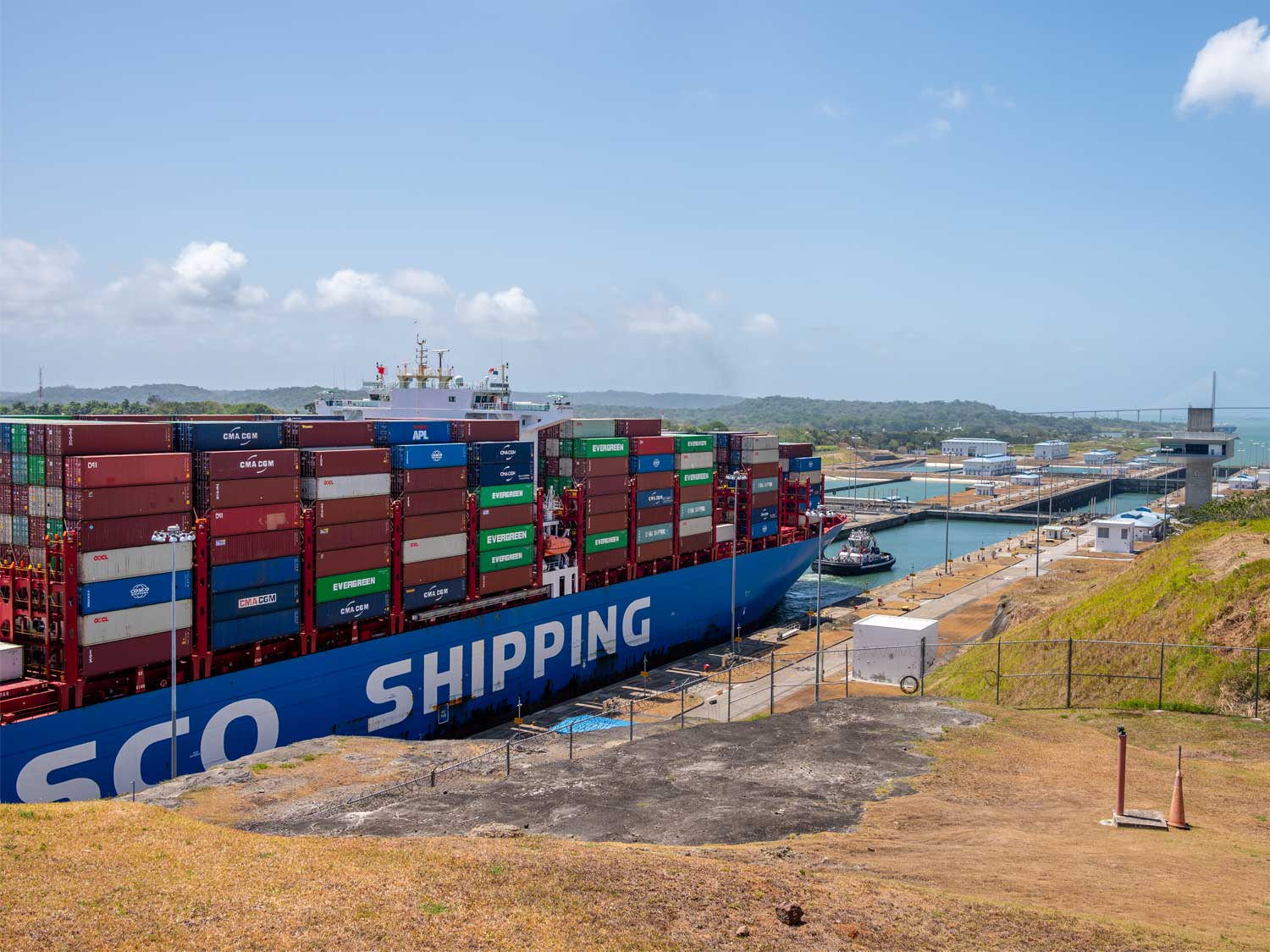
The Panama Canal is adding another significant factor for Asia–US East Coast and Gulf Coast services.
Water management measures are reducing the maximum permitted draft for vessels using the Neopanamax locks. The Canal has progressively tightened draft allowances during 2026 as it manages Gatun Lake water levels and prepares for the potential effects of El Niño.
The restrictions do not necessarily reduce the number of vessels able to transit each day. Instead, they do affect how many containers individual ships can carry. A lower maximum draft can force heavily laden containerships to reduce their loads before transiting, effectively removing container capacity from services even when scheduled sailings continue operating.
That matters because more than half of the Neopanamax vessels serving the US East and Gulf coasts currently transit Panama. The effect could therefore extend well beyond the Canal itself, tightening available space on some of the transpacific's most important services.
The Canal's normal Neopanamax specification allows a maximum draft of 50 feet, illustrating how progressively lower limits can constrain vessel utilisation.
Costs are beginning to reflect the restrictions
Carriers are already responding commercially. Several lines have announced Panama Canal surcharges for Asia–US East Coast and Asia–Gulf Coast cargo, with further charges scheduled to take effect from September.
These additional costs arrive as freight rates are already strengthening. With carriers controlling capacity through blank sailings and Canal restrictions potentially reducing the amount of cargo individual vessels can carry, there is less spare capacity available to absorb increases in demand.
The result could be a less volatile but structurally firmer transpacific market through the remainder of the traditional peak season. Rather than dramatic week-to-week movements, shippers could face sustained pressure on rates, space and equipment availability.
West Coast routings gain strategic importance
US West Coast services avoid the Panama Canal altogether, potentially giving shippers another option when East and Gulf Coast capacity becomes constrained. However, any significant diversion of cargo towards Los Angeles, Long Beach and other Pacific gateways could increase pressure on vessel space, port capacity, rail connections and inland transport.
That inland element is becoming particularly important because US trucking costs are rising sharply. National dry-van spot rates remain more than 40% above 2025 levels, while the average shipper-paid spot rate including fuel increased by almost 50% year on year in July.
Pressure is particularly evident around the West Coast gateways. In Los Angeles, outbound shipper-paid spot rates rose more than 50% year on year in July, as stronger inland movements from the country's largest container gateway coincided with reduced available trucking capacity.
Higher costs do not simply reflect stronger freight volumes. In some US regions, expenditure has increased substantially despite falling shipment volumes, demonstrating how capacity withdrawal, carrier pricing and operating costs can drive rates higher even when demand remains subdued.
US diesel prices are around 40% higher year on year, increasing carrier costs and fuel surcharge exposure. Less-than-truckload pricing is also strengthening, with general rate increases typically around 7% and some contract renewals moving into double-digit increases.
For transpacific shippers, this changes the calculation. Rerouting cargo through the West Coast may avoid Panama Canal restrictions and surcharges, but higher inland transport costs could offset some or all of the ocean freight advantage.
Metro connects Asia with a growing US network
The lowest ocean rate does not always deliver the lowest overall cost. With transpacific capacity tightening, Panama Canal restrictions adding complexity and US inland transport costs rising, shippers need to consider the entire journey across ocean, port, rail and road.
Metro's established Asian network and growing US footprint give shippers the flexibility to compare East Coast, Gulf Coast and West Coast options based on total landed cost, capacity, transit time and final destination. From securing ocean space and selecting the right gateway to coordinating inland transport and final delivery, Metro optimises the supply chain as a whole.