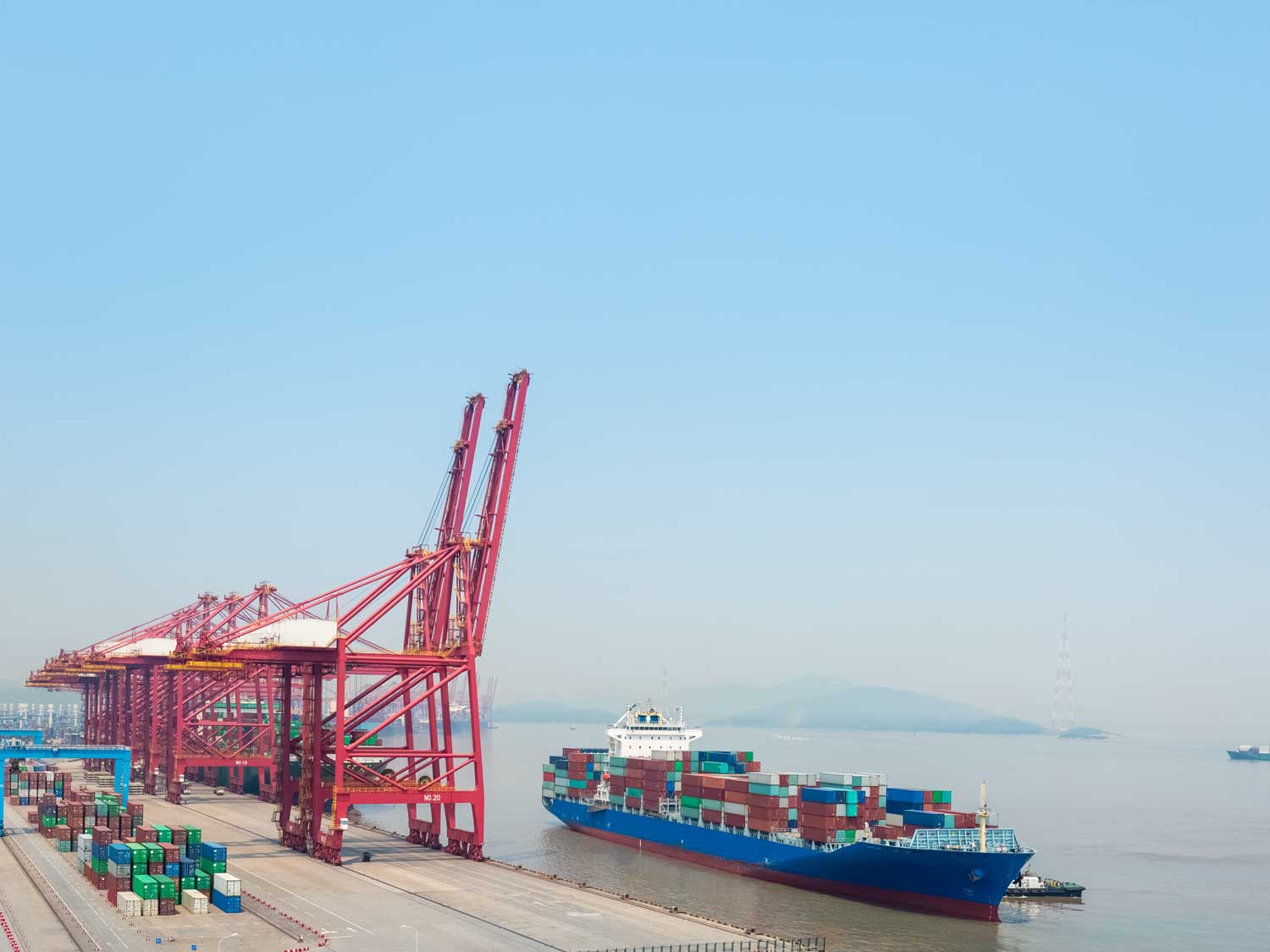
Ningbo

Asia–Europe freight rates rebound as carriers tighten capacity

Ocean freight rates on Asia–Europe trades are rising again after months of downward pressure, but contrasting market indicators and increasing blank sailings suggest the recovery is being driven as much by carrier capacity management as underlying cargo demand.

The Asia–Europe container market has entered a new phase of price volatility, with shipping lines attempting to strengthen freight rates ahead of November and the approaching annual contract negotiation season.

After an extended period of softening spot rates, October has delivered two consecutive weeks of increases. However, the recovery remains uneven, with conflicting freight indexes and relatively subdued demand raising questions about whether higher prices can be sustained.

For shippers, the immediate challenge is distinguishing between genuine market tightening and temporary price movements created by changes to available capacity.

Spot rates reverse their downward trend

Drewry's World Container Index recorded a 6% increase on Shanghai–Rotterdam and a 7% rise on Shanghai–Genoa in mid-October, reversing several weeks of declining prices. 

The recovery continued into the following week, with Shanghai–Rotterdam increasing another 3% and Shanghai–Genoa rising 5% in the assessment published on 22 October.

Across the two weeks, this represents cumulative increases of approximately 9% and 12% respectively.

The broader Drewry index increased 2% in the latest assessment, reflecting firmer pricing across several major east–west trades.

However, not every benchmark supports the same interpretation and while Drewry recorded rising Asia–Europe rates in mid-October, another freight index reported a 7% decline on Asia–North Europe.

Different methodologies, reporting periods and underlying transactions explain some of the divergence, but the contrasting readings reinforce the absence of a consistent recovery across the market.

Shipping lines withdraw capacity to support prices

With demand showing limited signs of significant acceleration, carriers are turning increasingly to capacity management.

Drewry reported eight blank sailings scheduled on Asia–Europe services for the week beginning 26 October, compared with two the preceding week.

The broader outlook confirms that capacity adjustments will continue through November.

Across the major east–west trades, 56 sailings are expected to be cancelled between weeks 44 and 48, representing approximately 8% of the 714 scheduled departures.

Asia–Europe and Mediterranean services account for 54% of these cancellations, making them the principal focus of carrier capacity management.

Although 92% of scheduled services are still expected to operate, cancellations can have a disproportionate effect on individual departure weeks, ports and carrier networks.

For shippers, this creates a familiar contradiction: substantial overall vessel capacity alongside restricted availability on particular services.

Blank sailings can also concentrate cargo onto fewer vessels, increasing the risk of rollovers and schedule disruption.

November rate increases face a demand test

Alongside withdrawing capacity, shipping lines are introducing higher Freight All Kinds (FAK) rates.

New pricing announced for mid-October targeted increases across North Europe and Mediterranean destinations, although some offers were subsequently revised downwards.

Further increases have been announced for 1 November, with Mediterranean targets generally higher than those for North Europe.

Shipping lines are attempting to establish firmer pricing ahead of annual contract discussions, but without a sustained increase in cargo volumes, higher rates may prove difficult to maintain.

The coming weeks will therefore test whether capacity withdrawals can support the recovery or whether additional available space and competitive pricing will limit further increases.

Operational developments could also influence the balance between capacity and demand.

Asian port congestion has shown signs of improvement, with vessel waiting times at Shanghai falling from 97 hours in week 38 to 38 hours in week 42.

This improvement should help restore schedule efficiency and release vessel capacity previously absorbed by delays.

What this means for shippers

The latest developments suggest that Asia–Europe freight rates will remain volatile through the remainder of 2026. Recent increases have been supported by carrier capacity management and pricing initiatives, but subdued demand and discounted offers suggest that further fluctuations are likely.

Service reliability remains just as important as pricing, with blank sailings reducing departure options and increasing the risk of cargo being rolled. Meanwhile, improving Asian port operations and the gradual return of services through the Suez Canal could release additional capacity, changing the balance between supply and demand.

Shippers should therefore assess available services, booking windows and delivery requirements alongside freight rate movements, rather than relying solely on headline market indexes.

Metro: Turning market volatility into better shipping decisions

When freight rates fluctuate and carriers adjust capacity, the lowest quoted price is not always the best shipping solution.

Metro combines established relationships with leading ocean carriers, global freight procurement expertise and extensive origin and destination capabilities to help customers make informed decisions across Asia–Europe trades.

Our teams monitor carrier schedules, capacity withdrawals, freight pricing and port conditions, identifying alternative services, gateways and consolidation opportunities when market conditions change.

Whether you're reviewing November bookings, preparing for 2027 contract negotiations or looking to improve schedule reliability, Metro can help you balance competitive pricing with dependable capacity and delivery performance.

aircraft vapour trails

Global airfreight peak accelerates

Airfreight markets are entering the final quarter of 2026 with strengthening demand, sharply rising fuel costs and growing pressure on capacity, although significant differences between trades are creating contrasting conditions for shippers.

Global air cargo demand rebounded strongly in September, with volumes increasing 9% year on year, supported by high-value technology shipments and the continued expansion of artificial intelligence infrastructure.

Following a brief slowdown during China's Golden Week holiday, activity accelerated again in October. The global Baltic Air Freight Index rose 4.7% in the week to 19 October, reaching levels above the peaks recorded during the previous two years.

With freight rates approximately 26% higher year on year and jet fuel costs more than doubling, the market is entering its traditional peak season from an already elevated position.

However, the strongest pressures are concentrated on particular trade lanes, rather than reflecting a uniform increase in global demand.

Transpacific demand leads the market

Asia–US airfreight is experiencing the strongest growth, driven increasingly by shipments of semiconductors, servers, computer components and equipment supporting data-centre development.

This demand is adding to traditional seasonal volumes from consumer electronics, product launches and e-commerce.

WorldACD figures for October show Asia-Pacific air cargo volumes to the US increasing 14% year on year, while average rates on the trade were 41% higher.

The return of Chinese manufacturing activity after Golden Week generated a further surge in demand, with Hong Kong–US volumes rising 27% week on week and mainland China–US increasing 18%.

Technology-related demand is particularly significant because some major customers are securing substantial blocks of airline capacity, potentially reducing the space available to other shippers.

With further AI infrastructure shipments expected through the final quarter, transpacific capacity could tighten considerably, particularly at key Asian origins.

Asia–Europe recovers, but remains below last year's volumes

The Asia–Europe market presents a different picture.

Although volumes recovered after Golden Week, demand remains weaker than a year ago, reflecting changes in e-commerce flows and the impact of new EU charges on low-value imports.

Air cargo volumes from Asia-Pacific to Europe were 16% lower year on year in mid-October, despite a 13% week-on-week recovery.

The decline has been particularly pronounced from Hong Kong, where Europe-bound volumes fell 32% compared with the previous year.

Mainland China has also experienced weaker demand, although September figures suggested some improvement following deeper declines during July and August.

Nevertheless, rates remain elevated, with Asia-Europe pricing 25% higher year on year in October, despite increasing only 1% week on week.

This divergence between weaker volumes and higher freight costs highlights the influence of fuel prices, geopolitical disruption and airline operating costs.

Further EU measures affecting low-value e-commerce shipments from November could add to uncertainty over demand patterns.

Transatlantic remains comparatively subdued

Transatlantic airfreight has not experienced the same acceleration as the transpacific, with recent October assessments showing softer pricing on Europe–US services, and outbound rates from major European gateways declining.

Frankfurt's overall outbound index fell 6.6%, while London Heathrow declined 2.3%, although both remained more than 30% above their year-earlier levels.

US-origin rates to Europe and the UK also softened.

These movements suggest that transatlantic capacity and demand remain more balanced than on the busiest Asia–US routes, although elevated fuel costs continue to influence the overall pricing environment.

For shippers, the contrast reinforces the importance of assessing supply and demand for individual origin and destination markets rather than assuming that global rate increases apply equally across all routes.

However, demand is only one factor driving the current market. Jet fuel prices increased approximately 114% year on year by mid-October, reflecting the impact of geopolitical conflict and disruption to international energy markets.

Airlines are responding through higher fuel surcharges and tighter control of operating costs. At the same time, restrictions affecting airspace and international routing options are increasing operational complexity and potentially reducing effective capacity.

These pressures help explain why freight rates remain substantially above 2025 levels even on routes where cargo volumes have weakened.

The combination of rising operating costs and concentrated demand means that lower volumes will not necessarily translate into lower freight rates.

Capacity planning becomes critical for the final quarter

The latest market data points towards a peak season shaped by competing pressures.

Technology and AI infrastructure shipments are generating substantial demand across the transpacific, while Asia–Europe continues to adjust to changing e-commerce patterns.

Meanwhile, airlines are increasing freighter deployment selectively, with global capacity rising 2% in mid-October following two weeks of reductions.

However, the availability of additional aircraft does not guarantee space on the routes experiencing the strongest demand.

Shippers should secure capacity early on high-demand transpacific routes, particularly for time-sensitive technology and industrial shipments. 

Where concentrated demand or operational disruption restricts available space, alternative gateways and routings may provide greater flexibility. With fuel prices continuing to rise, businesses should also monitor total freight costs, including fuel surcharges, rather than focusing solely on headline airfreight rates.

Securing capacity when airfreight markets tighten

When airfreight markets tighten, securing dependable capacity and controlling costs requires more than access to airline schedules.

Metro combines established airline relationships, international buying power and specialist airfreight expertise with a global network connecting businesses with major international air cargo gateways.

From scheduled airfreight and consolidation to charter solutions, customs clearance and final delivery, Metro provides coordinated transport options tailored to shipment priorities.

Supported by experienced local teams and international network visibility, we help customers assess available capacity, evaluate alternative routings and respond to changing market conditions.

Whether you're securing peak-season space from Asia, managing transatlantic movements or reviewing your 2027 airfreight strategy, Metro can help protect delivery performance while maintaining control over your logistics costs.

Contact Metro to discuss your airfreight requirements and identify the capacity, routing and service options best suited to your business.

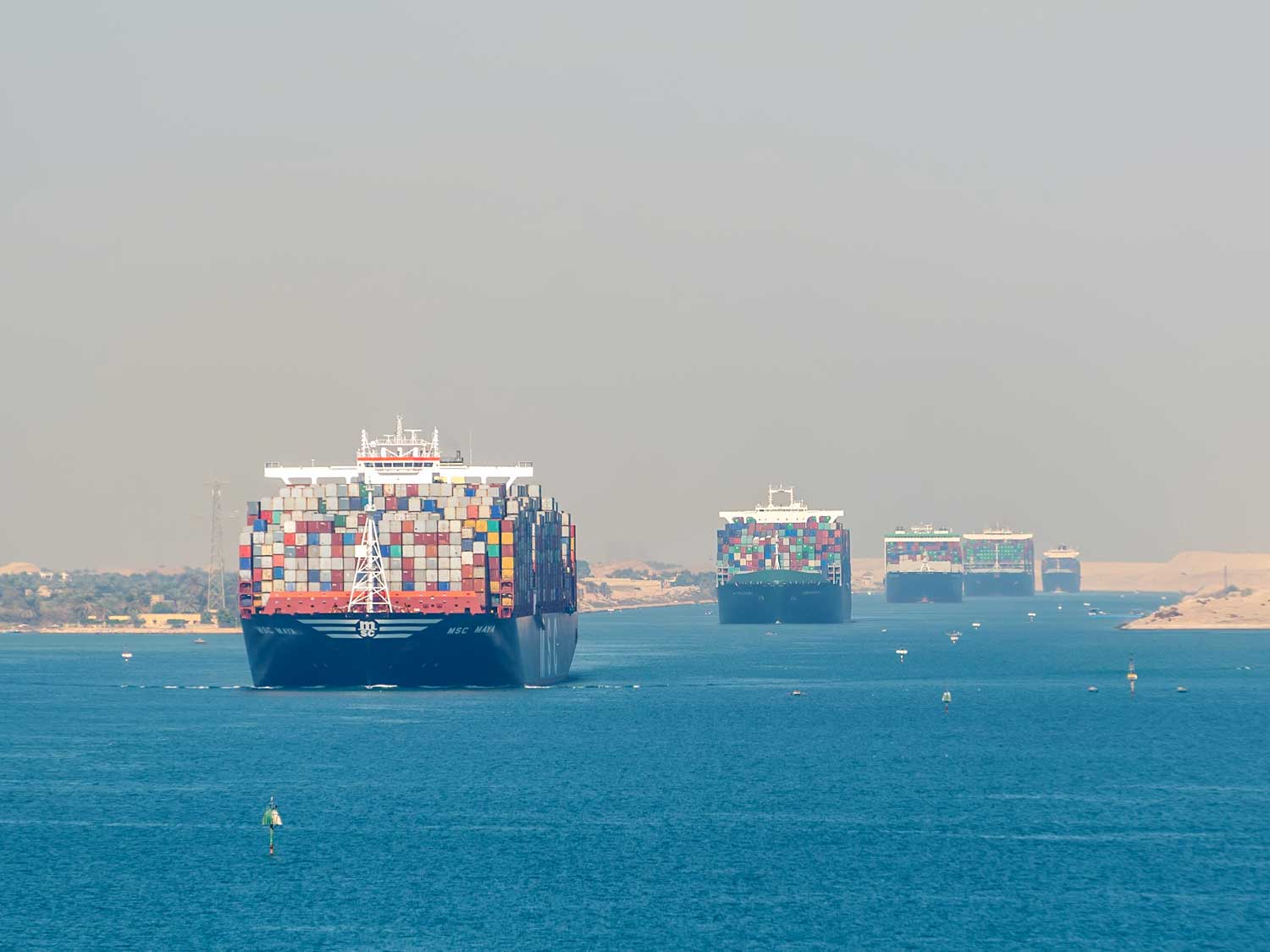
Suez convoy

Suez Canal return gathers pace

Nearly two-thirds of Far East–Europe container shipping capacity is now operating through the Red Sea and Suez Canal, marking a significant shift away from Cape of Good Hope diversions, although security concerns and changing service rotations mean the return remains uneven.

After almost three years of widespread diversions around southern Africa, container shipping is progressively returning to one of the world's most important trade corridors.

Major shipping lines have restored Suez transits across a growing number of Asia–Europe services, with the recovery now extending to selected routes connecting Asia and the US East Coast.

The transition could shorten delivery times, reduce fuel consumption and eventually release substantial vessel capacity. However, mixed routings, ongoing security assessments and potential congestion at European ports mean the benefits will not be immediate or consistent across every service.

Nearly two-thirds of Asia–Europe capacity returns

The scale of the recovery is becoming increasingly clear.

63%
Far East–Europe capacity using the Red Sea
70%
Far East–Mediterranean capacity
58%
Far East–North Europe capacity
24 of 46
Direct Far East–Europe services transiting the Red Sea

Analysis of the ten largest container shipping networks shows that approximately 5.5 million TEU of the 8.7 million TEU deployed between the Far East and Europe is now assigned to services using the Red Sea.

The Mediterranean trades are leading the recovery, with around 70% of capacity back on Suez routings, compared with 58% on Far East–North Europe services.

However, the return is not uniform.

Some services use the Suez Canal westbound towards Europe but continue to route eastbound voyages around the Cape of Good Hope.

This approach allows carriers to reintroduce shorter routings selectively while retaining flexibility if regional security conditions deteriorate.

Major carriers accelerate their return

The shift has gathered momentum since the summer, with several major shipping groups progressively restoring services.

MSC resumed Suez transits in August and now operates 11 loops through the waterway, representing approximately 2.2 million TEU of deployed capacity.

Maersk and Hapag-Lloyd have also expanded their use of the route, with nine alliance services representing around 1.76 million TEU.

CMA CGM maintained a presence through the Suez Canal during the disruption and has subsequently expanded its operations, while COSCO and OOCL have restored six services with combined deployed capacity of approximately 1.27 million TEU.

The Premier Alliance has also begun returning selected services, adding further momentum.

With some networks operating through Suez in both directions, others retaining Cape diversions, and several using different routes for outbound and return voyages, individual service patterns remain important when assessing transit times and reliability.

Weekly Suez traffic continues to strengthen

The recovery is also evident in actual canal traffic. Containership transits increased from 54 in week 41 to 55 in week 42, extending a period of improving volumes.

The latest figures indicate that more carriers are progressively restoring services rather than relying solely on occasional voyages.

However, the canal remains well below its historical potential, and the return is taking place against a backdrop of continuing security concerns around the Red Sea and Bab-el-Mandeb Strait.

For shipping lines, the commercial advantages of Suez are substantial. Shorter voyages can reduce fuel consumption, lower operating costs and potentially allow carriers to maintain weekly services with fewer vessels.

With bunker prices remaining elevated, these savings provide a strong incentive to restore shorter routes wherever security assessments permit.

Asia–US East Coast services begin returning

The recovery is no longer confined to Europe. MSC and Zim have resumed Suez transits in both directions on their shared Asia–US East Coast service, marking a further development in the restoration of global shipping networks.

The first northbound sailing departed Singapore on 18 October, with arrival in New York–New Jersey expected on 18 November.

Other services connecting India and the Middle East with the US East Coast have also resumed Suez routings, although some continue to use the Cape of Good Hope in the opposite direction.

For shippers, the potential transit-time benefits vary considerably. Asia–Europe services returning to Suez have achieved average transit-time improvements of approximately seven days.

However, North American services have experienced mixed results, with some achieving modest savings and others recording longer overall transit times despite using the shorter canal route.

Port rotations, transhipment arrangements and congestion at intermediate gateways can offset the theoretical advantages of a shorter voyage.

Full return could happen in early 2027

Industry expectations increasingly point towards a broader restoration of Suez services during the first quarter of 2027.

However, this remains a scenario rather than a confirmed timetable.

Maersk has discussed the possibility of further service returns, but has emphasised that no definitive schedule has been announced and that future changes will depend on security conditions, operational planning and consultation with partners and customers.

The pace of recovery will also depend on the ability of ports and inland transport networks to accommodate changing vessel arrival patterns.

Rotterdam and Antwerp-Bruges are already experiencing challenges associated with overlapping schedules and fluctuating volumes as services transition between Cape and Suez routings.

A faster return could release significant effective vessel capacity into the market, potentially increasing pressure on ocean freight rates.

At the same time, changes to vessel rotations and arrival patterns could create temporary congestion, schedule disruption and equipment imbalances.

Changing ocean networks offer supply-chain opportunities

The return to Suez could reshape ocean freight costs, transit times and capacity availability. Making the most of these changes requires accurate market intelligence and the flexibility to respond.

Our teams monitor carrier routing decisions, vessel schedules, port conditions and freight rates, identifying opportunities to improve transit times, manage costs and maintain reliable delivery performance.

Whether you're reviewing Asia–Europe or trans-Pacific shipping arrangements, evaluating India–US connections or preparing for further network changes in 2027, Metro can help you understand the implications and identify practical alternatives.

Contact Metro to review your ocean freight strategy and take advantage of emerging routing, capacity and cost opportunities as the Suez Canal recovery gathers pace.

strike at port

German port strikes averted, but Rhine disruption deepens

German dockworkers have accepted a new pay agreement, averting widespread port strikes, but record-low Rhine water levels continue to disrupt inland freight movements, increasing costs and threatening North European supply chains.

North European importers have avoided another potential disruption after German dockworkers accepted revised employment terms, reducing the immediate threat of industrial action at Hamburg, Bremerhaven and Wilhelmshaven.

However, congestion remains at several terminals, while exceptionally low Rhine water levels are restricting barge operations between Germany's industrial heartland and the major container gateways of Rotterdam and Antwerp.

The result is a continuing challenge for European supply chains: even when ocean freight services and port operations improve, inland transport constraints can still delay cargo and increase costs.

German port agreement reduces strike risk

Germany's ver.di union accepted revised employment terms on 6 October, following several rounds of negotiations and earlier warning strikes.

The agreement covers approximately 11,000 workers across six German ports and includes a 3.4% wage increase over 12 months.

Although final approval from port employers remains outstanding, the agreement has significantly reduced the immediate threat of industrial action.

However, terminal congestion remains a concern. Bremerhaven's container yard utilisation has reached 90%, compared with 80–85% at Hamburg and approximately 65% at Wilhelmshaven.

Vessel waiting times have improved since early September, but high terminal utilisation leaves limited flexibility to absorb further disruption.

Rhine restrictions threaten inland connections

The Rhine presents a more persistent challenge. Exceptionally low water levels have restricted barge movements along one of Europe's most important inland freight corridors, connecting German industrial centres with Rotterdam and Antwerp.

At Kaub, a critical navigation point, water levels fell to just 6cm on the gauge during August, the lowest recorded since measurements began in 1880.

Barges have been forced to operate with substantially reduced loads, while some vessels have been unable to complete their journeys.

The scale of the disruption is significant. A single 1,500-tonne barge can carry the equivalent of approximately 60 lorry loads, placing additional pressure on road and rail networks when river transport becomes unavailable.

Congestion is also affecting barge operations, with average waiting times reaching 36 hours at Antwerp and 56 hours at Rotterdam.

The severity of the situation was reinforced over the weekend of 10–11 October, when four inland vessels ran aground near Ludwigshöhe, prompting additional restrictions on vessel movements near Mainz.

Although all four vessels were subsequently refloated, the incidents underline the continuing risks facing inland shipping.

Low-water surcharges increase transport costs

Restricted barge capacity is also increasing inland transport costs. Shipping lines and barge operators have revised low-water surcharges to reflect the additional expense of operating vessels with reduced loads.

Surcharge structures link charges to water levels at Duisburg-Ruhrort, Kaub and Cologne.

As river levels fall, charges increase progressively, with the most severe restrictions potentially adding more than €1,500 per container to inland transport costs.

At particularly low levels, operators may be unable to guarantee container movements at all.

Alternative road and rail services can help maintain cargo flows, but limited capacity and increased demand may introduce further delays and expense.

A container arriving on schedule at Rotterdam, Antwerp or a German gateway offers little benefit if its onward movement is delayed by restricted inland capacity.

Keep your European supply chain moving

Metro's ocean freight and European logistics specialists combine carrier relationships, local market intelligence and inland transport expertise to help customers maintain reliable cargo movements.

From assessing alternative gateways and inland routes to coordinating road, rail and multimodal transport, Metro can identify practical options to minimise disruption and protect delivery commitments.

Don't let inland disruption undermine your shipping plans. Talk to Metro's freight specialists about your upcoming European shipments and the transport options that can keep your cargo moving.