Mark Dainter scaled e1597747489821

The Metro team talk: Mark Dainter

Graduating university with a degree in chemistry, Mark quickly realised that a career in “blowing things up” was not for him.

 Joining Metro in 1996, almost two and a half decades ago, Mark elicits his versatility through working across a wide variety of departments in the business, ranging from import and export operations, to documentation.

Over the last 15 years, Mark’s involvement with the pricing aspects of the business have been indispensable, performing them within Metro’s procurement team, whilst undertaking a principle role in our digital Tariff System.

Mark’s current responsibilities encompass pricing and administration, in which he is instrumental in publishing rates and contracts and the administration of carrier charges and customer tariffs.

As a self-proclaimed ‘Jack of all trades’, Mark’s ancillary responsibilities include reporting statistics and auditing; whilst his expertise allows him to “put his hand” to a wealth of other tasks in the business.

Right now, Mark’s primary focus is looking at ways to increasing efficiency within the business by further digitalising and automating processes.

Competitive advantage in training Part 1

Why millennials overlook a career in logistics – by a millennial

To most millennials, the semantics of ‘logistics’ are riddled with outdated stereotypes of a heavy haulier, or warehouse shelf stackers.

The more desirable elements of the industry – of which there are many – are not projected to young people, causing a lack of exposure and knowledge about logistics. 

Luckily, my own perceptions of logistics are clearer than most of my generation. Although I have not directly worked in the field, I have been exposed to logistics my entire life, as my father works in the freight forwarding industry. This places me in a unique position to offer the perspective of a young person who is external to the trade, while still understanding what logistics really is.  

Having a freight forwarder in the family has revealed far more than the technical aspects of logistics. It has illustrated a lifestyle. Yes, the hours can be gruelling and long, with the workload seemingly relentless at times. And although there sometimes appears to be an imbalance between the amount of time spent in the office and at home, the industry does offer good prospects.

Something that has always drawn me to my father’s line of work was watching him travel across the globe. The possibility to experience other cultures and to meet a diverse pool of people through your career is the diamond that shines through the rough, long hours.

And although we get the occasional whinge and whine about the stressful nature of the job, you see a man who is truly passionate about his career, and that passion is infectious.

And there are plenty of opportunities to work in the sector – which is not true of every industry.

Vice president of value-added service for DHL Germany Christiane Beimel said: “Supply chain managers are retiring faster than they can be replaced”; 25 to 33% of supply chain professionals are nearing retirement age.  

So it’s crucial to entice the younger generations into the industry.  The question, is how? 

First and foremost, companies need to educate young people about what logistics really is. To leave the banal label of logistics behind, it is integral to highlight the expansive nature of the field, with its eclectic mix of career paths on offer, ranging from supply chain management to warehouse design, from sales to sailings.  

Secondly, as younger generations begin to define themselves as citizens of the world, it is important to highlight the importance of logistics in helping develop a cosmopolitan society. Logistics is one of the key enablers of globalisation, internationally linking the supplies and demands of the entire world.  Logistics facilitates the fusion of cultures through the movement of different products from different nations.  

And logistics is about co-operation and collaboration, helping to keep the world in order, rather than solely about financial competition. Young people will be drawn into the industry, wanting to brand themselves as enablers of multiculturalism.  

And then there is climate change, a key issue for the young today, and logistics can play a big part.

The environment particularly resonates with millennials. With the transport sector accounting for 25% of the total commercial energy consumed worldwide, supply chain managers are integral for instigating fuel-efficient shipping.   

Finally, there is new hope for logistics in the post-Covid world, as nations rely on freight forwarders to transport essential products, such as PPE and other medical supplies. The consumer typically overlooks how we get our online orders, but residing in these unprecedented times has caused a shift. Young people are now thinking about how their goods arrive, and are becoming more aware of it.

But companies, you have a job to do. To ensure a steady flow of young applicants into the field, it’s crucial that you educate millennials about what it means to work in logistics, and to ensure that the preconception of the heavy haulier or underpaid warehouse worker can at long last become a remnant of the past.  

Written by James Liddell


Steve Smith

The Metro team talk: Steve Smith

The essential ingredient for many industries, chemicals are part of nearly every product used in the home and office. There is no room for error in logistics for the chemical and petro-chemical sector, which is a key vertical for Metro, in the care of Steve Smith.

Joining Metro in 2003, Steve began his career in the Ocean Export team, before moving across to chemical accounts two years later, handling global movements of hazardous and non-hazardous goods by all modes (road / sea / air / rail) and types (FCL / Lcl / Iso tank / bulk).

Chemical logistics requires flexibility and adaptability and supply chains can be long, unpredictable and complex, with Steve managing his team to deliver the end-to-end process for imports, exports and cross-trade.

Steve’s role includes extensive travel, but it is also highly responsible, as the effective and safe handling of these most challenging products, together with care for the environment and in full accordance with rigorous regulations, is of key importance in protecting the image and reputation of Metro and our chemical clients.

Steve helps clients optimise their supply chains, ensuring service, safety and quality throughout, for high-value and high-consequence goods.

Ensuring the safety of people, the environment and material goods requires comprehensive knowledge of protective measures and dangerous goods handling, throughout all phases of transport and storage of chemical goods.

Steve is a qualified Dangerous Goods Safety Adviser(DGSA) for road, rail, and inland waterways, having passed examinations set by the Department for Transport (DfT).

Through Steve and his Metro colleagues, our clients can take a strategic approach to their chemical product supply chains, creating resilience, flexibility and a real competitive advantage. In addition they receive a measured, reliable and consistent solution within a safe supply chain.

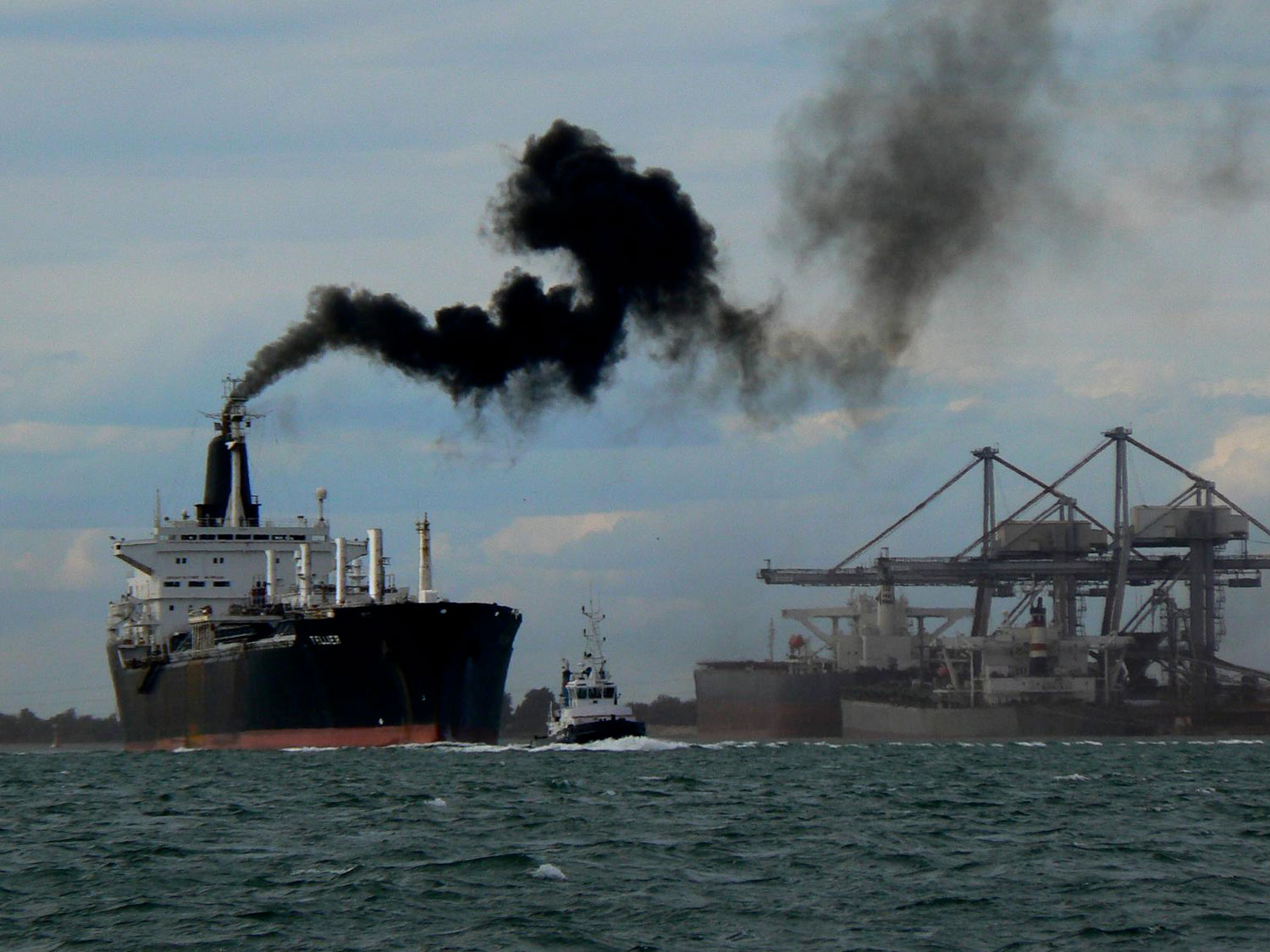
2020 bunker changes

Reduce emissions and improve your bottom line

Environmental strategies and carbon emission reduction activities have been core elements in multi-national trading reports for some years and more shippers are beginning to realise that they can adapt their supply chain to be environmentally friendly and save money in the process.

Cutting emissions is often directly related to creating efficiencies and cutting costs, activities that are more interesting than usual.

Reducing CO2 emissions starts with a thorough review of supply chain operations, volumes, routes, modes and performance.

Understanding the ‘big picture’ provides visibility of the simple fixes and quick-wins, like more consolidation, mode switching, or mixing.

Road transport accounts for the bulk of of CO2 emissions with 73%, air cargo follows with 12%, while sea freight accounts for 10% and rail at 2%. 

The extensive manufacturing, demand and transport disruption triggered by the Covid pandemic has highlighted the vulnerability of extended supply chains and prompted some to espouse near-shoring, which may offer some environmental benefit, but omits the economic case for off-shoring in the first place.

Some near-shoring is inevitable, when the efficiencies and costs are too compelling to ignore, but many shippers will persist with extended supply chains and look to their suppliers for environmental policies that support their eco-ambitions.

Metro are continually review our environmental policy and work with fully audited and approved partners with effective carbon emission reduction policies. We measure all movements against acceptable levels to ensure minimum environmental damage in the movement of your goods. Metro is aiming to be a carbon neutral organisation in the very near future. 

Even the biggest shippers can’t influence an airline or shipping line’s environmental strategy, but the International Maritime Organisation (IMO) and the International Civil Aviation Organisation (ICAO) have set ambitious goals and it is straightforward to favour the most engaged carriers.

Metro are developing tools, as part of our MVT supply chain management platform, that will calculate the carbon ‘cost’ to and from any global point, by any mode, or modes of transport, so that our shippers can monitor and reduce their carbon footprint.

Using the same toolkit we can analyse supply chain volumes, routing and mode characteristics and recommend options that will reduce costs as well as carbon emissions, including modal shifts, reducing distances and better utilisation of transport transportation assets.