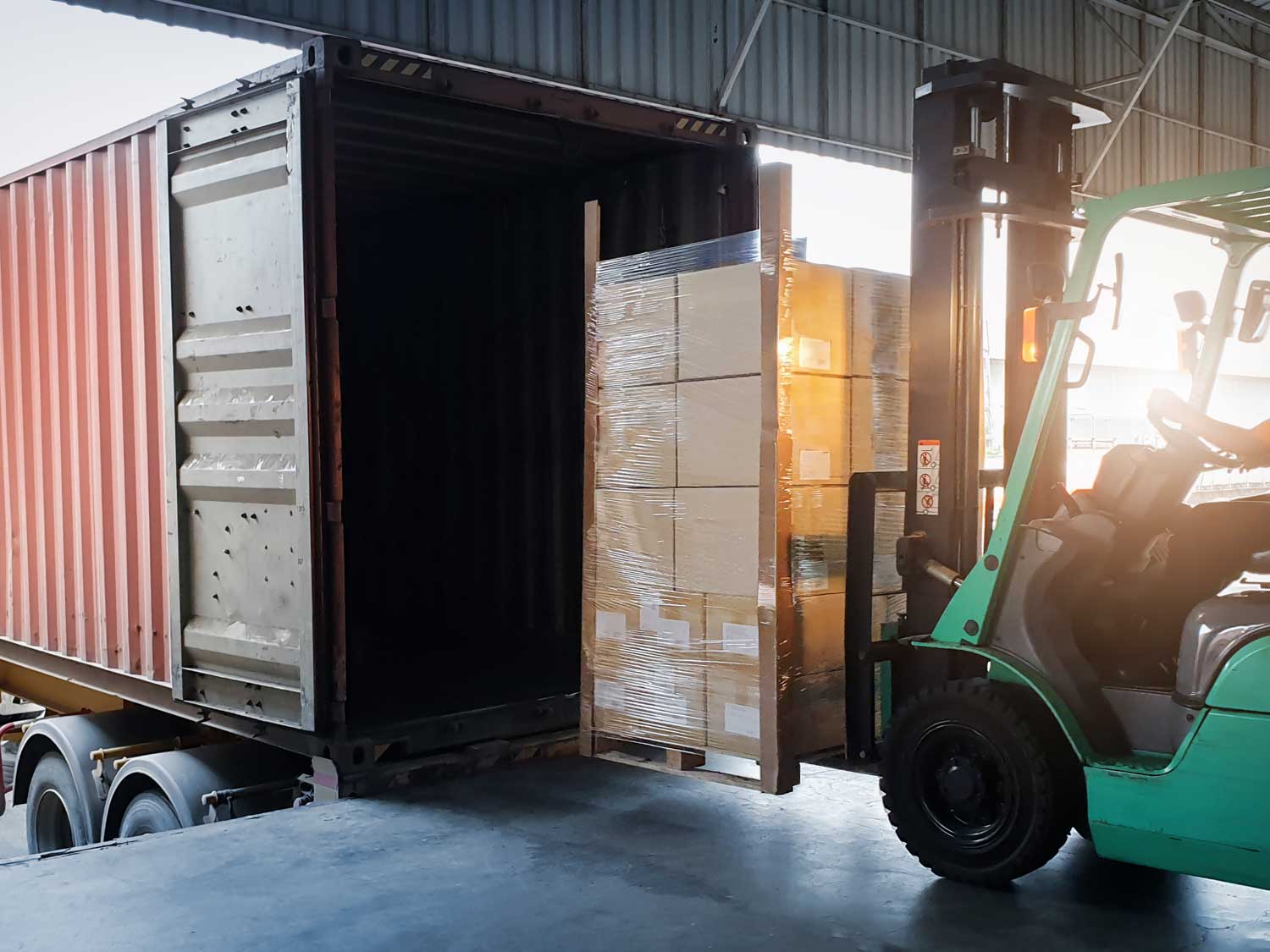
container loading

Why more importers are rethinking FCL during peak season pressure

Metro’s LCL Optimised Solution lets shippers move smaller, more frequent orders without paying for empty container space, freeing up working capital and easing the current squeeze on capacity.

As peak season tightens capacity across the major east-west container trades, many importers are reassessing whether shipping partially filled containers still makes commercial sense.

With space tighter, container equipment under pressure and freight markets increasingly volatile, Metro is seeing growing interest in flexible LCL (Less than Container Load) solutions that help businesses reduce costs, improve inventory flow and avoid paying for unused container space.

For many shippers, particularly those moving fluctuating or irregular cargo volumes, the traditional Full Container Load (FCL) model can tie up unnecessary working capital and create avoidable inefficiencies across the supply chain.

When LCL becomes more cost-effective

While FCL remains more cost-effective as shipment volumes scale, cargo volumes below 15 CBM are generally better suited to LCL solutions, while 15 to 20 CBM represents a tipping point where FCL and LCL options should be compared carefully.

That calculation becomes even more relevant during peak season periods, when under-utilised containers effectively mean paying premium freight rates for empty space.

However, the headline freight rate is only part of the picture. Many origin and destination charges, including customs clearance, documentation and terminal handling, apply whether cargo moves as FCL or LCL. The real saving often comes from avoiding under-filled containers and reducing indirect costs linked to excess inventory.

Metro’s LCL Optimised Solution

Metro’s Optimised Solution converts under-utilised 20′ and 40′ FCL shipments into LCL by loading cargo into Metro’s own consolidated containers alongside compatible freight from other customers. This improves container utilisation while giving customers access to guaranteed capacity during peak periods without paying for unused space.

Customers benefit from lower freight costs per cubic metre compared with similar volumes moving in partially filled FCL containers, alongside reduced administration and handling complexity through simplified pricing and regular consolidated departures.

Although LCL shipments naturally involve additional consolidation and deconsolidation handling, Metro’s priority processes for LCL conversions minimise disruption, reduce risk and maintain cargo integrity throughout the shipment process.

The overall result is a more flexible and commercially efficient shipping model for importers whose cargo volumes no longer justify dedicated FCL space on every movement.

Reducing inventory pressure and improving flexibility

Smaller and more frequent shipments help reduce the amount of cash tied up in bulk inventory while also lowering storage pressure and dwell time at origin.

Businesses gain greater flexibility to respond to changing demand patterns without committing to large inventory positions weeks or months in advance. In volatile market conditions, that flexibility can become a major operational advantage.

Metro’s regular consolidated departures also help customers reduce origin delays and improve supply chain responsiveness during periods of disruption, particularly when container shortages and rolling bookings are affecting traditional FCL movements.

As market conditions remain volatile and peak season pressure continues building, many importers are reviewing whether every shipment genuinely requires a full container, or whether a smarter consolidation strategy could unlock greater efficiency across the supply chain.

Metro’s Optimised LCL Solution helps customers reduce freight costs, free up working capital, secure guaranteed space and avoid paying for under-utilised containers during volatile market conditions.

If you would like to explore whether converting FCL shipments into Metro’s consolidated LCL solution could improve your supply chain efficiency, save money and improve your cash flow, EMAIL Key Account Director Jane Kenny.

NYC 1440x1080 1

U.S. Supply Chains Grapple Cost Pressures and Uncertainty

Heading into the second half of 2026 shippers face, a politically charged USMCA review, an early tightening on the trans‑Pacific, and war‑driven fuel costs pushing up inland transport prices across North America. 

Together, they are rewriting the assumptions many companies use for peak‑season planning, pricing and inland network design.

USMCA stability at stake for North American production

The United States–Mexico–Canada Agreement (USMCA) reaches its first scheduled “joint review” on 1 July 2026, six years after it took effect. The three governments must decide whether to confirm the deal through 2042, seek adjustments, or signal opposition that could trigger renegotiation and, in the worst case, open the door to an eventual sunset in 2036 if no resolution is found.

Manufacturing across North America, and especially in the automotive sector, has a lot riding on the outcome. Automotive trade accounts for roughly 20–25% of total USMCA trade flows, making it the single largest sectorial user of the agreement. Since 2020, higher regional content requirements and labour‑value rules have already reshaped sourcing patterns for OEMs and tier suppliers, driving more production and component sourcing into Mexico, the U.S. and Canada.

Industry groups on all sides of the border are pushing for a stable, growth‑oriented review that preserves tariff‑free access and gives long‑term visibility to investors. At the same time, policymakers are signalling that the review will not be a formality. Areas likely to come under scrutiny include automotive rules of origin and tracing, enforcement of labour and environmental commitments, energy and state‑owned enterprise disputes, digital trade and data rules, and the role of Chinese investment and components in North American supply chains.

For U.S. manufacturers and importers, this means the next 12–18 months are a critical window to:

  • Verify that products truly qualify under current USMCA rules and identify any borderline cases.
  • Model how tighter regional content or new tracing requirements could change compliance status and cost.
  • Stress‑test footprint and sourcing decisions, particularly where there is high China content flowing via Mexico or Canada into the U.S.

Trans‑Pacific signs of an early peak

Eastbound trans‑Pacific trades are already showing signs of an early peak‑season, with container spot rates from Asia to the U.S. west and east coasts climbing sharply on the back of May general rate increases, as carriers tighten capacity and push through surcharges.

Recent data shows:

  • Spot rates from major South China ports to the U.S. west coast rising almost 100% on levels from only weeks earlier.
  • Asia–U.S. east coast spot rates climbing by 50–60% over a similar period, with some indices even higher.
  • Carriers rolling out peak season surcharges and emergency fuel surcharges ahead of the usual schedule, with higher amounts signalled for late June and 1 July.

Several dynamics are driving this early tightening:

  • Importers are front‑loading orders to get ahead of further cost increases later in the year, including potential tariff changes and bunker‑linked adjustments.
  • Vessel diversions around southern Africa to avoid Red Sea and Gulf of Aden risks, coupled with congestion at some Asian load ports, are absorbing capacity and disrupting schedules.
  • Capacity additions have lagged demand on key lanes, and carriers are using blank sailings and service adjustments to keep utilisation high.

We expect some rate relief later in the summer if additional capacity returns and front‑loaded volumes drop off, but the near‑term picture is one of elevated spot rates and tight space as peak‑season volumes converge with constrained supply.

Trucking and inland costs rise on fuel‑driven inflation

War‑driven fuel prices are pushing trucking and intermodal costs sharply higher, even before demand has fully recovered.

Since the escalation of conflict involving Iran, U.S. retail diesel prices have moved from just under USD 4 per gallon to around USD 5.60 per gallon on average, with some regions significantly higher. This jump has fed directly into trucking Producer Price Index (PPI) measures:

  • Truckload and LTL PPIs have risen markedly in recent months, reversing a multi‑year period of freight deflation;
  • Spot truckload rates on long‑haul lanes have climbed to their highest levels since 2022, with average per‑mile prices up more than 25% year‑on‑year in some benchmarks;
  • Higher fuel and capacity discipline are also starting to pull contract rates up, with increases spreading from truckload into LTL and intermodal.

It is worth noting that these increases are being driven largely by supply‑side constraints, reduced capacity, higher fuel costs and more disciplined carrier pricing, rather than by booming freight demand. For shippers, that means transport inflation can persist even if volumes remain only modestly above 2025 levels.

Metro’s CEO Grant Liddell and Managing Director Andrew Smith will be visiting U.S. offices and customers next week, to review operations and discuss these challenges on the ground, to help shape next‑step plans.

If you’d like to sense‑check your outlook for the second half of 2026 – from USMCA exposure and sourcing footprints to peak‑season capacity and inland cost pressures you can EMAIL Andrew directly or connect with the Metro Global USA team.

Apprentice

Investing in People and Expertise: Developing Metro’s Capability for the Long Term

Metro’s growth strategy is built on people, as much as on network and technology, strengthening capability, consistency and culture across our global business.

Two recent initiatives that bring that to life are Metro's Product Training programme and Graduate Development Programme.

Keeping our expertise sharp

Real value for customers comes not only from what we can do, but from how clearly and confidently we can explain it and apply it to their needs. To support that, we have launched a series of newly curated Metro Product Training sessions designed to give colleagues across our global network a clear, current and consistent understanding of our full service offering.

The programme spans the breadth of Metro’s capabilities across Ocean, Air, European Road, Brokerage and Technology, alongside updates from across the wider GB Global group. This integrated approach encourages teams to think beyond individual products and build more joined‑up, strategic solutions that draw on multiple modes, regions and specialist services.

Take‑up across the business has been superb, reflecting the commitment to continuous improvement that underpins our new values of being Customer‑First, Committed, Innovative, Progressive and Agile. 

The engagement we are seeing ensures colleagues are equipped to hold informed, solution‑focused conversations, whether they are dealing with day‑to‑day shipments or complex, time‑critical supply chains.

Importantly, we are also opening sessions to selected customers over the coming weeks. These will provide an opportunity to look “under the bonnet” of our capabilities, understand how different services can be combined in practice, and explore where we can add further value to your operations. If you are interested in joining a future session, please get in touch with your usual Metro contact.

Building the next generation: Metro’s Graduate Development Programme

Alongside developing existing colleagues, we are investing heavily in the next generation of talent. Our tailored Graduate Development Programme, launched earlier this year, has already attracted more than 800 applicants – a clear sign that logistics and supply chain are increasingly seen as dynamic, long‑term career paths.

The programme offers a structured, immersive introduction to the industry. Graduates will rotate through key areas of the business, including air, ocean, road, brokerage, commercial and central support functions, combining hands‑on operational experience with structured learning and cross‑functional projects. From day one, they will work within a framework that blends real responsibility, mentoring, workshops and performance development, so they are not just observing the industry but actively contributing to it.

The recruitment process has been highly competitive, with multiple stages designed to assess potential, capability and alignment with Metro’s values and culture. We are now preparing to host two assessment centres for a final group of high‑calibre candidates, ahead of an autumn start for our first cohort. Successful graduates will move into permanent roles with clear progression pathways and the support needed to grow into future specialists and leaders.

A joined‑up approach to people, capability and culture

These initiatives sit alongside broader investments in people and organisational development, including our leadership development programmes, refreshed management training, enhanced onboarding and the rollout of our digital learning platform, all aimed at ensuring colleagues have the skills and tools they need in a fast‑moving, technology‑enabled logistics environment.

Together, the Product Training and Graduate Development programmes reflect the same core objective: to build a strong, values‑driven organisation that can support customers with consistent quality, deep expertise and proactive thinking, today and in the years ahead.

Summing up both initiatives, Paul Moss, HR Director, commented:

“Bringing new talent into our industry is essential—not just for Metro, but for the long-term strength of the sector as a whole. What has been particularly encouraging is the level of interest we’ve seen, and the calibre of candidates engaging with the programme. Our focus is on providing a structured, meaningful development experience that equips graduates with the skills, exposure, and confidence to build successful careers within logistics and supply chain. In turn, this ensures we continue to deliver the quality, innovation, and expertise our customers expect.”

If you, or someone you know, would like to work with a progressive colleague-focused business, please EMAIL Paul Moss, a CV and covering letter.

SMMT summit

EU urged to keep British auto supply chains within “Made in Europe” framework

The UK automotive industry is urging the European Union to preserve close manufacturing integration with Britain as Brussels advances new industrial policies designed to strengthen European supply chains and accelerate domestic electric vehicle production.

The Society of Motor Manufacturers and Traders (SMMT) has warned that proposed EU “Made in Europe” measures could unintentionally damage one of the world’s most integrated automotive manufacturing relationships if UK operations are excluded from future incentives and industrial support mechanisms.

The concerns centre on the EU’s proposed Industrial Accelerator Act (IAA), a key part of the bloc’s wider “Made in Europe” strategy aimed at strengthening European manufacturing, accelerating decarbonisation and improving competitiveness against the US and China.

UK and EU automotive manufacturing remains deeply interconnected

The SMMT recently met EU representatives in Brussels to discuss how the proposed legislation could affect cross-border automotive manufacturing and whether UK operations would remain eligible for support linked to the “Made in Europe” framework.

The industry body argues that the UK and EU automotive sectors remain fundamentally interdependent despite Brexit, with the EU exporting over €9bn worth of automotive components to UK manufacturers every year, making Britain the largest single export market globally for EU automotive parts.

These flows include battery systems, electric motors, traditional powertrain components, electronics, body panels and high-value engineered parts that move repeatedly between the UK and EU during the manufacturing cycle.

The wider UK–EU automotive relationship is now estimated to be worth around €80bn annually, while UK factories remain the EU’s largest export market for passenger vehicles, worth almost €40bn per year to European manufacturers.

SMMT chief executive Mike Hawes said, “Brexit put the resilience of our shared industry under enormous stress, but manufacturers have overcome those challenges to grow our trade in electrified vehicles alone to record levels.

The organisation argues that excluding UK operations from future “Made in Europe” incentives could weaken both UK and EU manufacturing competitiveness by disrupting deeply integrated supply chains that have evolved over decades.

Industrial policy becoming increasingly tied to supply chain geography

The proposed Industrial Accelerator Act forms part of a broader shift towards more interventionist industrial policy across major global economies.

The EU’s objective is to accelerate decarbonisation, strengthen domestic manufacturing capability and reduce strategic dependence on overseas supply chains, particularly in areas linked to electric vehicles, batteries and advanced technologies.

The concern for UK manufacturers is whether British suppliers, assembly operations and associated supply chains would qualify for the same incentives and support structures as EU-based competitors.

The SMMT has warned that excluding UK operations from the framework could create new friction across automotive supply chains at precisely the moment manufacturers are trying to accelerate investment into electrification, battery production and low-emission vehicle technology.

Global trade pressure adds further complexity

The debate also comes as the automotive industry adapts to increasingly fragmented global trade conditions.

Following the 2025 UK–US trade agreement, the United States became the UK’s largest export market for cars, with more than 101,000 UK-built vehicles shipped to the US during 2024, worth around £7.6bn. The agreement reduced US tariffs on British-built vehicles from 27.5% to 10% within a quota of 100,000 vehicles, providing important support for premium and luxury manufacturers serving the American market.

At the same time, European automotive manufacturers continue pushing for progress on EU–US trade negotiations amid concerns that tariff disputes and industrial competition could create further instability across international manufacturing networks.

Despite these global shifts, UK automotive leaders continue to stress that Europe remains operationally critical from a manufacturing, sourcing and logistics perspective.

Metro supports automotive manufacturers, suppliers and aftermarket businesses with integrated freight forwarding, customs support and multimodal logistics solutions designed for highly time-sensitive international supply chains. 

From UK–EU customs coordination and inbound production logistics to time-critical component distribution and international freight management, Metro helps automotive customers maintain continuity across complex manufacturing networks operating under changing regulatory and trade conditions.

EMAIL Managing Director, Andrew Smith, today to learn more.