Airfreight markets are entering the fourth-quarter peak season with demand strengthening, capacity tightening on key routes and renewed disruption in the Middle East adding pressure to airline networks and transport costs.
Global air cargo demand recovered strongly in September, with worldwide tonnages increasing 9% year on year, according to WorldACD. Growth was particularly strong across Asia Pacific and North America, where volumes increased 10%.
The recovery reflects continued demand for high-value and time-sensitive shipments, particularly equipment supporting artificial intelligence, data centres and semiconductor manufacturing.
However, the market is becoming increasingly uneven, with trans-Pacific demand accelerating, China–Europe volumes recovering only gradually and Middle East disruption affecting available capacity.
Peak-season demand strengthens despite temporary rate dip
Airfreight rates edged higher throughout September as shippers prepared for the traditional fourth-quarter peak.
Worldwide average rates increased 1% month on month and stood 25% above September 2025 levels, reflecting stronger demand, elevated fuel costs and continuing capacity constraints.
The Baltic Air Freight Index subsequently rose 5% in the week to 5 October before easing 2.1% during China's Golden Week holiday, when factory closures temporarily reduced export volumes.
Despite that decline, the index remained 24.3% higher year on year as the market entered its busiest quarter.
Capacity commitments are already influencing the outlook. Major e-commerce operators and businesses preparing product launches have secured peak-season space, while some large AI infrastructure customers have yet to finalise their requirements.
Additional bookings from these shippers could tighten available capacity and push rates higher during the coming weeks.
AI infrastructure drives trans-Pacific growth
The expansion of AI infrastructure has become a significant driver of air cargo demand, particularly between Asia and North America.
Large volumes of servers, semiconductors, data-centre equipment and energy storage systems are moving from manufacturing centres in Taiwan, South Korea, Vietnam and China to support US investment in digital infrastructure.
Trans-Pacific airfreight volumes increased 10% year on year in September, with outbound Asian load factors approaching 90%, despite airlines increasing capacity by approximately 10%.
The strength of demand is also influencing airline deployment decisions, with freighters being transferred from other routes to serve the trans-Pacific market.
WorldACD figures reinforce the trend, showing China–US air cargo tonnages increasing 17% year on year in September, while average spot rates rose approximately 30%.
Ocean freight disruption could add further pressure. Schedule reliability from Asia to the US West Coast reportedly fell from 56% in May to just 26% in September, increasing the potential for urgent shipments to transfer to airfreight.
Saudi attacks create further capacity uncertainty
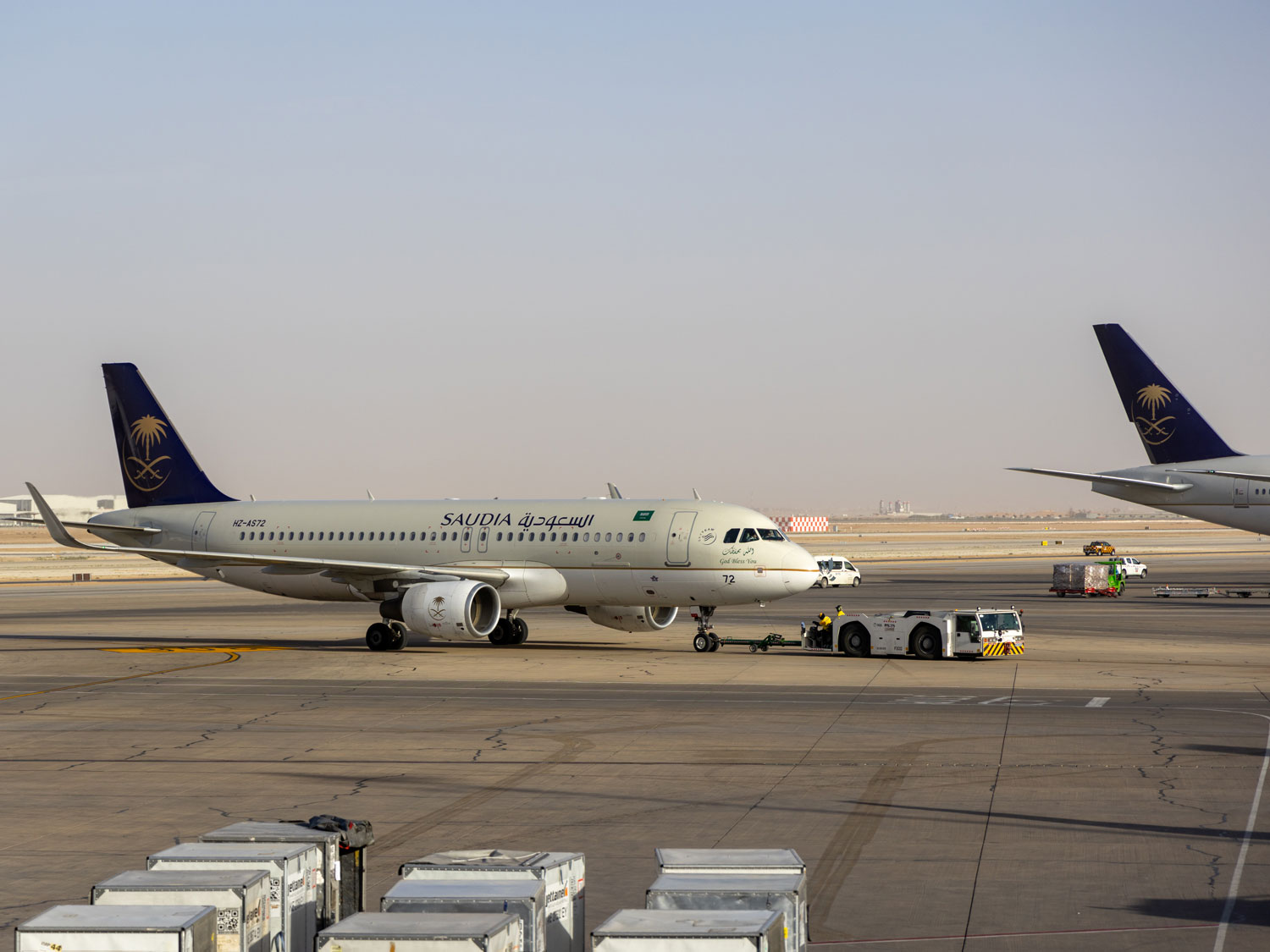
Renewed attacks on Saudi Arabian airports have introduced another source of disruption as the peak season gathers pace.
Following strikes on Riyadh's King Khalid International Airport and other Saudi facilities, airlines suspended services and authorities imposed operational restrictions.
Initial data showed Riyadh's international outbound air cargo capacity falling 34% over 24 hours, with freighter capacity particularly affected.
Further attacks prompted an extended suspension of operations at Riyadh on 12 October, while Dammam International Airport also experienced disruption.
The immediate consequences extend beyond Saudi Arabia. Airlines operating between Asia and Europe have already been adjusting their networks following wider Middle East disruption, including the loss of established intermediate stops.
Alternative routings can increase flying times, introduce payload restrictions and reduce the effective capacity available to shippers.
With peak-season demand building, prolonged restrictions could intensify competition for available space, particularly on routes connecting Asia, the Middle East and Europe.
China–Europe recovery remains uneven
While trans-Pacific demand continues to strengthen, the China–Europe market presents a different picture.
Combined air cargo volumes from mainland China and Hong Kong to Europe fell 10% year on year in September, although this represented an improvement on declines of 14% in July and 15% in August.
The downturn reflects changes to EU treatment of low-value e-commerce imports, which have affected shipments from Hong Kong and southern China.
Hong Kong–Europe tonnages remained 24% below September 2025 levels, while mainland China recorded a more modest 2% decline.
Rates have reflected this divergence, with China–Europe average prices increasing approximately 9% year on year in September, compared with a 30% increase in China–US spot rates.
The figures highlight how demand, regulation and available capacity are creating increasingly different conditions across major airfreight corridors.
Planning ahead as capacity tightens
The fourth-quarter outlook points towards sustained demand, particularly on trans-Pacific routes, with further potential for rate increases as remaining peak-season capacity is committed.
Saudi Arabian disruption adds uncertainty to an already constrained market, while higher fuel costs and shifting airline networks could affect availability and pricing across other trade lanes.
For shippers, early planning, accurate forecasts and flexibility over routing and departure dates will be increasingly important.
Metro's global airfreight network, airline relationships and experienced operational teams help customers secure capacity, assess alternative routings and respond quickly when market conditions change.
Whether managing regular shipments, urgent requirements or time-critical cargo, Metro combines international buying power with local expertise and shipment visibility to keep supply chains moving.
Contact Metro's airfreight team to review your peak-season requirements, protect critical shipments and identify the most effective options before capacity becomes constrained.