refinery

Fuel shocks across ocean, air and road freight

With the Strait of Hormuz effectively closed, crude oil can still exist within the region, but refined products, which includes marine fuel, jet fuel and diesel, can no longer move freely to key consumption markets, which has triggered a sharp divergence in pricing and availability across all modes. 

For shippers, this creates a higher cost floor, as transport fuels are no longer moving in line with crude. Marine bunker, jet fuel and diesel each have their own supply chains and crack spreads (the margin between crude and refined products), and are now behaving independently of Brent. This is driving bunker-led cost pressure in ocean, jet fuel-driven inflation in air, and diesel-driven cost escalation in road. 

Ocean freight: bunker costs reset the pricing floor

In ocean freight, bunker fuel has become the dominant cost driver. Asian fuel hubs, particularly Singapore, are experiencing significant pressure as rerouted vessels increase demand while supply remains constrained.

This has created a disconnect between traditional pricing mechanisms and real-time costs. 

Emergency bunker surcharges are being applied across major trade lanes, while standard adjustment factors lag behind market conditions and may only catch up with current fuel inflation later in the year.

The result is a structurally higher cost base, with ocean rates now reflecting fuel volatility rather than underlying demand alone. 

Air freight: jet fuel shortage tightens capacity

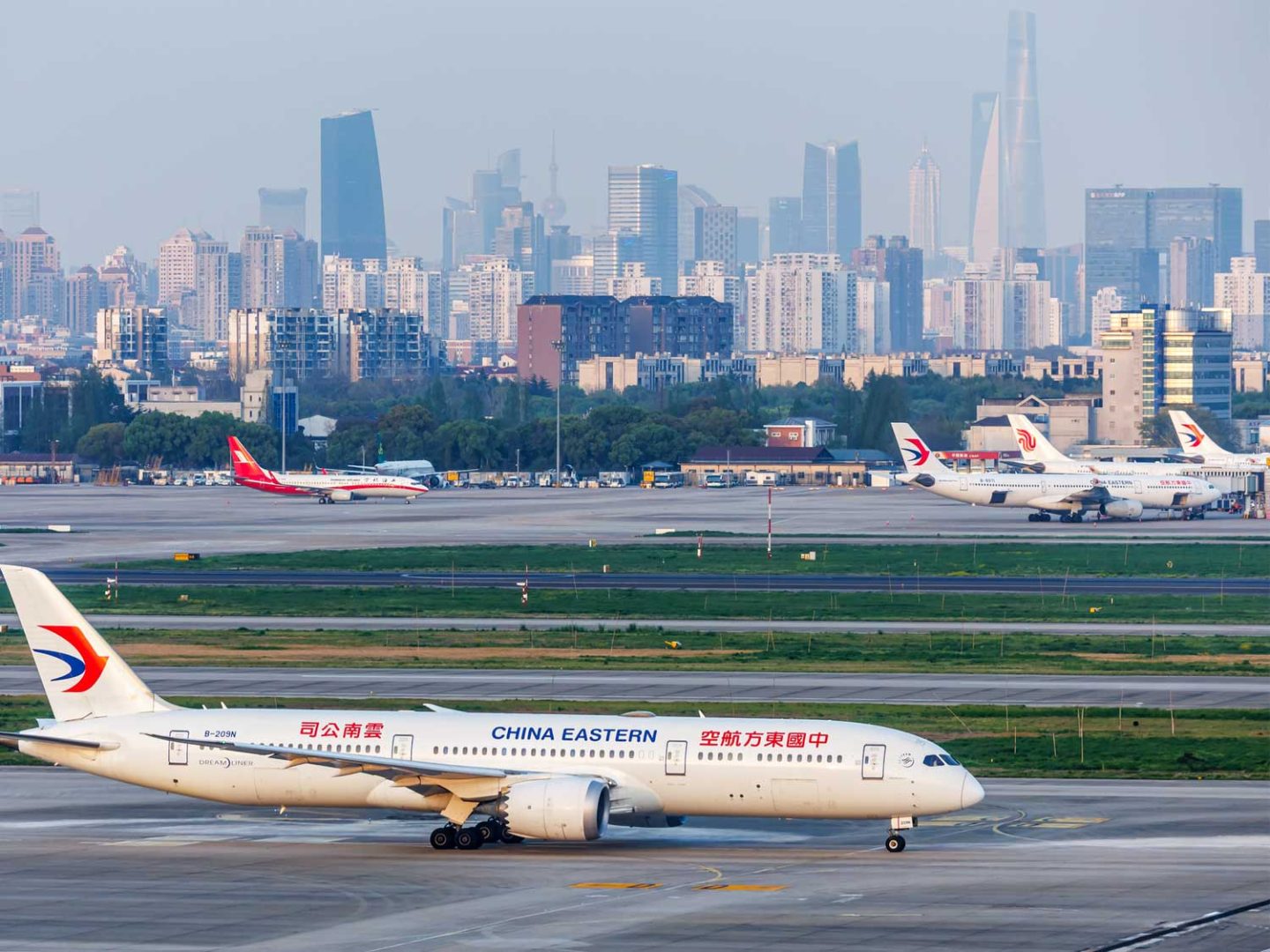
Air freight is facing the most acute fuel-driven pressure. Gulf refineries, which typically supply jet fuel to Europe and Asia, are unable to export at normal levels, creating a shortage of refined product.

This has driven a sharp increase in jet fuel prices, with crack spreads widening dramatically from around $16 per barrel pre-crisis to approximately $100 in some regions. 

This regional price divergence means that Asia and Middle East jet fuel benchmarks sit substantially above North American levels, meaning that every kilo of freight uplifted is starting from a materially higher fuel cost base. 

As a result, airlines are adjusting networks, reducing marginal capacity and prioritising fuel efficiency, tightening available uplift and sustaining elevated airfreight rates.

Road freight: diesel inflation feeds through to transport costs

Road freight is also seeing significant cost pressure, with diesel prices rising independently of crude due to refinery constraints and regional supply dynamics.

Fuel accounts for roughly 30% of total truck operating costs, meaning sustained diesel inflation is already feeding through into pricing. 

At the same time, increased reliance on overland routes across the Middle East is adding further demand pressure, compounding both cost and capacity challenges.

What this means for shippers

  • Expect fuel-driven cost volatility across all modes
  • Plan for longer and less predictable transit times
  • Build flexibility into routing and inventory strategies
  • Monitor surcharge mechanisms

Fuel disruption, routing constraints and capacity pressure are now closely linked. Managing one without the others is no longer effective.

Metro works with customers to model alternative routes, balance mode selection and manage cost exposure in real time. If you are seeing rising costs, delays or uncertainty in your supply chain, EMAIL managing director, Andrew Smith, to secure the most effective solution for your cargo.

China flag and ship

China’s maritime code overhaul reshapes legal risk for UK shippers

A significant shift in the legal framework governing global shipping comes into force on 1 May 2026, as China implements revisions to its Maritime Code. 

While the changes are designed to align with international standards, their practical effect is to strengthen Chinese jurisdiction over cargo moving through its ports.

For UK shippers, this represents a meaningful change in how contracts of carriage are interpreted and enforced. Agreements that have historically relied on English law and London arbitration may now face limitations when disputes arise in connection with Chinese ports.

At the centre of the reform is a clear principle: where cargo is loaded or discharged in China, Chinese law is likely to apply. This introduces a new layer of complexity for businesses trading with or through the region, particularly where contractual terms have not been fully aligned with the updated legal framework.

Jurisdictional shift changes how disputes may be handled

The revised code increases the likelihood that Chinese courts or arbitration bodies will take the lead in resolving cargo-related disputes. In practical terms, this means that even where contracts specify alternative governing law, those provisions may carry less weight if the shipment is linked to a Chinese port.

This is particularly relevant for bills of lading, where multiple contractual layers can exist. 

The interaction between bespoke agreements and standard shipping documents is now less predictable, raising the risk that disputes will be assessed under Chinese law rather than previously agreed terms.

For UK businesses, this alters the balance of legal certainty that has long underpinned international shipping contracts.

The revisions also introduce more defined rules around cargo claims, including how and when shippers can pursue carriers for loss or damage, particularly where bills of lading have been transferred.

While this provides clearer guidance, it also requires a deeper understanding of how claims will be handled under Chinese law. Processes, timelines and evidential requirements may differ from those typically expected under English legal frameworks, affecting how disputes are prepared and resolved.

The updated code also reflects broader changes across shipping, with new provisions addressing the use of digital transport records, placing greater emphasis on compliance and reporting standards, particularly for foreign vessels. At the same time, changes to liability rules require closer scrutiny of insurance coverage and documentation.

A potentially more complex operating environment for UK trade with China

Taken together, the reforms reinforce China’s position as a central authority in the legal framework governing its trade flows. While English law and arbitration remain relevant, their practical influence may be reduced in specific cargo-related scenarios.

The impact will vary depending on contract structure, shipment type and dispute context, but the direction is clear: greater local control and increased legal complexity for international shippers.

With the changes now imminent, shippers should:

  • Review contracts covering shipments to and from China, particularly governing law and jurisdiction clauses
  • Reassess risk allocation within shipping agreements and supporting documentation
  • Confirm insurance coverage aligns with updated liability requirements

Early action will help mitigate exposure and reduce the risk of disputes being handled under unfamiliar or less favourable terms.

Metro works with customers to review contracts, align shipping strategies and ensure compliance with evolving international frameworks. If your business trades with China,  EMAIL our Managing Director, Andrew Smith, today to protect your position and keep your supply chain moving with confidence.

Gulf of Oman 1440x1080 1

Container and RoRo flows disrupted as Gulf remains closed

The effective closure of key Gulf shipping routes has halted vessel access to major regional hubs, leaving ships anchored or diverted and forcing carriers to discharge cargo at alternative ports across Oman and the UAE.

These ports are now acting as critical stopgap gateways, but they lack the scale, infrastructure and connectivity of established hubs such as Jebel Ali. As a result, cargo flows are becoming fragmented, with increased reliance on transhipment and secondary routing options.

This disruption is also impacting automotive supply chains. As of 30 March, 15 deep-sea pure car and truck carriers (PCTCs) remain locked in the Persian Gulf, including vessels linked to major Asian operators. Prior to the escalation, more than two dozen PCTCs were calling Gulf ports weekly, underlining the scale of capacity now removed from the market.

Although the number of vessels directly affected is relatively limited, the impact is amplified by the volume of vehicles already loaded and destined for the region. With transit through the Strait of Hormuz effectively closed, operators are holding cargo on board, returning vessels to origin in Asia, or discharging at alternative locations.

East Africa is emerging as a temporary relief valve, with ports such as Lamu receiving diverted RoRo volumes. Thousands of CEUs are now being held in storage, awaiting clarity on onward routing, further extending lead times and tying up equipment.

At the same time, longer-term routing options remain constrained. Potential alternatives via Red Sea gateways such as Jeddah or Aqaba face their own limitations, particularly as ongoing security concerns continue to divert Asia–Europe RoRo traffic around the Cape of Good Hope.

Pressure is already building across container flows. Congestion is rising at substitute ports, while markets such as Western India are beginning to experience delays as they absorb displaced volumes. Although global trade lanes outside the region remain broadly stable, rerouting activity is increasing and reshaping network dynamics.

A drone strike on the Salalah container terminal on 28 March further exposed the fragility of these alternative networks. The incident forced a temporary closure of one of the region’s key transhipment hubs, disrupting operations at a critical access point for Gulf-bound cargo. While the port reopened three days later, operational constraints are expected to continue, limiting throughput and extending delays.

Equipment imbalances, cargo restrictions and congestion

Beyond routing disruption, structural pressure is building within the ocean freight system. Equipment availability is becoming increasingly uneven as flows are disrupted, with empty container shortages emerging in certain markets.

At the same time, cargo handling restrictions are tightening. Metro is seeing direct evidence across Oman and other regional ports that hazardous containers are no longer being accepted, regardless of classification. Units already on terminal are being required to move off port as a priority.

However, with no viable repatriation hubs available within the region, options are extremely limited. In many cases, hazardous containers must be redirected back to origin or moved to upstream ports outside the affected area, adding cost, delay and operational complexity.

Port congestion remains a persistent constraint. Around 3 million TEU of global capacity is currently tied up in port delays, highlighting the gap between theoretical vessel capacity and the reality of moving cargo through constrained infrastructure.

Even where vessel space exists, operational limitations at ports are restricting throughput. Alternative ports are not configured to handle sustained high-volume flows, while feeder networks and regional services are being adjusted to accommodate changing conditions.

The disruption is also creating wider scheduling challenges, with sailings being rerouted and transit times becoming less predictable as carriers respond to evolving constraints.

Pressure building, with risk of spillover across modes

For now, the global impact remains more contained than previous crises, with major east–west trade lanes continuing to operate. However, underlying pressure is increasing, and the longer disruption persists, the greater the risk of wider spillover across both container and RoRo networks.

Rerouting is becoming more widespread, congestion is building at key alternative gateways and equipment imbalances are beginning to take hold. At the same time, rising oil prices are feeding into bunker costs, adding a further layer of cost pressure across all trades.

The key variable remains duration. If disruption continues, today’s regional challenges are likely to extend into broader network instability, affecting schedule reliability, transit times and overall supply chain predictability across multiple cargo types.

For shippers and other supply chain participants, the focus is shifting towards maintaining flexibility, securing capacity early and planning for multiple routing scenarios as conditions evolve.

Maintain flow across container and automotive supply chains

Metro is helping customers minimise disruption across containerised and automotive supply chains with practical, experience-led solutions.

With secure vessel capacity, alternative discharge strategies and flexible routing options, Metro keeps cargo moving as networks shift, including complex RoRo diversions and delayed vehicle flows.

Metro’s on-the-ground insight into operational constraints, including hazardous cargo restrictions and port-specific limitations, enables early intervention and reduces the risk of costly delays, diversions or cargo being stranded.

Through MVT, customers gain real-time visibility of shipments, congestion and routing options, enabling faster, data-led decisions across both container and automotive movements.

To review your current ocean or automotive supply chain exposure, hazardous cargo options or contingency plans, EMAIL Andrew Smith, Managing Director.

Trucks Middle East

Middle East overland networks under strain

Overland transport across the Middle East has moved from a contingency option to a critical component of regional supply chains, as disruption to ocean and air networks forces cargo onto road-based alternatives. The result is a rapidly tightening environment, where capacity, infrastructure and cross-border processes are all under increasing pressure.

With ocean access into the Gulf restricted, containers are being discharged at ports outside the region and redirected inland via road networks. Oman, alongside locations such as Khor Fakkan, Sohar and Jeddah, has become a central staging point for cargo moving into Gulf Cooperation Council (GCC) markets.

In practice, this means cargo originally destined for major hubs such as Jebel Ali or Hamad is now entering the region through a variety of entry points, with no standardised routing approach. As a result, overland transport is playing a far greater role in bridging gaps between discharge locations and final delivery points.

However, the infrastructure supporting this shift was not designed for sustained, high-volume container flows over long distances, and pressure is building quickly.

Trucking capacity shortages and border constraints

The rapid increase in inland volumes is exposing structural limitations across regional road networks. Trucking capacity is tightening across key corridors linking Oman, Fujairah and Saudi Arabia, with shortages extending transit times and delaying cargo recovery.

Congestion is intensifying at key nodes. In some locations, terminals are operating at full capacity, with vessel queues and dwell times extending beyond 10 days, while long truck queues are forming as cargo competes for onward movement.

At the same time, cross-border complexity is increasing. Driver availability is constrained by visa processing delays, with queues extending for hours and reducing the number of journeys each vehicle can complete. Additional restrictions on driver nationality are further limiting capacity on certain routes.

Operational constraints are also emerging at a regulatory level. Cross-border trucking is not always seamless, with limitations on where vehicles can operate and additional charges being introduced in some markets, increasing both cost and administrative complexity.

As a result, transit times are becoming less predictable and costs are rising sharply. In extreme cases, urgent shipments have seen trucking rates escalate significantly above typical market levels, reflecting both scarcity of capacity and the urgency of demand.

The weekend drone strike on the Port of Salalah has highlighted how exposed overland networks are to disruption at key staging points. The temporary closure of the terminal interrupted a critical gateway for cargo being discharged and moved inland to Gulf markets.

Although operations are set to resume from Tuesday 31st March, constraints are expected to continue, limiting throughput and adding further pressure to already congested road corridors.

Overland not scalable at current volumes

As disruption continues, overland transport is becoming a core part of regional supply chains rather than a temporary workaround. Road, rail and multimodal solutions are being deployed extensively to maintain flow into the Gulf, supported by a growing network of alternative corridors.

However, these solutions are not scalable at the level required to fully replace traditional ocean routes. Capacity limitations, border delays and infrastructure constraints are creating a bottleneck that is likely to persist as long as disruption continues.

For shippers, the challenge is operational as much as strategic — managing cargo already in transit, navigating changing routing decisions and securing inland capacity in a highly constrained environment.

Keep cargo moving with integrated solutions

By combining regional expertise and coverage with established multimodal networks, Metro is coordinating road, air-road and alternative routing strategies to bridge gaps created by disrupted ocean and air services.

Metro works proactively to secure trucking capacity, manage cross-border movements and identify the most effective corridors based on real-time conditions, reducing delays and maintaining control in a highly fluid environment.

With full visibility through the MVT platform, customers can track cargo across inland networks, monitor congestion and adapt quickly as routes and constraints evolve.

If your cargo is impacted or at risk of delay, EMAIL Andrew Smith, Managing Director, to secure capacity and define a clear route forward.