Bangladesh label

Foreign currency block sees airlines cut Bangladesh services

Leading garment manufacturer, Bangladesh, has withheld over USD $200 million of airline funds for repatriation, reportedly using the funds to shore up its depleted treasuries, leading foreign airlines to scale back their services and discouraging new market entrants.

The International Air Transport Association warned last month that the amount of airline funds for repatriation being blocked by governments has risen by over 25% in the last six months to USD $2 billion. 

Over 27 countries and territories are blocking funds from repatriation, the IATA said, with Nigeria topping, followed by Pakistan and Bangladesh coming in third position.

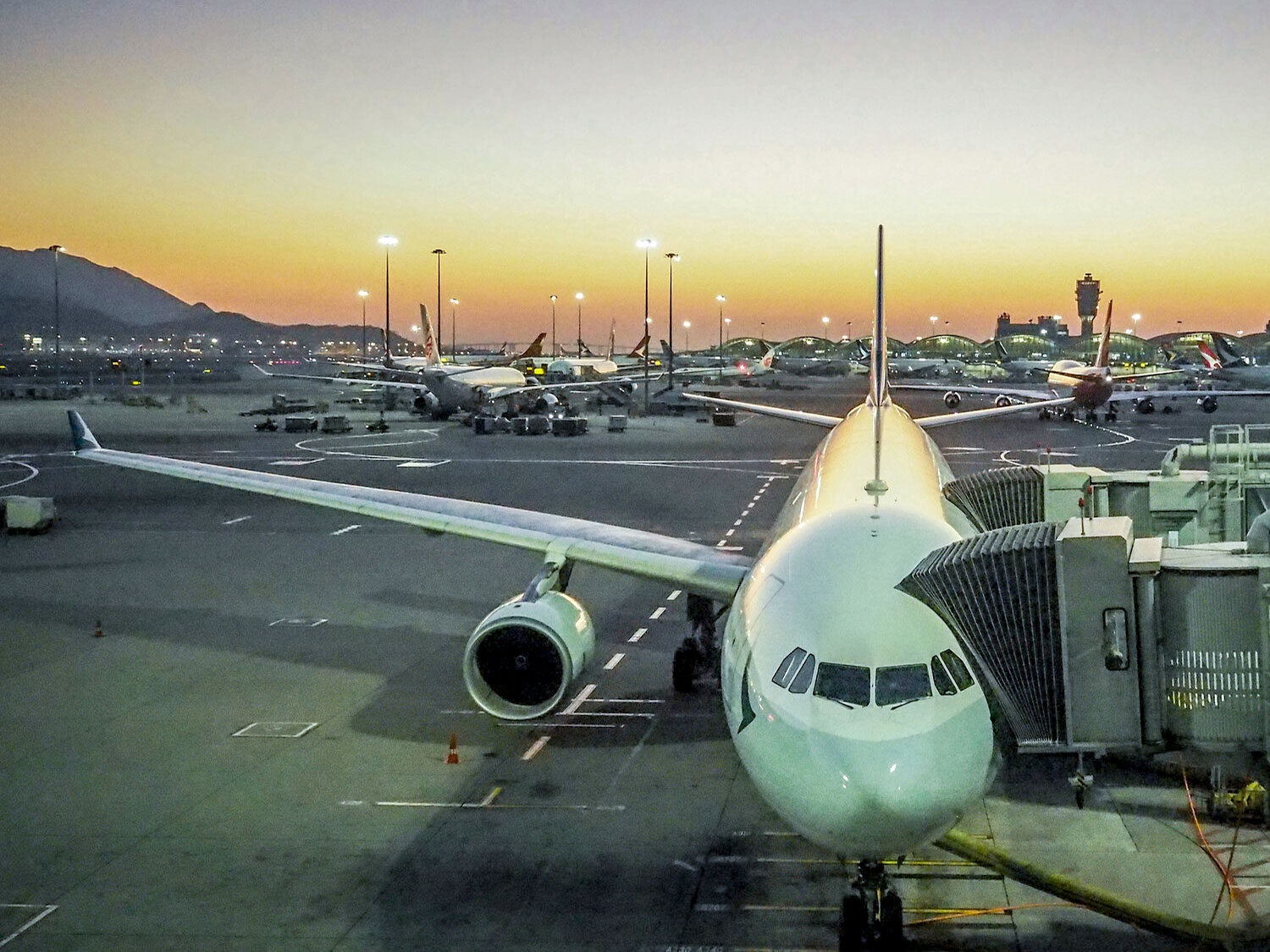
By the middle of 2022, Bangladesh’s Hazrat Shahjalal International Airport, in the capital Dhaka, was operating 140 international flights daily, on average.

Turkish Airlines usually operates 14 flights weekly in Bangladesh, but has been operating only seven flights a week since November as it cannot remit around USD $24 million and most other foreign airlines including Malindo Air, Kuwait Airways, and Cathay Pacific face the same issue and have slashed their flight frequencies to and from Bangladesh.

Fund repatriation by foreign airlines operating in Bangladesh has remained suspended since March 2022, with IATA calling on governments to remove barriers to airlines repatriating their revenues, in line with international agreements and treaty obligations.

Moreover, carriers are having to pay for refuelling their aircraft in Bangladesh by bringing in dollars through inward remittances, having been asked to pay it in dollars several years ago.

The country’s tourist trade body has predicted that the number of flights by foreign airlines from Bangladesh may decrease by 60% in the next six months to one year.

Around 80-90 international flights currently operate from Dhaka airport each day, equivalent to a 40% drop on last year.

Willie Walsh, Director General of IATA said, "No business can sustain providing service if they cannot get paid and this is no different for airlines…and it is critical for any economy to remain globally connected to markets and supply chains.”   
 
IATA continues to monitor the situation very closely and is engaging with the Bank of Bangladesh. It urged the countries' governments to quickly release all outstanding funds of the airlines to avoid disruptions in the smooth flow of passengers and goods into their economies.

There will be more to feature and share on this subject over 2023 and we will continue to keep you updated with the latest development in any country that you are trading with globally. Unfortunately the situation is not unique to Bangladesh in relation to economies running out of foreign exchange and the impact is likely to increase globally with fallout across the supply chain, regardless of the mode.

Despite the challenges, we continue to get our customers’ shipments lifted from Bangladesh. We work closely with our local partners to monitor the situation, market capacity and new service opportunities that might benefit our customers, such as placing shipments through alternative gateway airports in India or Singapore with a land-bridge or ocean first leg connection.

Evaluating and booking space on viable services early, including cross-modal and cross-border solutions, is a critical factor in achieving our customers’ deadlines. 

EMAIL Elliot Carlie to review our time-sensitive solutions for your Bangladesh and Asia shipments. 

Qatar unloading

In a challenging air freight market it’s time to remember the basics

With factories closing across China, ahead of Sunday’s start of the Lunar new year holidays, air freight demand on major routes has continued to decline, prompting our commercial team to remind their colleagues what makes Metro’s air freight product stand out from the crowd.

With air freight rates now significantly below 2021 levels, the market is normalising and means that time-sensitive shippers could benefit from some significant opportunities on the most popular trade-lanes…the perfect time to highlight our air freight and time-sensitive credentials!

One of the UK’s leading logistics exporters by air, Metro are recognised as an award winning innovator for air cargo, with strategic relationships at regional airport hubs, including Heathrow, Birmingham and Manchester.

Freight

We ensure that your cargo always arrives on time, at the lowest cost, by using the optimum blend of carriers, service and transit time. Always ensuring that you have the right balance of expected transit and cost and every option available in a turbulent time-critical market.

Charter

We leverage our long-standing carrier relationships, or as we prefer to consider them partnerships, to secure and position cost-effective charter aircraft for urgent cargo and project shipment needs.

Courier

We have access to the most competitive integrator rates and services for valuable consignments and samples, with solutions for the most urgent requirements.

Our team

We share a sense of urgency and attention to detail, anticipating issues and preventing them from happening, or working around them whatever the challenge – we have our finger on the daily aviation pulse. We communicate openly with each other, customers, partners and carriers. Together we are committed to continuous improvement. Optimising every movement and ensuring deadlines are met – in fact that will always be one of our first questions – what delivery date is required?

We operate regular inbound and outbound consolidation services and work with leading global carriers, together with selected regional carriers, and where needed our own dedicated charter flights. Total control.

By integrating carrier schedules, we offer the widest choice of routes, transit and services, to provide the most cost-effective solutions for every need, from next flight out to time-definite and economy.

Key products

We are dangerous goods specialists, for all hazard types and are particularly skilled in the safe handling and transportation of Lithium Batteries.

Our team offer European cross-trade solutions, that complement export and import services. We cover the world with our network – the majority of the air freight movements we carry do not originate or are destined for UK/ Europe.

When market conditions are favourable our Sea/Air solutions via our dedicated Singapore and Dubai hubs are the most cost-effective, reliable, secure and flexible solution available in the market.

We handle all types of cargo, door-to-door, dealing with paperwork and arranging customs clearance anywhere in the world, for a wide range of verticals including garments, food and beverage products, retail consumer goods, automotive and chemicals. 

Shipments move directly from origin to destination, or on cross-trade routes embracing Europe | USA | ISC | SE Asia | China | Latin America. We always provide every option available as standard, to and from every destination globally.

For further details on our time critical movements, air freight products or ‘distressed ocean freight’ please contact Elliot Carlile who will talk you through the current week's solutions, or long term contracted fixed validity rates, that we can deliver throughout 2023. Listening to the requirements, designing and creating solutions is what Elliot thrives on, with his team of cargo aviation experts – proven and proactive.

Grant Liddell left Arturo Marte right

Air France and KLM sign inaugural environmental deal with Metro

Metro is the first of the airlines’ customers in the United Kingdom to invest in their joint, innovative Sustainable Aviation Fuel (SAF) programme, confirming our shared ambition to contribute to the development of reduced greenhouse gases within the aviation logistics sector. 

(Pictured above are Grant Liddell (left), Metro's managing director and Arturo Marte (right), cargo director, Air France KLM Martinair Cargo.jpg

Metro has already made its head office operations carbon-neutral and is committed to extending this zero-emission strategy as far down customers’ supply chains as possible, which is why we have become the first forwarder to join the Air France KLM Martinair Cargo (AFKLMP Cargo) SAF programme and invest in sustainable aviation fuel.

IATA member airlines and the wider aviation freight industry are collectively committed to making flying net zero by 2050 and Sustainable Aviation Fuel (SAF), which was first flown on a commercial flight by KLM in 2011, and has been identified as one of the key elements in helping achieve this goal.

Aviation biofuels are produced from plant sources, waste oils, solid biomass, or from synthetic biology and can lower CO2 emissions by up to 98% compared to conventional jet fuel.

Arturo Marte, cargo director, Air France KLM Martinair Cargo said. “I’m pleased to welcome Metro as our first UK customer to join our Sustainable Aviation Programme and helping us raise awareness in our industry.”

Grant Liddell, Metro’s managing director. "We are proud to be partnered with Air France KLM Martinair Cargo and take this collaborative approach directly with the airline.”

“Air France and KLM have been pioneering SAF since 2009, but it is still a pioneering technology and Metro’s participation in the AFKLMP programme will help fund the research and development, which can increase production and make SAF available in greater quantities and in more locations.”

“Although it is currently early in the switch to full SAF on cargo flights, this will gather pace over the coming years, and we are already promoting the benefit in greenhouse gas reductions to our customers that are using time-critical modes across the industry." 

The signing ceremony took place at Metro’s head office in Birmingham, with officials from both companies attending, including Arturo Marte, cargo director for the United Kingdom & Ireland at Air France KLM Martinair Cargo, and Grant Liddell, managing director of Metro. 

The same toolkit we use to measure, reporting and offset our emissions, to achieve carbon neutrality, is available ‘free of charge’ to our customers.

Part of our MVT supply chain platform, the ECO module monitors the energy emissions, emission costs and CO2 equivalent emissions, of customers’ consignments, by every mode. 

Reports and key eco statistics related to their movements, allow them to see which areas will benefit most from emissions offsetting and where efforts can have the most impact.

To request a demo or discuss your requirements, please contact Simon George, who can outline our proven carbon reduction strategies and the availability of offset projects.

FXT at dawn

December 2022; Freight market summary review

As freight prices on every mode return to relative stability and the worst effects of inflation work though, the market is expected to rebalance, achieve ‘correction’ and ultimately recover with slow growth in 2023.

The spiking freight rates on all modes are falling away and, taking inflation into account, the global freight market is expected to grow over 27% this year, though that figure falls to -2.4%, when inflation is removed, reflecting the falling volumes and demand slumps.

AIR

More shippers and particularly those that switched modes, when vessel operating performance fell to historic lows, are busily switching back to sea freight, as ocean congestion ends and container freight rates recede towards pre-pandemic levels.

The stabilisation of sea freight rates and improvements in vessel schedule reliability is encouraging some shippers to move cargo between airplanes and ocean containers, and especially users of our supply chain management MVT platform.

With MVT it is easy to amend purchase orders and be agile in switching complete or partial orders from ships to planes, or vice versa, if SKU sales velocity change.

Despite rates on many routes continuing to soften, shippers are unlikely to delay booking and securing airfreight capacity, to wait and see how the market fares, because from an operational point of view, this would mean an enormous risk, if any market changes restricted capacity. 

Time critical movements of cargo will always be necessary and unforeseen market dynamics will undoubtedly occur resulting in demand for air freight, whether through production delays or logistics interruption – history dictates that there will always be a necessity for airfreight, and usually at very short notice as world events continue to change, sometimes dramatically.

SEA

Freight rates have continued their decline with the market struggling to keep up and the carriers resorting to ever more drastic blanking programmes, to slow the price slide, or other tactics including cancellation of whole services or suspending vessel departures entirely – which is becoming more prevalent on many major routes.

The Asia-Europe trade remains under pressure with falling spot rates, a generally soft trading environment and no sign of the market bottoming out. Although contract rates for 2023 fixed validity and capacity assurance are hardening and increasing for the longer term situation in 2023 as carriers look to recover control of the current demand slump and balance supply to match.

Carriers are expected to announce more blank sailings/ cancellations as they seek to reduce the supply equation in their favour and while residual congestion is still impacting parts of Europe and the Americas, hopes are rising in China as the government finally begin to relax their absolute zero-COVID restrictions. Although they do still remain in a toned down form.

With transpacific volumes declining, rates have been falling, with west coast spot rates reaching something approaching pre-pandemic levels (it was only 12 months ago that rate levels on the spot market were at $20,000 per FFE) and while east coast rates have dropped, some capacity has been tied up in the continuing Savannah congestion and at other ports.

Transatlantic rates are starting to soften, particularly to Europe and while there is no change to capacity expected through the end of 2022, the expected fall in volumes is reducing port congestion and vessel waiting times on both coasts.

After what seems like an eternity most ports are finally turning vessels around on schedule, although times are still tight in Savannah, Houston, Oakland and Vancouver.

ROAD

European road freight rates hit an all-time high in 2022 as rising cost pressures, supply and capacity disruptions, regulatory change and the conflict in Ukraine created a potent mix of rate influenced drivers, but are beginning to reduce after Q3 peak.

Europe’s domestic road freight market is projected to grow by just 0.7% in real terms, while the European international road freight market is projected to grow by 2.1% in 2023.

A key driver behind the stronger performance of the international section might be retail and e-commerce sales which stimulate more cross-border flows of consumer goods.

Shortages of raw materials and intermediate products, together with weakening demand and energy shortages are clouding the outlook for the manufacturing sector in Europe,

Soaring diesel prices appear to have been subdued for now in the UK and the most recent EU data shows that the average weekly diesel prices in Q3 have fallen by 1.7% quarter-on-quarter. Although still incredibly high in reality and this could change very quickly from some of the consequences of global activity and the geopolitical landscape.

This represents at the very least a stabilisation of prices across the UK and Europe, with the momentum at the end of the last quarter appearing to be downward. However as widely reported in the trade, national and international press the UK, in particular, is still seeing issues with European trade levels and supply chain demand and supply availability.

Despite the ongoing challenges, we continue to find cost-effective international transport solutions, by every mode for every shipment, including urgent and time-sensitive cargo.

Please contact the below to learn more, or to discuss any of the issues covered in this market report.

SEA - Andrew.Smith@metroshipping.co.uk

AIR - Elliot.Carlile@metroshipping.co.uk

OVERLAND - Simon.Balfe@metroshipping.co.uk

Metro are here to assist with your decision making and planning for 2023 logistics strategy and options available. We are at the forefront of the market globally and will ensure you are best positioned to succeed in 2023. Please contact us – we encourage proactive knowledge based intelligence sharing and will always deliver on your expectations.