Hormuz satellite

Middle East disruption continues as Metro scales contingency solutions

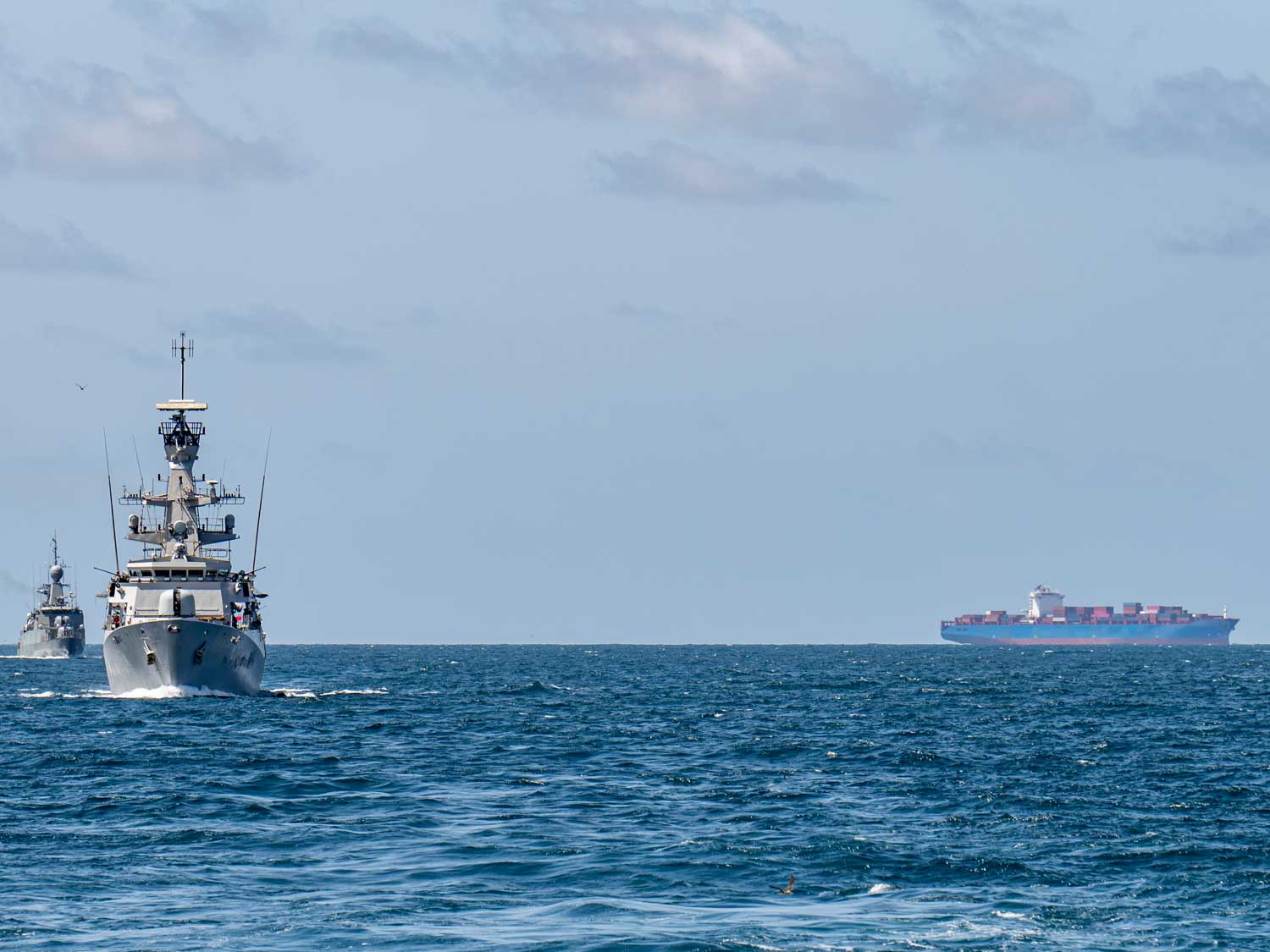
The extension of the US–Iran ceasefire has done little to stabilise operating conditions in the region, with last week’s seizure of two MSC-managed container vessels by Iran’s Islamic Revolutionary Guard Corps in the Strait of Hormuz. 

The incident highlight the ongoing risk to commercial shipping and reinforces the reality that access through Hormuz remains severely constrained, with container flows through the Strait largely suspended.

Land-bridge solutions under pressure as demand surges

As traditional shipping routes have been disrupted, supply chains have shifted rapidly towards alternative solutions, particularly land-bridge routes across the Gulf.

However, these corridors are now under significant strain. Demand for trucking capacity has surged well beyond available supply, with rates on key lanes such as Jeddah to the UAE rising four to five times above pre-conflict levels.

Jeddah has become the primary gateway following security concerns at Khor Fakkan and Salalah, concentrating volumes into a single entry point and creating further bottlenecks. In some cases, demand for road capacity has reached multiples of available supply, driving sharp price escalation and limiting flexibility for shippers.

Operational disruption now outweighs capacity availability

One of the defining characteristics of the current market is that disruption is being driven less by a lack of physical assets and more by how networks are operating.

Ocean carriers are navigating around both the Red Sea and Hormuz, adding 15–20% to voyage distances, increasing fuel consumption and reducing effective capacity. At the same time, global port congestion has exceeded 3 million TEU, further impacting reliability. 

Airfreight networks are also adjusting to restricted airspace and reduced Gulf capacity, while road freight is absorbing increased volumes through regional corridors, adding complexity and extending transit times.

The result is a market where capacity exists, but is harder to access, less predictable and more expensive to deploy.

Pricing volatility accelerates as fuel and disruption outpace contracts

Freight pricing is struggling to keep pace with the speed of change.

Across ocean freight, emergency bunker surcharges are now widely applied, while traditional fuel adjustment mechanisms lag behind real-time cost increases. In airfreight, fuel surcharges are being revised more frequently as jet fuel prices continue to rise. In road freight, fuels costs typically represent over 30% of operator costs, placing short-term pressure on carriers and increasing the likelihood of further cost pass-through. 

The situation is further complicated by simultaneous pressure across multiple global chokepoints.

Disruption linked to the Strait of Hormuz is occurring alongside continued Red Sea instability and wider geopolitical friction across key corridors. This has created a structurally higher-risk operating environment, where any escalation can quickly remove capacity, extend transit times and increase costs across all modes. 

Scaling solutions to maintain cargo flow

In response, Metro has significantly increased its operational focus on the region, with time dedicated to resolving Middle East-linked problems rising by more than 1000%.

The focus is on execution: ensuring cargo continues to move and that shipments already in transit are delivered using the most effective available solution.

Metro is actively supporting customers through:

  • Dynamic re-routing of in-transit cargo, avoiding disruption hotspots
  • Alternative gateway strategies, identifying viable entry points outside high-risk zones
  • Airfreight deployment, where speed and reliability are critical
  • Land-bridge and multimodal solutions, maintaining flow where ocean routes are constrained

This flexible, hands-on approach is essential in a market where conditions are changing rapidly and pre-planned routes are no longer sufficient.

If you have cargo moving to, from or through the Middle East, or shipments currently held en route, Metro can help you identify and implement the most effective resolutions.

EMAIL Managing Director, Andrew Smith, today to secure capacity, protect transit times and keep your supply chain moving in a rapidly changing environment.

refinery

Fuel shocks across ocean, air and road freight

With the Strait of Hormuz effectively closed, crude oil can still exist within the region, but refined products, which includes marine fuel, jet fuel and diesel, can no longer move freely to key consumption markets, which has triggered a sharp divergence in pricing and availability across all modes. 

For shippers, this creates a higher cost floor, as transport fuels are no longer moving in line with crude. Marine bunker, jet fuel and diesel each have their own supply chains and crack spreads (the margin between crude and refined products), and are now behaving independently of Brent. This is driving bunker-led cost pressure in ocean, jet fuel-driven inflation in air, and diesel-driven cost escalation in road. 

Ocean freight: bunker costs reset the pricing floor

In ocean freight, bunker fuel has become the dominant cost driver. Asian fuel hubs, particularly Singapore, are experiencing significant pressure as rerouted vessels increase demand while supply remains constrained.

This has created a disconnect between traditional pricing mechanisms and real-time costs. 

Emergency bunker surcharges are being applied across major trade lanes, while standard adjustment factors lag behind market conditions and may only catch up with current fuel inflation later in the year.

The result is a structurally higher cost base, with ocean rates now reflecting fuel volatility rather than underlying demand alone. 

Air freight: jet fuel shortage tightens capacity

Air freight is facing the most acute fuel-driven pressure. Gulf refineries, which typically supply jet fuel to Europe and Asia, are unable to export at normal levels, creating a shortage of refined product.

This has driven a sharp increase in jet fuel prices, with crack spreads widening dramatically from around $16 per barrel pre-crisis to approximately $100 in some regions. 

This regional price divergence means that Asia and Middle East jet fuel benchmarks sit substantially above North American levels, meaning that every kilo of freight uplifted is starting from a materially higher fuel cost base. 

As a result, airlines are adjusting networks, reducing marginal capacity and prioritising fuel efficiency, tightening available uplift and sustaining elevated airfreight rates.

Road freight: diesel inflation feeds through to transport costs

Road freight is also seeing significant cost pressure, with diesel prices rising independently of crude due to refinery constraints and regional supply dynamics.

Fuel accounts for roughly 30% of total truck operating costs, meaning sustained diesel inflation is already feeding through into pricing. 

At the same time, increased reliance on overland routes across the Middle East is adding further demand pressure, compounding both cost and capacity challenges.

What this means for shippers

  • Expect fuel-driven cost volatility across all modes
  • Plan for longer and less predictable transit times
  • Build flexibility into routing and inventory strategies
  • Monitor surcharge mechanisms

Fuel disruption, routing constraints and capacity pressure are now closely linked. Managing one without the others is no longer effective.

Metro works with customers to model alternative routes, balance mode selection and manage cost exposure in real time. If you are seeing rising costs, delays or uncertainty in your supply chain, EMAIL managing director, Andrew Smith, to secure the most effective solution for your cargo.

Truck in Switzerland

A tougher European road market and a UK edging back towards it

For years, the road freight market has been under sustained pressure, shaped by a combination of post-Brexit structural change, rising costs and geopolitical disruption. 

At the same time, there are early signs that the UK may begin to move closer to Europe in practical, trade-focused ways, in a shift that could have meaningful implications for cross-border logistics.

For now, however, the market remains challenging.

Since Brexit, UK–EU road freight has been defined by increased friction. New customs processes, regulatory checks and border systems have added cost, complexity and delay, particularly for groupage and mixed loads.

The impact is clear in the data. Road freight volumes are estimated to be down by over 10% since Brexit, reflecting weaker trade flows and reduced demand. UK exports to the EU have also taken a structural hit, with studies pointing to a decline of around 16%.

At the same time, the number of operators has fallen sharply. Between 2021 and 2025, 2,051 UK road haulage companies became insolvent, which is almost double the 1,068 recorded in the previous five-year period. That equates to nearly eight hauliers exiting the market every week.

This combination of lower volumes and higher costs has fundamentally reshaped the sector. Capacity has tightened, margins have come under pressure, and the market has consolidated around stronger, more resilient operators.

Rising costs and the impact of the Iran war

The Iran conflict has added a new layer of pressure at a time when the sector was only just stabilising. Fuel costs, which can account for up to 30% of operating expenses, have risen sharply, with industry bodies warning this represents a structural shift rather than a temporary spike.

Across Europe, operators are now dealing with sustained fuel volatility, tightening supply and increasing financial strain. The knock-on effects are being felt across the entire road freight ecosystem, from pricing and capacity to investment decisions and fleet utilisation.

At the same time, additional cost pressures continue to build. Driver shortages remain unresolved, pushing up wages and limiting flexibility. New tolling regimes are increasing the cost of operating across key European markets. Regulatory changes, including evolving border systems on both sides of the Channel, are adding further administrative burden.

This is not just a UK issue. Across Europe, the road freight market remains fragile, with growth limited to just 0.5%, with many key markets recording declines.

The short-term outlook is closely tied to energy markets, geopolitical developments and spiking fuel costs. In this environment, many operators are focused on protecting margins and maintaining utilisation rather than expanding. Investment is being delayed, networks are being rationalised, and risk appetite remains low.

Signs of a closer UK–EU relationship

Against this backdrop, there are early signs of a shift in the UK–EU relationship. As the Trade and Cooperation Agreement comes up for review, both sides are exploring ways to reduce friction and improve trade flows.

Potential developments include veterinary and SPS agreements to streamline border checks, deeper customs cooperation and more structured alignment on energy and climate policy. For road freight, these are not abstract political discussions, they directly influence transit times, costs and reliability.

Even incremental improvements could have a meaningful impact, helping restore confidence, support volume recovery and reduce operational complexity.

Metro’s European division bucks the trend

While much of the market is under pressure, Metro’s European road freight division is moving in the opposite direction.

The division has been growing at 40% per year, making it Metro’s fastest-growing business unit. This performance stands in sharp contrast to the wider market, where volumes are flat or declining and operators are exiting the sector.

This growth has been driven by a clear and deliberate strategy. Metro has invested in building a strong European network, with high-quality groupage services into key markets including the Netherlands, Turkey, Poland and Iberia, alongside established strengths in France and Germany.

The business offers a balanced mix of less-than-truckload (LTL) and full-truckload (FTL) solutions, with a range of equipment, security and service options, giving customers flexibility as demand patterns shift. Crucially, the focus is on tailored, customer-led solutions, adapting routing, transit times and documentation processes to meet specific requirements.

In a more complex post-Brexit environment, this approach is proving highly effective. Rather than avoiding complexity, Metro is helping customers navigate it, smoothing customs processes, reducing risk and maintaining flow across European supply chains.

As the European road freight landscape continues to evolve, Metro provides the expertise, network strength and proactive approach needed to keep goods moving. Helping customers manage complexity, control cost and unlock opportunity across UK–EU trade. 

EMAIL our Managing Director Andy Smith to learn how we can secure your European supply chains.

Trucks Middle East

Middle East overland networks under strain

Overland transport across the Middle East has moved from a contingency option to a critical component of regional supply chains, as disruption to ocean and air networks forces cargo onto road-based alternatives. The result is a rapidly tightening environment, where capacity, infrastructure and cross-border processes are all under increasing pressure.

With ocean access into the Gulf restricted, containers are being discharged at ports outside the region and redirected inland via road networks. Oman, alongside locations such as Khor Fakkan, Sohar and Jeddah, has become a central staging point for cargo moving into Gulf Cooperation Council (GCC) markets.

In practice, this means cargo originally destined for major hubs such as Jebel Ali or Hamad is now entering the region through a variety of entry points, with no standardised routing approach. As a result, overland transport is playing a far greater role in bridging gaps between discharge locations and final delivery points.

However, the infrastructure supporting this shift was not designed for sustained, high-volume container flows over long distances, and pressure is building quickly.

Trucking capacity shortages and border constraints

The rapid increase in inland volumes is exposing structural limitations across regional road networks. Trucking capacity is tightening across key corridors linking Oman, Fujairah and Saudi Arabia, with shortages extending transit times and delaying cargo recovery.

Congestion is intensifying at key nodes. In some locations, terminals are operating at full capacity, with vessel queues and dwell times extending beyond 10 days, while long truck queues are forming as cargo competes for onward movement.

At the same time, cross-border complexity is increasing. Driver availability is constrained by visa processing delays, with queues extending for hours and reducing the number of journeys each vehicle can complete. Additional restrictions on driver nationality are further limiting capacity on certain routes.

Operational constraints are also emerging at a regulatory level. Cross-border trucking is not always seamless, with limitations on where vehicles can operate and additional charges being introduced in some markets, increasing both cost and administrative complexity.

As a result, transit times are becoming less predictable and costs are rising sharply. In extreme cases, urgent shipments have seen trucking rates escalate significantly above typical market levels, reflecting both scarcity of capacity and the urgency of demand.

The weekend drone strike on the Port of Salalah has highlighted how exposed overland networks are to disruption at key staging points. The temporary closure of the terminal interrupted a critical gateway for cargo being discharged and moved inland to Gulf markets.

Although operations are set to resume from Tuesday 31st March, constraints are expected to continue, limiting throughput and adding further pressure to already congested road corridors.

Overland not scalable at current volumes

As disruption continues, overland transport is becoming a core part of regional supply chains rather than a temporary workaround. Road, rail and multimodal solutions are being deployed extensively to maintain flow into the Gulf, supported by a growing network of alternative corridors.

However, these solutions are not scalable at the level required to fully replace traditional ocean routes. Capacity limitations, border delays and infrastructure constraints are creating a bottleneck that is likely to persist as long as disruption continues.

For shippers, the challenge is operational as much as strategic — managing cargo already in transit, navigating changing routing decisions and securing inland capacity in a highly constrained environment.

Keep cargo moving with integrated solutions

By combining regional expertise and coverage with established multimodal networks, Metro is coordinating road, air-road and alternative routing strategies to bridge gaps created by disrupted ocean and air services.

Metro works proactively to secure trucking capacity, manage cross-border movements and identify the most effective corridors based on real-time conditions, reducing delays and maintaining control in a highly fluid environment.

With full visibility through the MVT platform, customers can track cargo across inland networks, monitor congestion and adapt quickly as routes and constraints evolve.

If your cargo is impacted or at risk of delay, EMAIL Andrew Smith, Managing Director, to secure capacity and define a clear route forward.