
Shippers risk falling foul of post-Brexit origin rules

Shippers risk falling foul of post-Brexit origin rules

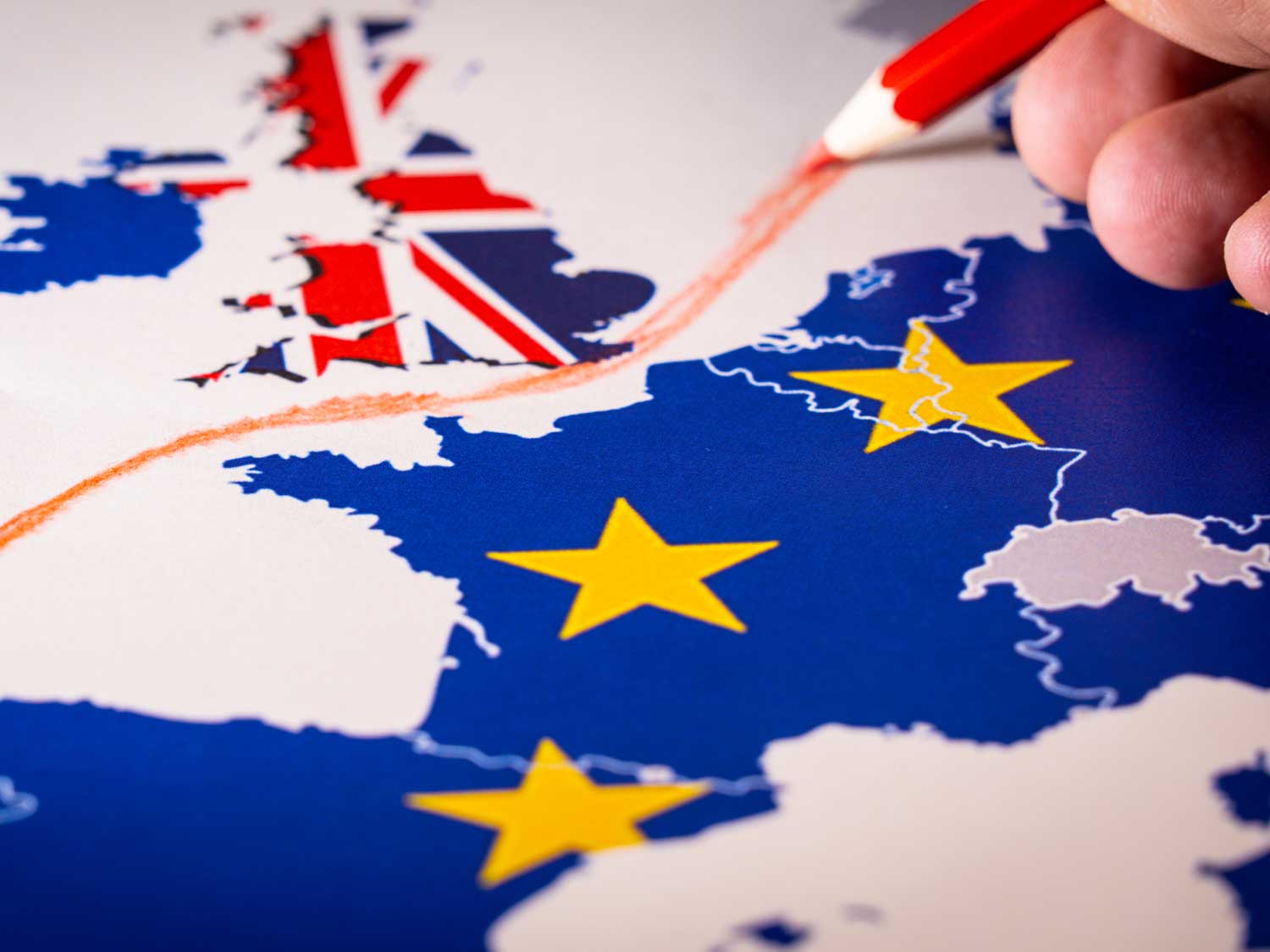
Many British companies trading with the EU are still failing to understand the extent of their legal obligations to comply with the origin rules of the EU-UK trade deal and could face disruptive enforcement action by customs authorities, when a ‘grace’ period for UK imports ends on the 1st January 2022.

Under the terms of the Trade and Cooperation Agreement that took effect at the start of the year, EU exporters can send goods to the UK tariff-free, but only if they can prove their products are sufficiently “made in the EU” to qualify for preferential access to the bloc’s single market.

These certification requirements on local content also apply to UK exporters wanting to send goods to the EU without incurring tariffs.

The “rules of origin certification process, was deemed so complex that EU and UK exporters were given a one-year grace period that reduced the required documentation, but this will expire on the 1st January 2022, with many companies facing a paperwork challenge.

UK importers found to have brought in goods tariff-free that are later found not to have complied with the rules of origin must pay full duties, and vice versa.

During the one-year grace period, British and EU companies have been allowed to certify their goods did qualify for zero-tariff access under the rules of origin, without supporting evidence from their suppliers.

Rules of origin and the way “originating content” is calculated vary from one product to another, but typically an item must be about 50% British or EU made in order to qualify for zero-tariff access under the terms of the trade deal.

To date, many British businesses have simply been attaching declarations stating they met the rules of origin to their invoices, even when they have no idea if the product is compliant or not.

Other companies have been working to better understand their origin situation, but with the potential for hundreds and thousands of components and complex and far-reaching tiers of supply, the situation is challenging.

The extent of any disruption from January will depend on how strictly EU and UK customs authorities carry out rules of origin checks. Inspections are expected to increase, particularly on the UK side, with more customs officers in place to ensure accuracy in terms of origin classification, as they will be collecting duty on behalf of the government rather than Brussels as was the case pre-Brexit.

If goods do not meet the rules of origin requirements or, more critically if origin cannot be proven, the importers will need to pay applicable Customs Duty.

The requirement to obtain preferential duty lies with the UK importer, who will need to provide either a statement of origin from the exporter or evidence they obtained about the originating status of the product.

Statement on origin that the product is originating made out by the exporter:

When exporting from the EU a statement of origin can be made out by any exporter where the value of the consignment is under €6,000 (£5,700). Above this, the EU exporter must have a Registered Exporter number (REX) and include it in the statement.

The statement on origin can be provided on any commercial document, describing the product in sufficient detail to enable its identification.

Importer’s knowledge that the product is originating:

‘Importers knowledge’ allows the importer to claim preferential tariff treatment based on evidence in their possession, that they obtained about the originating status of imported products. This evidence may be provided by the exporter or producer and provide evidence that the product qualifies as originating. As the importer is making a claim using their own knowledge, no statement on origin has to be provided by the exporter or producer.

If the UK exporter is subject to a request for verification and cannot provide evidence to show that the goods exported to the EU originate in the UK, the EU importer will be liable to pay the full rate of Customs Duty.

Now available to new customers, our CuDoS customs brokerage platform is optimised continuously, in line with the regimes in force on both sides of the Channel. Automating and submitting customs declarations, CuDoS simplifies compliant border processing, in either direction. 

We simplify declaration submission and safeguard our customers EU supply chains from the potential fallout of easement and regime changes, which means that their EU/UK movements will not be interrupted when full UK/EU border controls are implemented on the 1st January 2022.

To discuss your situation and to learn how we automate customs declarations for businesses of all sizes, please contact Elliot Carlile or Grant Liddell who can talk you through the options.

Brexit delay, dithering and duties: Metro has your back

Brexit delay, dithering and duties: Metro has your back

To the consternation of many shippers, the Government is changing the start dates for new border checks and processes for imports and exports with the EU. The good news is that Metro’s experts can protect your supply chain from these changes and simplify customs compliance, with our intelligent, automated, digital solutions.

With three significant Brexit changes and developments already this month, it is clear why so many businesses trading with the EU are confused, uncertain and concerned about changing customs regimes, requirements and compliance.

Metro’s dedicated customs brokerage team, is one of the industry’s biggest, most experienced and best resourced. It is a unique repository for EU/UK Brexit expertise and a flagship for graduate professional development in a critical area.

Continuing investment in technology and the brokerage team has expanded the capacity of our groundbreaking Customs Document System – CuDoS – and the capability of the advisory, support and compliance resource we provide businesses that trade with the EU. 

The proprietary CuDoS embraces proven, new and emerging technologies including optical character recognition, to convert documents into digital data. With automation technology, machine learning and artificial intelligence, to simplify and automate declarations, CuDoS is constantly adapting to ensure compliance with change UK/EU customs regimes.

CuDoS: 2021 Brexit stats:

  • 74% of workflow automated
  • 15,000 export declarations
  • 6,000 Transit accompanying documents
  • 12,000 import declarations
  • 99% analog to digital accuracy
  • 8 minutes = record declaration turnaround
  • 85% of clearances turned around in under 2 hours

Importers pay more post-Brexit duties

UK importers have paid 42% more in customs duties since Brexit came into force on the 1st January, largely to the “rule of origin” tariff, which applies to goods imported from the EU which were originally made, or contain components made, outside of the EU.

UK importers are paying more duty and UK Customs is losing out on hundreds of millions of pounds, as importers fail to comply with the delayed declaration scheme set up to soften the impact of Brexit.

Delays cost business

Delayed customs declarations are not being converted into actual customs declarations and while some importers may be happy to import without declarations while they can avoid them, they do face the very real prospect of retrospective action and auditing by HMRC, to recover outstanding taxes and duties.

The decision by the UK government to further delay Brexit border controls has been criticised by trade associations who believe that if these controls were imposed on EU suppliers, it would cause friction that might encourage a negotiated relaxation in controls between the UK and the EU and is to the detriment of UK companies.

Under the revised timetable:

  • Pre-notification of Sanitary and Phytosanitary (SPS) goods, which were due to be introduced on 1st October 2021, will now be introduced on 1st January 2022.
  • Export Health Certificates, which were due to be introduced on 1st October 2021, will now be introduced on 1st July 2022.
  • Phytosanitary Certificates and physical checks on SPS goods at Border Control Posts, due to be introduced on 1st January 2022, will now be introduced on 1st July 2022.
  • Safety and Security declarations on imports will be required as of 1st July 2022 as opposed to 1st January 2022.
  • Exit safety and security declaration applies from the 1st October 2021. An EXS is required  for a range of situations including, empty pallets, containers or a vehicle being moved under a transport contract and goods moving under transit.

Available, for the first time, to new customers, our CuDoS customs brokerage platform is optimised continuously, in line with the regimes in force on both sides of the Channel. Automating and submitting customs declarations, CudDoS simplifies compliant border processing, in either direction. 

We simplify declaration submission and safeguard our customers EU supply chains from the potential fallout of easement and regime changes, which means that their EU/UK movements will not be interrupted when full UK/EU border controls are implemented on the 1st January 2022.

To discus your situation and to learn how we automate customs declarations for businesses of all sizes, please contact Elliot Carlile or Grant Liddell who can talk you through the options.

Post-Brexit update: Haulier and multimodal transport market latest

Post-Brexit update: Haulier and multimodal transport market latest

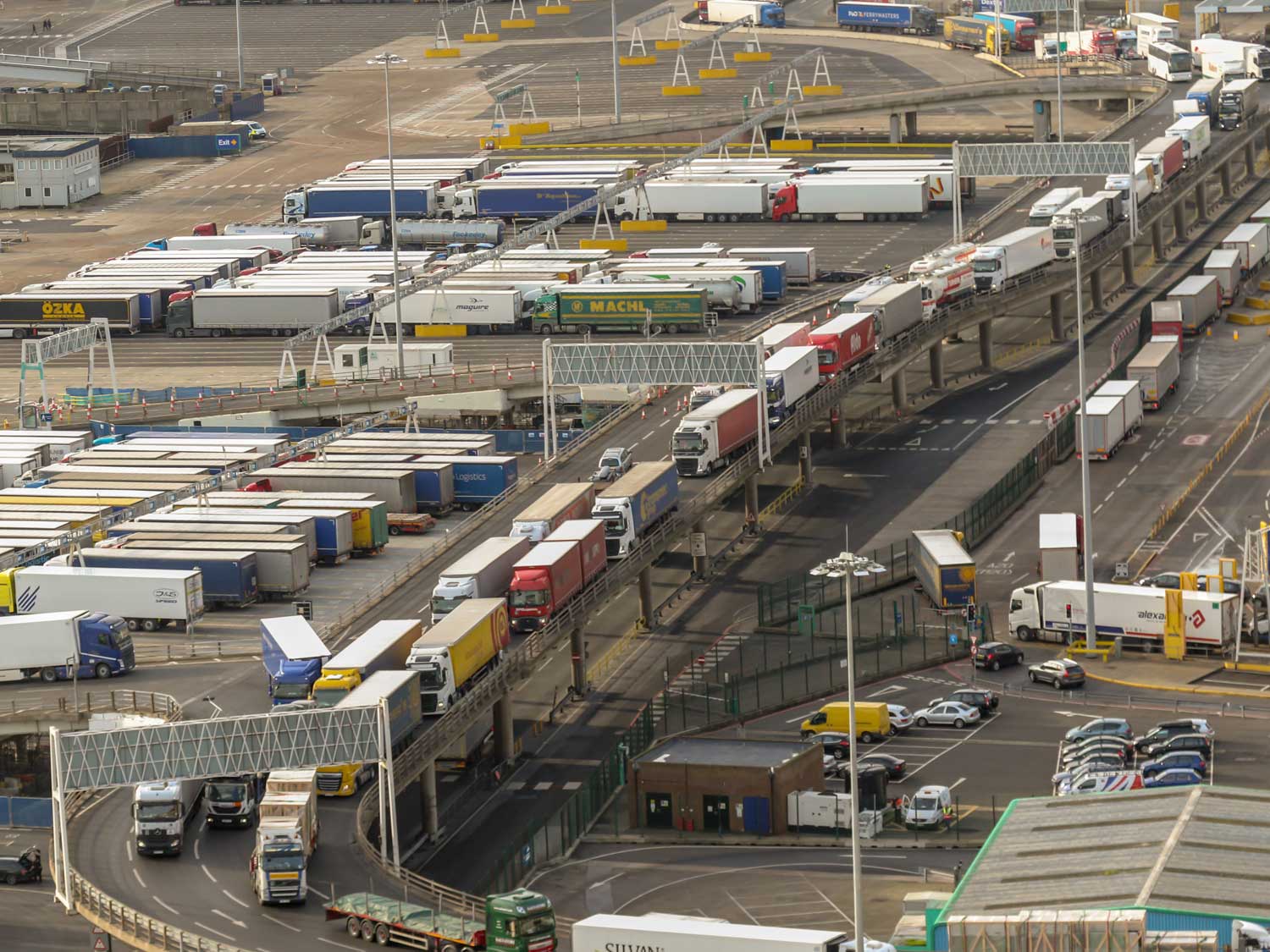
UK hauliers are under massive pressure, struggling to counter the border delays, increased administration and crippling driver shortages that have plagued the industry since Brexit and now, as they fear the full UK border checks due in January, drivers are planning a strike in August.

Surges in pandemic-driven demand are pushing hauliers to breaking point, with a study suggesting that 94% were seeing greater aftershocks from Brexit than expected and that 69% of UK haulage firms have been losing business because of post-Brexit regulation changes.

Lorry drivers in the UK are planning a nationwide strike over their working conditions, prompting warnings that this would cripple the country’s already creaking supply chains.

So far the “stay at home” action proposed for the 23rd August has attracted the support of 3,000 HGV drivers, however the Road Haulage Association (RHA) is urging drivers against taking action, saying it would make a “bad situation worse”.

The RHA is concerned that any action may heighten the effect of driver shortages, itself compounded by the ‘pingdemic’. Even the exemption of about 10,000 workers at 500 food distribution centres from quarantine does not appear to have offset the effect of the current shortage of an estimated 100,000 lorry drivers in the UK alone.

The 2021 Post-Brexit Hauliers Survey showed that more than half of haulage companies have already moved some operations to the EU and more would consider it in the future.

Over two thirds of haulage firms said they had already seen increased costs, with the rest expecting rises next year or in the near future. Many will have no choice but to pass these costs on, to keep their businesses viable. 

This fallout has already being experienced in the container haulage market over recent weeks, with container transport becoming a premium product within the domestic transport environment, as salaries are increased to match those of retailers and commercial businesses outside of the industry.

Almost a third said they were avoiding the food and drinks sector because of increased checks and administration on some products and other sectors have been impacted, including livestock farming (25%), agricultural farming (25%), gardening supplies (19%) and retail (13%).

The impact of the driver shortage has been amplified by the fact that in the three months of 2021, the uplift in demand for haulage was more than twice what it was for the same period in 2019 and in April it was 120% higher than in 2019.

Despite the massive increases in demand for domestic movements, half said fewer exports were going to the EU, and half said fewer imports were coming in. However the main freight transport operators are not UK based but are European organisations so this may not reflect the real situation as they would not necessarily have been considered, just the impact on UK domiciled haulage companies.

Increased waiting times at the border was the biggest impact cited by respondents (81%), followed by increased time spent on admin (69%), and fewer exports and imports (56% and 50% respectively).

Other challenges included longer journey times to take alternative routes, higher tariffs, changing licensing and registration requirements, with only 6% of hauliers saying they had not been impacted.

Nearly seven out of ten haulage companies said they believed they would be negatively impacted by full border checks due to come into force at the beginning of next year and the British International Freight Association (BIFA) is encouraging businesses engaged in trade between the UK and EU, to make sure that they are fully prepared for the rule changes that will be even greater than those of January 2021. This is predominantly focused around the current temporary customs processes that will change permanently in 2022.

Road transport cannot be avoided, as part of the international movement of goods, with drivers critical for container movements, international and domestic haulage.

We work with a number of selected long-term haulage partners across the UK, to give us access to the widest pool of equipment and driver resource. 

Our CuDoS customs brokerage platform is optimised continuously, in line with the regimes in force on both sides of the Channel, automating and submitting customs declarations, for simple and compliant border processing in either direction and means that our clients’ EU supply chains will not be interrupted when full UK/EU border controls are implemented on the 1st January 2022.

To learn more, or to discuss your situation, please contact Elliot Carlile or Grant Liddell (or Simon Balfe who leads our UK multimodal transport operations) who can talk you through the options.

Six months in UK businesses are still battling with the post-Brexit environment and sleep-walking into chaos

Six months in UK businesses are still battling with the post-Brexit environment and sleep-walking into chaos

Surveys for the FT find companies have been hit hard by new checks and red tape, with almost a third of British companies suffering a decline or loss of business since post-Brexit.

The survey by the Institute of Directors found that 17% that previously traded with the EU have stopped — either temporarily or permanently — since the start of the year.

Six months after Brexit, companies reported they were continuing to struggle to comply with border checks, customs controls and bureaucracy which have added friction to EU/UK commerce.

Of those companies that trade with the EU, 31% said new barriers since 1st January had a negative impact on trading with the bloc and just 6% said trade had increased, with 58% reporting no change.

According to another survey, by the Chartered Management Institute (CMI), just over a quarter of respondents said changes at the end of the Brexit transition had negatively affected their organisations’ turnover in January and six months later there had been no improvement, with the same proportion reporting a negative impact.

Some UK businesses have responded to Brexit by moving operations across the English Channel to simplify trading with the bloc and many businesses think the impact of Brexit will get worse when some of the HMRC easements come to an end this year, including the introduction of import controls at British borders with the bloc.

According to the IoD survey, about two-thirds of companies said the new UK customs controls would have a negative effect on trade when they were implemented in January next year — six months after they were supposed to be introduced.

The Loadstar reported this week on concerns that UK importers of European goods are “sleepwalking” into disaster, as the UK’s six-month moratorium on customs declarations comes to an end.

HMRC’s six-month delay on declarations for imported goods from 1st January aimed to reduce strain on the system and provide importers sufficient time to adjust to post-Brexit procedures.

But many brokers feel it simply delayed a crisis, as many importers are new to the customs environment and they may not realise their agent used the delayed declaration scheme and they will have failed to retain sufficient records or copies of E2/C88s, providing proof of authorisation to import or export.

The delayed declaration scheme process is actually quite complex and, we believe, fundamentally dangerous, which is why none of our importers adopted it. Opting instead for full clearance of their goods and consequently any liability to HMRC. We have been advising customers and recommending full customs entry at time of movement which now will ensure that this situation does not impact your historical movements and compliance.

We can clearly see that there will be issues arising from HMRC’s border ‘easements’ and potential pitfalls, that we are pleased our customers will avoid.

Our CuDoS customs brokerage platform is optimised continuously, in line with the regimes in force on both sides of the Channel, automating and submitting customs declarations, for simple and compliant border processing in either direction. Which has protected our customers from the potential fallout of HMRC’s delayed declaration scheme and means that their EU supply chains will not be interrupted when full UK/EU border controls are implemented on the 1st January 2022.

To learn more and to discuss your trading objectives, please contact Elliot Carlile or Grant Liddell who can talk you through the options.