Dover istock

New EU border controls threaten cross-channel delays

Almost 60% of all UK-EU trade passes through the UK short straits and ensuring their operational stability is key to facilitating and maximising international trade, but EU border controls due to take effect next May threaten to impact their resilience and sustainability.

The European Entry/Exit System (EES) will replace wet stamping of passports and require Britons to register biometrics including facial and fingerprint scans on their first border crossing into the EU, and then be scanned on subsequent crossings.

Britons travelling to the European continent have been warned to expect huge delays at ferry ports and the Channel Tunnel from May 2023, with the launch of the scheme expected to be chaotic.

The technology the EU is implementing to support the EES rollout was designed for airports and railway stations, where passengers approach individually in queues and under French laws, the information must be gathered in the presence of a border official and cannot be subcontracted.

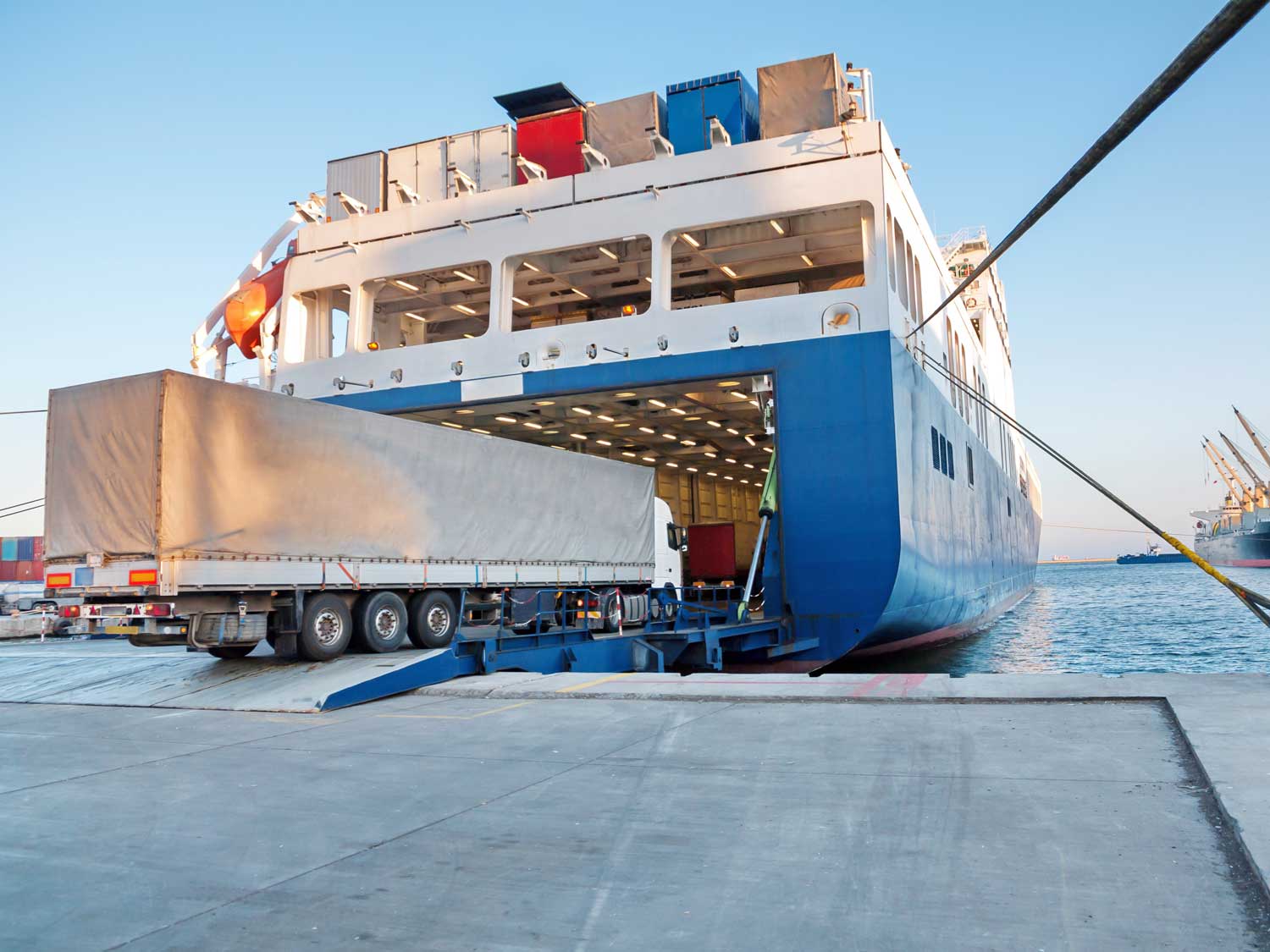
The head of EU exit for the Dover Harbour Board, told MPs last year that there is no such thing as an eGate for a car, and there is no such thing as an eGate process for people travelling as a group. They’re all one-at-a-time processes, which means that at British exit ports, EES would require car passengers and commercial vehicle drivers to exit their vehicles at French border controls to undertake passport checks; in addition to compromising the safety of drivers, it would also delay just-in-time supply chains.

The port of Dover has voiced fears - that are supported by Logistics UK and other freight trade associations - that EES will not work in a ferry port where there could be hundreds of cars waiting to get onto ferries and with up to 10,000 lorries crossing every day, any disruption to processing cars for departure, could lead to prolonged freight delays.

Experts suggest that EES could extend passenger processing times, currently averaging 90 seconds per car by a few minutes, which Imperial College forecasts would trigger 29-mile queues.

The Port of Dover, ferry operators, Logistics UK and the British Ports Association (BPA) are lobbying the government to address the looming threats to traffic fluidity from the EU Entry Exit System (EES) and support new border control infrastructure.

Metro are at the forefront of UK/EU customs brokerage solutions, with our automated CuDoS declaration platform and a dedicated team of customs experts, reacting swiftly to any changes in the UK’s trading relationship with the EU.

To learn how we can simplify and automate customs declarations for your businesses, please EMAIL Elliot Carlile to review the options.

manufacturing

Exporting compliance is complex but critical

The United Kingdom has an obligation to ensure that goods, technology or software are not exported into the wrong hands, or breach UK, UN or EU sanctions and anyone who exports goods or technology must comply with strict export control legislation.

Compliance with export control legislation requires the exporter to consider whether they may need an export licence from the Export Control Joint Unit to carry out an activity and, if required, to obtain the licence before any export is made. 

Failure to obtain a licence when one is required or failure to observe the terms of a licence is a criminal offence for which the exporter is likely to be liable and ignorance is not an excuse.

Since Russia invaded Ukraine, up to 200 sanctions a day have been imposed and exporters need to ensure they are compliant with the requirements of any new legislation.

Many commercially available materials, products, technologies and chemicals, could have a military application and be subject to export controls, or may be covered by end-use controls or sanctions.

Controlled items often find their way into countries under bans or sanctions, particularly when exporters have not carried out thorough due diligence on their buyer, or believe they are too small to be a target.  

Non-compliance with export rules may incur financial and reputational damage, with UK fines running to hundreds of thousands of pounds, while in the US they have been known to run into tens of millions of dollars – plus jail sentences. 

There may also be secondary sanctions that apply to any non-domestic firm that decide to trade with sanctioned entities or countries, such as Iran, effectively barring them from trading with the US, who will pursue people who break their rules.

Often, exporters don’t want to know they have compliance issues because they think it will cost them money, but this is a false economy, because our customs experts can help them build a compliance regime that avoids penalties and creates a competitive advantage.

By being compliant our exporters avoid the costs and fines associated with non-compliance, ensuring that their products will not be impounded, and assuring their customers that products are safe to use or to re-export.

Larger firms are starting to use compliance as leverage in supplier negotiations, including clauses in their contracts that put the burden of compliance on to the supplier.

In these circumstances it is critical that the supplier really understands the customer and contract so they can prove due diligence, which may include looking beyond sanctioned entities or countries, to include those that may be more likely to divert goods. 

Exporting firms need to understand the intricacies of their supply chains, including all components and in particular US parts, as their export administration regulations state that if the amount of US-owned material in an end-product exceeds a set limit – i.e. 10% - they may only be re-exported with authorisation from the US Department of Commerce.

Under this rule a complete product could meet the requirements for export from the UK, but its components, or spare parts may exceed the US’ threshold and be blocked. The risk of getting the US compliance wrong is very expensive, and potentially liberty threatening.

If you have questions or concerns about any of the issues highlighted here, or would like to learn how we could simplify your export compliance, EMAIL Andy Fitchett, for the latest updates and market intel. It will ensure any doubt is removed from your global trade, in an ever changing environment.

India factory

New trade system for developing countries

The Department for International Trade launched a new preferential trading scheme on the 15th August 2022. The Developing Countries Trading Scheme (DCTS) is intended to grow free and fair trade with 65 developing nations, with a combined market of more than 3.3 billion.

The DCTS extends tariff cuts to hundreds of products, including clothes and food, from 65 specified developing countries, as part of the UK government’s efforts to replace similar EU schemes.

DCTS will effectively replace the Generalised System of Preferences, which applies import duties at reduced, preferential rates, to nominated countries.

UK Trade minister Anne-Marie Trevelyan said the Developing Countries Trading scheme (DCTS) would extend tariff cuts to hundreds more products exported from developing countries and goes further than the GSP.

The DCTS offers developing countries a simpler and more generous set of trading preferences and simplifies rules such as rules of origin, which dictate what proportion of a product must be made in its country of origin and removes some seasonal tariffs, in a bid to reduce red tape and lower costs, as an incentive to firms to import more goods from developing countries.

Key changes include:

  • Simplified rules of origin, by making product specific and cumulation rules more generous and easier to follow
  • Removal of tariffs on 156 products of strategic interest to developing countries
  • Simplification of tariff schedule by getting rid of nuisance tariffs and some seasonal tariffs
  • Access granted on economic vulnerability and not on international convention
  • Ensuring that goods which are genuinely competitive in the UK market from India and Indonesia do not get preferential tariffs
  • Powers to suspend a country for human rights, labour rights and other violations broadened

Our CuDoS customs brokerage platform is optimised continuously, in line with HMRC regime changes, automating and submitting customs declarations, for simple and compliant preference processing. 

To discuss your trading strategy, access to preferential tariffs and documentary requirements please contact our customs expert, Andy Fitchett, who can talk you through your opportunities and options.

P and O

July UK border updates – consistent trade with the EU Bloc

The government, who would like your feedback on UK border controls, have announced an unexpected border easement, but another one that nearly a quarter of a million traders would welcome is unlikely to happen.

Customs Declaration Service
The customs handling of import and export freight system (CHIEF) has been in use by HM Revenue and Customs (HMRC) for nearly 30 years and is being replaced from the 30th September 2022.

Metro clients will be migrated onto the CDS platform and will maintain the same support currently provided by our export, import and off service brokerage teams, but they must be registered to use CDS. 

With just three months to go HMRC recently contacted 220,000 businesses, to urge them to move over to CDS, because it takes time to move across, depending on the size and nature of their business and they must start the process now to ensure they are fully set up ahead of the 30th September deadline.

Effective from last Tuesday all new registrations must be made on the Customs Declaration Service, because CHIEF is closing for import declarations on the 30th September and HMRC needs time to ensure that the shutdown proceeds in an orderly manner.

It consequently appears extremely unlikely that the September switch-off date for CHIEF, for UK imports, will be postponed and the date is now set in stone.

Brokerage manager, Andy Fitchett, “We’re ahead of the curve, hiring 35 brokers to ready us for the CDS launch, with procedures, processes and training in place. We’re going through the process of getting our clients onboard now, and our aim is to have this done by August, so we can spend September organising any stragglers.

SEE OUR GUIDE

Safety and security easements
On the 1st July HMRC introduced four new border easements, focused around the submission of safety and security (S&S) information and designed to simplify the movement of vehicles taking goods into and out of the UK.

The announced changes will benefit hauliers, because they will not be burdened with the administration of creating documentation for the port of departure and will benefit the ports of departure in the UK because the haulier can move through the port unheeded.

The quicker circulation of vehicles does means that equipment should be available to shippers faster.

SEE OUR REPORT

Border users survey
The government’s 2025 UK Border Strategy is intended to make the UK border the most effective in the world, embracing innovation and simplified processes and your experiences will help them understand how the border can be improved.

With improved security and biosecurity, the ambition is to make border documentation digital, to reduce complexity for traders and the border industry.

The new Target Operating Model will set out the transformative programme that will digitise the border; harnessing new technologies and data to reduce friction and costs for businesses and consumers.

The government’s border users survey aims to understand how the experience of the border can be improved through digitisation of government or trade documentation and processes.

ACCESS THE SURVEY HERE

RESPONSES MUST BE SUBMITTED BY THE 11TH JULY 2022

Our customs brokerage team have been processing live entries through CDS and our CuDoS automated customs platform has been updated for and integrated with CDS for nationwide declarations, at any point of entry or exit.

Metro are at the forefront of UK/EU customs brokerage solutions, with our automated CuDoS declaration platform and a dedicated team of customs experts, reacting swiftly to any changes in the UK’s trading relationship with the EU.

To learn how we can simplify and automate customs declarations for your businesses, please contact Elliot Carlile to talk through the options.