Trailer

EU road toll increases start in Germany

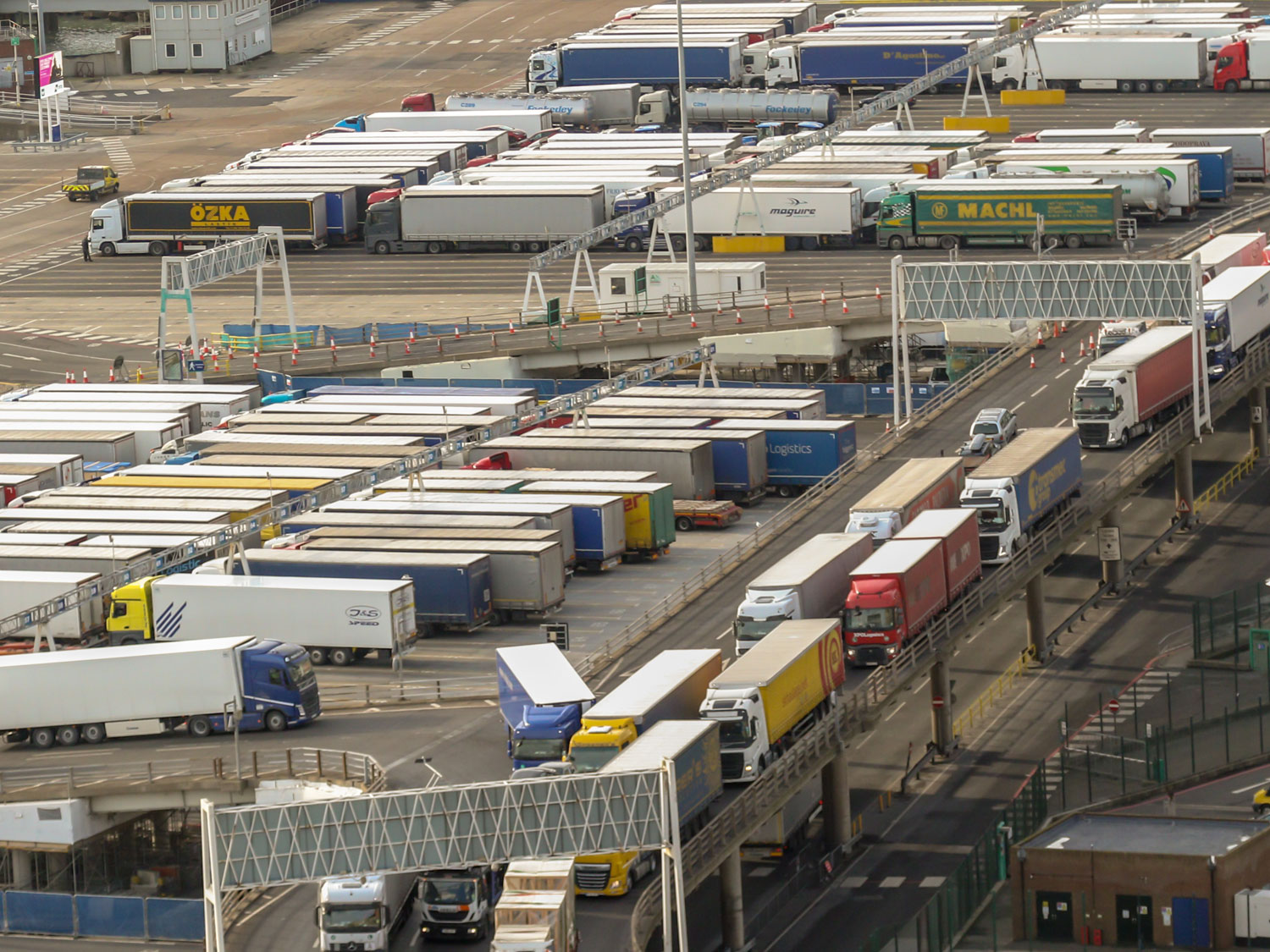
Increases in HGV road toll charges in Germany, which includes an additional CO2 emissions tax of €200 per tonne began on the 1st December 2023 and for vehicle combinations with a gross vehicle weight of up to 40 tons, prices will increase by almost 86% – giving 35.4 cents per kilometre.

The German MAUT, officially known as the Infrastructure Usage Charge or Levy, was introduced to finance and maintain Germany's highway infrastructure.

Funding is therefore paid not only by German carriers, but all those delivering, collecting or transiting the country, with the increase in freight prices passed on by the hauliers to their customers.

Depending on the vehicle weight capacity, number of axles and the emission class there will be an increase in German MAUT ( Toll ) of circa €0.158 per km.  Therefore, if transiting through Germany from the Netherlands border to Poland, a distance of circa 700 kms using the Toll roads, this is an increase of circa €110.00 per trip. 

The 1st December was the start date for trucks with a gross vehicle weight of more than 7.5 tons, while from 1st July 2024 the German Maut system will be expanded to include vehicles with a technically permissible total weight of 3.5 tons or more.

The toll is a fixed government tax and will be charged as a cent amount per kilometre driven. In particular, the CO2 emission class, the weight, the number of axles and the pollutant class of a vehicle have an influence on the amount of the surcharge.  

On the 1st October 2023, there was a 17.6% increase in the cost of the Hungarian toll system, while Austria and the Czech Republic are raising tolls in January and March 2024, following Germany's Maut increase. 

Austria's tolls will increase by 20-30%, and the Czech Republic's tolls will increase by 10-15%

The toll increases are a result of an EU directive to introduce road tolls based on CO2 emissions and ALL member states are tasked with implementing such a system by the 24th March 2024 at the latest.

Metro’s road freight teams are located close by major manufacturing and transport hubs in Birmingham, Desford and Wythenshawe.

To learn more about our expanded European capability, including our Customs Brokerage (CuDoS), European Distribution (EU/DDP), short-sea services and intermodal solutions, EMAIL Richard Gibbs. 
emissions ship

EU Emissions Trading Scheme surcharge

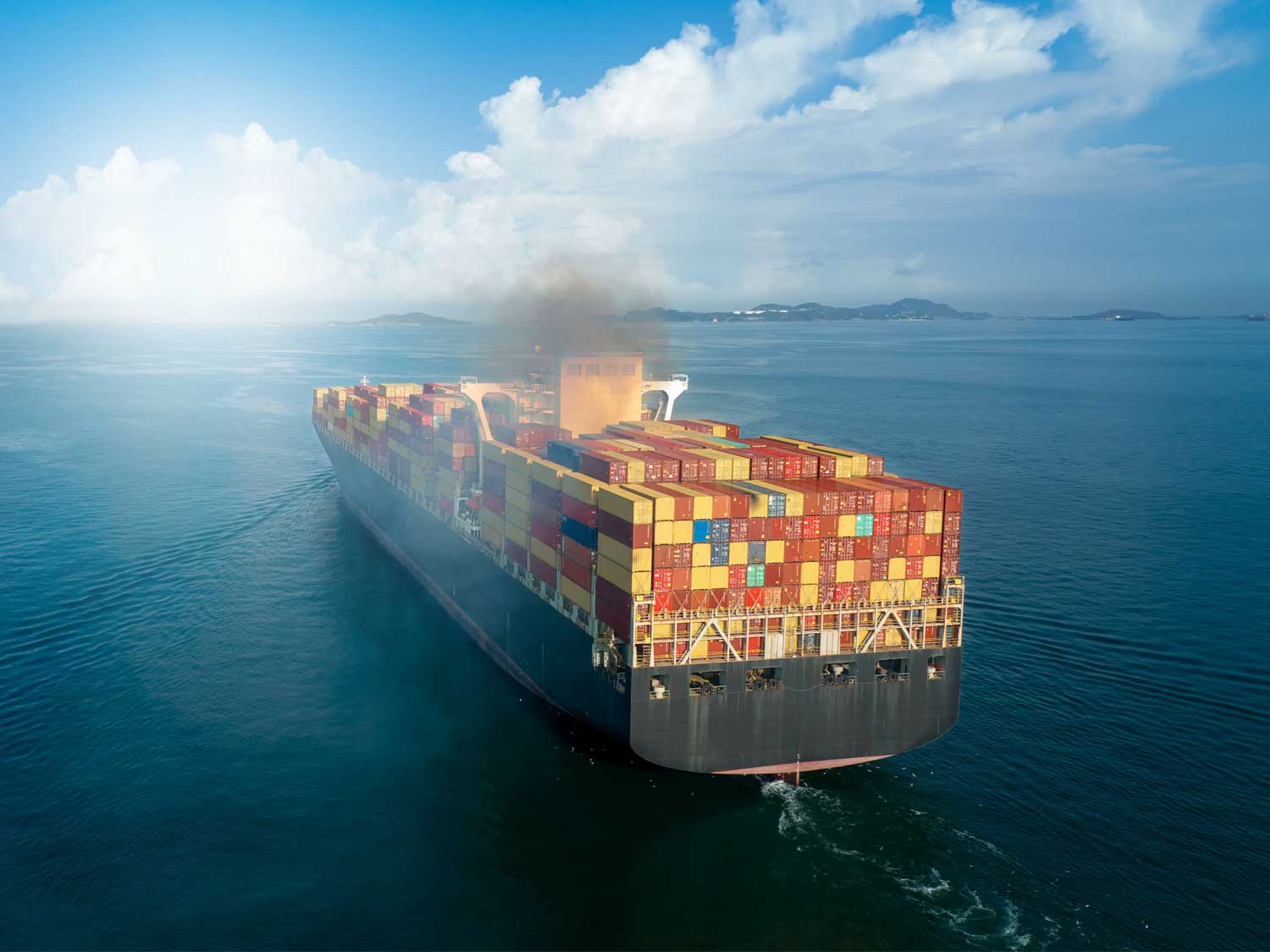
The EU’s Emissions Trading Scheme (EU ETS) extends to container shipping from the 1st January 2024, with significant legal, commercial and financial consequences for carriers and a new surcharges for shippers.

Under the EU ETS carriers will purchase a capped number of permits, known as EU Allowances (EUAs) at auction that allow discharge of a specified quantity of greenhouse gas emissions (GHGs) over a set time period. 

ETS is a ‘cap and trade’ scheme where a limit (the cap) is placed on the amount to emit specified pollutants and obliges individual shipping lines to hold an allowance for each tonne of CO2 or other carbon equivalent gases they emit.

The cap reduces annually over four years to lower emissions and if a company exceeds its allowance, it may be penalised with a heavy fine.

There will be no set price list for these emission allowances – instead, the price will be defined by supply and demand on the market. 

Taking into account the ETS phase-in period covering 40% of emissions in 2024, 70% in 2025 and 100% in 2026, the shipping industry could be liable for €3.1bn in 2024, €5.7bn in 2025 and €8.4bn in 2026. With container shipping potentially accounting for 30% of overall emissions.

Unlike the standard bunker adjustment factor (BAF) which is adjusted quarterly, based on publicly available fuel prices, that will not be possible with ETS, because the cost is only known post-fact and hence the lines will have to make upfront assumptions.

Maersk and Hapag-Lloyd recently shared their ETS surcharge indications, at €70 and €24 per 40’ but there is no transparency on how these numbers are arrived at and the way legislators have defined ETS makes transparency an almost impossible task.

The EU-ETS high-level surcharge tariff assumption and calculation logic shared by another carrier underlines just how opaque the new surcharge will be with their caveat:

“This is just an estimation of the surcharge tariff with current information, therefore, this will not guarantee the future surcharge tariff or its calculation logic. The actual surcharge tariff will be announced separately before the actual implementation. “

And getting alignment, with carriers agreeing on a common standard for the ETS surcharge, would constitute illegal collusion under EU competition law, so no help there.

This is a complex and evolving issue, which we will continue to monitor, sharing important developments, because the ETS surcharge, including its methodologies are subject to change.

The cost of ETS compliance for the lines will be significant and will keep increasing with the phased implementation.

EMAIL Andrew Smith, Chief Commercial Officer, if you would like to learn more, or have concerns about any of the issues raised here.

container ships

EC to end container shipping alliances

On the 9th August 2022, the European Commission (EC) issued a call for feedback on the Consortia Block Exemption Regulation (CBER) and on Tuesday announced that it will not renew the sector’s exemption to operating shipping alliances when current legislation expires on 25th  April.

The Consortia Block Exemption Regulation (CBER) was introduced in 2009, after the EC banned the old conference system, that had allowed container shipping lines to coordinate on pricing levels.

CBER allowed carriers to continue operating vessel-sharing agreements and pooling capacity, and was extended in 2014 and 2020, but the EC has now decided that CBER is not fit for purpose, as it does not fulfil the criteria of effectiveness, efficiency and EU added value.

The Block Exemption has been under review since 2020, during which time the market has experienced massive fluctuations in demand, capacity and price, driven by the initial impact of COVID, pandemic lockdown, post-COVID demand and now the cost of living crisis.

A period over which, market turmoil should have underlined the need for cooperation between carriers, but instead resulted in a transitory and exceptional phase of excess demand over effective capacity and of record profits for carriers.

The EC’s decision paper said the feedback from carriers and lobby groups showed an incomplete understanding of the CBER and claimed it had failed to bring demonstrable benefits to European consumers, as inelasticity of demand and the limited elasticity of supply reduced the likelihood that any cost efficiencies achieved by carriers would be passed on to users.

The EC refused to blame CBER for causing the chaos seen in container supply chains since 2020, but suggested its effectiveness and efficiency during this period was limited and noted that the widespread opposition from shippers, forwarders, unions and port operators to extending the regulation showed deep divisions among supply chain partners.

The CBER has notably created the impression that carriers had an advantage, while other supply chain stakeholders were treated unfairly and that there was no real level playing field in the maritime sector.

It concluded: “Overall, it appears that the restoration of trust between the stakeholders necessary to build a resilient, integrated and efficient supply chain requires ensuring that the liner shipping sector is not perceived as being subject to looser scrutiny from antitrust enforcers than other industries.”

UK review of Consortia Block Exemption Regulation

On the 19th January the UK’s Competition and Markets Authority (CMA) published its report into whether or not the Liner Shipping Consortia Block Exemption Regulation (the retained CBER) should be renewed or varied when it expires on 25 April 2024.

In its CBER review, the CMA met with key stakeholders to gather views on the operation of the retained CBER regime in the UK and is proposing replacing the retained CBER with a Liner Shipping Consortia Block Exemption Order (CBEO).

The CMA added it recommended a similar version of the existing CBER, in order to ensure the continuity of container shipping for UK businesses, because if the retained CBER was allowed to expire without replacement, carriers may be deterred from making direct calls to UK ports in favour of serving the UK by transhipment to and from European ports.

The CMA’s concern was that shipping costs for UK consumers could rise considerably without a regulation aligned to the substantially larger market on the European mainland.

With the EU now intent on ending CBER next April, it is almost certain that the UK will follow suit.

Metro leverage opportunities for our customers across all three of the shipping alliances, with individual carrier relationships that are long established and built on personal relationships, from operations to senior management and executive level.

These relationships across a portfolio of carrier partners, already give our customers access to the widest range of service offerings, port-pairings and rates and they will be maintained, however the container shipping sector is transformed next April.

We will stay close to this topic, as it develops and ensure that you are kept up to date with the most important news. 

If you have any questions or concerns relating the shipping alliances, the Consortia Block Exemption Regulation, or sea freight in general, please EMAIL Andrew Smith, Metro’s Chief Commercial Officer. 

Dover queues

Final stage of EU’s Import Control System 2

On the 1st March 2024, the European Union is launching the 3rd and final part of its pre-loading and pre-arrival safety and security programme, which requires pre-advice of mandatory information and failure by shippers to comply may lead to goods being rejected by the airline, shipping line, rail operator or haulier.

The European Union (EU) implemented the European Import Control System (ICS) in the safety and security measures framework in 2011, to perform risk analysis on air, sea, rail and road freight before it enters or transits the customs territory of the EU.

In 2021, the EU began the rollout of ICS2 in 3 phases:  
15th March 2021: Mail/express shipments (pre-loading)
1st March 2023: Air cargo and Mail/express shipments (full)
1st March 2024: Maritime, Road, and Rail

Carriers submit details on cargo before it is carried into the EU, risk analysis on the data decides if shipments can proceed, or need to be presented for inspection.  

The ICS2 process:

1. Lodge the ENS declaration to customs by the economic operators 
2. Safety and security risk analysis performed by customs 
3. Arrival notification of the means of transport by the carrier or its representative 
4. Presentation to customs and examination in case of a potential risk

We have been adapting our processes and systems to meet the new EU requirements, but compliance with ICS2 changes will depend on the active participation of shippers.

Carriers will require relevant data to fulfil their responsibility for the pre-loading and pre-arrival information data set, including the journey details, which is sent to ICS2, where it is automatically reviewed for possible security threats. 

The pre-loading and pre-arrival messages are collectively referred to as the Entry Summary Declaration (ENS).

We will require the following information, so that we can ensure the pre-loading data is made available to the carrier in good time:

Shipper Name
Shipper Address
Consignee Name (including EORI number for cargo staying in Europe)
Consignee Address
Cargo Description (including 6-digit HS codes)
Total Quantity
Total Weight

When the ENS information is not provided to EU customs, shipments will be stopped and will not be processed for customs clearance, which will lead to delays and potential fines.

We are working closely with our sea, road and rail partners, test-submitting these new data sets, to ensure the smooth implementation of this new EU customs process. 

If you have any concerns or questions, regarding the ICS2 roll-out please EMAIL Andy Fitchett, Brokerage Manager.