

European roadmap to recovery

New EU emissions trading system for road transport

EU Member States formally adopted the new emissions trading system in road transport (ETS II) last month, but the road freight industry insist 2027 is “too soon to launch”, given the absence of refueling and EV charging infrastructure.

The Council of the EU in April, adopted a new emissions trading system for road transport (ETS II). The system will apply to road transport fuel suppliers starting 2027 unless oil and gas prices are exceptionally high and while the International Road Transport Union (IRU) welcomes the later date - having originally been set for 2024 - they think it is still too early.

Industry pundits believe that the EU’s decision reflects a lack of understanding of the make-up of the haulage sector. While larger road transport firms would adapt to meet the new system, over 70% of capacity comes from SME hauliers, who will see their slender margins squeezed to the point that business may no longer be profitable for them.

The IRU think that the compromise to launch ETS II in 2027 – compared to 2024, as initially supported in the European Parliament, or even 2025 and 2026, as first proposed by the European Commission – is significantly more realistic, given the expected pace of infrastructure and technological development.

The IRU argued throughout the legislative process that 2027 is too soon and are glad that the EU demonstrated some pragmatism, by not settling for an even earlier date, considering earlier proposals had unrealistic start dates or impractical distinctions between private and commercial vehicles.

The road transport sector’s call to charge carbon emissions as efficiently as possible is reflected in the text formally adopted by the Council. ETS II will generally supersede existing national schemes, unless national schemes set higher prices for allowances.

The IRU maintain that when it comes to decarbonisation, ETS II is not particularly effective and it is unlikely that the necessary conditions, such as EU-wide charging and refueling infrastructure, for a substantial transition to zero-emission heavy-duty vehicles, will be in place for years.

Metro’s European road transport solutions incorporate dedicated vehicles moving on set routes, with defined delivery deadlines, using GPS tracked trucks, to provide full transparency on transit schedules throughout the UK and mainland Europe.

Metro’s reliable services, specialised equipment and operational excellence, develop resilient road freight solutions for the most complex and demanding supply chains.

To explore the potential of our short-sea container, unaccompanied trailer and road transport services EMAIL Matt Paxton-Rhodes to begin a conversation.
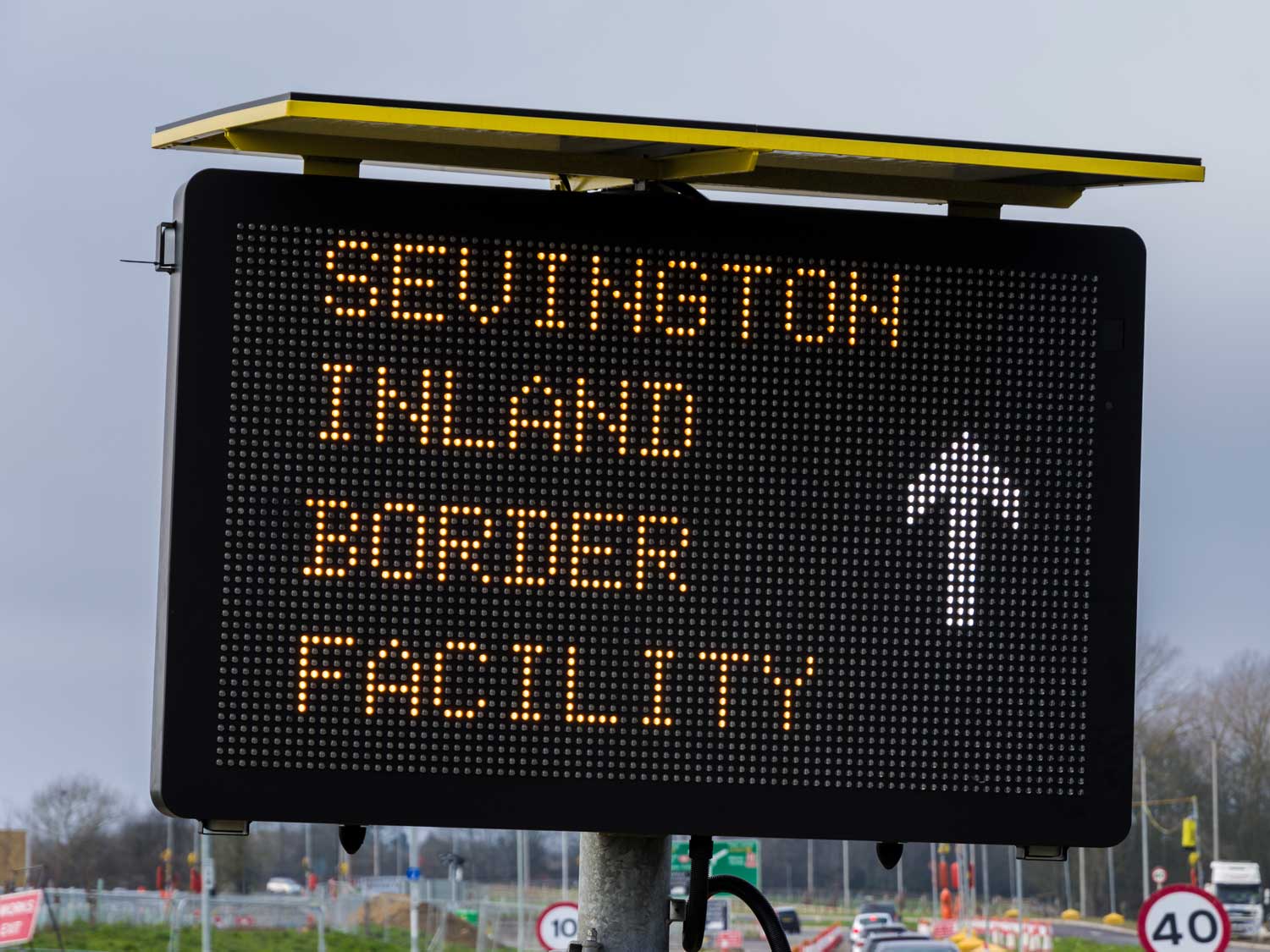
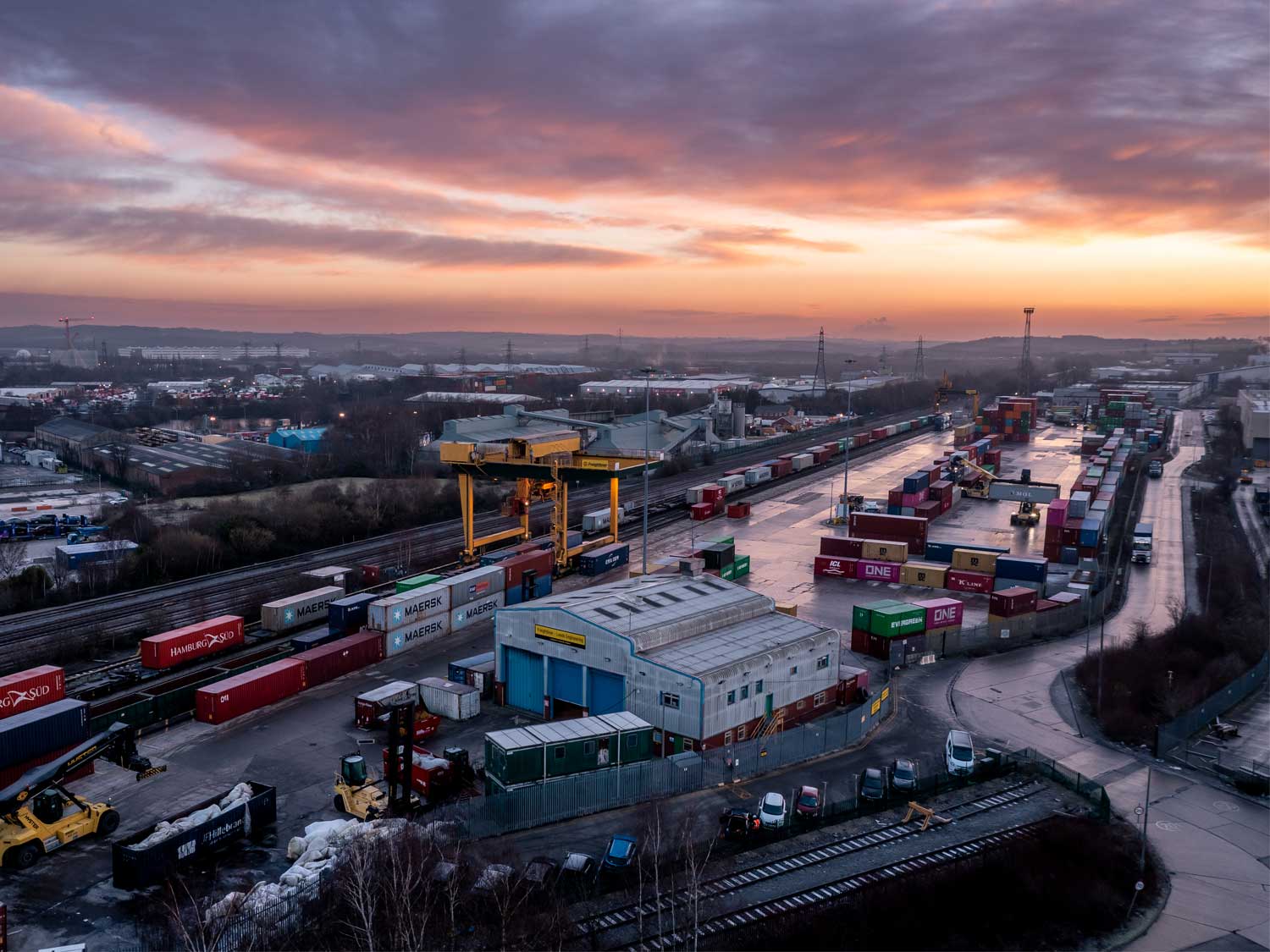
Inland Border Facility

Delayed post-Brexit import checks to launch

Despite being part of its post-Brexit trade agreement the UK government has delayed checks on EU goods four times. It has announced that risk-based checks for EU and non-EU imports will finally be introduced in three parts from October.

The draft Border Target Operating Model (TOM) sets out proposals for a new border surveillance and control system to provide protection from security and biosecurity threats, with risk-based checks across EU and non-EU trade.

The government has delayed putting in place import checks, which are legally required under the Brexit trade deal, four times due to concerns over port disruption, leading to considerable friction with Brussels.

The draft TOM was developed with input from the border industry and affected UK businesses and the government will engage with industry for a further six weeks, before publishing the final version of the model.

New changes for imports from the EU into UK include:
• Trusted traders scheme to avoid trade checks
• Reduced safety and security data requirements
• Introduction of the UK Single Trade Window
• Live animal products and by-products, plants and plant product controls will be determined by risk and country of origin
• Simplified and digitised health certificates
• Checks to take place at Border Control Posts to prevent port traffic

None of the proposed checks or controls in the model will apply to imports into Northern Ireland from the EU, following the Windsor Framework, but there will be further checks for goods arriving directly on the UK mainland from Ireland.

Subject to feedback and review, the TOM will be implemented in three parts:

31st October 2023 

Introduction of health certification on imports of medium-risk animal products, plants, plant products and high-risk food and feed of non-animal origin from the EU.

31st January 2024 

Introduction of documentary and risk-based identity and physical checks on medium-risk animal products, plants, plant products and high-risk food and feed of non-animal origin from the EU.

Imports of animal and plant goods from the rest of the world will start to benefit from the model.

Existing inspections of high-risk plants/plant products from the EU will move from their destination to a border control post within a port or airport

31st October 2024 

Safety and security declarations for EU imports will come into force, as will a reduced need for import data and the use of the UK Single Trade Window, which will remove the need for duplicated pre-arrival data.

Businesses in Northern Ireland will be able to import goods from the EU with none of the additional checks or controls set out in the new Border Target Operating Model.

Metro are at the forefront of UK/EU/RoW customs brokerage solutions, with our automated CuDoS declaration platform and a dedicated team of customs experts, reacting swiftly to any changes in the UK’s trading regimes.

To learn how we can simplify and automate customs declarations for your businesses, please EMAIL Andy Fitchett, Brokerage Manager, to review the options.

Intermodal 2

<b>Unaccompanied freight service milestone</b>

Short-sea container, unaccompanied trailer services and the use of quieter regional ports have enjoyed something of a renaissance since Brexit, as more complex border controls have added to congestion and delays at the busiest Channel ports.

DFDS’s Sheerness to Calais service has now moved more than 50,000 trailers since it was first launched in July 2021, an increase of 65% in daily unit volumes, while London Medway processed almost 4,000 unaccompanied trailers in a single month.

Unaccompanied freight, which sees trailers and containers shipped into regional ports without a driver, is seen as a major way of overcoming challenges with customs delays, and driver shortages.

DFDS and P&O are the main RoRo operators out of Dover to primary ports like Calais and Dunkerque, but there are hundreds of alternative RoRo services and sailings every week, that serve alternative ports like Zeebrugge, Rotterdam, London, Humberside, Liverpool, Gothenburg, Esbjerg, Santander and Porto.

Eurotunnel has been adding new rail services to meet growing demand for the unaccompanied transport of trailers and Brittany Ferries has confirmed that the amount of unaccompanied freight it is transporting on its routes between the UK and France/Spain is much higher than in previous years, with its Galicia service, operating between Santander in Spain and Portsmouth and around 40% of the freight carried has been unaccompanied trailers.

There is a good case for moving non-perishable cargo that is not on a strict deadline via unaccompanied services, because they are more reliable than accompanied freight, which are open to multiple points of failure.

Short sea unaccompanied container and trailer services offer literally hundreds of port pair, service and rate options, which allows the smart supply chain manager to flex service levels, transit time and rates for optimum services at the lowest economic rate.

For the right product and supply chain situations, short sea container shipping and unaccompanied trailers can be a smart, efficient and cost efficient alternative to standard overland services with Northern and Southern Europe. 

Many of the biggest shippers and manufacturers are established users of short sea services because they like the additional opportunities it provides over traditional road transport such as access to the rail network and the option of using the container as extended storage.

Short sea can be half the cost of road, but may be triple the transit. If you would like to explore the potential of short-sea container, unaccompanied trailer services and the benefits of quieter regional ports, EMAIL Matt Paxton-Rhodes to begin a conversation.
Metro truck at bay

<strong>New appointment further strengthens European team and platform expansion</strong>

Metro’s award-winning European solutions will be enhanced, expanded and advanced by new European Director, and industry veteran, Richard Gibbs.

Commenting on his new role, Richard said. “Metro have a familiar and dependable partner network in place, with the ability to extend overland solutions swiftly across Europe, which is critical, in supporting effective European transport and 3PL and 4PL operations to our customers.

Metro’s European service template is well established and proven to meet the needs of the most demanding supply chains; by blending the optimum mix of partners, carriers, service design, customs formalities/compliance and advanced supporting technology, to deliver transparency and consistent reliability of service.

By blending partner capacity, specialised equipment and operational excellence in this way, Metro’s European solutions can be quickly and effectively extended to support the transport of any products, components and raw materials, in any geography. Meeting the most rigid timescales and service levels.

Solutions range from time-definite courier and express van operations, to simple line-haul or specialised trailers operating daily between multiple manufacturing plants, with defined delivery deadlines and GPS tracking to provide full visibility of transit throughout Europe.

We are already seeing customers near-shoring to Turkey and the Iberian peninsula, which is increasing interest in our short-sea services, and the port pair, service and rate options they offer.

Multimodal and short sea services have so much untapped potential, including access to rail and the option of using the container in inventory planning and the option to flex service levels, transit times and rates for the optimum service at the lowest economic rate.”

To learn more about our European capability, including our road freight template, short-sea services or intermodal solutions EMAIL Richard Gibbs. He will be delighted to share the initiatives, innovation and creative approach we take to your overland movements to ensure that you can deliver your product at the right time, the right cost and in the right way wherever required within the UK or European markets. Reliably.