

Terms of trade will trip you up

Metro are getting BIGGER in Europe

Metro has been shipping freight to, from and across Europe since 1981, using road, rail and short-sea services to create country and product-specific transport solutions. Our new Head of European Services, Matt Paxton-Rhodes, wants to make these award-winning solutions available to more shippers, in more verticals.

Metro’s European transport solutions are designed to meet the needs of individual customers, many of whom have entrusted the management and operation of their supply chain to Metro. 

Safely, efficiently and cost-effectively, Metro plan and arrange the time-definite transport of components intra-Europe, and finished products from the manufacturer or producer, to their final point of use on the European continent.

The European team is experienced in orchestrating and overseeing the timely, cost-effective transport of goods to anywhere in Europe, using rail, short-sea and carrier partners’ modern fleet of vehicles. Designed to transport loads of any size and type, including out-of-gauge, refrigerated and automotive.

Metro’s new Head of European Services, Matt Paxton-Rhodes, has held senior executive roles with some of the biggest global carriers and forwarders, gaining an enviable breadth of experience, knowledge and contacts along the way.

It is a sign of Metro’s growth and stature, that a senior industry professional like Matt is excited by his move and the opportunity to transform the European product.

Matt is very clear on the factors that attracted him to Metro:

People - The passion of the senior team and their total commitment to customers and colleagues.

Power - The flat reporting structure and the empowering of management to make decisions gives Metro the agility to react quickly to customers’ needs. Now.

Product - Metro’s European product is established, proven and effective, with a distinct opportunity for replication in new verticals and geographies. 

Platform – We will always provide all options and best fit recommendations – regardless of the requirement for overland trucking. Trade with our closest markets continues to change, almost daily – so do we with our solutions.

Despite only being with the business for less than a year, Matt has set his sights on some short term objectives. 

“The Metro team has extensive knowledge of European transport and customs compliance arrangements, which means they are well experienced in providing the most appropriate solutions for transporting goods in the fastest, safest and most reliable ways, to deadline and including for JIT operations.”

“Having an established and effective core-product means that I can focus on building a dedicated team to increase capacity, by taking our best-practice and matching it closely to the needs of new verticals, on new routes.”

“Turkey, an increasingly popular location for near-shoring, is a good place to start as it is one of our most established routes and the potential for growth is immense.”

‘’Our brokerage team are market leading and cutting edge – the whole end to end piece is naturally part of the offer and it is a very compelling proposition that we design around our customers individual needs and requirements.’’

If you would like to explore our European capability, or learn more about our Turkish services, EMAIL Matt now. It will be 5 minutes well used!

rail freight

Potentially disruptive rail strike averted in US, while, unfortunately, UK braces for more

President Biden’s administration has averted a rail strike that would have caused further issues within the country’s fragile supply chain infrastructure, while rail strikes will recommence  in the UK from October, following the recent deferment of the original announced action.

US shippers and retailers had warned of the negative effects of a rail strike and the ‘11th hour’ contract agreement brokered by Biden’s team shows that the White House was particularly sensitive to the issue, as any strike would have had a hugely negative impact on the pending midterm elections.

Freight railroads and unions reached the tentative contract agreement for 60,000 employees just hours before a strike or lockout could have happened from midnight last Friday.

The deal brokered by the Biden administration averts a strike that had the potential to impact the country’s supply chain, by disrupting the movement of containers inland and the positioning of products throughout the country.

Shippers are relieved that the devastating nationwide rail strike has been avoided, with many applauding the Biden administration’s intervention, at a time when high inflation and economic uncertainty are challenging consumer budgets and putting business resiliency at risk.

Confidence in rail freight transportation is higher in the wake of the tentative deal and with many of the biggest volume shippers moving freight worth billions of dollars via the rail network, their dependency on reliable services is absolute.

The tentative deal means railroads and ports can unwind the contingency plans they had begun to implement ahead of the strike deadline, with inland ports resuming normal operations.

However, train strikes are set to resume in the UK, after unions cancelled their most recent planned action following the Queen’s death, with ASLEF train driver members at 12 rail companies set to strike on Saturday 1st October and Wednesday 5th October. This does also effect the movement of containers throughout the UK and puts further pressure on the inland logistics required for export and import movements, including an upsurge in demand for pure road transport, especially if the strikes are longer than 24 hours.

The Rail, Maritime and Transport (RMT) union has also announced a strike for the 1st October among its members at Network Rail and 14 train companies.

Workers are striking over pay and conditions, with unions objecting to pay offers that sit well below inflation.

RMT general secretary Mick Lynch said: “We will continue to negotiate in good faith, but the employers and government need to understand our industrial campaign will continue for as long as it takes.”

Previous rail strikes have had restricted direct impact on our container movements, but we monitor the situation closely and our transport team work closely with our rail service providers, to work around potential disruption.

If you have any questions, concerns, or would like any further information regarding the situation in the United States, please don’t hesitate to contact Kevin Lake, who leads our North American operations. 

rail freight

Train strikes threaten freight movements

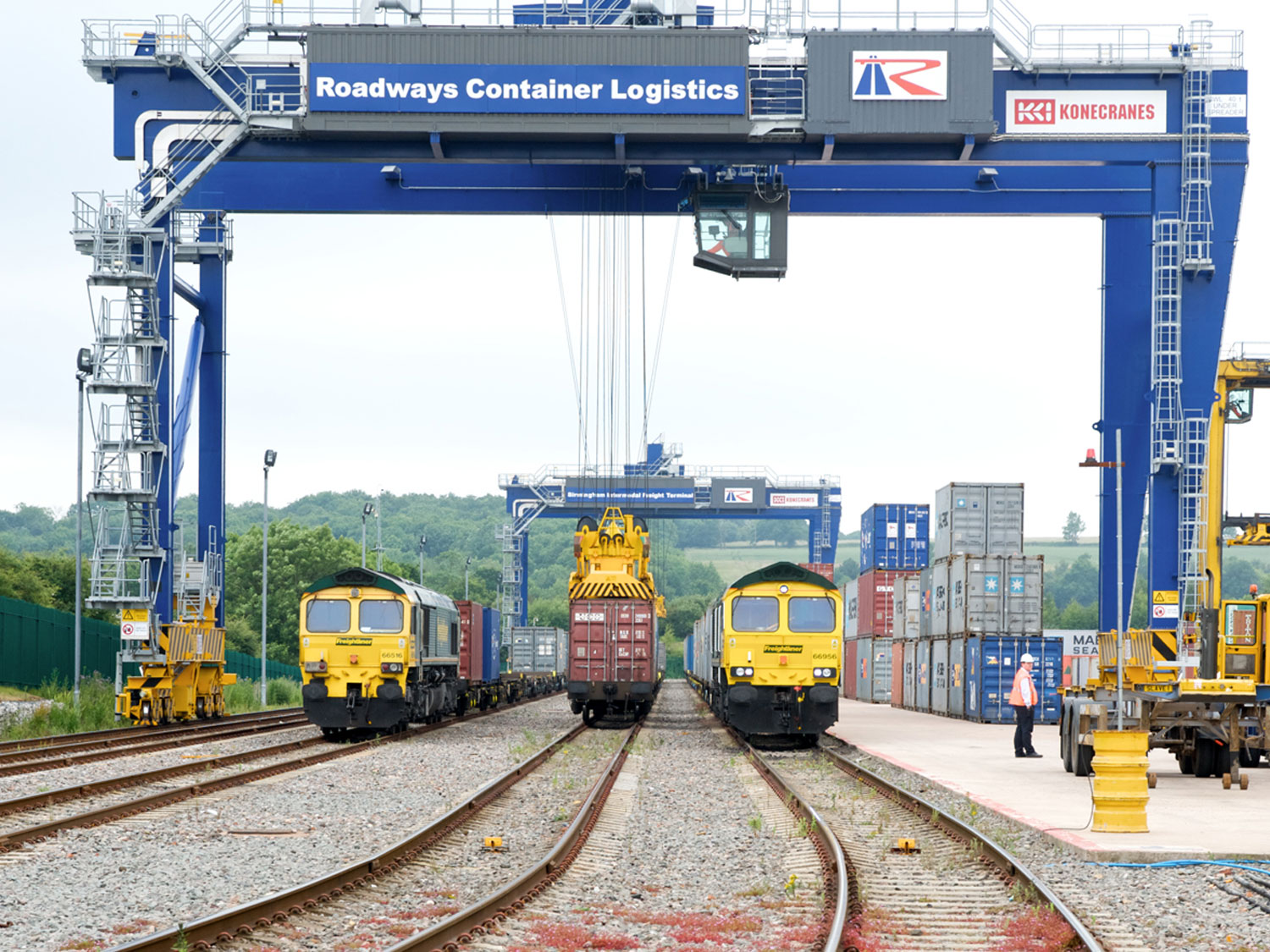
The biggest rail strike in modern history will affect all rail operations and potentially bring the country to a standstill next week. Our transport teams are working with our service providers on contingency plans that will keep freight moving.

The Rail, Maritime and Transport (RMT) union has promised it will "shut down" the rail network in a row over jobs, pensions and pay, with three days strikes on June 21st, June 23rd and June 25th.

Freight and passenger journeys throughout Britain will be hit by the disruption, which is supported by 40,000 staff working for 13 major operators, along with staff from Network Rail and will be the biggest on the rail network since 1989, according to the RMT.

Further talks could be held between the RMT and Network Rail in the coming days, but the union warns that operators and Network Rail will need to come up with new proposals to prevent months of disruption.

Freight cargo will be affected because union members that control train movements, such as signallers, will be on strike.

RMT general secretary Mick Lynch said: “Railway workers have had to contend with pay freezes, the prospect of losing their jobs and repeated attacks on their terms and conditions. Removing 2,500 safety-critical jobs from Network Rail will spell disaster for the public, make accidents more likely and will increase the possibility of trains flying off the tracks.”

Plans are being drawn up by Network Rail for a five-year budgeting phase to start in March 2024. As part of these discussions, a decision is being made as to whether to continue to maintain the railways to “Route Availability-10” (RA10) – a standard of load-bearing for tracks, equivalent to 25.4 tonnes – or to allow maintenance standards to lapse to RA8 (up to 22.8 tonnes), which would entail a major culling of maintenance operations and would have a considerable knock-on effect on the passage of rail cargo around the UK.

Our rail service providers are working hard on contingency plans to keep as much freight operating as possible on the rail network, but we are expecting disruption to services and to rail supply chains throughout the five day strike period. 

In preparing for this potential disruption we are repositioning equipment and our rail team are working closely with our road freight partners to transfer cargo when appropriate and minimise any impact on our rail customers. 

ship and graph

Sea freight facing even more challenges

Low-sulphur fuel container ship bunker prices have increased by a third since Russia’s move on Ukraine, with bunker surcharges rising around 15% and expected to spike further with crude oil hitting new highs of more than double the price at the beginning of the year.

Expect the carriers to claw back as much cash as possible in the form of emergency bunker surcharges and increased use of slow-steaming to mitigate the financial impact.

We are seeing delays and detention of cargo by overseas customs authorities seeking Russian and prohibited cargo and French customs officers have already seized two vessels suspected of breaching sanctions.

<

Until trade lanes are free of Russian containers, disruption is to be expected, as customs intercede, cargo is identified, offloaded and (ideally, to free up much needed equipment) unloaded. 

Dwell time for containers and vessels is a key indicator of port efficiency. The longer cargo is stuck in port, the more it potentially costs shippers, in rent, inventory holding and tied up working capital and container ships operate to stringent schedules, which means any delay ripples across the entire service. 

During unexpected increases in dwell time, port operators increase stack heights and store containers on every available space in their yards, which significantly lowers productivity, potentially exacerbating dwell time.

Dwell times have increased 43% across Europe since Russia’s invasion of Ukraine, with consumer packaged goods, food and beverages, hit particularly hard, as dwell times increased by 55%.

Container ships are skipping ports to try and maintain their schedules or, at best, limit delays, which are averaging 17 days and unchanged since last November. 

Average round trip duration for all seven OCEAN Alliance Asia - North Europe loops however stood at 93 days, compared to an average round voyage time of 78 days.

China to Europe rail freight operations are apparently continuing, though major service providers have added Moscow ally Belarus to their booking suspensions, which effectively blocks rail shipments on much of the Asia-North Europe network, because containers must be transferred to different gauge trains on entering Europe, with the busiest crossing at the Małaszewicze-Brest reloading area on the Poland-Belarus border.

Increasing in popularity with shippers, particularly for high-value products that would benefit from a faster transit, rail freight from China has grown massively since the advent of the COVID pandemic, with volumes surging 29% last year, to 1.46m teu.

The displacement of such massive volumes will have a profound impact on other modes from Asia, taking much needed capacity and putting even more pressure on pricing.

Air cargo shippers on Asia to Europe lanes, that are already anticipating a hike in prices as a substantial amount of capacity has come out of the market, as a direct result of Russia’s move on Ukraine, could be hit particularly hard.

Supply chains are facing a new set of challenges and with conditions changing rapidly, upstream and downstream, we are working closely with our network partners, to proactively identify potential issues and take any action necessary to protect our customers.

We maintain long-term contracts and space agreements with leading airlines, carriers and shipping lines, which means we can provide the best alternatives and options, whatever the situation.

Our proactive team, leading-edge technology and open communication, provide our customers with the real-time visibility, control and intelligence they need, to maintain resilient, flexible and reliable supply chains.