BHX

March: Air freight market update

Softening air freight rates and no post-Chinese New Year recovery means the usual strong March pick-up will not recover a depressed market and any uptick in rates due to demand being focused toward Turkey after the earthquake has been short lived.

Many key air freight trade lanes currently have weak demand, balanced or excessive capacity, with an aggressive spot market. The Asia-Europe trade lane has struggled with particularly slack demand as a result of the global consumer decline and the fallout from the war in Ukraine, which has now been occurring for over a year, affecting global trade as an impact. 

Data from market analyst CLIVE found that global air cargo capacity has increased for the eleventh consecutive month in February, up 11% on the same period last year, rising above the pre-pandemic level for the first time in four years, but volumes were down 8% in terms of chargeable weight compared to pre-pandemic 2019.

CLIVE say they do see the fundamental changes that will help the current market conditions and while there is hope and expectation of volumes increasing in Q3 as companies restock, many shippers will look firstly to cheaper modes of transport and, even if there is a boost, it might still result in zero overall growth for air cargo.

The stricter Covid rules and lockdowns in China have slowed the return of passenger flights between Europe and Asia, with belly-hold cargo making up just 32% of market share, compared to 55% before the pandemic, but with China finally reopening its borders to tourists and issuing all visas from Wednesday 15th March 2023, the stats may swiftly improve.

Twelve months ago, Cathay Cargo was not flying into Europe at all, because of the Hong Kong government’s Covid-19 restrictions on airline crew. 

This gradually increased from one flight a week into London, to one flight a day by the final quarter, with the carrier aiming to have four or five flights a day by the middle of the year.

Cathay Cargo is now operating wide-body services to Frankfurt, Amsterdam, London, Paris and Manchester so the opportunity to lift more cargo continues to grow.

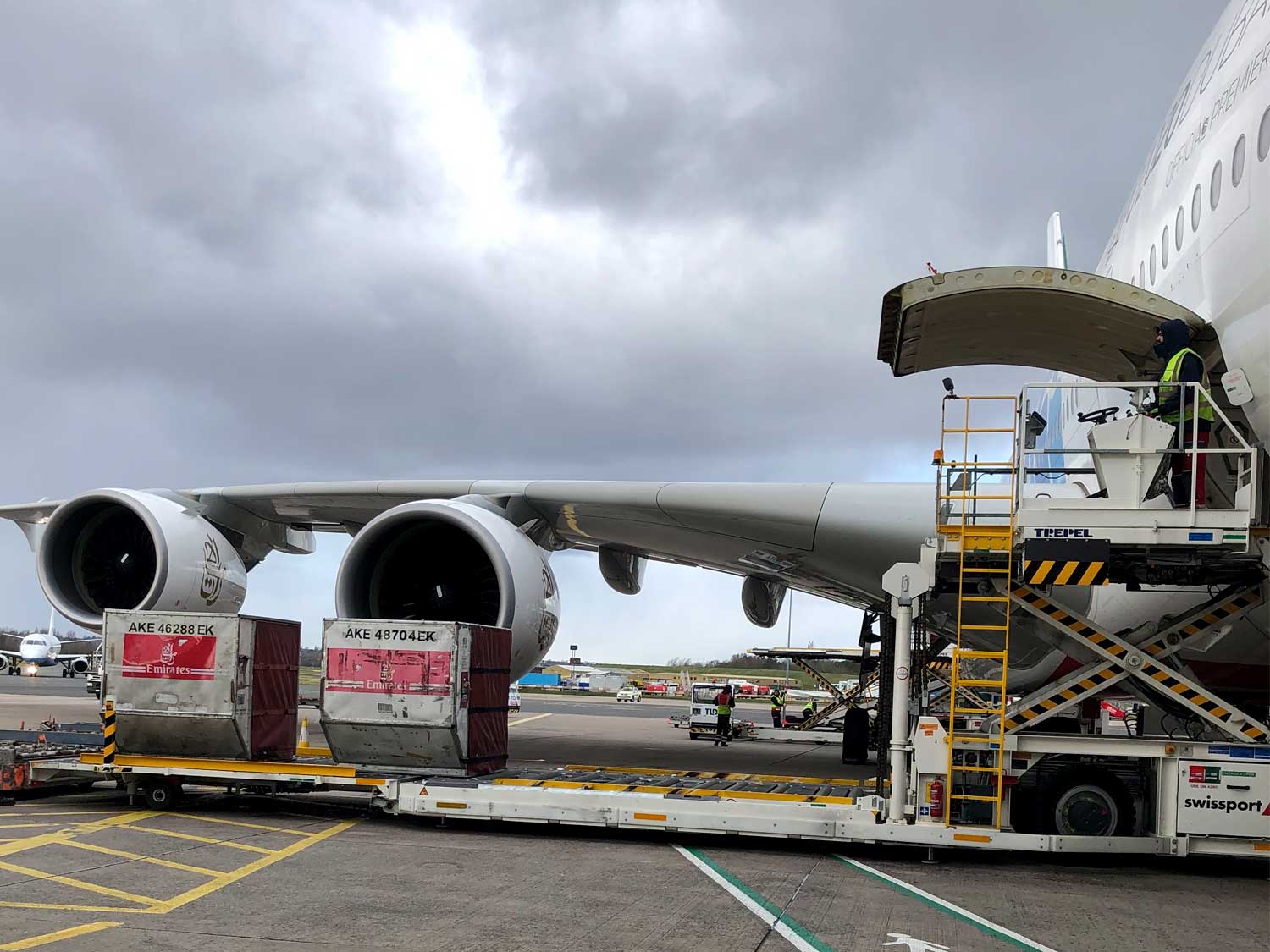
Emirates, a key carrier partner, has not fully resumed its Airbus A380 pre-pandemic capacity levels and while it was operating 928 weekly flights in January, it was still 22.9% below January 2019 levels. But that’s changing slowly but surely.

Currently, Emirates operates 14 weekly flights to our Birmingham air freight hub and seven to Glasgow. It will resume its second daily service to London Stansted from the 1st May and will ramp up its operations to London with 11 daily flights. This includes six times daily to London Heathrow and three times daily to Gatwick.

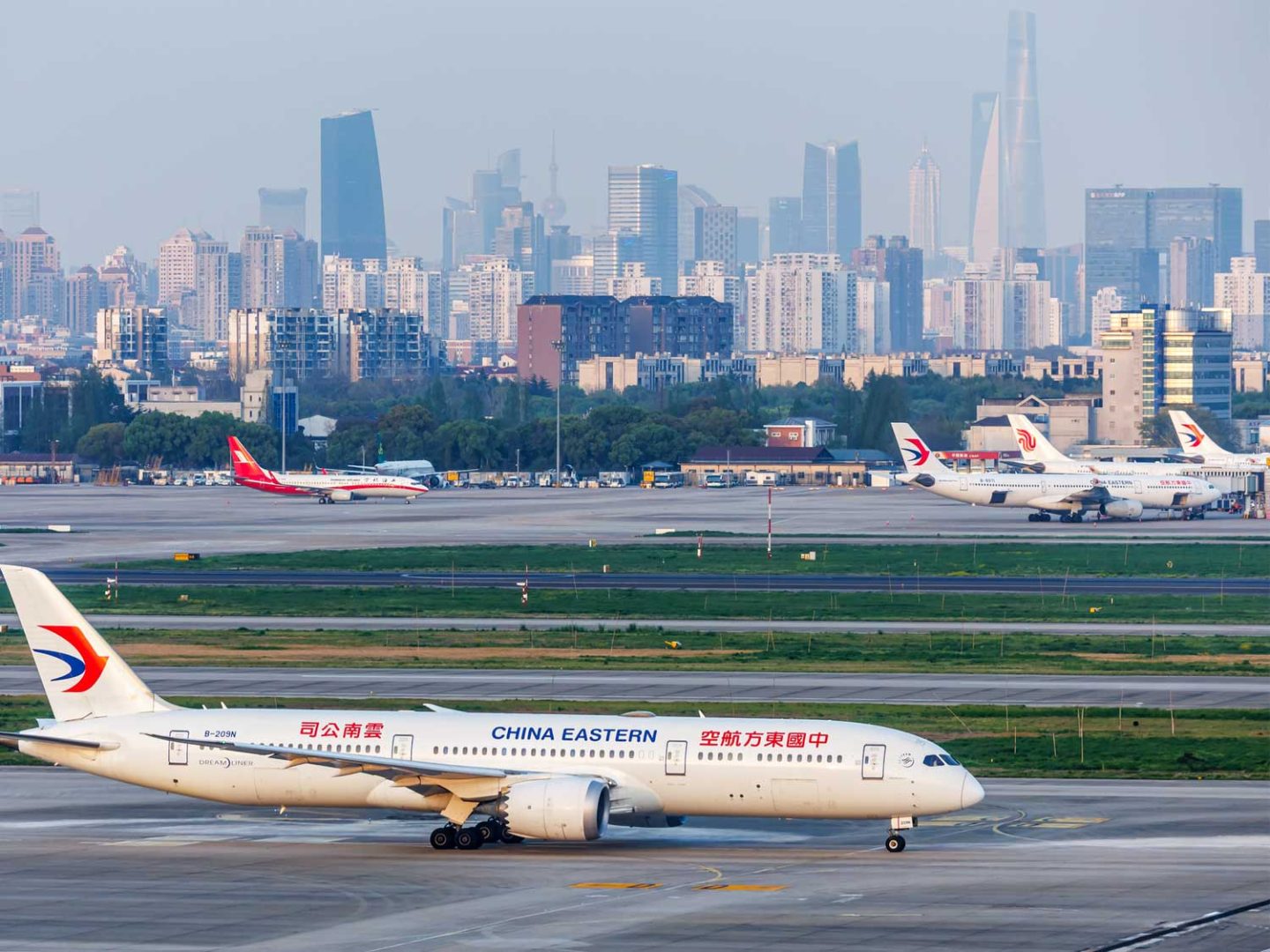
The reopening of China and the growth of new manufacturers in Southeast Asia and India, together with increasing demand of Asian consumers are significant opportunities for air carriers.

Geopolitical tensions and the tightening of global economic conditions impacted consumer sentiment and resulted in the air cargo demand decline during the second half of 2022, which followed several years of steady air market demand growth.

The largest impact on rate development was driven by the fuel crisis that followed the start of the war in Ukraine, extended flying time, less payload and slower turnaround of the aircraft.

Market drivers are for rates to move towards pre-Covid levels, but operating costs for carriers have been significantly impacted by inflation, fuel, ground and general operating costs. We are not there yet and it is likely that air freight rates will remain robust and at higher levels for some time as the base cost base has increased.

It is widely anticipated that in the second half of the year demand will strengthen for time-critical movements and there will be a recovery in air cargo demand as inventory needs replenishing and the world hopefully begins to stabilise both financially and from a consumer perspective.  We will continue to update on the ingredients and performance in the air freight market to ensure that you have the knowledge and market intel to make informed decisions throughout 2023.

Our air freight team continue to move time-sensitive cargoes globally, working to the tightest budgets and deadlines.

We work closely with our network and carrier partners to monitor market capacity and identify opportunities to use regional airports and particularly our Birmingham International Hub that will benefit our customers, with some of the most cost-effective services available in the market.

There are solutions for every critical shipment, please EMAIL Elliot Carlile for insights and advice.

No sign of China air boom busting

Air freight market update; February

Global demand for air freight remained low in early January and with no surge in demand from Asia, that would normally precede Chinese New Year, volumes have been trending downwards since the first half of 2022.

The China airfreight market has remained subdued post the Lunar New Year holidays, with volumes falling by over 10% week on week and load factors only reaching 54% in January.

The Baltic Air Freight Index (BAI) tracks weekly transactional rates for general cargo and is a weighted average of 17 key trade routes.

The BAI dropped -33.5% in the 12 months to the end of January, but despite that steep fall the index is almost double where it was in January 2020, before the start of the COVID pandemic.

While index levels for the biggest outbound destinations, including Hong Kong and Shanghai, are either similar to, or well above pre-Covid levels, that is not the case for some smaller but also significant markets, including Vietnam and India, which are slow and likely to slow further in coming weeks.

There is no denying the multiple challenges that face airfreight in 2023, with high inflation and subdued demand, and with any significant economic recovery not anticipated before the 3rd quarter, volumes will remain flat, though rising levels of business in post-lockdown China, is boosting demand and capacity into an otherwise weak market.

Looking ahead, IATA has predicted a 4.3% decline in air cargo volumes in 2023, with yields for carriers expected to decline by around 22%.

Inventory levels will need to replenish to meet demand, when it returns, but with recession likely, economists do not see that happening until the second quarter for many retailers.

The continuing conflict in Ukraine is a drag on the global economy and consumer confidence and there are uncertainties around China’s re-opening which will depress demand.

Global average airfreight rates remain above pre-Covid levels, which suggests that carriers will remain financially stable and the eCommerce sector continues to bloom, with over a fifth of retail goods purchased online and a large percentage of that flying.

Since the advent of the COVID pandemic the biggest challenge has been securing air freight capacity, but weaker demand and returning passenger flight belly-capacity means that is not an issue now on most routes and with the start of the summer holiday schedule in the second quarter, you can add in even more capacity.

There are expectations that freighter fleets may expand on a few routes, which is in addition to the sea/air capacity we can access via Dubai and Singapore (when they are economically attractive).

As soon as the global situation improves, economies are very likely to recover quickly and, as consumer confidence returns, demand for air cargo capacity will rapidly increase, which could quickly lead to capacity constraints and higher prices, but we have volume contracts in place and are ready to adapt to changing market conditions, as necessary, with alternative services, routes and cross-border solutions, if the market really does take off.

Despite the ongoing challenges, we continue to find cost-effective solutions for urgent and time-sensitive shipments, using a blend of scheduled, dedicated and chartered air cargo services. 

EMAIL Elliot Carlie for further insights and advice on our air cargo solutions, or to discuss the current market position for live urgent movements. 

EU airport

EU launch customs pre-advice regime for air cargo

On the 1st March 2023, the European Union is launching a customs pre-loading and pre-arrival safety and security programme, which will require the pre-advice of mandatory information and failure to provide the correct data in good time may lead to goods being rejected by the airline.

The EU’s Import Control System (ICS) processes large-scale advance cargo information to  monitor the security of the EU´s external border and automation of the process means that data can be exchanged more efficiently between carriers and EU member states. 

ICS2 is an automated entry process that will apply to all air cargo moving to and via the EU from the 1st March 2023 and requires customs pre-acceptance and pre-arrival security and safety clearance.

We are preparing for the new requirements by adapting our processes and systems to meet the new EU requirements, but compliance with ICS2 changes will depend on the active participation of shippers. 

Carriers will require full airway bill data, which we will provide them with, before acceptance to fulfil their responsibility for the pre-loading filing (PLACI). 

The carrier’s pre-loading and pre-arrival information data set, including the journey details, is sent to ICS2, where it is automatically reviewed for possible security threats. The pre-loading and pre-arrival messages are collectively referred to as the Entry Summary Declaration (ENS).

We will require the following information, so that we can ensure the pre-loading data is made available to the carrier in good time:

  • Shipper Name
  • Shipper Address
  • Consignee Name (including EORI number for cargo staying in Europe)
  • Consignee Address
  • Cargo Description (including 6-digit HS codes)
  • Total Quantity
  • Total Weight
  • EU Customs analyse the data and return approval to load, request for information or Screening, or direct not to load.

    When the ENS information is not provided to EU customs, shipments will be stopped and will not be processed for customs clearance, which will lead to delays and potential fines.

    We are working closely with our airline partners, test-submitting these new data elements in our airway bill and consolidation lists, to ensure the smooth implementation of this new EU customs process. 

     If you have any concerns or questions, regarding the ICS2 roll-out please EMAIL Elliot Carlile.

    US graph

    US freight market round-up

    There was no pre-CNY transpacific rush this year and with China re-opening, factories are expected to open again in the second half of February, which is why carriers have tried to maintain rates. The CNY has given US ports a respite and most are now clear, with hardly any ships waiting outside West Coast ports and very few off the East Coast and Gulf.

    Asia

    The traditional ex-Asia space and volume crunch around Chinese New Year was extremely muted and market capacity remained higher than previous years, so we expect blank sailings to continue, as the lines attempt to stabilise rates.

    Maersk’s 2022 Q4 volumes were down 14% on 2021 and it announced on Monday the “temporary suspension” of its TP20 transpacific loop, while OOCL’s North American liftings were down 16% over the year.

    Despite US retail sales performing well in 2022, amidst higher inflation, global economic turmoil is adding to the uncertainty as to how strong demand from Asia will be in the second half of this year, with the lines struggling to balance transpacific capacity, if demand does not pick up in the summer-fall peak season. 

    In the current transpacific environment in which spot rates and demand have fallen dramatically, the focus is now on cutting additional fees, such as detention charges for the late return of equipment, which can add hundreds of dollars to the total transportation cost. 

    Shippers want more free storage days and the container shipping lines say (off-the-record) that they’re willing to be flexible on detention if they receive compensatory freight rates.

    The container shipping lines claim that their problems have been amplified because their operational and administration costs increased significantly during the pandemic, and while freight rates have been dropping, the carriers’ per-unit costs have increased. On the eastbound transpacific trade-lane the lines claim units costs are up by >40% due to vessel backlogs and inland bottlenecks that add delays and costs to the supply chain, rising prices for bunker and diesel fuel, and administrative costs.

    Detention charges normally kick in after four or five days and the daily costs for chassis, which the lines lease from intermodal equipment providers, vary depending upon the contractual relationship they have with the equipment lessor. Other costs are more nebulous, such as the potential revenue that is lost when the equipment sits idle at a warehouse for days or weeks. 

    Carriers tend to be more bullish about demurrage charges, which are levied by the terminals when inbound loaded containers are left on the docks after their free days.

    Transatlantic

    The number of blank sailings from Europe to the U.S. has been minimal despite demand and rates softening and capacity is set to increase as MSC and Maersk are adding more vessels in the Mediterranean loops in the next few weeks.

    Falling volumes has assisted the easing of congestion in U.S. East Coast (USEC) and U.S. West Coast (USWC) ports, with equipment availability getting better as congestion eases. 

    Low empty stacks at inland depots are becoming established in some areas, but we still recommend equipment pick-up from the Port of Loading if possible and early shipment booking.

    From the U.S. to Europe there is plenty of USEC capacity available, but services from Gulf and USWC ports remain tight and the market is stable. Gulf Coast to Europe services continue to have medium to high utilisation levels, though this is softening with the reintroduction of capacity.

    ILWU

    During the nine-month-long impasse in negotiations, between the International Longshore and Warehouse Union (ILWU) and the Pacific Maritime Association (PMA) dockworkers have engaged in unofficial actions at ports in Southern California, Northern California, and the Pacific Northwest that, although limited in scope and duration, have nonetheless caused disruptions in cargo handling. 

    Shippers will continue to route cargo away from the West Coast, until the PMA and ILWU reach a contract settlement.  

    Since last Autumn, Los Angeles-Long Beach and the Northwest Seaport Alliance of Seattle and Tacoma have registered year-over-year declines in imports from Asia, while imports through major East and Gulf coast ports have increased.

    Air

    Capacity from Asia continues to outstrip demand, which export demand from the U.S. remains steady to all markets, with airports running at a normal pace.

    Capacity is opening up further, especially into Europe and rates remain stable week over week.

    We negotiate long-term and FAK contracts with shipping lines across all three alliances to secure space and rates, so that we can provide the best alternatives and options, whatever the situation.

    We have avoided huge detention and demurrage costs over the last few years for our customers, through slick entry to and from the USA markets and utilising our own facilities, or partner container yards, to limit the impact.

    To learn how we can support your trade with the United States, or to learn more about our ocean and air solutions, please EMAIL our Chief Commercial Officer, Andy Smith.