Top 20 cargo airports

Air freight stabilises, but elevated rates and uneven capacity remain

Air freight markets are showing signs of greater stability following the recent US-Iran peace agreement and the restoration of much of the disrupted Middle East network. 

However, while the crisis phase has eased, the market has settled into a new reality characterised by elevated rates, constrained capacity and strong demand from technology sectors.

Capacity is gradually returning, but not quickly enough to restore equilibrium. As a result, rates remain significantly higher than a year ago and supply chains continue to face a more expensive operating environment.

Recovery is underway, but the market remains tight

The reopening of airspace and the restoration of services through the Gulf have brought welcome relief. Major carriers have rebuilt much of their network and flight frequencies across the UAE and Qatar have increased steadily.

Yet the impact of the disruption has not fully disappeared. A large proportion of Asia-Europe traffic previously relied on Middle East hubs, and the loss of capacity earlier in the crisis created a structural imbalance that continues to affect the market.

Global freighter capacity has improved and some transpacific routes are approaching pre-disruption levels. However, capacity growth continues to lag demand growth. Over the past two years, cargo volumes have expanded by around 10%, while capacity has increased by only about 6%, leaving the market vulnerable to even modest disruptions.

Longer routings, restricted airspace and operational inefficiencies mean that available aircraft do not always translate into usable cargo capacity. This continues to underpin rates across key trade lanes.

Rates remain well above last year

Despite the return of additional capacity, pricing has proved remarkably resilient.

Global air freight rates have eased only marginally in recent weeks and remain more than 30% above last year's levels. Asia-Europe rates reached their highest point of the year during May before softening slightly, but remain around 50% higher than a year ago.

Volumes have grown by only low single digits, demonstrating that the current market is being driven more by restricted capacity than by explosive demand.

Weekly fluctuations continue, but the underlying balance between supply and demand remains tight enough to prevent any meaningful correction.

Technology and e-commerce continue to drive demand

Demand remains healthy rather than exceptional.

Growth is being supported by semiconductor production, AI infrastructure investment and high-value electronics shipments. Asia-Pacific volumes have increased by high single digits this year, while the flow of e-commerce cargo has also shifted as changing US regulations redirect some volumes towards European markets.

Forwarders report that demand broadly reflects global economic growth rather than a dramatic surge. However, with little spare capacity available, even moderate volume increases are sufficient to sustain elevated rates.

The summer contract season and continued integration activity among major logistics providers are also expected to support volumes during the second half of the year.

Fuel volatility remains a key variable

The easing of tensions in the Gulf has helped energy markets stabilise and jet fuel prices have fallen by around a quarter from recent peaks.

Fuel surcharges have responded with low double-digit percentage reductions, offering some relief to shippers. However, jet fuel prices remain more than 50% higher than last year's average and continue to represent a significant component of total transport costs.

While the US-Iran agreement reduces the risk of further disruption, energy markets remain sensitive and pricing mechanisms often lag underlying fuel movements, making budgeting difficult.

A firmer market, but a more predictable one

The air freight market has moved away from crisis conditions, but it has not returned to pre-disruption norms.

Capacity is recovering unevenly. Demand from technology and high-value sectors remains strong. Fuel costs continue to influence pricing, and rates are likely to remain above historical averages even if further softening occurs during the second half of the year.

For shippers, the challenge is no longer simply reacting to disruption, but adapting to a market that operates with less spare capacity and a permanently higher cost base.

Metro's air freight specialists work with customers every day to secure capacity, manage costs and build resilience into critical supply chains. If your business is facing rising airfreight costs, constrained space or time-sensitive challenges, EMAIL our Managing Director, Andrew Smith, directly.

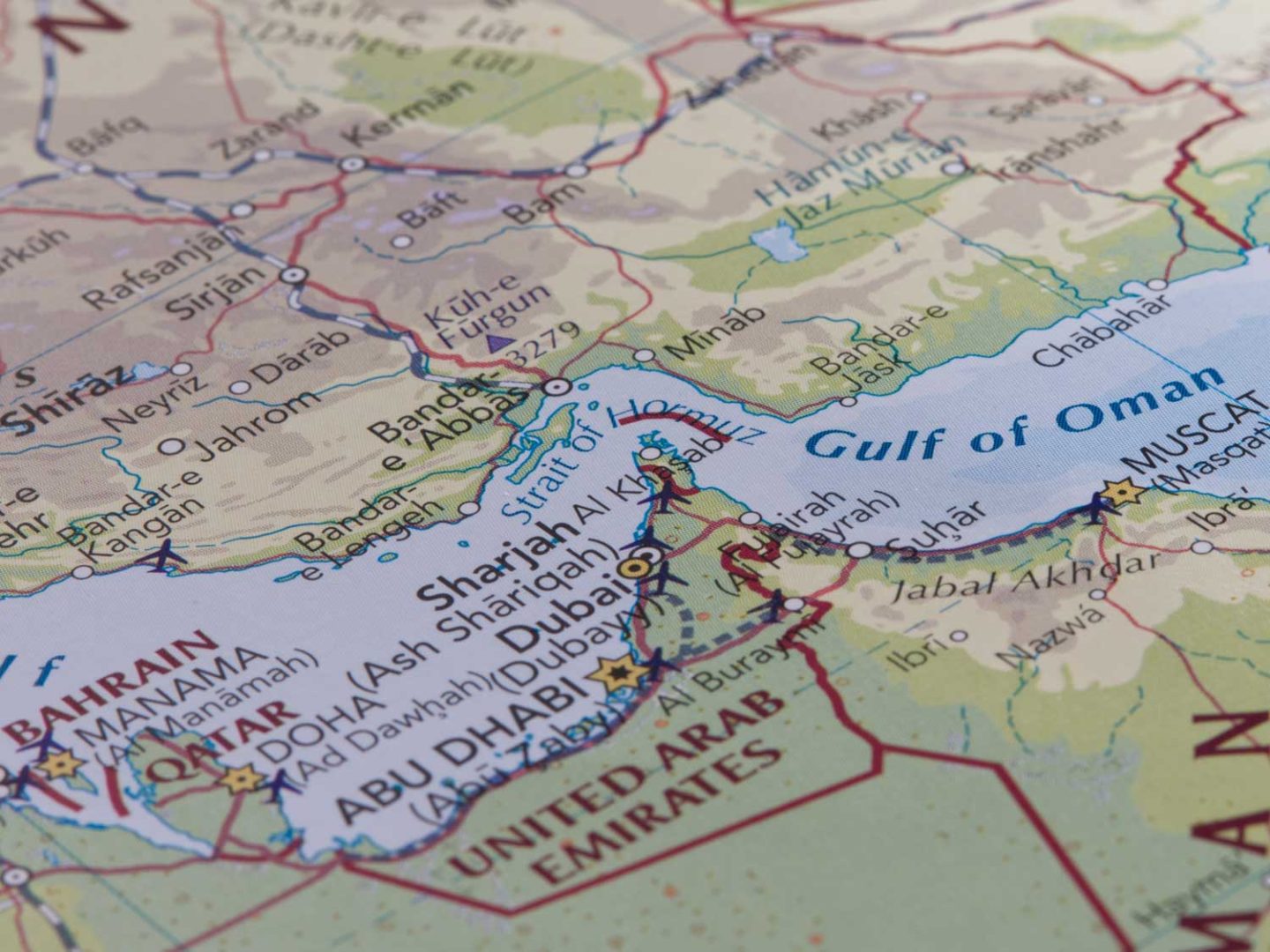
Gulf of Oman 1440x1080 1

Gulf Tensions Redefining Asia–Europe Shipping

Diplomatic efforts to reopen the Strait of Hormuz remain stalled, constraining one of the world’s most important energy corridors and prolonging the biggest disruption to global oil supply in decades. 

Public statements from Tehran suggest Hormuz will only fully reopen once the conflict with the US and Israel is resolved, and even then Iran intends to retain a significant degree of control over traffic through the waterway.

Washington, for its part, is using an oil‑export blockade and secondary sanctions to squeeze Iran’s revenues and push it towards a ceasefire and broader deal. That has created a stand‑off, with Iran using threats to shipping and de facto control of Hormuz as leverage, while the US is using control of Iran’s oil exports and financial channels as its own bargaining chip. 

Pakistan has tried to mediate between Washington and Tehran, hosting talks and shuttling ideas between the two sides, but recent rounds have produced little progress. Iran wants an end to the blockade and a clear framework for Hormuz governance before tackling nuclear issues, while the US wants concrete nuclear concessions up front, with maritime and sanctions relief later. That gap, combined with sporadic flare‑ups around the Gulf, is why many analysts now see a prolonged stand‑off or even a return to open conflict as real possibilities.

Oil and fuel markets stay tight

This deadlock is feeding directly into energy markets. Roughly a fifth to a quarter of global seaborne oil normally move through Hormuz, so any sustained disruption has an outsized effect on supply and sentiment. Since the start of the war, benchmark crude prices have jumped by around 50%.

Even partial diversions and intermittent tanker flows are enough to keep physical crude markets tight and refinery margins elevated. Refineries in Europe, the US and West Africa have shifted more output into aviation and marine fuels, but feedstock uncertainty and higher risk premiums are feeding through into bunker and jet prices. For carriers, that means bunker adjustment factors, emergency fuel surcharges and war‑risk charges are now key drivers of end‑user freight rates across ocean and air.

How this feeds into peak season

Higher oil and fuel prices ripple into every mode, and the timing of bunker adjustments now interacts directly with the traditional peak‑season calendar.

Historically, Asia–Europe peak season demand has built from late June through to China’s Golden Week in early October. In the last two years, that pattern was already starting earlier as shippers brought orders forward to deal with Red Sea diversions and longer voyage times. In 2024, Asia–Europe rates began climbing in early May and peaked by mid‑July; in 2025 the climb started in early June, again topping out around mid‑July.

This year, Hormuz‑linked fuel volatility adds another layer. Bunker costs spiked after the latest escalation at the end of February, prompting emergency surcharges on spot cargo and triggering higher quarterly bunker adjustment factors for contracts from 1 July. Many large shippers are now accelerating Asia–Europe shipments through May and June to move as much volume as possible before that quarterly BAF reset takes effect.

The result is a front‑loaded peak, with exceptionally strong demand in late May and June, driven by restocking needs and attempts to get ahead of fuel‑linked rate hikes. That demand sits on top of the disruption “premium” already visible in spot rates on key east–west trades, where prices are running several hundred dollars per 40ft above where seasonal patterns would normally put them.

For UK shippers, the geopolitical headlines around Hormuz translate into three practical realities:

  • Fuel remains a structural driver of freight costs. Even if crude prices ease from day‑to‑day, bunker and jet markets are likely to stay tight and volatile as long as Hormuz is contested.
  • Timing matters more than usual. Quarterly bunker adjustment dates and carriers’ general rate increase cycles are now key milestones; moving cargo just before a BAF reset can materially change landed cost.
  • Peak season is starting earlier and lasting longer. Instead of a neat late‑Q3 surge, shippers face a longer high‑risk period running from late spring into the autumn, with rate spikes tied as much to fuel and conflict as to consumer demand.

Against that backdrop, we recommend that shippers should plan around higher and more volatile transport costs, rather than hoping for a quick return to pre‑crisis norms. Building in more lead time, watching bunker‑linked surcharges closely, and spreading volume across services and carriers can all help reduce the risk of being caught out by the next twist in Hormuz diplomacy.

EMAIL Managing Director, Andrew Smith, today to secure capacity, protect transit times and keep your supply chain moving in a rapidly changing environment.

ships at anchor

Middle East Conflict Is Rewriting the Airfreight Peak

Airfreight has always played a dual role in supply chains, providing a reliable core mode for some flows and a pressure‑relief valve when ocean networks clog up. 

The current Middle East crisis has upended that safety‑valve function; because instead of a short, sharp bottleneck, the market has shifted into a higher‑cost, more volatile place, that is already reshaping the 2026 peak season.

The initial fear was that conflict around the Gulf would trigger a sudden collapse in air capacity and an uncontrollable spike in jet fuel costs. That fearful initial phase has now passed, but pricing has not returned to pre‑crisis norms. Freight indices show global air rates holding well above early‑2026 levels, with some Asia–Europe spot rates doubling by April and still sitting nearly 75% above pre-war levels.

Fuel surcharges are no longer climbing week by week, but they remain dramatically higher than at the start of the year. The air cargo market is not spiralling upward, but it has clearly found a new, elevated pricing floor.

Capacity returns, but on new terms

Freighter lift grew around 3% month‑on‑month in April, reversing earlier declines, although week‑on‑week growth has slowed as airlines add capacity cautiously. Gulf carriers have been rebuilding their schedules, with strong month‑on‑month growth on Asia–Middle East and Europe–Middle East lanes, and major integrators have restored intercontinental flights into Bahrain, Dubai and other Gulf hubs from Europe and Asia.

Regional airspace is open again, albeit with corridors, pre‑approvals and routing constraints. Network operators have re‑established connections that link Europe, Asia and Africa through the Middle East, and are gradually extending services deeper into the region. Backup hubs in places such as Riyadh and Muscat remain in use while the security picture stabilises, but some carriers have also found alternative “mid‑points” in India and South‑East Asia to recover Asia–Europe capacity.

Other operators remain more cautious. Some European freighter airlines are still avoiding most Middle East stops, citing airspace and security concerns, and are waiting on further guidance from aviation security authorities before fully reopening networks. Major Asian carriers have delayed the resumption of certain passenger and freighter services into Riyadh and Dubai, even as they add freighter capacity into Bangkok, Vietnam and other South‑East Asian gateways.

Recent rate data shows some easing out of major Asian hubs and on Europe–US and Europe–Gulf routes, but pricing remains historically high. Outbound Heathrow rates, for example, are still more than 40% above last year. Refineries in Europe, the US and West Africa have shifted output towards aviation fuel, airlines have rerouted networks and trimmed weaker services, and capacity is being deployed with unusual discipline. Together, these factors are preventing a rapid collapse in pricing.

What this means for the “traditional” air peak

In a normal year, shippers would expect a relatively quiet summer followed by a steady build‑up into the late‑Q3/Q4 peak. Middle East disruption has scrambled that pattern in three important ways:

  • The market has already experienced “mini peaks” in Q2, as conflict‑related diversions and fuel shocks pushed rates to levels normally associated with peak season.
  • With airspace constraints, elevated fuel costs and tight capacity discipline, the system has less slack than usual. The ability to “pivot to air” from ocean at short notice is weaker.
  • Geopolitical risk now appears to be permanently repriced into airfreight. Even if the Gulf situation stabilises, fuel surcharges and base rates are likely to remain volatile, and the industry is planning around that assumption with more frequent surcharge adjustments.

For UK shippers, the implication is that 2026’s airfreight peak is less about one clear season and more about a longer period of heightened risk, with short, unpredictable demand spikes layered onto an already expensive base. Treating the whole second half of the year as potentially “peak‑like”, budgeting for higher air costs, and pre‑booking critical flows on key lanes will be essential to avoid being caught out.

Metro works closely with airlines and partners to secure capacity, identify alternative routings and maintain reliability in a disrupted market. If your supply chain depends on airfreight, EMAIL our Managing Director, Andrew Smith, to protect space, manage cost exposure and keep your cargo moving.

refinery

Fuel shocks across ocean, air and road freight

With the Strait of Hormuz effectively closed, crude oil can still exist within the region, but refined products, which includes marine fuel, jet fuel and diesel, can no longer move freely to key consumption markets, which has triggered a sharp divergence in pricing and availability across all modes. 

For shippers, this creates a higher cost floor, as transport fuels are no longer moving in line with crude. Marine bunker, jet fuel and diesel each have their own supply chains and crack spreads (the margin between crude and refined products), and are now behaving independently of Brent. This is driving bunker-led cost pressure in ocean, jet fuel-driven inflation in air, and diesel-driven cost escalation in road. 

Ocean freight: bunker costs reset the pricing floor

In ocean freight, bunker fuel has become the dominant cost driver. Asian fuel hubs, particularly Singapore, are experiencing significant pressure as rerouted vessels increase demand while supply remains constrained.

This has created a disconnect between traditional pricing mechanisms and real-time costs. 

Emergency bunker surcharges are being applied across major trade lanes, while standard adjustment factors lag behind market conditions and may only catch up with current fuel inflation later in the year.

The result is a structurally higher cost base, with ocean rates now reflecting fuel volatility rather than underlying demand alone. 

Air freight: jet fuel shortage tightens capacity

Air freight is facing the most acute fuel-driven pressure. Gulf refineries, which typically supply jet fuel to Europe and Asia, are unable to export at normal levels, creating a shortage of refined product.

This has driven a sharp increase in jet fuel prices, with crack spreads widening dramatically from around $16 per barrel pre-crisis to approximately $100 in some regions. 

This regional price divergence means that Asia and Middle East jet fuel benchmarks sit substantially above North American levels, meaning that every kilo of freight uplifted is starting from a materially higher fuel cost base. 

As a result, airlines are adjusting networks, reducing marginal capacity and prioritising fuel efficiency, tightening available uplift and sustaining elevated airfreight rates.

Road freight: diesel inflation feeds through to transport costs

Road freight is also seeing significant cost pressure, with diesel prices rising independently of crude due to refinery constraints and regional supply dynamics.

Fuel accounts for roughly 30% of total truck operating costs, meaning sustained diesel inflation is already feeding through into pricing. 

At the same time, increased reliance on overland routes across the Middle East is adding further demand pressure, compounding both cost and capacity challenges.

What this means for shippers

  • Expect fuel-driven cost volatility across all modes
  • Plan for longer and less predictable transit times
  • Build flexibility into routing and inventory strategies
  • Monitor surcharge mechanisms

Fuel disruption, routing constraints and capacity pressure are now closely linked. Managing one without the others is no longer effective.

Metro works with customers to model alternative routes, balance mode selection and manage cost exposure in real time. If you are seeing rising costs, delays or uncertainty in your supply chain, EMAIL managing director, Andrew Smith, to secure the most effective solution for your cargo.