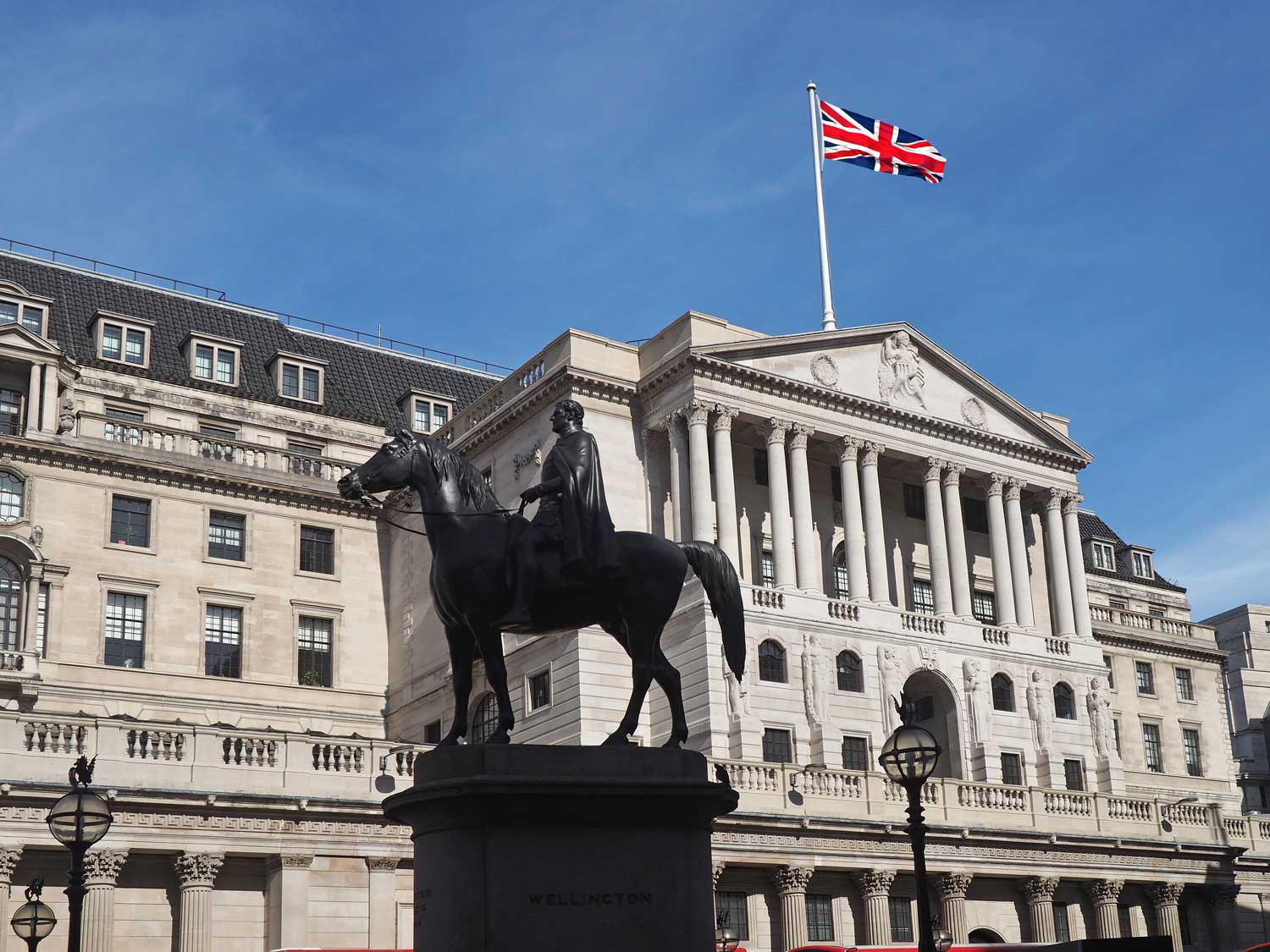
Bank of England

UK Faces Highest Inflation in G7 as Sterling Slides Against Dollar

The British pound has come under renewed pressure this week, falling against the U.S. dollar amid a backdrop of global monetary shifts and troubling domestic inflation forecasts.

The GBP/USD exchange rate dipped as investors digested signals from central banks and fresh warnings from international bodies about the UK’s economic trajectory.

Sterling Weakens as Dollar Gains Strength

The pound’s decline is largely attributed to a strengthening U.S. dollar, buoyed by cautious Federal Reserve commentary and delayed economic data due to the ongoing U.S. government shutdown.

Fed Chair Jerome Powell and other officials have hinted at a slower pace of rate cuts, citing labor market fragility and persistent inflationary pressures. This has led markets to reassess expectations, favouring the dollar over riskier assets.

Meanwhile, easing tensions between the U.S. and China—particularly around tariffs—have reduced global risk aversion, further supporting the greenback.

UK Inflation: A Growing Concern

Adding to the pound’s woes is the UK’s inflation outlook, which is now forecast to be the highest among G7 nations in both 2025 and 2026, according to the International Monetary Fund (IMF) and the Organisation for Economic Co-operation and Development (OECD).

IMF Forecasts:

    • 2025: UK inflation to average 3.4%
    • 2026: Expected to ease to 2.5%, still above the G7 average

OECD Forecasts:

    • 2025: UK inflation at 3.5%
    • 2026: Slight decline to 2.7%, second-highest in the G7

This inflation surge is being driven by:

  • Rising food and hospitality prices
  • Increased labour costs due to higher national insurance and minimum wage
  • Elevated regulated energy and utility bills
  • Persistent supply chain and trade frictions

Implications for Households and Policy

For UK households, this means continued pressure on living costs, with grocery and energy bills remaining stubbornly high. The Bank of England faces a delicate balancing act as it attempts to bring inflation back to its 2% target without stifling growth.

The inflation outlook also poses a challenge for Chancellor Rachel Reeves ahead of the November Budget, with speculation mounting around potential tax hikes to plug a £20–30 billion fiscal gap.

Looking Ahead

With inflation set to outpace all other G7 economies and the pound under pressure, the UK’s economic policymakers face a critical period. Markets will be watching closely for signals from the Bank of England and the Treasury as they navigate this complex landscape.

Metro combines market monitoring with cost modelling, contract strategy and logistics optimisation to help you seize opportunities and protect margins.

EMAIL Laurence Burford, CFO, for expert guidance on risk management and supply chain resilience.
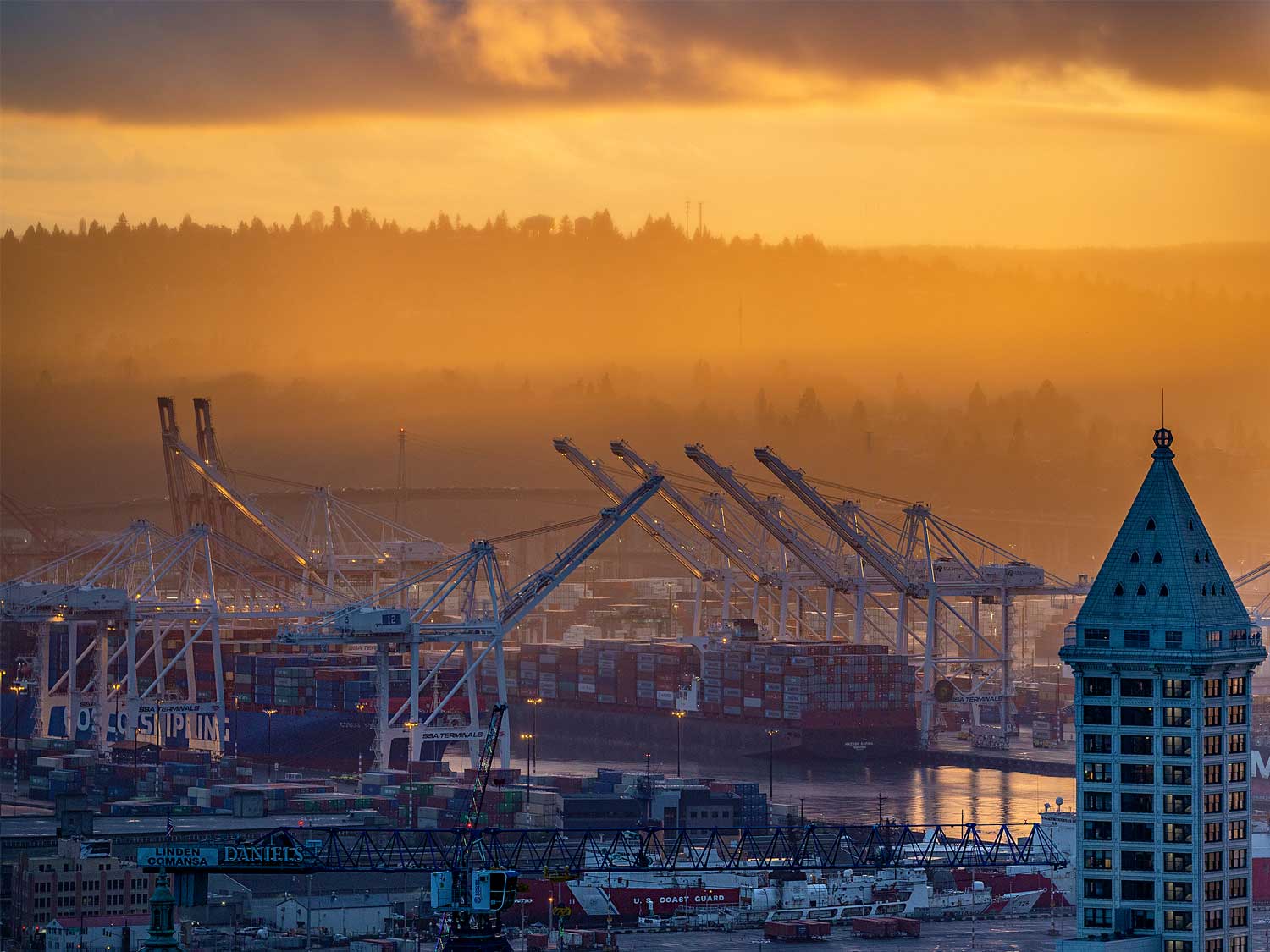
Seattle

Carriers Pull Sailings and Add GRIs as US Port Fees Add New Cost Layer

Container lines are tightening capacity to defend freight rates just as new U.S. port fees on China vessels start on 14 October—costs that carriers say will be passed through to shippers.

In the run-up to contracting season, the shipping alliances have stepped up blank sailings to support pricing. Between weeks 42–46, carriers withdrew 41 of 716 planned east–west sailings with the heaviest cuts on the transpacific and Asia–Europe corridors. It means that 6% of capacity, or 544,000 TEU have been stripped from transpacific and Asia–Europe trade-lanes over the past four weeks. 

Spot rates remain soft, with Drewry’s composite World Container Index dipping 1% in week 41, as carriers signal fresh GRIs of up to $2,300/teu and congestion/peak surcharges as they curb supply with voids and slow steaming.

USTR port fees are active

From 14 October, the United States is imposing USTR “special port service fees” on China-linked tonnage, with payment required in advance of arrival to avoid being denied lading, unlading or clearance.

For Chinese-owned/operated vessels, the fee starts at $50 per net ton, stepping up annually to 2028. For Chinese-built ships (not China-operated), the fee is the higher of $18 per net ton or $120 per discharged container, while foreign-built vehicle carriers face $46 per net ton from today.

What it means for shippers

  • The USTR regime adds a new fixed cost per container on top of base ocean rates and surcharges, and carriers are preparing pass-throughs.
  • With 6% of departures already pulled on main east–west trades and more voids likely, load factors are rising on the sailings that remain, which will add upward price pressure.
  • U.S. rules emphasise USTR pre-payment and proof on arrival, with non-compliance risks of port denial, cascading delays to inland supply chains and additional cost.

The container shipping lines are using their capacity and surcharge levers to prop up rates, while the USTR/China port fees, effective from last Tuesday, inject a non-market cost that will filter through to shippers. Expect more targeted blanks, GRIs with short notice, and more surcharges on Asia–Europe and transpacific flows into November.

At Metro, we work hand-in-hand with our network and carrier partners to keep cargo moving, even when the market is disrupted.

From time-sensitive shipments to sudden blankings, our sea freight team secure the right space to safeguard your supply chains and shield you from GRIs.

EMAIL Andrew Smith, Managing Director, today to explore how we can protect your US supply chains and insulate you from threatened GRIs.

Rachel Reeves 1440x1080 1

UK Economic Pulse: Stagnation in July Signals a Fragile Balance for Trade

The UK economy stalled in July 2025, with GDP flatlining after June’s 0.4% rise. While this performance matched market expectations, the detail matters: services and construction posted marginal gains, but a 0.9% drop in industrial output dragged the total to zero.

For manufacturers, the 1.3% decline in production over the three months to July is a warning sign. Weakness in sectors such as pharmaceuticals, which typically underpin high-value exports, reflects reduced investment and ongoing global trade frictions. For importers, slower factory output means less demand for inbound raw materials and components, while exporters face thinner volumes and heightened uncertainty around international orders.

Services activity edged up by 0.1% in July, supported by retail and hospitality, while construction expanded 0.2%. For retailers, this stability is important as consumer-facing demand keeps supply chains active and underpins steady import flows of finished goods.

The resilience of construction, meanwhile, sustains demand for bulk transport, materials distribution, and specialist haulage.

Retail and eCommerce continue to play a vital role in logistics real estate, driving nearly one-third of all industrial and warehouse take-up in the 12 months to Q2 2025. However, rising vacancies and slower rental growth suggest a more competitive property market, with prime property leading.

A Slow-Growth Outlook

Economists forecast modest UK growth of 0.3% for Q3, keeping recession fears at bay but offering little upside. For manufacturers and exporters, this translates into subdued demand at home and limited relief from external pressures. Importers may see steadier conditions if services-driven consumer activity holds, but global headwinds, from tariffs to shifting sourcing strategies, will continue.

For logistics providers, the picture is mixed: growth in some verticals offsets decline in others, but rising operating costs and skills shortages are eroding margins. Many firms are delaying expansion or fleet upgrades until greater economic clarity emerges.

The Bank of England cut rates to 4% in August but has since signalled a pause on further easing. Inflation, still close to 4%, and slowing wage growth leave policymakers cautious. 

For SMEs in logistics and manufacturing, elevated borrowing costs remain a major obstacle. Access to affordable credit is restricted, curbing investment in new vehicles, facilities, and technology. Nearly one-third of smaller operators report scaling back operations due to finance constraints.

Retailers and importers, heavily reliant on efficient logistics, are indirectly affected. Higher financing costs across the supply chain can reduce investment in capacity and innovation, tightening the system at a time when resilience is most needed.

Logistics as an Economic Anchor

Despite these challenges, the logistics industry continues to prove its value. Contributing over £170 billion to the economy in 2024 and employing more than 8% of the workforce, logistics underpins every sector that manufacturers, retailers, importers, and exporters depend on.

Occupier demand for prime logistics space remains steady, investment volumes are expected to rise in the second half of the year, and long-term fundamentals are strong. Yet the market is shifting. New warehouse completions and a rise in secondhand stock are pushing up vacancy rates, softening rents, and increasing incentives for occupiers, which may present opportunities to secure favourable terms in a cooling market.

Conclusion: Caution and Opportunity

July’s GDP stagnation is not a crisis, but a signal that the economy is balancing precariously. Manufacturers face declining output, retailers and construction are holding the line, and importers and exporters must manage supply chains against a backdrop of tariffs, weak trade flows, and limited finance.

Logistics sits at the centre of this crossroads. The sector is challenged, but it also offers opportunities—from property leverage to supply chain optimisation—for businesses that act decisively. For shippers, the message is clear: staying agile, building resilience, and forging strong logistics partnerships will be critical to navigating the months ahead.

With growth flat and costs elevated, every decision on sourcing, inventory, capacity and space matters. Metro combines market monitoring with cost modelling, contract strategy and logistics optimisation to help you seize opportunities and protect margins.

EMAIL Laurence Burford, CFO, for expert guidance on risk management and supply chain resilience.

EU UK negotiations

Resetting UK–EU trade

Five years on from the Trade and Cooperation Agreement (TCA) and with the 2026 review fast approaching, the UK and EU have a chance to move beyond firefighting and design a trading relationship that works in today’s economy.

A new Parliamentary report from the Chartered Institute of Export & International Trade sets out a practical roadmap to turn trade friction into advantage, by prioritising digital connectivity, trusted cooperation and real-world fixes for businesses, especially SMEs.

Exports in services have grown, but goods trade, and particularly for smaller exporters, still hits too many barriers. The Institute proposes a coherent package of measures that reduces cost and complexity at the border, unlocks mobility and skills, and aligns climate and industrial policies so supply chains can invest with confidence.

h4b>The Institute’s eight recommendations

1) Streamline borders and customs

  • Build interoperable UK–EU digital trade corridors to remove duplication and delays.
  • Create a Common Security Zone to simplify newer safety and security requirements.
  • Align the UK’s Trade Strategy with the EU Customs Reform programme to deliver a seamless user experience.

2) Make SPS trade predictable

  • Implement the Common Sanitary and Phytosanitary (SPS) Area via a joint SPS committee (as trailed at the 2025 summit).
  • Work directly with industry to fix recurring pain points in food, plant and animal movements.

3) Modernise rules of origin

  • Simplify and harmonise product-specific rules in the TCA.
  • Enable diagonal cumulation with shared FTA partners.
  • Consider UK participation in the Pan-Euro-Mediterranean (PEM) Convention to increase sourcing flexibility.

4) Deepen regulatory cooperation

  • Use outcome-based equivalence and dynamic alignment where it matters most.
  • Strike targeted “side deals”, including mutual recognition for conformity assessment, and collaborate on emerging areas such as AI and digital trade.

5) Link carbon and energy frameworks

  • Link UK and EU emissions trading schemes and align CBAM approaches.
  • Broaden energy cooperation to support secure, affordable decarbonisation.

6) Back Northern Ireland’s dual-market role

  • Build on the Windsor Framework to deepen trade, energy and mobility links.
  • Position Northern Ireland as a practical model of friction-reduction that benefits both sides.

7) Enable skills and mobility

  • Launch a reciprocal youth mobility scheme and explore re-entry to Erasmus+.
  • Accelerate mutual recognition of professional qualifications in high-impact sectors.

8) Align industrial and digital policy

  • Establish a UK–EU Industrial Cooperation Council to coordinate investment, innovation and regulation.
  • Add a dedicated digital trade chapter to future-proof the partnership.

The last five years have shown that technical workarounds are not enough. SMEs need consistent rules, fewer duplicative checks and clearer pathways. By sequencing border simplification, SPS certainty and origin reform, policymakers can cut costs quickly while building a platform for long-term competitiveness.

What success would look like

  • Lower cost-to-export for SMEs through simplified formalities and interoperable systems.
  • Faster, more predictable food flows via an SPS framework that solves problems at source.
  • More resilient supply chains thanks to compatible rules and modernised origin provisions.
  • A digital-ready TCA that reflects how firms actually trade in 2026 and beyond.

From rules-of-origin compliance to fast-changing customs requirements, our experts deliver integrated and automated solutions that simplify compliance, cut costs and keep your trade moving.

To learn about our automated CuDoS platform and how we can help you navigate the evolving UK–EU trade environment with confidence, please EMAIL our Managing Director Andrew Smith today.