USMCA

USMCA renewal talks critical for North American manufacturing supply chains

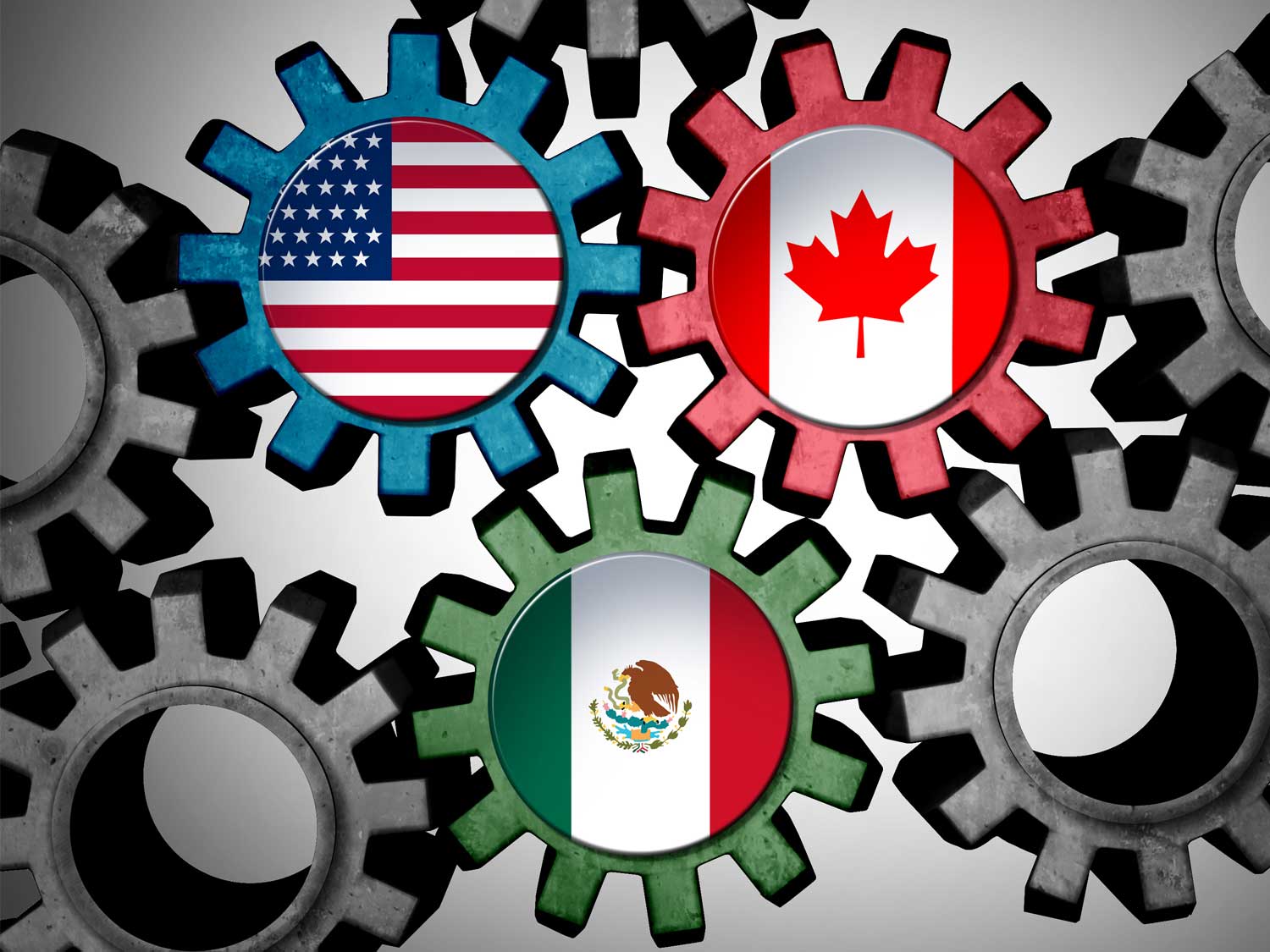
The United States-Mexico-Canada Agreement (USMCA) is the legal and operational backbone of a $31 trillion North American trading bloc, and its renewal process is a live strategic risk factor for manufacturers and automotive brands active in the region.

Renewal negotiations are one of the most strategically important issues facing North American manufacturers, automotive brands and industrial supply chains.

While the agreement itself is not due to expire immediately, the failure to secure a straightforward 16-year renewal by the July 2026 review milestone is creating growing uncertainty across sectors heavily reliant on integrated US, Mexican and Canadian manufacturing operations.

The negotiations are particularly important for automotive, machinery, steel, aluminium and advanced manufacturing supply chains that have spent years restructuring production around the USMCA framework.

Why USMCA matters

The USMCA effectively underpins North America’s position as a highly integrated manufacturing bloc, supporting nearly $2 trillion in annual trade and deeply interconnected cross-border production networks.

The agreement provides the legal and operational framework that allows manufacturers to build complex regional supply chains with long-term investment certainty, streamlined customs processes and unified rules governing trade across all three countries.

That stability has become increasingly valuable as global manufacturers continue reducing dependence on long-distance Asian supply chains and accelerating near-shoring strategies closer to North American demand centres.

Mexico, in particular, has become a major beneficiary of this shift, offering shorter transit times, lower logistics risk and strong manufacturing integration with US production.

Automotive supply chains remain at the centre of negotiations

USMCA rules already require 75% of vehicle content to originate within North America for tariff-free treatment, helping drive major investment into regional automotive manufacturing and supplier networks.

Modern automotive production across North America is now deeply interconnected, with components often crossing borders multiple times before final vehicle assembly.

A single component may be stamped in Mexico, machined in the US and assembled into a finished vehicle in Canada or back in Mexico. That level of integration means even relatively small tariff or rules-of-origin changes can have significant operational and commercial consequences.

The Trump administration is now reportedly pushing for even higher US content requirements within vehicles as part of the renewal process, alongside broader efforts to bring more manufacturing activity back into the United States.

At the same time, steel, aluminium and automotive tariffs remain major areas of disagreement between the three countries.

Negotiations becoming more complex and politically sensitive

Formal negotiations between the US and Mexico are now under way, while Canada is still waiting to enter full trilateral discussions with Washington.

Current expectations are that the July review deadline will pass without a full agreement, triggering an extended review and negotiation period rather than an immediate collapse of the agreement itself.

In practical terms, USMCA would remain operational, but uncertainty around future rules, tariffs and investment conditions could persist for months or even years.

That uncertainty matters.

Manufacturers making long-term investment decisions around factories, tooling, supplier sourcing and critical minerals need confidence that North American trade rules will remain stable over the life of those investments.

The White House is also increasingly using separate bilateral negotiations alongside the formal USMCA review process, creating additional complexity around tariffs, automotive rules, steel, aluminium, labour standards and critical minerals.

For many manufacturers, the agreement is now viewed not simply as a trade deal, but as a strategic foundation for North American industrial resilience.

What this means for manufacturers and importers

For businesses operating across North America, the current environment reinforces the importance of supply chain flexibility, customs planning and close monitoring of trade policy developments.

Automotive, industrial and manufacturing sectors remain particularly exposed to any changes involving rules of origin, tariffs, customs procedures or regional content requirements.

While the direction of negotiations remains uncertain, all three governments continue publicly supporting the importance of maintaining a trilateral North American trade structure.

The challenge now is whether that shared strategic interest can overcome increasingly difficult political and economic negotiations.

Metro helps customers manage complex cross-border logistics, customs compliance and North American supply chain strategies across the US, Mexico and Canada.

To discuss your North American logistics requirements or USMCA-related supply chain planning, EMAIL Managing Director Andrew Smith.

Gulf of Oman 1440x1080 1

Gulf Tensions Redefining Asia–Europe Shipping

Diplomatic efforts to reopen the Strait of Hormuz remain stalled, constraining one of the world’s most important energy corridors and prolonging the biggest disruption to global oil supply in decades. 

Public statements from Tehran suggest Hormuz will only fully reopen once the conflict with the US and Israel is resolved, and even then Iran intends to retain a significant degree of control over traffic through the waterway.

Washington, for its part, is using an oil‑export blockade and secondary sanctions to squeeze Iran’s revenues and push it towards a ceasefire and broader deal. That has created a stand‑off, with Iran using threats to shipping and de facto control of Hormuz as leverage, while the US is using control of Iran’s oil exports and financial channels as its own bargaining chip. 

Pakistan has tried to mediate between Washington and Tehran, hosting talks and shuttling ideas between the two sides, but recent rounds have produced little progress. Iran wants an end to the blockade and a clear framework for Hormuz governance before tackling nuclear issues, while the US wants concrete nuclear concessions up front, with maritime and sanctions relief later. That gap, combined with sporadic flare‑ups around the Gulf, is why many analysts now see a prolonged stand‑off or even a return to open conflict as real possibilities.

Oil and fuel markets stay tight

This deadlock is feeding directly into energy markets. Roughly a fifth to a quarter of global seaborne oil normally move through Hormuz, so any sustained disruption has an outsized effect on supply and sentiment. Since the start of the war, benchmark crude prices have jumped by around 50%.

Even partial diversions and intermittent tanker flows are enough to keep physical crude markets tight and refinery margins elevated. Refineries in Europe, the US and West Africa have shifted more output into aviation and marine fuels, but feedstock uncertainty and higher risk premiums are feeding through into bunker and jet prices. For carriers, that means bunker adjustment factors, emergency fuel surcharges and war‑risk charges are now key drivers of end‑user freight rates across ocean and air.

How this feeds into peak season

Higher oil and fuel prices ripple into every mode, and the timing of bunker adjustments now interacts directly with the traditional peak‑season calendar.

Historically, Asia–Europe peak season demand has built from late June through to China’s Golden Week in early October. In the last two years, that pattern was already starting earlier as shippers brought orders forward to deal with Red Sea diversions and longer voyage times. In 2024, Asia–Europe rates began climbing in early May and peaked by mid‑July; in 2025 the climb started in early June, again topping out around mid‑July.

This year, Hormuz‑linked fuel volatility adds another layer. Bunker costs spiked after the latest escalation at the end of February, prompting emergency surcharges on spot cargo and triggering higher quarterly bunker adjustment factors for contracts from 1 July. Many large shippers are now accelerating Asia–Europe shipments through May and June to move as much volume as possible before that quarterly BAF reset takes effect.

The result is a front‑loaded peak, with exceptionally strong demand in late May and June, driven by restocking needs and attempts to get ahead of fuel‑linked rate hikes. That demand sits on top of the disruption “premium” already visible in spot rates on key east–west trades, where prices are running several hundred dollars per 40ft above where seasonal patterns would normally put them.

For UK shippers, the geopolitical headlines around Hormuz translate into three practical realities:

  • Fuel remains a structural driver of freight costs. Even if crude prices ease from day‑to‑day, bunker and jet markets are likely to stay tight and volatile as long as Hormuz is contested.
  • Timing matters more than usual. Quarterly bunker adjustment dates and carriers’ general rate increase cycles are now key milestones; moving cargo just before a BAF reset can materially change landed cost.
  • Peak season is starting earlier and lasting longer. Instead of a neat late‑Q3 surge, shippers face a longer high‑risk period running from late spring into the autumn, with rate spikes tied as much to fuel and conflict as to consumer demand.

Against that backdrop, we recommend that shippers should plan around higher and more volatile transport costs, rather than hoping for a quick return to pre‑crisis norms. Building in more lead time, watching bunker‑linked surcharges closely, and spreading volume across services and carriers can all help reduce the risk of being caught out by the next twist in Hormuz diplomacy.

EMAIL Managing Director, Andrew Smith, today to secure capacity, protect transit times and keep your supply chain moving in a rapidly changing environment.

Maersk at FXT 1440x1080 1

Hormuz Is Pulling the Ocean Peak Forward

Container shipping normally follows a traditional demand curve, with rates climbing into Chinese New Year, softening through spring, and then building towards a Q3 peak. But not this year.

The crisis around the Strait of Hormuz is introducing an extra layer of cost and volatility, which means that instead of a gentle spring lull, the market is moving into peak‑like conditions earlier, and from a higher baseline.

Analysis of more than a decade of data shows how sharply 2026 has diverged from normal patterns on key trade lanes.

Shanghai–Los Angeles rates typically peak three weeks before Chinese New Year as shippers rush orders out, then fall into a sustained post‑holiday slump. This year, the usual pre‑CNY dip was deeper than normal and was followed by an unusually sharp post‑holiday drop. Instead of then drifting sideways, spot rates turned and climbed steeply, with east and west coast transpacific spot rates well above where they would usually sit at this point in the cycle.

On Asia–North Europe, the deviation from normal seasonality emerged slightly earlier, with a two‑week offset, and post‑CNY declines less severe than on the transpacific. The premium over “normal” seasonal levels initially surged, then faded, only to re‑emerge as rates climbed again and remain elevated. The Mediterranean trade has swung even more sharply, with early premiums peaking, dropping back to zero and then returning close to the highest levels.

Analysts are cautious about attributing every dollar of these increases to Hormuz, acknowledging that localised supply‑and‑demand factors also play a role. But the break from normal seasonality coincides closely with the crisis, and there is now a clear correlation between Gulf risk and an extra layer of cost in spot pricing.

Early peak, fuel pressure and front‑loading

Since carriers began diverting away from the Red Sea, importers have tended to order earlier to make sure boxes arrive before China’s Golden Week at the start of October. With longer transit times, containers loaded after mid‑October may not reach destination in time for the main holiday season, so some of the traditional late‑Q3 peak has already been brought forward into late Q2 and early Q3 in recent years.

In 2024, Asia–Europe rates started climbing in early May and peaked by mid‑July. In 2025, after seeing that the previous year’s May start was probably earlier than necessary, prices picked up in early June and again peaked in mid‑July. This year, some carriers are already reporting an uptick in demand on Asia–North Europe and Asia–Med, with daily prices already reacting to mid‑May general rate increase attempts and further rate hikes announced for June.

On top of that, bunker costs jumped after the latest Middle East escalation at the end of February. Emergency fuel surcharges quickly appeared on spot shipments, but contract cargo is tied to quarterly bunker adjustment factors. That has created a powerful timing incentive, with exceptionally strong shipper demand through late May and into June from larger cargo owners looking to move as much as possible before 1 July, when the next quarterly BAF reset will automatically push up contract freight rates.

Capacity constraints and blankings

Higher oil prices and longer routes via the Cape or alternative legs around the region have increased bunker and operating costs and tied up a large slice of global container capacity in longer voyage cycles.

At the same time, the supply side is tight. Few new ships are being delivered directly into the main Asia–Europe and transpacific loops in the near term, keeping the market “short of ships” and charter rates firm. Alliance partners are also using blanked sailings more actively. Instead of restricting blankings to Chinese New Year and Golden Week, carriers are using blankings as a flexible tool to match capacity to demand and support higher rate levels.

New alliance structures and more tactical service adjustments allow carriers to shift capacity more quickly between trades. For shippers, that can translate into sudden changes in available space and short‑notice rate moves, even outside the traditional peak window.

What this means for the 2026 ocean peak

Taken together, these factors are pulling peak‑season conditions forward and widening the window of risk:

  • Rates on key east–west trades are already running several hundred dollars per 40ft above where they would normally be for this stage in the year, even before the usual late‑Q3 build‑up.
  • Bookings and volumes on Asia–Europe trades are strengthening earlier, as shippers bring orders forward to secure space, get ahead of bunker‑linked increases on 1 July and hedge against further Gulf‑related shocks.
  • With limited new capacity entering the market, more dynamic blanking strategies and ongoing uncertainty around Hormuz and the wider Middle East, the system has less slack to absorb sudden volume surges later in the year.

For UK importers, the practical message is that the “traditional” Q3 ocean peak is being replaced by a longer, more uncertain high‑risk period, starting in late spring and running through to the autumn. 

Some of the early‑season rate increases may not fully stick, but geopolitical risk and fuel cost pressure are now baked into the market rather than being a passing anomaly. 

Through proactive capacity planning and contingency-focused supply chain support, Metro helps customers respond effectively to disruption, changing demand patterns and peak season uncertainty. EMAIL Managing Director, Andrew Smith, to learn more.

ships at anchor

Middle East Conflict Is Rewriting the Airfreight Peak

Airfreight has always played a dual role in supply chains, providing a reliable core mode for some flows and a pressure‑relief valve when ocean networks clog up. 

The current Middle East crisis has upended that safety‑valve function; because instead of a short, sharp bottleneck, the market has shifted into a higher‑cost, more volatile place, that is already reshaping the 2026 peak season.

The initial fear was that conflict around the Gulf would trigger a sudden collapse in air capacity and an uncontrollable spike in jet fuel costs. That fearful initial phase has now passed, but pricing has not returned to pre‑crisis norms. Freight indices show global air rates holding well above early‑2026 levels, with some Asia–Europe spot rates doubling by April and still sitting nearly 75% above pre-war levels.

Fuel surcharges are no longer climbing week by week, but they remain dramatically higher than at the start of the year. The air cargo market is not spiralling upward, but it has clearly found a new, elevated pricing floor.

Capacity returns, but on new terms

Freighter lift grew around 3% month‑on‑month in April, reversing earlier declines, although week‑on‑week growth has slowed as airlines add capacity cautiously. Gulf carriers have been rebuilding their schedules, with strong month‑on‑month growth on Asia–Middle East and Europe–Middle East lanes, and major integrators have restored intercontinental flights into Bahrain, Dubai and other Gulf hubs from Europe and Asia.

Regional airspace is open again, albeit with corridors, pre‑approvals and routing constraints. Network operators have re‑established connections that link Europe, Asia and Africa through the Middle East, and are gradually extending services deeper into the region. Backup hubs in places such as Riyadh and Muscat remain in use while the security picture stabilises, but some carriers have also found alternative “mid‑points” in India and South‑East Asia to recover Asia–Europe capacity.

Other operators remain more cautious. Some European freighter airlines are still avoiding most Middle East stops, citing airspace and security concerns, and are waiting on further guidance from aviation security authorities before fully reopening networks. Major Asian carriers have delayed the resumption of certain passenger and freighter services into Riyadh and Dubai, even as they add freighter capacity into Bangkok, Vietnam and other South‑East Asian gateways.

Recent rate data shows some easing out of major Asian hubs and on Europe–US and Europe–Gulf routes, but pricing remains historically high. Outbound Heathrow rates, for example, are still more than 40% above last year. Refineries in Europe, the US and West Africa have shifted output towards aviation fuel, airlines have rerouted networks and trimmed weaker services, and capacity is being deployed with unusual discipline. Together, these factors are preventing a rapid collapse in pricing.

What this means for the “traditional” air peak

In a normal year, shippers would expect a relatively quiet summer followed by a steady build‑up into the late‑Q3/Q4 peak. Middle East disruption has scrambled that pattern in three important ways:

  • The market has already experienced “mini peaks” in Q2, as conflict‑related diversions and fuel shocks pushed rates to levels normally associated with peak season.
  • With airspace constraints, elevated fuel costs and tight capacity discipline, the system has less slack than usual. The ability to “pivot to air” from ocean at short notice is weaker.
  • Geopolitical risk now appears to be permanently repriced into airfreight. Even if the Gulf situation stabilises, fuel surcharges and base rates are likely to remain volatile, and the industry is planning around that assumption with more frequent surcharge adjustments.

For UK shippers, the implication is that 2026’s airfreight peak is less about one clear season and more about a longer period of heightened risk, with short, unpredictable demand spikes layered onto an already expensive base. Treating the whole second half of the year as potentially “peak‑like”, budgeting for higher air costs, and pre‑booking critical flows on key lanes will be essential to avoid being caught out.

Metro works closely with airlines and partners to secure capacity, identify alternative routings and maintain reliability in a disrupted market. If your supply chain depends on airfreight, EMAIL our Managing Director, Andrew Smith, to protect space, manage cost exposure and keep your cargo moving.