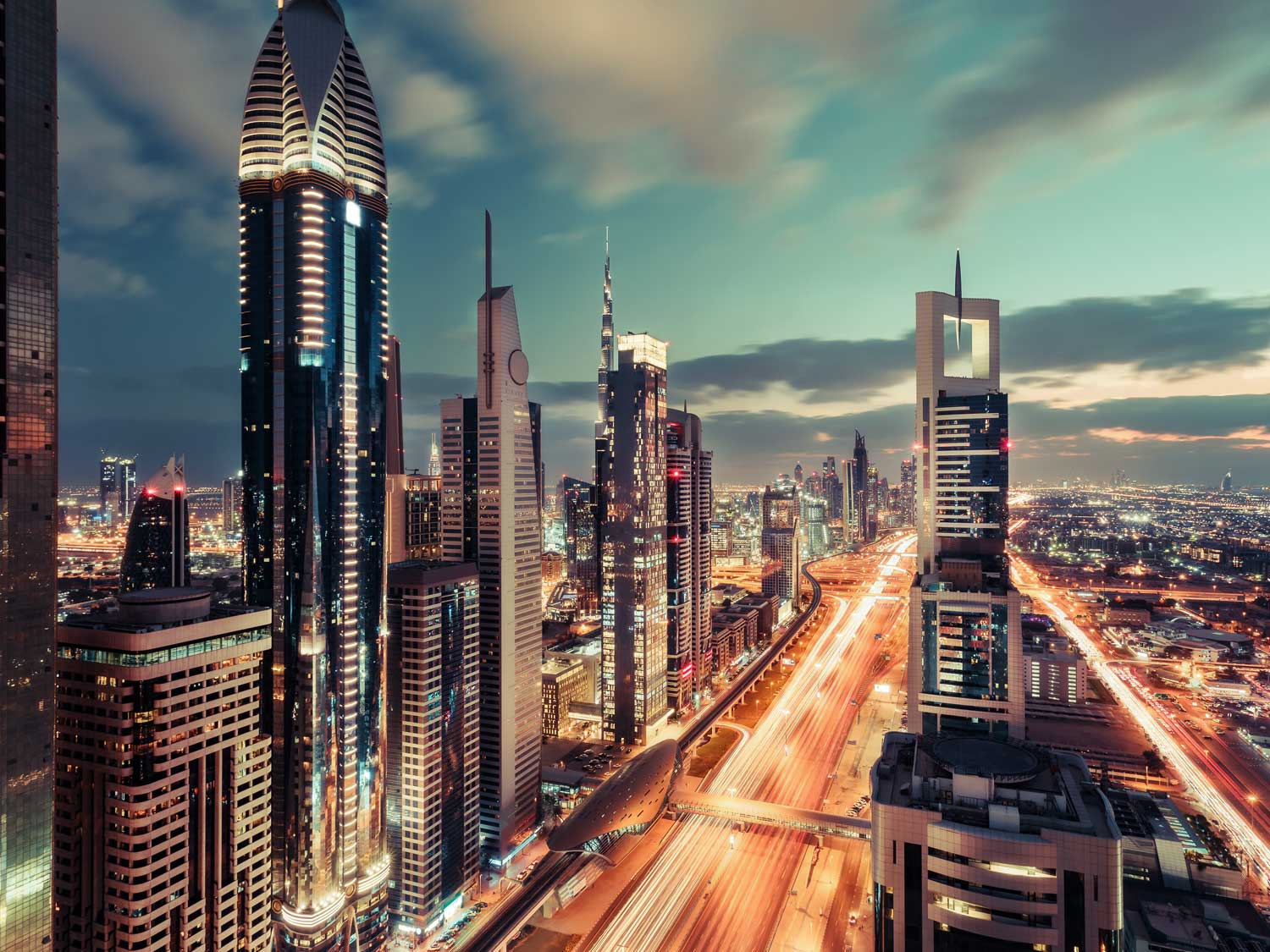
New Silk Road will link the Gulf to Europe

New Silk Road will link the Gulf to Europe

Turkey, Qatar, and the UAE are joining with Iraq to develop a new land corridor – Development Road Project – which will connect the Gulf to Europe.

The Development Road Project is a multi-billion dollar land corridor that will stretch 750 miles from the Persian Gulf to the Mediterranean Sea, establishing a network with railways, roads, ports and cities, to significantly reduce travel time between Asia and Europe via Turkey.

Estimates for the costs of the Development Road Project range from $8 billion to $15 billion, and possibly up to $20 billion, which may be financed by the UAE, Qatar, or another country, with the entire project expected to be completed within five years, once the funding is secured.

In May 2023, Baghdad hosted a summit which brought together transport ministers and officials from the European Union, the World Bank, GCC, Iran, Turkey, Syria and Jordan to discuss the establishment of the Development Road initiative.

The Development Road, dubbed the “Iraqi Silk Road”, gained further attention during the G20 Summit in New Delhi last September, when the project was discussed as an alternative route to the Suez Canal, to aid faster and more efficient trade between Asia and Europe.

The project is expected to turn Iraq into a transit hub and compete with Egypt’s Suez Canal, strengthening Iraq’s geopolitical position in the region and the world, while supporting security and stability in the region.

In April 2024, a quadrilateral memorandum of understanding, regarding cooperation in the Development Road project was signed by the transportation ministers of Iraq, Turkey, Qatar and UAE, with railways and highways connecting to Iraq’s Great Faw Port, aimed to be the largest port in the Middle East.

The project is planned to be completed in three stages by 2028, 2033 and 2050 and will open Iraq to the world through Turkey. It will generate $4 billion annually and create at least 100,000 jobs.

We will keep you advised and updated as this initiative proceeds, sharing any important developments and seeking market opportunities as they materialise.

If you have any questions or concerns about the ‘new Silk Road’, or would like to discuss the potential implications and benefits of this initiative, please EMAIL our Chief Commercial Officer, Andy Smith.
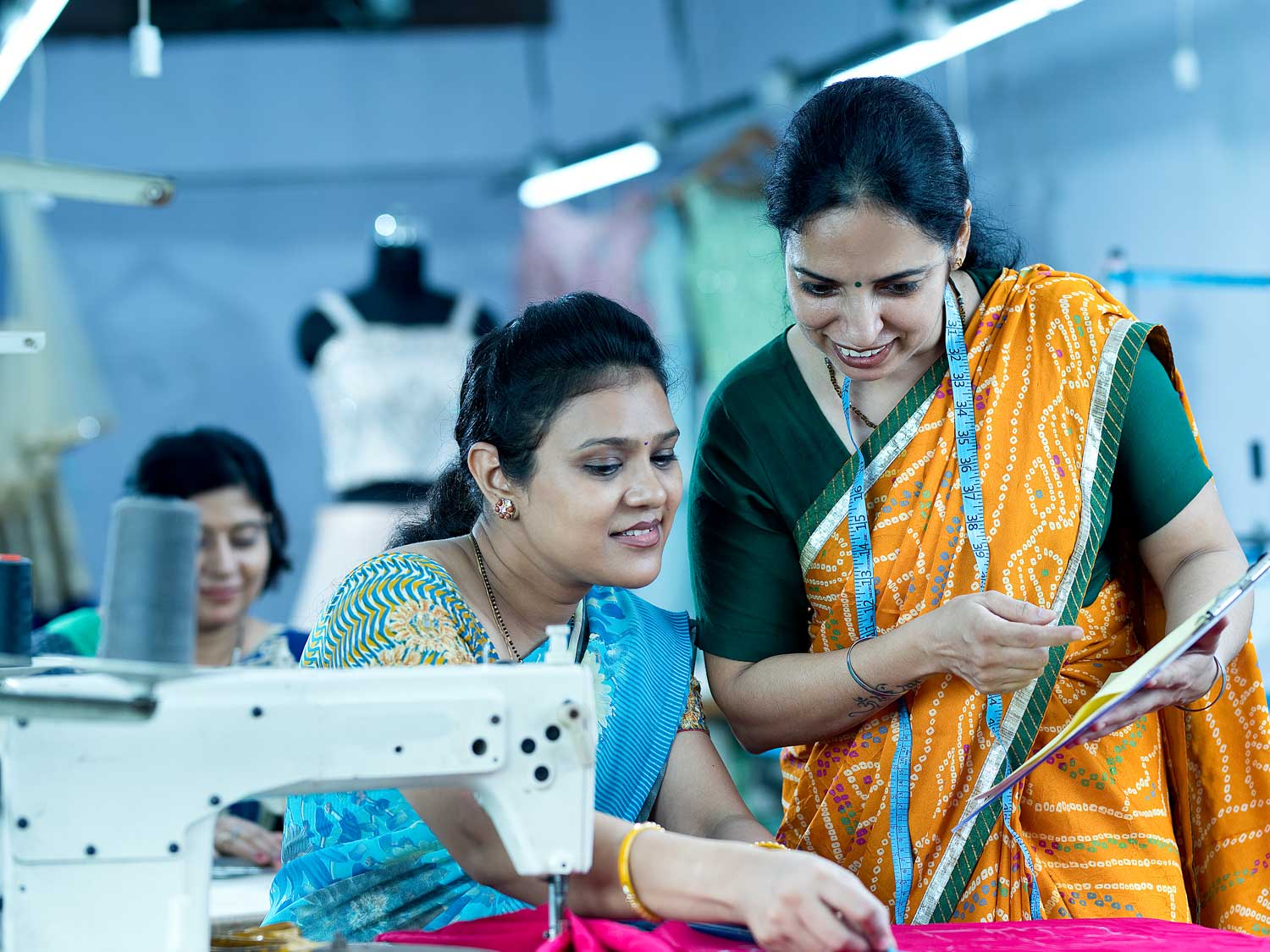
Near-shoring boosted by supply chain disruption

Near-shoring boosted by supply chain disruption

The post-COVID environment, geopolitical uncertainty, protectionism, climate-change events and now the Red Sea crisis have all put pressure on global supply chains and as we discovered at TPM, companies are increasingly considering the evolution of their global supply chains to minimise risk and security of supply.

In response to geopolitical risks highlighted by the Israeli-Hamas war, Russia’s war against Ukraine and by China’s threats against Taiwan, supplier diversification may add resilience, while near-shoring brings production closer to the point of supply, to shorten lead and delivery times, which potentially means lower levels of inventory and further reduces carbon emissions.

The trend towards diversification is clearly good news for emerging manufacturing power-houses like India, Vietnam, Turkey, Egypt and Mexico.

Over 5% of the UK’s importers are already trading with India and the number is likely to increase as more companies look to diversify their supply chains. 

There is no doubt that production moving away from China has benefited many countries around Asia, including India, Thailand and Cambodia, but there is still a huge proportion of the global supply chain reliant on China.

And research from the IMF suggests that there is no structural retreat from globalisation and that since the global impacts experienced during the COVID-19 pandemic have subsided international trade as a share of GDP has rebounded strongly, despite the fears of geo-economic fragmentation.

What this may mean is that companies could opt for supply chain diversification and resilience over efficiency, especially when security concerns gain greater weight in commercial considerations.

Many European fashion retailers have already sought to avoid long lead times and increased carrier costs by moving parts of their supply chains out of China and into EMEA countries including Turkey, Egypt and Morocco.

Zara’s parent company, Inditex, announced that a switch to near-shoring had helped them reduce waste by keeping a leaner inventory, boost low-order volumes and get clothes into stores in as little as two weeks, boosting profits by 80%.

As the threat of supply chain disruption persists and as competition grows, diversification and near-shoring could become a standard component in retail supply chains, building resilience and adaptability into operations.

For over 40 years Metro has helped customers open up new export markets and diversify sourcing across Asia and EMEA.

Metro’s integrated transport networks are designed to support JIT manufacturing requirements across Asia and within the EU, sub-Saharan Africa and Turkey and are ideally positioned to support the new sourcing requirements that de-risk supply chain operations.

We see diversification and near-shoring as a simple extension of a client’s sourcing strategy, so that if there is disruption in one area, inherent flexibility means the supply chain will continue to flow. 

Our global partner network, strategic carrier alliances and MVT supply chain platforms are all geared towards supporting the widest spectrum of supply chains. 

If you would like to learn how we can boost your ability to source from alternative global manufacturing regions, EMAIL our Chief Commercial Officer, Andrew Smith, to arrange a consultation and scoping discussion.

Metro are getting BIGGER in Europe

Metro are getting BIGGER in Europe

Metro has been shipping freight to, from and across Europe since 1981, using road, rail and short-sea services to create country and product-specific transport solutions. Our new Head of European Services, Matt Paxton-Rhodes, wants to make these award-winning solutions available to more shippers, in more verticals.

Metro’s European transport solutions are designed to meet the needs of individual customers, many of whom have entrusted the management and operation of their supply chain to Metro. 

Safely, efficiently and cost-effectively, Metro plan and arrange the time-definite transport of components intra-Europe, and finished products from the manufacturer or producer, to their final point of use on the European continent.

The European team is experienced in orchestrating and overseeing the timely, cost-effective transport of goods to anywhere in Europe, using rail, short-sea and carrier partners’ modern fleet of vehicles. Designed to transport loads of any size and type, including out-of-gauge, refrigerated and automotive.

Metro’s new Head of European Services, Matt Paxton-Rhodes, has held senior executive roles with some of the biggest global carriers and forwarders, gaining an enviable breadth of experience, knowledge and contacts along the way.

It is a sign of Metro’s growth and stature, that a senior industry professional like Matt is excited by his move and the opportunity to transform the European product.

Matt is very clear on the factors that attracted him to Metro:

People – The passion of the senior team and their total commitment to customers and colleagues.

Power – The flat reporting structure and the empowering of management to make decisions gives Metro the agility to react quickly to customers’ needs. Now.

Product – Metro’s European product is established, proven and effective, with a distinct opportunity for replication in new verticals and geographies. 

Platform – We will always provide all options and best fit recommendations – regardless of the requirement for overland trucking. Trade with our closest markets continues to change, almost daily – so do we with our solutions.

Despite only being with the business for less than a year, Matt has set his sights on some short term objectives. 

“The Metro team has extensive knowledge of European transport and customs compliance arrangements, which means they are well experienced in providing the most appropriate solutions for transporting goods in the fastest, safest and most reliable ways, to deadline and including for JIT operations.”

“Having an established and effective core-product means that I can focus on building a dedicated team to increase capacity, by taking our best-practice and matching it closely to the needs of new verticals, on new routes.”

“Turkey, an increasingly popular location for near-shoring, is a good place to start as it is one of our most established routes and the potential for growth is immense.”

‘’Our brokerage team are market leading and cutting edge – the whole end to end piece is naturally part of the offer and it is a very compelling proposition that we design around our customers individual needs and requirements.’’

If you would like to explore our European capability, or learn more about our Turkish services, EMAIL Matt now. It will be 5 minutes well used!

Turkey and UK close in one Free Trade Deal

Turkey and UK close in one Free Trade Deal

As the UK and Turkey close in on a free trade agreement to boost bilateral trade up to £15 billion by 2023, Metro is enhancing our freight services to and from the region.

Turkey is “very close” to signing a free trade agreement with the UK covering manufactured goods, agriculture and services, Turkey’s foreign minister has told the Financial Times.

The UK is Turkey’s second-largest trade partner after Germany, and securing an FTA with Britain is deemed critical for Turkish manufacturers, particularly carmakers, textile factories and white goods producers. 

Total UK-Turkish trade hit a high of £18.8bn last year, with £7.9bn in British exports, and £10.9bn of Turkish imports to the UK, with more than 2,500 UK companies operating in Turkey including BP, Shell, Vodafone, Unilever, BAE Systems and Diageo. 

Turkey’s main exports to the UK are vehicles, white goods and clothes.

Turkey is a member of the EU customs union, which means they can’t sign a free trade agreement (FTA) with the UK before the completion of the EU-UK trade agreement.

For UK companies trading with Turkey, Metro provides a wide selection of service departures, transit times and freight modes to ensure that you get your product delivered on time, at the best price, every time. 

Our teams in the UK, along with our partners in Turkey, arrange national collections and deliveries, while managing daily full load operations and receiving export cargo at our freight centres for the secure groupage services, which depart three times weekly. 

Metro’s groupage service is unbeatable for consolidating your smaller consignments of cartons and pallets together for cost-effective transport to and from Turkey.

Our 13.6M tilt-sided trailers offer over 100 cubic metres of loading space, which makes our groupage services so economical and means we can handle the biggest full load requirements.

For ultra-heavy and outsize cargo we can position specialist equipment and, when appropriate, offer a total project-shipping service.

Specialised equipment is also available for temperature sensitive products and hanging garments.

For valuable and urgent shipments our driver accompanied road trailers move door-to-door without transhipment or route deviation, with a transit time of just seven days. 

We also offer the environmentally appealing option of a sea freight leg between Turkey and Northern Europe, which cuts road miles by over 50%, offering a significant cut in CO2 emissions per M3.