Emirates Dubai

Air freight faces tighter capacity, higher costs and more complex routing decisions

Air freight is coming under growing pressure as disruption in the Middle East continues to reshape capacity, routing and pricing across key global trade lanes. 

While the impact varies by origin and destination, the overall pattern is clear: space has tightened, costs have risen and shippers are being forced to make faster, more flexible decisions.

The sharpest changes are being seen on services linking Asia and Europe, as well as on traffic moving out of India and wider South Asia.

Rates from Hong Kong to Europe have risen by almost 30% since the outbreak of the conflict, while pricing from India has moved much more aggressively, with increases of around 60% to the US and approximately 80% to Europe. More broadly, rates from several Asian origins into Europe have risen at double-digit weekly levels as cargo that would previously have moved through Gulf hubs is redirected elsewhere.

This reflects a market where disruption is not affecting all lanes equally. Some routes have seen relatively limited change, while others have tightened quickly as shippers compete for a smaller pool of available uplift.

Capacity loss through Gulf hubs is changing the shape of the market

A large share of Asia–Europe air cargo normally moves via the Middle East, so reduced operations at major Gulf hubs are having a wider effect on the global network.

Capacity to and from the most affected Middle Eastern airports has fallen sharply from normal levels, and overall global air cargo capacity remains below pre-conflict norms. 

Some of the hardest-hit corridors have seen available space fall by around 40%, particularly on lanes linking Asia Pacific with the Middle East and the Middle East with Europe.

As a result, cargo is being pushed towards direct services or rerouted through Asian hubs such as Hong Kong, Taiwan, Singapore, South Korea and Japan. That is helping to restore some connectivity, but it is also creating fresh pressure on feeder legs, intra-Asia services and selected transpacific flows.

In response, carriers have started adding capacity on some Asia Pacific–Europe routes, with space up by roughly 20% on certain corridors. Even so, the market remains tight, and additional capacity has not been enough to remove the pressure entirely.

Fuel surcharges are adding a second layer of cost pressure

Freight rates are only part of the story. Fuel surcharges are also rising rapidly as airlines deal with higher jet fuel costs and longer routings around restricted airspace.

Jet fuel prices have risen sharply, and in some cases the gap between crude oil and jet fuel has widened significantly, increasing the likelihood of further surcharge adjustments. 

Some airlines are now reviewing fuel surcharges weekly rather than monthly, which makes budgeting more difficult, as cost is changing more quickly and with less notice.

This is creating a double cost challenge: higher base freight rates combined with higher fuel-related charges.

The market is reacting with alternative routings

As direct capacity becomes harder to secure, the market is adapting.

Some cargo is being routed on longer, less conventional paths, including via North America, simply because direct Asia–Europe space is too limited or too expensive. These solutions can keep freight moving, but they usually come at a premium and add complexity to planning.

At the same time, demand is increasing for multimodal alternatives. Road connections between airports, regional trucking solutions and other hybrid models are becoming more attractive where they can protect delivery schedules or reduce the cost of a fully airfreight solution.

This is a reminder that the current challenge is not just about price. It is also about network design, transit reliability and how quickly supply chains can adapt when traditional routings become less dependable.

A volatile market is masking very different lane-by-lane realities

Headline air freight indices suggest the global market has moved only modestly overall, with broad average rates rising by only small percentages week on week and remaining close to last year’s levels.

However, those averages disguise major differences between individual trade lanes. Some corridors have posted only limited movement, while others have risen sharply in a matter of days. Outbound Asia has shown particularly wide divergence, with strong gains into Europe from several origins, while some US-bound lanes have softened or remained mixed.

For shippers, that means average market data only tells part of the story. The real challenge is understanding where pressure is building, where capacity is returning, and which routing options remain commercially viable.

Air freight decisions are becoming more time-sensitive, more expensive and more dependent on having the right alternatives ready.

Metro helps customers navigate tight capacity, fuel-driven cost changes and shifting routings by building practical options around urgency, cargo profile and destination requirements.

If you need to assess the most reliable or cost-effective way to move time-critical freight, EMAIL Andrew Smith, Managing Director at Metro. He can help you explore direct air, alternative gateway and routing options in line with current market conditions.

Truck Middle East

Road and road–air solutions gain traction in Middle East disruption

As disruption across the Middle East continues to restrict traditional air and ocean routes, shippers are increasingly turning to road and road–air solutions to maintain cargo flow. 

What began as a contingency response is now becoming a core part of how supply chains are adapting to a more constrained and fragmented logistics environment.

With vessel access to the Arabian Gulf severely restricted and air capacity reduced, significant volumes of cargo are being redirected onto land-based networks.

Ports such as Khor Fakkan, Fujairah, Sohar and Jeddah are now acting as key entry points, with cargo transferred onto trucks for onward delivery across the Gulf. These corridors are supporting flows into major markets including the UAE, Saudi Arabia, Qatar, Kuwait and Bahrain.

However, this shift is placing pressure on overland infrastructure that was not designed to handle such volumes. Trucking demand has risen sharply, leading to capacity shortages on key corridors across Oman, Saudi Arabia and the UAE. As a result, transit times are becoming less predictable and costs are rising in response to increased demand.

At the same time, congestion at contingency ports is extending dwell times, further increasing reliance on inland transport to maintain movement.

Road–air models offer a practical alternative to constrained air freight

As direct air freight capacity remains limited and increasingly expensive, road–air solutions are becoming more widely used.

Cargo is being moved by road to alternative airport gateways outside the most affected areas, where it can reconnect with more stable flight schedules. This approach helps bypass disrupted hubs while maintaining faster transit times than traditional ocean freight.

The model is also being applied on longer-distance routes. In some cases, cargo is being trucked across regions before connecting with onward air services, reflecting a broader shift towards more flexible, hybrid transport solutions.

Demand for these services is increasing as shippers look to balance speed, cost and reliability in a market where traditional options are under pressure.

Operational complexity increases as networks evolve

While these solutions are keeping cargo moving, they also introduce new layers of complexity.

Border crossings, customs processes and security checks are becoming more critical to overall transit time performance. In addition, the rapid scaling of road-based solutions is creating pressure on available capacity, particularly on heavily used corridors.

At the same time, multimodal coordination is becoming more important. Successfully combining road, air and ocean services requires close planning, real-time visibility and the ability to adapt quickly as conditions change.

This is driving greater demand for integrated logistics approaches that can manage multiple transport modes within a single, coordinated solution.

Rather than relying on fixed routes or single modes, businesses are adopting more flexible strategies that allow them to respond to disruption as it develops. This includes using alternative gateways, combining transport modes and building contingency options into their planning.

When traditional routes are under pressure, the ability to switch quickly to practical alternatives becomes critical.

Metro is actively supporting customers with road–air and direct road solutions, combining regional trucking, alternative airport gateways and multimodal coordination to keep cargo moving.

If you are facing delays, capacity constraints or rising air freight costs, EMAIL Andrew Smith, Managing Director at Metro, to discuss how road–air or direct road options could support your shipments in the current market.

Salalah

Drones strike Gulf hubs as air and sea freight networks tighten

Security incidents on 11 March have added further pressure to global freight networks already affected by disruption across the Middle East.

A drone strike at the Port of Salalah in Oman hit fuel storage tanks, forcing the suspension of port operations and bunkering activity at one of the region’s key container transhipment and fuel supply hubs. Salalah is a critical location for vessel refuelling and cargo transfers in the Arabian Sea, and any interruption to bunkering services can affect shipping schedules and vessel routing across multiple trade lanes.

Initial assessments indicate both port operations and bunker supply remain suspended while the extent of the damage is evaluated. The incident follows earlier security events near the port and additional reported attacks affecting nearby Duqm, increasing concern over the resilience of key logistics infrastructure in the region.

At the same time, Dubai International Airport temporarily halted operations after a drone strike nearby wounded four people on the morning of 11 March. Flights have since resumed, but the incident briefly disrupted one of the world’s busiest international aviation hubs and a critical gateway for global air cargo flows.

Port congestion risk rising

The operational disruption comes at a time when global container shipping networks remain highly sensitive to sudden shocks.

When vessels are diverted or delayed, shipping networks can rapidly move from normal operations to congestion. Cargo diverted from disrupted Gulf ports is already being redirected to other locations, with India’s west coast ports among the first to experience increased volumes.

Shipping networks remain vulnerable because delays compound quickly across vessel rotations.  In 2025, Red Sea re-routings took about 9% of capacity out of the system, while port congestion took out a further 10%. That’s capacity lost, not because the ships didn’t exist, but because delays made them non-functional.

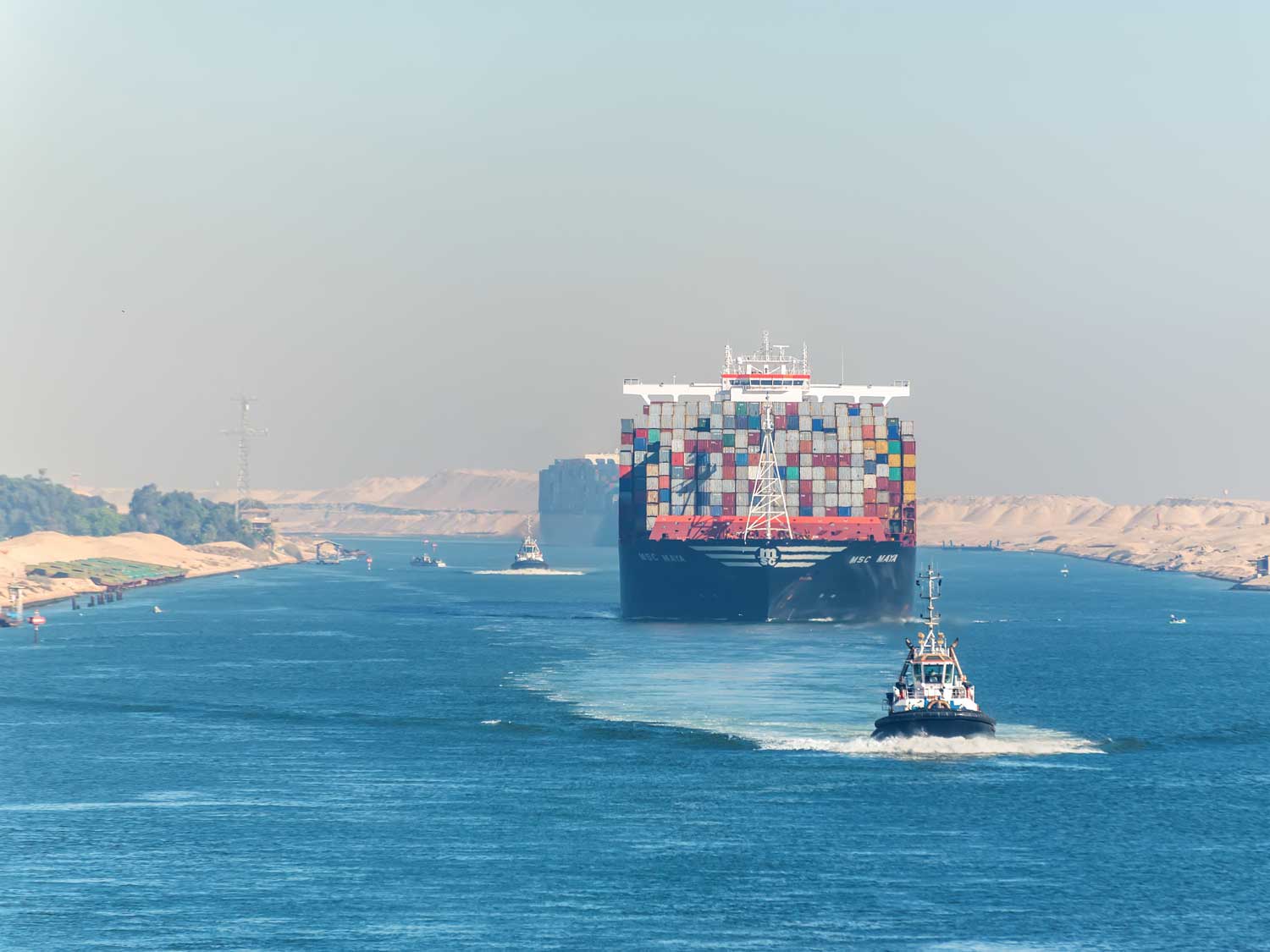
The current situation’s risk comes in two parts. First, as carriers abandon Suez transits because of the new strikes, schedules shift unevenly back toward the Cape of Good Hope. And as carriers move at different cadences, it creates vessel bunching, port congestion and massive service instability.

Secondly, the blockade of the Strait of Hormuz has trapped vessels and forced carriers to suspend transits, creating a sudden loss of capacity that is rippling through the whole supply chain.

Air cargo capacity tightening across global routes

Air freight markets are also tightening as disruption across Middle Eastern aviation hubs affects global cargo connectivity.

Many international air cargo supply chains rely on Gulf carriers and airports as transit points between Asia, Europe and North America. When these hubs face operational disruption or flight cancellations, cargo must be rerouted through alternative airports and airlines.

The impact is already visible in export markets heavily dependent on these connections. In Bangladesh, where around 60% of air cargo typically moves through Middle Eastern hubs, hundreds of flights have been cancelled since late February.

As a result, air freight rates to Europe have more than tripled, while rates to the United States have almost doubled, reflecting the sudden shortage of available capacity.

What this means for shippers

The attacks on Salalah and the temporary disruption at Dubai International Airport highlight how quickly events in the region can affect global logistics infrastructure.

For shippers, the immediate risks include reduced air cargo capacity, potential vessel delays linked to bunkering disruption, and increased pressure on alternative ports and airports as cargo flows are redirected.

Metro is monitoring developments across Middle Eastern ports, airports and carrier networks and will continue to provide updates as the situation evolves.

If your shipments move through affected trade lanes, contact your Metro account manager to review routing options and ensure your supply chain remains resilient as conditions develop.

Suez empty

Middle East: Disruption ripples through global supply chains

The ongoing disruption across the Middle East is now sending shockwaves far beyond the region itself, with upstream impacts emerging across air cargo networks, ocean shipping services and global freight pricing.

What began as a regional security crisis affecting Gulf airspace and the Strait of Hormuz is increasingly triggering structural changes in how global supply chains move cargo between Asia, Europe and the Americas.

Carriers and airlines are rapidly restructuring networks, while a growing number of emergency surcharges are being introduced as transport providers attempt to offset rising operational risks and fuel costs.

Air cargo networks feel the strain

Air cargo capacity has begun to stabilise slightly, but significant gaps remain in global lift availability.

Global air cargo capacity is currently down around 8%, improving from the 18% decline recorded earlier in the week. However, the regional disruption remains severe.

Outbound capacity from the Middle East to Europe remains 52% below normal levels, although this is an improvement on the 61% reduction seen earlier in the crisis.

At the same time, capacity from Asia Pacific to the Middle East remains 57% lower week-on-week, reflecting the continued disruption to key Gulf hub airports.

To compensate, airlines have increased direct Asia–Europe flights by around 14%, bypassing traditional stopovers in Dubai, Doha and Abu Dhabi and operating longer non-stop sectors.

However, direct flying cannot fully replace the connectivity normally provided by the Middle East’s hub-and-spoke air cargo networks.

Approximately a quarter of China–Europe air cargo capacity normally transits the Middle East, meaning the sudden loss of these hubs is creating structural gaps in the global network.

South Asia exports under particular pressure

The disruption is particularly acute for exporters across South and Southeast Asia, where cargo flows to Europe and North America rely heavily on Middle Eastern transit hubs.

Across South Asia–Europe corridors, available cargo tonne kilometres (ACTK) have fallen by 39%, leaving shippers scrambling to secure alternative routings.

Air cargo markets across the Indian Subcontinent and Bangladesh are already feeling the secondary effects.

Export capacity from Dhaka has tightened significantly, pushing airfreight rates up by roughly 20%.

In India, where many cargo services traditionally route via Gulf hubs, capacity constraints are becoming increasingly visible. Several major origins are now overbooked, some locations have temporarily stopped accepting cargo for five to seven days, and freight rates have increased by two to three times on certain lanes.

As capacity normally routed through the Middle East disappears, cargo destined for Europe and North America is expected to begin stacking up at Asian airports, creating a growing imbalance between available lift and cargo demand.

Early signs of pricing pressure are already emerging.

Spot rate indices have increased 2% from China to North America, 7% to Northern Europe, and 3% eastbound across the Atlantic.

The developing supply-demand imbalance is drawing comparisons with airfreight market conditions seen during the COVID-19 pandemic, when ocean disruptions pushed large volumes of cargo into the air freight market and triggered rapid rate increases.

Disruption spreads through global shipping networks

The ocean freight sector is experiencing a similar cascade effect.

Maritime tensions intensified further this week when the 1,700-TEU container vessel Safeen Prestige was struck by a missile in the Strait of Hormuz, bringing the total number of vessels hit during the crisis to six tankers and one container ship.

Although only a small proportion of the global fleet is physically located in the immediate risk zone, the operational consequences extend much further.

Currently around 2% of the global container fleet is located inside or near the Persian Gulf.

However, the wider network impact extends far beyond those vessels.

A total of 124 liner services include at least one Arabian Gulf port in their scheduled rotations, representing:

  • 520 container vessels
  • 3.6 million TEU of deployed capacity

As a result, the current disruption is directly affecting more than 10% of the global container shipping fleet by deployed capacity.

Carriers are already restructuring services, redeploying vessels and adjusting port rotations across multiple trade lanes as they attempt to maintain network stability.

Emergency surcharges begin to emerge

Alongside operational disruption, shipping lines have begun implementing a growing range of emergency surcharges linked to security risks, fuel costs and network congestion.

These charges are appearing under several different names, including:

  • ECS – Emergency Conflict Surcharge
  • WRS – War Risk Surcharge
  • EFS – Emergency Fuel Surcharge
  • EFQ – Emergency Fuel Quarterly surcharge

While terminology varies, the purpose is broadly similar: to offset the additional costs associated with longer sailing distances, higher insurance premiums and volatile fuel markets.

In some cases, the surcharges being discussed across the market are significant and may reach four-figure levels per container, depending on the trade lane, equipment type and carrier policy.

Because these charges differ between carriers and routes, shippers may encounter multiple surcharges applied simultaneously as conditions evolve.

Alongside new surcharges, carriers are also introducing operational measures designed to manage equipment supply and limit container accumulation at intermediate ports.

In one recent example, a major carrier has introduced a requirement for import containers discharged at certain ports to be collected from the quay within 48 hours.

Failure to remove containers within that timeframe may trigger additional charges, which in some cases are in a substantial four figure range.

Cargo backing up upstream

The ripple effects are already visible at origin.

In Bangladesh, more than 1,000 containers are currently stranded at Chittagong port and inland depots, while hundreds of containers already shipped remain stuck at Middle Eastern ports or on vessels awaiting discharge.

Similar pressures are beginning to appear at other Asian export hubs as Gulf-bound cargo stalls and vessels adjust schedules.

Nearly every major Asia export port is now experiencing some level of disruption, either through delayed sailings, suspended services or uncertainty around onward routing.

As shipping lines and airlines continue restructuring their networks, the full impact is expected to spread further across global supply chains.

Ocean carriers may redeploy vessels across Asia–Europe and Asia–US trade lanes, while airlines continue adjusting long-haul flight paths to compensate for the loss of Gulf connectivity.

Managing disruption

In light of the rapidly evolving situation, Metro is working closely with customers to assess the need for contingency airfreight on a shipment-by-shipment basis.

Our team can also advise on alternative routing options, particularly for cargo that would normally transit Middle Eastern hubs, helping customers minimise disruption and maintain supply chain resilience.

Customers with shipments moving through the region are encouraged to contact their Metro representative to review routing options and obtain the latest operational guidance.