ship aerial 1440x1080 1

Europe Builds Momentum as Trans-Pacific Slowdown Deepens

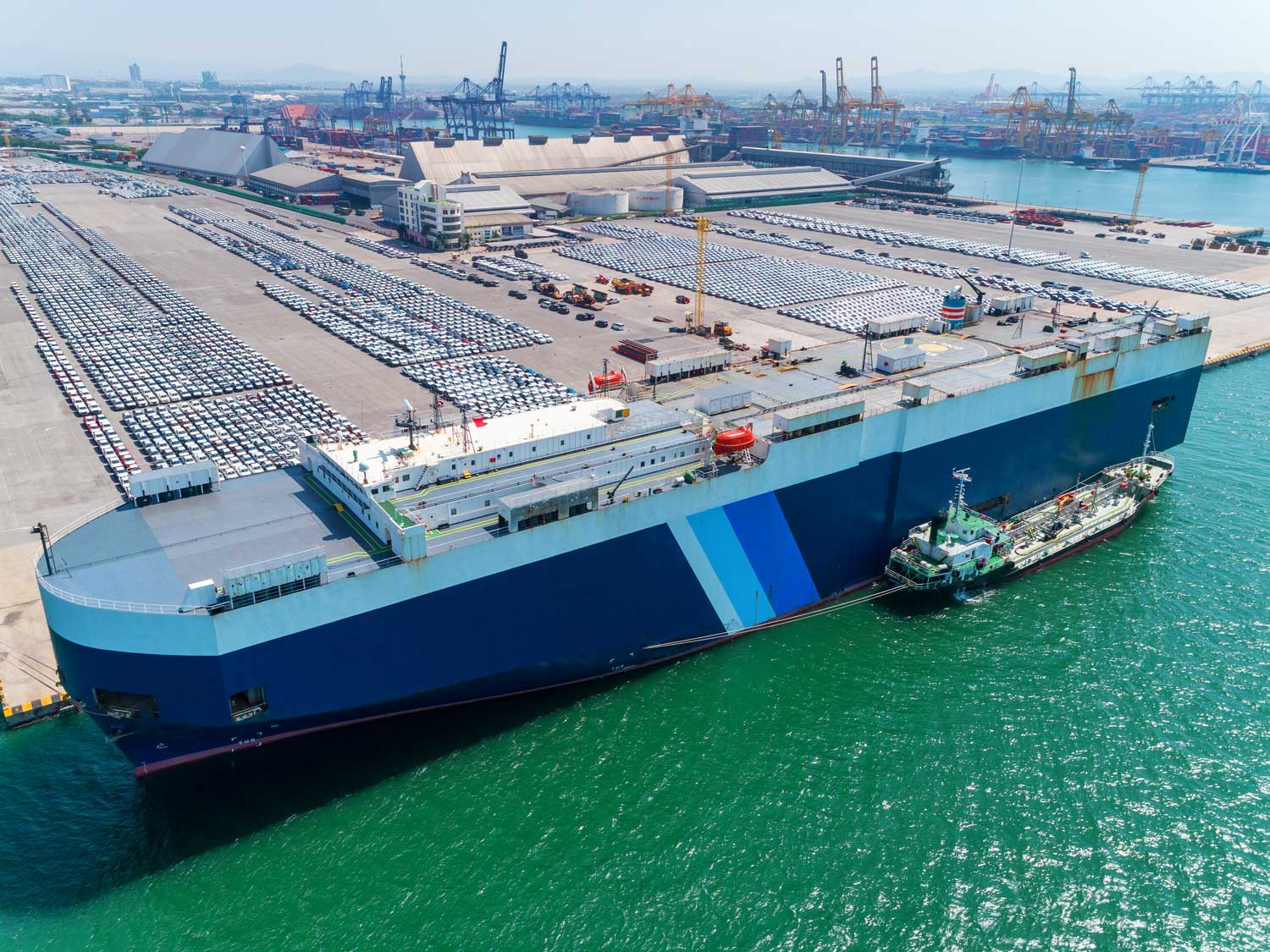
Global container shipping is evolving rapidly, with Asia–Europe trade lanes showing fresh strength just as the transpacific market enters a significant slowdown. This divergence is creating new challenges and opportunities for shippers.

On the Asia–Europe route, demand has been steadily rising, with spot freight rates climbing significantly since the end of May. After a sluggish start to the year, the peak season seems to have arrived, driven by stronger consumer sentiment in Europe, improved macroeconomic indicators, and renewed retailer confidence in stock building.

Forecasts for European imports have been upgraded. Instead of the previously expected 3.5% annual growth, volumes are now set to increase by 6% through 2025. This is being supported by lower inflation, falling unemployment, rising disposable income, and stronger euro/sterling, which is making imports from Asia more affordable.

A new UK trade agreement is also giving exporters a boost by reducing U.S. tariffs on inbound goods to 10%. Discussions with the EU are ongoing, and similar tariff terms could apply more broadly to European supply chains, further stimulating demand.

In contrast, container traffic from Asia to North America is heading in the opposite direction. The sharp increase in demand earlier this year, driven by front-loading stock ahead of tariff deadlines, has left warehouses full and order volumes slowing. With inventory levels high and economic uncertainty persisting, import activity is falling, and rates have dropped since early June from Asia.

Adding to this pressure is the looming reintroduction of US tariffs. Temporary suspensions on general and China-specific tariffs are set to expire in July and August respectively. While extensions are possible, the expected imposition of new duties, potentially rising to 55% for some Chinese goods, may suppress demand further and shift sourcing decisions in the second half of the year.

Although a short-lived spike in cargo arrivals at US West Coast ports may materialise in July, driven by attempts to beat the tariff deadlines, this is expected to be a temporary reprieve in a broader downtrend.

Meanwhile, carriers on the Asia–Europe route are preparing to balance higher demand with tighter capacity. Shipping lines plan to withdraw approximately 90,000 TEU of scheduled space in August compared to July, using blank sailings and capacity cuts to maintain pricing discipline. If volumes remain strong, this could lead to a second wave of rate increases before the end of summer.

Beyond commercial dynamics, security remains a key concern in the Red Sea. A bulk carrier was attacked this week using drone boats, rocket-propelled grenades, and small arms, in the first such assault since December. Analysts warn that the threat level to commercial shipping has risen significantly, with continued disruption to Suez-linked services.

As trade routes shift, tariffs tighten, and risks increase, the ability to adapt quickly and make informed shipping decisions is more critical than ever.

Metro’s sea freight team provides expert guidance to help you navigate volatile conditions, mitigate disruption, and make your supply chain more resilient. Whether you’re importing from Asia or exporting to global markets, we’ll keep your cargo moving and your costs under control.  EMAIL our managing director Andrew Smith.

customer survey 1440x1080 1

Survey Highlights Why Supply Chains Must Evolve or Fall Behind

Global businesses must prepare for a fundamental overhaul of their supply chains, as the cumulative impact of geopolitical tension, climate volatility, cost inflation and sourcing risk reshapes the logistics landscape.

According to a recent survey by the Boston Consulting Group (BCG), 87% of leading global companies are planning to restructure their global supply chains. Over half have already suffered serious procurement cost increases, with more than one in five citing disruption from climate-related events such as wildfires and flooding. 

In addition to economic uncertainty and climate-related disruption, businesses are contending with fractured supplier networks, unstable trade relationships, and growing geopolitical risk. Ongoing conflict in Europe, heightened tensions between global powers, and renewed unrest in the Middle East are all adding urgency. 

The Challenges BCG Identified:

  • 57% of firms have suffered supply shortages
  • 55% are being hit hard by procurement cost inflation
  • 33% see energy prices as a major threat
  • 23% have experienced disruption from climate events
  • 20% cite global geopolitical tensions as a business risk

Fragmented supplier networks and over-reliance on vulnerable sourcing channels are being exposed, yet fewer than half of companies are using digital tools to spot weaknesses or manage risk proactively. While many are now diversifying suppliers, near-shoring and conducting more frequent evaluations, most remain trapped in reactive decision-making.

Although 40% of businesses now carry out regular supplier assessments and 36% have adopted dual or multi-sourcing strategies, the majority still operate reactively. Only 45% are using digital tools to anticipate and address supply chain vulnerabilities before they escalate. The result is a growing gap between firms that can adapt, and those that can only respond.

From Restructuring to Resilience
The shift is clear: supply chains need to be more agile, digitally enabled, and less geographically dependent. But this transformation doesn’t happen through strategy alone. It requires digital processes, and partners built to handle change.

That’s where Metro’s supply chain control platform, MVT, provides a distinct advantage. Developed to unify procurement, freight, fulfilment and inventory management, MVT transforms fragmented operations into a connected, insight-driven system—giving businesses the visibility and control needed to stay ahead of disruption.

Whether you’re managing multi-country supplier networks, tracking shipment milestones in real time, or integrating with your ERP and sales platforms, MVT enables data-backed decisions at every stage. It’s more than visibility—it’s the backbone for scalable, resilient logistics.

With Metro’s global reach, sector expertise, and fully integrated services across freight, customs, warehousing and fulfilment, we help customers re-engineer supply chains that are responsive, cost-efficient, and future-ready.

Unlock the power of connected logistics
Disruption may be constant—but with the right digital tools and operational model, your supply chain doesn’t have to be vulnerable.

EMAIL our managing director, Andrew Smith, to learn how MVT can give you total control of your supply chain.

Coronavirus hits car carrier fleet

Momentum for UK Carmakers in Landmark US Trade Deal

British car manufacturers will benefit from cost savings and improved export competitiveness, following the formal implementation of the first stage of the UK–US ‘Economic Prosperity Deal’ signed at the G7 Summit on 16 June 2025.

Under the deal, up to 100,000 UK-built vehicles per year can now enter the United States at a reduced 10% tariff, down from the previous 25%. The change is part of a broader executive order issued by President Donald Trump to “operationalise” the agreement announced in May. 

The automotive tariff changes are already being enacted, with the US Commerce Secretary directed to implement them formally within seven days of the executive order and the UK government expects the new rates to take effect by the end of June.

Prime Minister Starmer described the development as “a very good day for both of our countries – a real sign of strength”, adding: “This now implements on car tariffs and aerospace our really important agreement.”

The deal represents a significant strategic win for the UK automotive sector, which relies heavily on US exports and was previously burdened by high tariff barriers. The new quota-based relief delivers meaningful margin gains for UK carmakers and positions them to grow market share in the world’s second-largest car market.

The agreement also eliminates US tariffs on UK aerospace components and jet engines, providing immediate benefits to another high-value manufacturing sector. UK exporters in both industries are now exempt from levies introduced under Trump’s broader national security tariffs, which have seen global rates surge as high as 50% for some goods.

Steel and aluminium remain under review. While the UK has been granted a temporary exemption from the newly doubled 50% global tariff, the original 25% rate still applies. Trump’s executive order outlines plans for a future tariff-rate quota on UK metal imports, with details to be finalised by the US Department of Commerce based on UK compliance with broader trade commitments and security measures.

In return for the reduced tariffs, the UK has agreed to allow expanded US market access for beef, ethanol, and select industrial goods. The inclusion of a 1.4 billion litre tariff-free ethanol quota, equivalent to the UK’s entire annual demand, has drawn criticism from domestic bioethanol producers who warn of damaging effects on local industry.

Despite this, the agreement is being hailed as a breakthrough for key UK export sectors. Speaking after the announcement, UK Business and Trade Secretary Jonathan Reynolds noted. “We agreed this deal with the US to ensure jobs and livelihoods in some of our most vital sectors were protected, and we are delivering on the first set of agreements in a matter of weeks.”

For the automotive sector, the speed of implementation, clarity on tariff relief, and reaffirmed transatlantic cooperation point to a more promising and profitable trading future.

To explore how Metro supports leading automotive brands with global logistics, visit metglob.azurewebsites.net/automotive or EMAIL our managing director, Andrew Smith, to discuss post-deal opportunities.

Airfreight Tracking 3.0 v2 1440x1080 1

Real-Time Visibility Takes Flight

New live flight tracking powers smarter airfreight decisions with MVT Track & Trace.

We’re excited to share a powerful new upgrade to MVT Track & Trace, Metro’s shipment visibility platform, that delivers even greater control and confidence when managing your airfreight.

Our latest enhancement introduces real-time flight telemetry tracking, giving you an instant, accurate view of your air cargo’s location, live and in motion. For every shipment, you can now follow its journey across an interactive map, complete with precise flight paths and positional data updated in real time.

Whether you’re monitoring standard freight or time-critical consignments, this new feature transforms how you track air movements, with benefits that include:

  • Live flight tracking for every airfreight shipment
  • Visual map interface showing the current aircraft position and route
  • Accurate flight data, including departure, ETA, and arrival confirmation
  • Time-stamped milestone events, clearly logged for full shipment oversight

Each key status change is automatically captured and displayed through a clean, user-friendly interface, so you’re always in the know, without the need for chasing updates.

This level of transparency is especially valuable when speed and certainty matter most. By enriching your operational visibility, our new flight telemetry feature supports smarter decisions, tighter planning, and more resilient supply chains.

At Metro, we’re committed to continuous innovation that makes logistics smarter, faster, and easier to manage. This upgrade to MVT Track & Trace is just one of the ways we’re helping you stay ahead.

Want to see it in action? Log in to your MVT portal today or EMAIL Ian Powell,
Customer and Technical Solutions Director.