CBP 1440x1080 1

US tariff refunds move closer as customs systems adapt to process large-scale repayments

The process of refunding tariffs to US importers is beginning to take shape following the Supreme Court’s decision to strike down duties imposed under emergency powers. 

US Customs and Border Protection (CBP) is developing a dedicated system within its Automated Commercial Environment to handle what is expected to be one of the largest refund exercises undertaken by the agency.

The process is being designed around four key stages: claim submission, automated validation and recalculation of duties, review and liquidation, and final refund payment. Importers will be required to submit detailed entry data, which the system will validate before calculating the amounts owed and issuing repayments electronically.

Although progress is being made, the scale of the task remains considerable. Tens of millions of entries are potentially affected, and the volume of data required means the process cannot be implemented immediately. Current timelines suggest the system will take several weeks to become fully operational, with further updates expected as development continues.

Data requirements will increase scrutiny on historical entries

The refund process will require importers to provide a comprehensive dataset covering entries where tariffs were paid. This includes classification details, country of origin, entry numbers, duty amounts and supporting documentation.

As a result, the process is likely to do more than simply return funds. By consolidating this level of information into a single submission, it effectively creates a detailed audit trail of past imports.

For businesses, this increases the importance of data accuracy and consistency. Any discrepancies in classification, valuation or origin could trigger further review, potentially extending timelines or leading to additional compliance checks.

Despite the scale of the opportunity, readiness across the importing community remains relatively low.

Only a small proportion of eligible importers have completed the necessary setup to receive refunds electronically. Until this process is finalised, any payments issued may be rejected, delaying recovery of funds.

At the same time, recent changes to US customs requirements mean that more detailed shipment information is already being requested earlier in the import process. Combined with the refund requirements, this is increasing the administrative burden on importers.

Submitting claims without fully validating the underlying data may expose businesses to additional scrutiny. Conversely, delaying preparation could result in slower access to funds once the system becomes fully operational.

This creates a balance between speed and compliance, where careful preparation is likely to be the most effective strategy.

Technology and expertise will play a critical role

Given the volume of entries and the level of detail required, technology is expected to play an increasingly important role in managing the process.

Automated systems can help organise entry data, validate submissions and identify inconsistencies before claims are filed. At the same time, experienced customs oversight remains essential to ensure that filings are accurate and aligned with regulatory requirements.

For many importers, this combination of technology and expertise will be key to navigating what is likely to be a complex and closely monitored process.

The tariff refund process presents a clear financial opportunity, but it also requires careful handling of data, compliance and submission timing.

Metro combines its US presence, local customs brokerage expertise and advanced systems, including its AI and machine-learning powered CuDoS platform, to support the CBP refund process - helping customers prepare accurate, compliant claims.

If you want to understand what you may be owed and how to approach the refund process with confidence, EMAIL Andrew Smith, Managing Director at Metro, to discuss how Metro’s US customs team can support your submission strategy.
Supreme Court

U.S. Tariff ruling resets importing landscape

In a decision that reshapes the mechanics of U.S. trade policy, the U.S. Supreme Court has curtailed the use of emergency powers to impose broad import tariffs. 

The outcome is not the removal of tariffs, but a shift in how they are applied and a potential window to recover previously paid duties.

On 20 February, the U.S. Supreme Court ruled that President Trump did not have authority under the International Emergency Economic Powers Act (IEEPA) to impose sweeping “reciprocal” tariffs on general imports, including duties affecting EU and UK exports.

The Court determined that tariffs constitute taxation and therefore require clear Congressional approval. As a result, tariffs introduced solely under that statute are no longer legally supported.

However, the ruling does not eliminate U.S. tariffs altogether. It narrows the legal pathway through which they can be introduced.

Existing programmes remain fully active:

  • Section 301 tariffs addressing unfair trade practices
  • Section 232 national security tariffs
  • Section 201 safeguard measures

Replacement tariff: Section 122 Global Surcharge

In response to the ruling, the U.S. administration introduced a 10% global import surcharge under Section 122 of the Trade Act, effective 24 November.

Unlike the invalidated emergency tariffs, Section 122 is legally defined and time-limited:

  • Maximum duration: 150 days (unless extended by Congress)
  • Maximum rate: 15% (currently set at 10%)
  • Intended purpose: short-term balance-of-payments stabilisation

The UK continues to seek clarity on whether it will remain at 10% under its previously negotiated arrangement, should the global rate rise toward 15%. At present, the majority of existing UK–US trade measures – including sector-specific arrangements on cars, steel and pharmaceuticals – are not expected to change.

The EU has placed elements of its own U.S. tariff understanding on hold pending further developments.

Refund recovery: a potential opportunity

The more immediate operational issue concerns duties already paid under the invalidated measures. Businesses are expected to pursue substantial refund claims, potentially exceeding $200bn.

Depending on entry status, recovery mechanisms may include:

  • Post-summary corrections for unliquidated entries
  • Formal protests submitted within statutory deadlines
  • Litigation before the U.S. Court of International Trade for older entries

Full procedural guidance has yet to be published by federal agencies. Nevertheless, importers should begin preparing documentation immediately, including:

  • Identification of affected entries
  • Verification of duty payments
  • Coordination of any drawback claims
  • Preservation of statutory deadlines

Customs compliance in this environment is no longer routine administration; it has become a matter of financial risk management and cash recovery strategy.

How Metro can support you

Metro is closely monitoring federal guidance, reviewing agency communications and assessing operational implications across customs entry processes.

We recommend that businesses trading with the United States initiate an internal review of potentially affected entries without delay. Our U.S. customs specialists can help assess exposure, identify recovery pathways and support documentation preparation to protect your position.

As further clarity emerges, we will continue to provide timely updates and practical guidance.

EMAIL Andrew Smith, Managing Director, to learn how Metro can help you review your refund situation, mitigate new tariff regime, and protect your supply chain from volatility.

stop trade

Customs is the bottleneck in global trade — Metro is removing it

The Global Trade Observatory Outlook 2026, based on insights from more than 3,500 senior supply chain executives globally, delivers a clear message: customs is now the single biggest operational constraint in global trade. 

According to the report:

  • 60% of executives cite customs clearance as the leading cause of disruption.
  • 36% rank trade facilitation among the top policy priorities for enabling growth.

At a time when 94% still expect trade growth, the implication is clear: growth is possible, but only if border friction is controlled.

For importers and exporters, speed through borders is now as important as speed of transit.

Border Friction Is No Longer a Back-Office Issue

Customs delays today are not just administrative inconveniences. They create:

  • Demurrage and storage costs
  • Production stoppages
  • Missed retail windows
  • Inventory distortion
  • Reputational risk

As supply chains diversify and multi-origin sourcing becomes more diverse, compliance complexity increases. Different rules of origin, changing tariff regimes, sanctions screening, high-risk product categories and new digital reporting requirements all increase exposure.

The Global Trade Observatory findings confirm what many businesses already feel: border friction is now the pressure point in supply chain resilience and execution at customs is no longer a milestone, it is a strategic necessity.

Metro’s Customs Brokerage: Built for Complexity

Metro’s Customs Compliance Services are designed specifically for this environment of volatility and regulatory intensity. 

Our AEO-accredited team manage the full spectrum of customs requirements, including:

  • Permanent and temporary imports
  • Transit (T1) procedures
  • Specialised food and high-risk product declarations
  • UK, EU and USA clearance at all ports
  • Sanctions-origin advisory and exemption cases

This is not simply about filing entries, it is about total compliance and controlling risk before it materialises.

For example:

  • 99.8% of food shipments clear without delay, with IPAFFS paperwork typically submitted within one hour of receiving slaughterhouse documentation.
  • Export declarations are routinely processed within 30–120 minutes.
  • Secureduty refunds through proactive review and HMRC engagement.

CuDoS: AI-Driven Customs Intelligence

Metro’s AI-driven CuDoS platform automates compliance for complex, multi-line entries. 

  • Aggregates multi-line invoices (300+ lines)
  • Reduces manual processing by 70%
  • Achieves 99.3% first-time declaration accuracy
  • Completes complex entries in under two hours

In a market where manual processes can take 6–24 hours and error rates remain high, automation and AI-driven validation are competitive advantage.

From Compliance to Competitive Advantage

The Global Trade Observatory Outlook highlights how trade growth will continue despite uncertainty, but only for those who can navigate friction effectively, and customs sits at the centre of that challenge.

As supplier diversification increases and new trade corridors open, customs complexity rises. Multi-origin supply chains multiply declaration volumes and compliance touch-points.

Without disciplined brokerage and intelligent automation, delays compound quickly.

The Global Trade Observatory data confirms that customs is now the primary bottleneck in global trade. 

Metro’s mission is simple: remove that bottleneck.

If your business is experiencing clearance delays, compliance pressure, or escalating duty exposure, Metro’s Customs Compliance team and CuDoS platform deliver measurable performance improvements in speed, accuracy and cost control. EMAIL managing director, Andrew Smith, to learn more.

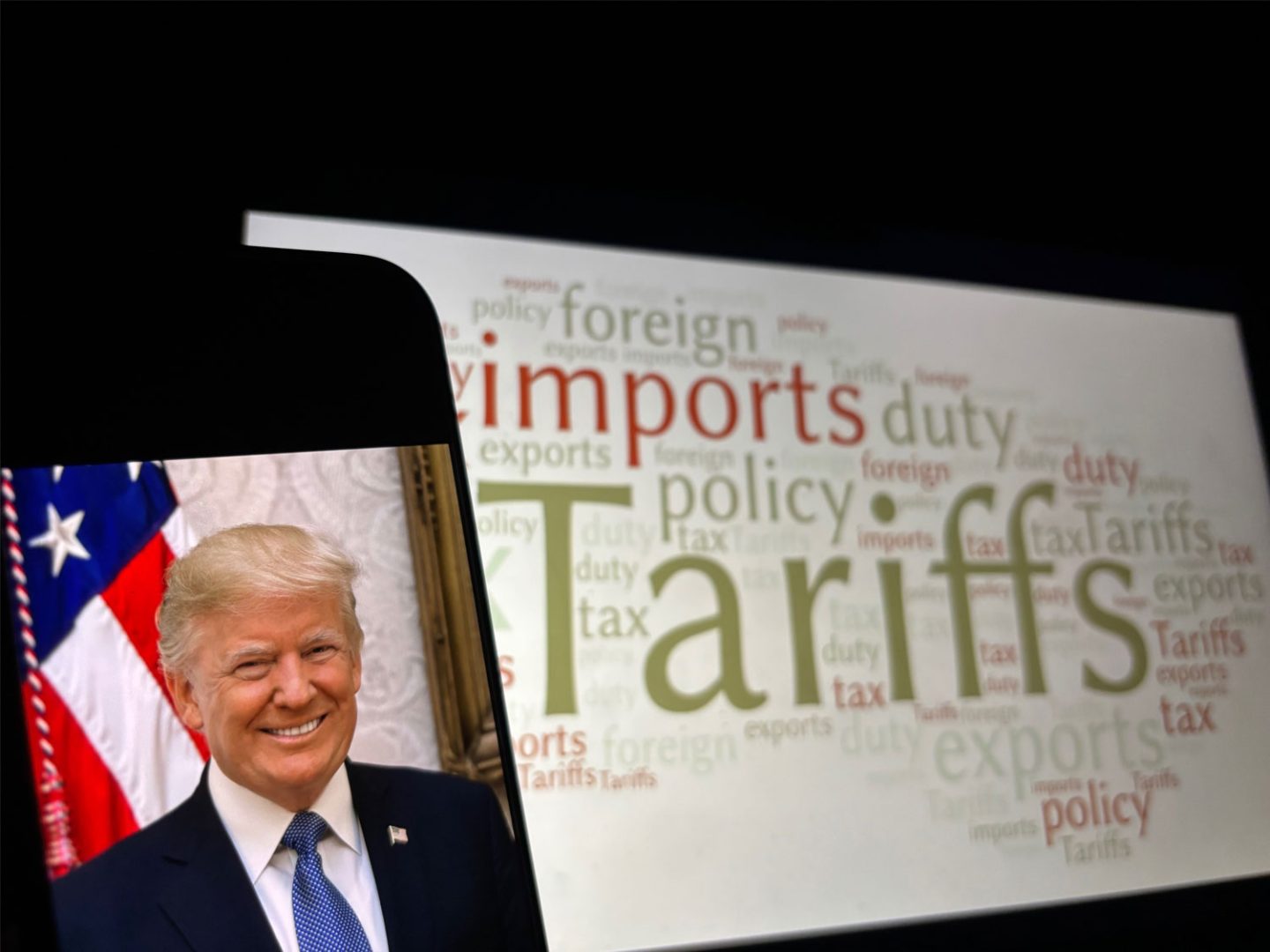
Trumps tariffs 1440x1080 1

Progress and Paralysis in US Trade Policy

After weeks and months of economic tension and political uncertainty, a flurry of developments in early November have reshaped the outlook for US trade and logistics.

From tariff rollbacks to port fee suspensions, and a potential landmark Supreme Court ruling and continuing government shutdown, the policy landscape is shifting rapidly, bringing both relief and unease across global supply chains.

Tariffs Eased Under New US–China Agreement

The reduction of tariffs between the US and China took effect on 10 November, following a trade accord reached between Presidents Trump and Xi. The agreement lowers import duties on a wide range of goods, from agricultural products and industrial components to consumer electronics.

Importers welcomed the easing as a means to restore competitiveness and predictability in sourcing, with improved freight flows anticipated on trans-Pacific lanes. Analysts note that while the tariff cuts do not resolve underlying geopolitical tensions, they provide welcome breathing space for manufacturers balancing cost pressures and re-shoring considerations.

Port Fee Suspension Brings Relief to Carriers and Shippers

Complementing the tariff reductions, both Washington and Beijing have suspended reciprocal port fees for one year, from 10 November. The decision, announced 30 October, pauses the retaliatory levies that had been applied to vessels linked to either country.

The inclusion of RoRo and car carrier vessels in the suspension was particularly well received by the automotive and heavy-equipment sectors, which had faced additional costs on each port call.

The agreement is widely viewed as a pragmatic step toward de-escalation in maritime trade policy, easing operational costs for shipping lines and restoring confidence among automotive exporters and manufacturing supply chains reliant on consistent vessel rotation between US and Chinese ports.

Supreme Court Tariff Showdown: Uncertainty Persists

The fate of President Trump’s ability to impose sweeping tariffs remains unresolved, with the Supreme Court having recently heard oral arguments but yet to issue a ruling. Lower courts previously ruled against the administration’s use of emergency powers to levy broad tariffs under the International Emergency Economic Powers Act (IEEPA), but the decision has been put on hold pending Supreme Court review.

The justices are split, with three seen as likely to support Trump’s position, three clearly against, and three in the middle, making the outcome difficult to predict. During oral arguments, skepticism was evident from across the bench regarding whether the statute provides a president such expansive tariff powers without congressional authorisation.

If the Supreme Court rules against Trump, attention will turn to the array of alternative mechanisms available to maintain tariffs. Even without IEEPA authority, legal experts note that the administration could rely on statutes such as Section 301 of the Trade Act of 1974, which permits tariffs against unfair trading practices, or Section 338, a Depression-era law, which allows for steep duties of up to 50% if US businesses are discriminated against abroad. While each legal tool has varying thresholds and limitations, trade analysts are convinced there remain multiple pathways for the US to reimpose tariffs on targeted imports, underscoring the persistent uncertainty facing global shippers and manufacturers.

Government Shutdown Disrupts Trade Flows

Meanwhile, the US government shutdown, which began on 1 October, continues to disrupt logistics and international trade operations. Although a Senate compromise now appears close, any deal is likely to offer only temporary relief, funding government activities through January and leaving open the possibility of renewed disruption early next year.

While ports remain open, reduced staffing at US Customs and Border Protection has slowed documentation and inspection processes, lengthening clearance times and increasing dwell periods at major gateways such as Los Angeles-Long Beach.

Exporters are facing further obstacles as the Bureau of Industry and Security and the Directorate of Defence Trade Controls have paused most export licence reviews, while trucking and aviation sectors face delays in driver certification and airworthiness approvals.

Global supply chains are already feeling the ripple effects, with European and Asian manufacturers reporting shipment delays and additional inventory costs. The episode underscores the vulnerability of cross-border trade to US political impasse, a reminder that even as tariff and port fee tensions ease, operational continuity remains at the mercy of Washington’s budget negotiations.

With tariffs shifting, port policies evolving, and the risk of government shutdowns disrupting customs and regulatory processes, keeping your cargo moving demands proactive coordination and local expertise.

Metro’s US brokerage and logistics teams work closely with CBP and partner agencies to maintain clearance continuity and minimise disruption during periods of political or operational uncertainty. Supported by our CuDoS customs automation platform and expanding Metro Global USA network, we ensure every declaration meets filing deadlines accurately, efficiently, and fully compliant.

EMAIL Andrew Smith, Managing Director, to learn how Metro can help you navigate US trade policy changes, mitigate shutdown risks, and protect your supply chain from volatility.