graph rising

Early peak season continues to support higher ocean rates

Peak season arrived earlier than expected this year, but it shows little sign of easing. Ocean freight rates from Asia to Europe continue to climb as strong demand, disciplined capacity management and lingering geopolitical uncertainty combine to keep pressure on both pricing and vessel space.

The latest round of carrier price increases introduced at the start of July has pushed freight rates higher once again across the Asia-Europe trade. Spot rates have risen by around 7% into North Europe and approximately 10% into the Mediterranean over the past week, extending a market that has steadily strengthened. 

Carriers have maintained tight capacity discipline despite stronger demand, with only a handful of blank sailings currently scheduled, suggesting carriers are successfully filling available vessel space rather than artificially restricting capacity. At the same time, higher freight costs linked to ongoing geopolitical disruption continue to support firmer market conditions. 

Middle East uncertainty continues

Although commercial shipping has resumed through the Strait of Hormuz following the recent ceasefire agreement, the market remains cautious.

Security concerns persist across the wider region and operators continue to factor geopolitical risk into network planning and pricing. Cargo flows are gradually normalising, but the disruption has altered routing decisions and placed additional demand on Mediterranean services, where pricing has risen significantly faster than into Northern Europe. 

Historically, Mediterranean services have commanded a modest premium over North Europe due to vessel deployment patterns. Today, however, that pricing gap has widened to levels rarely seen outside the exceptional supply chain disruption experienced during 2022, reflecting the continuing impact of Middle East instability on European trade lanes. 

The market may be approaching its peak

Demand remains healthy rather than accelerating, vessel space is becoming easier to secure on some services and several carriers have started extending rate validity beyond weekly announcements, suggesting they are becoming more confident about short-term pricing. 

However, this should not be mistaken for a return to normal market conditions.

Large volumes of cargo delayed during June still need to move through the network, while carriers continue to manage allocations carefully. Even if freight rates begin to soften later in the summer, they are expected to remain well above the levels seen earlier this year. 

Carrier confidence remains high

Confidence among ocean carriers is also evident in the charter market.

Improving freight earnings have encouraged more shipping lines to secure additional vessel capacity well into 2027 through longer-term charter agreements rather than relying solely on new-build programmes. Demand for available vessels remains strong across several ship sizes, while rising charter values and vessel prices underline continued 

confidence that freight markets will remain relatively firm for some time. 

For shippers, the message remains unchanged. The current market is being driven by resilient demand, disciplined carrier capacity management and ongoing geopolitical uncertainty rather than short-term disruption alone. Businesses leaving bookings until the last minute are likely to face reduced flexibility, higher costs and fewer routing options.

Plan ahead with Metro

Securing capacity early has become just as important as negotiating freight rates. Metro's ocean freight specialists continuously monitor carrier capacity, market conditions and routing options to help customers minimise disruption and manage transport costs in a fast-changing market.

To discuss your Asia-Europe shipping requirements and build greater resilience into your supply chain, EMAIL our managing director Andrew Smith.

Nhava Sheva

Fatal Accident Adds to Nhava Sheva Terminal Disruptions 

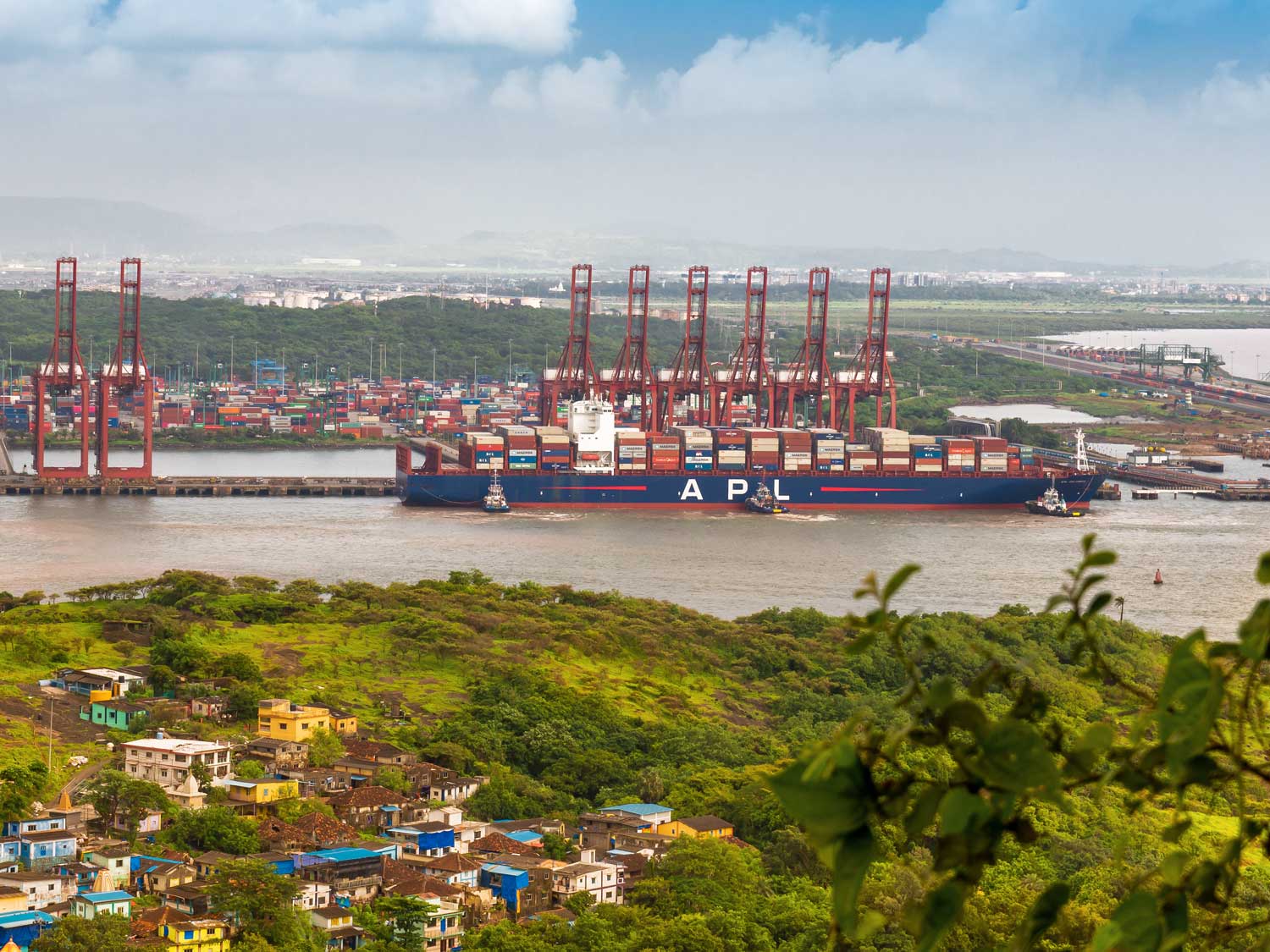
Heavy monsoon conditions and a fatal terminal accident are causing major delays to vessel and road operations at the Indian port of Nhava Sheva.

Raigad/JNPT/INNSA is currently under Red Alert due to continuous heavy rainfall and high wind speeds of 70–80 kmph. As a result, port operations have been severely impacted, leading to significant delays in vessel berthing and sailing schedules. 

Additionally, heavy rainfall and waterlogging have caused severe road congestion, impacting export container gate-in as well as import container evacuation from the terminals. 

Terminal Status: 

BMCTPL 

The terminal was operational during the daytime yesterday with very slow productivity. Port operations have been suspended since the midnight of 05 July until further notice due to adverse weather conditions. The suspension is resulting in delays to vessel berthing and sailing. 

NSICT & NSIGT 

Operations are continuing at very slow productivity due to heavy rainfall and strong winds. Terminal operations are being suspended intermittently whenever visibility becomes poor or wind conditions exceed safe operating limits, and resumed only when weather conditions improve. 

APMT 

Operations remain very slow with poor productivity due to heavy rainfall and high wind speeds. Similar to other terminals, operations are being halted intermittently during periods of poor visibility and unsafe wind conditions, resuming only when weather permits. 

NSFT 

Operations have been suspended since last night due to heavy rainfall and strong winds. A serious accident occurred at the terminal involving M.V. Dalian. During sludge removal operations, four containers toppled from the vessel onto the sludge removal tanker due to strong winds. 

The incident resulted in one fatality and one person sustaining severe injuries. Following the incident, NSFT operations have been suspended until further notice pending investigation and safety clearance. 

Road & Traffic Status

 Heavy rainfall and waterlogging have resulted in severe traffic congestion on approach roads to JNPT. 

Traffic Police have closed the road from Chandni Chowk Parking (approximately 7–8 km from the port) and are releasing trailers in a regulated manner based on traffic conditions to prevent further congestion. 

This is expected to further impact export container gate-in and import container evacuation across the terminals. 

Given the combination of suspended operations at some terminals, weather-related slowdowns at others, and constrained road access, we are expecting:

  • Delays to vessel berthing, sailing, and transhipment connections at Nhava Sheva.
  • Longer lead times for both export gate-in and import container pick-up at affected terminals.
  • Increased risk of short-notice changes to terminal windows and service rotations

Metro’s operations teams are actively monitoring the situation with our local offices and carriers, and we are working to minimise disruption as far as possible. 

Where feasible, we will look at alternative routings or scheduling adjustments and will communicate any material changes affecting your bookings directly.

For shippers from Nhava Sheva we recommend:

- Book 4 weeks in advance
- Prioritising stock (what needs to ship and what can wait)
- Assessing any stock which needs expediting/airfreight

India flag on container doors 1440x1080 1

India, the hottest shipping lane

Ocean freight from India has entered a period of intense demand, with tightening vessel space, rising freight rates and increasing competition for capacity across both European and North American trade lanes.

For businesses diversifying manufacturing away from China or expanding sourcing across South Asia, the challenge is no longer finding suppliers. It is securing reliable shipping capacity in an increasingly constrained market.

Capacity constraints are driving the market

The India-Europe trade has tightened significantly over recent weeks as booming export demand collides with reduced vessel availability.

While demand has recovered strongly, carriers have removed a substantial amount of capacity through blank sailings, cancelled departures, port omissions and revised service schedules. Between March and early July, more than one in five scheduled sailings between India and Europe failed to operate, reducing overall capacity by around 17% across the trade.

The result has been widespread vessel overbooking, booking windows stretching to four to six weeks, and an increasing risk of cargo either being rolled or, in some cases, having confirmed bookings cancelled and rebooked onto later sailings.

Freight rates have responded accordingly. Average pricing from western Indian gateways into Northern Europe has increased by up to 50% in little more than a month, with further peak season surcharges already announced for the second half of July.

Rather than being driven by a single disruption, the current market reflects a genuine supply and demand imbalance, with available vessel space struggling to keep pace with export demand.

Service reliability is becoming just as important as capacity

The tightening market is being compounded by inconsistent service performance.

Several India-Europe services have experienced repeated blank sailings over recent months, while others have omitted key North European ports, further reducing effective capacity available to shippers. On some loops, weekly departures have become considerably less frequent, extending delays whenever cargo is rolled to a subsequent sailing.

At the same time, schedule reliability varies significantly between carrier networks. While some services continue to operate with consistently high reliability through the deployment of additional vessels, others continue to experience frequent disruption and irregular departures.

For shippers, choosing the right carrier and service has become just as important as securing vessel space itself.

Pressure is spreading across South Asia

Across the wider South Asia region, carriers have introduced substantially higher Freight All Kinds (FAK) levels into both North Europe and Mediterranean markets. These increases represent step changes of around 30-50% compared with pricing seen at the end of the first quarter.

These adjustments reflect a broader reset in carrier expectations. With capacity constrained and demand holding firm, pricing is being recalibrated to reflect both operational pressures and ongoing network disruption.

While some variation remains across individual trade lanes, the direction of travel is consistent: a more expensive and less flexible South Asia-Europe market through the current peak season.

US demand is adding further pressure

Demand on the India-US East Coast lane has surged in recent weeks, with booking volumes more than doubling normal levels and freight rates increasing by more than 80% over a four-week period.

In response, one major carrier is preparing to reinstate a previously withdrawn India-US 

East Coast service only weeks after suspending it, underlining how quickly supply and demand dynamics have changed.

This matters for European shippers because carriers continue to allocate vessels where returns are strongest. Strong demand across North American services inevitably competes with India-Europe for finite vessel capacity, making space increasingly valuable across both trades.

Local expertise makes the difference

With an expanding office network across India, Metro’s local teams coordinate factory collections, inland movements, port operations and ocean bookings as a single integrated flow, providing customers with earlier visibility of capacity constraints and greater flexibility when market conditions change.

Whether that means using alternative gateways, splitting shipments across multiple sailings or combining ocean freight with targeted air solutions for time-critical cargo, we help businesses maintain continuity while controlling transport costs.

To discuss your India-Europe or India-North America shipping requirements, EMAIL Metro’s Managing Director.

Long Beach 1

Transpacific shipping remains under pressure as demand ripples inland

What began as a wave of tariff-driven front-loading has evolved into a broader restocking cycle, keeping container demand elevated, supporting transpacific freight rates and placing increasing pressure on inland transport networks.

While additional vessel capacity is now arriving on some Asia-US services, demand continues to outpace available space on many routes. At the same time, growing cargo volumes moving through major ports are driving higher trucking costs and creating fresh challenges beyond the quayside.

US importers accelerated purchasing during late spring to secure inventory ahead of anticipated tariff changes and higher fuel-related shipping costs. Those earlier buying decisions brought the traditional peak season forward, but stronger-than-expected consumer demand has also forced many retailers to continue replenishing inventories.

Imports from Asia finished the second quarter around 13% higher MoM, reflecting continued confidence in consumer spending despite ongoing trade uncertainty. Booking windows have consequently lengthened, with many importers now securing vessel space several weeks before departure to reduce the risk of delays. 

Although some of the initial front-loading may begin to ease later in the summer, inventory rebuilding is expected to continue supporting healthy cargo volumes well into the third quarter.

Freight rates remain elevated despite more capacity

Spot pricing on both East and West Coast routes has increased by between 70% and 100% over a short period, pushing the market close to multi-year highs. Carriers have continued to layer on general rate increases and peak season surcharges, capitalising on sustained booking pressure.

There are, however, early signs that market conditions may begin to diverge between US coasts.

Additional weekly services, extra-loader vessels and increased deployment are boosting capacity into the US West Coast during July and August. This could gradually ease pressure on west coast pricing if import demand begins to moderate.

The US East Coast presents a different picture. With fewer opportunities to introduce additional vessel strings, available space remains considerably tighter and freight rates are expected to stay firmer for longer, particularly while retailers continue replenishing inventories. 

For shippers, securing capacity early remains the most effective way of protecting supply chain reliability.

Congestion is moving beyond the ports

Higher container volumes moving through ports, rail terminals, distribution centres and warehouses have increased demand for domestic transport capacity, particularly around major gateway locations.

Spot road freight rates have risen sharply on port-related corridors, increasing by around 23% around Savannah and by approximately 12% around both Houston and Los Angeles compared with a year ago. Carriers are also reporting stronger freight demand from both existing and new customers as imported goods move deeper into domestic supply chains. 

The result is a tightening truckload market where inland transport is becoming just as important as securing ocean capacity.

Short-term expectations

There are signals that the initial wave of front-loading will begin to slow toward late July. At the same time, increasing vessel capacity should start to rebalance supply and demand, particularly on the West Coast.

However, several factors could extend the strength of the market:

  • Continued retail restocking into late summer
  • Strong underlying consumer demand
  • Persistent inland congestion and capacity constraints
  • Ongoing geopolitical cost pressures, particularly linked to fuel

Taken together, this points to a market that may soften, but not collapse.

For US importers, the challenge is no longer limited to securing ocean space, their focus must shift to end-to-end execution. Booking earlier to secure vessel space, planning inland transport and managing inventory flows to avoid congestion at destination.

Partner with Metro across the US supply chain

Metro combines global ocean freight expertise with a rapidly expanding US network to deliver fully integrated supply chain solutions from origin to final destination. Our growing presence across North America, supported by experienced local teams, enables us to coordinate ocean freight, customs clearance, inland trucking, rail distribution and warehousing as one seamless operation.

Whether you're importing through the West Coast, Gulf or East Coast, Metro provides the local knowledge, carrier relationships and nationwide capability to keep your cargo moving when markets are under pressure.

To discuss your Asia-US shipping requirements and discover how Metro can strengthen your North American supply chain, EMAIL Andrew Smith, Metro’s Managing Director.