Managing an Oversupplied Sea Freight Market

Managing an Oversupplied Sea Freight Market

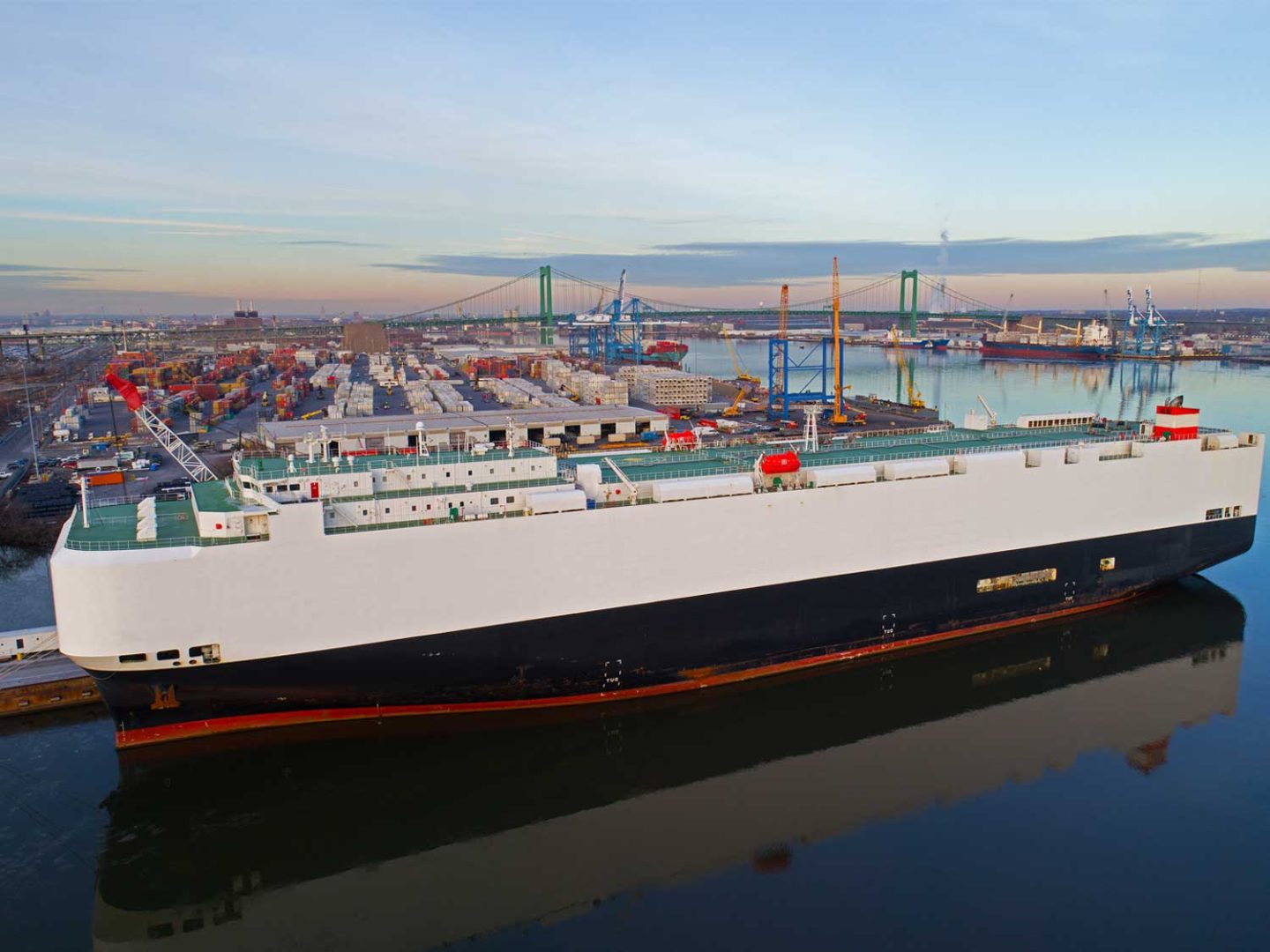
Unpredictable scheduling, blank sailings and overcapacity continue to unsettle the major east–west, transatlantic and transpacific trade lanes. But with tools such as late-stage blanking, slow steaming and selective vessel deployment, carriers are actively managing capacity to protect pricing and profitability.

Since the pandemic, capacity volatility has soared on key east-west trades. On the Asia–North Europe route, for example, weekly vessel capacity now fluctuates by nearly 30%, which is more than double the average variation seen between 2011 and 2019. Similar patterns are visible on Asia–Mediterranean and transpacific lanes, albeit to a lesser extent.

This volatility, which is driven by inconsistent vessel sizes, blank sailings, and disrupted schedules, has created the erratic cargo flows that intensified congestion at major ports this year. Rather than a predictable weekly rhythm, terminals are now dealing with surges followed by lulls, complicating yard planning, berth availability, and inland logistics.

The Next Stress Tests

China’s Golden Week holiday each October is typically preceded by a demand spike followed by a sharp dip, with carriers aligning supply with reduced demand. However, despite weaker demand signals, scheduled vessel capacity on Asia–Europe and Asia–North America trades remains significantly above previous years.

On the Asia–North Europe lane, capacity is set to be 8% higher than last year and over 25% above pre-pandemic levels. Blanked sailings currently account for just 3.8% of planned volume—far below the 15.4% removed in 2024.

Unless carriers remove up to 21 additional sailings in the coming weeks, the market risks excess capacity during a period traditionally associated with reduced demand. Analysts widely expect last-minute blankings to be announced, following a recent pattern of reactive, rather than pre-emptive, adjustments.

The transatlantic trade lane illustrates the complexities of carrier strategy in an oversupplied market with muted demand. Despite westbound spot rates below breakeven, blank sailings remain minimal. This may reflect a longer-term view, with carriers preferring to hold share and absorb short-term losses while waiting for demand to stabilise under the new US–EU tariff regime.

Carriers, meanwhile, continue to adjust alliances and service patterns. This last-minute approach, while unsettling for shippers, reflects carriers’ preference for short-notice flexibility over long-term commitment. For shippers, the unpredictability increases the risk of missed connections and inland bottlenecks, especially when relying on a single carrier or alliance.

The Carriers’ Strategic Levers

In the absence of demand control, carriers are increasingly leaning on their main pricing lever: supply. While blank sailings provide some short-term relief, they are often insufficient in isolation, especially when record levels of new tonnage are still entering the market.

Parking full strings of vessels, particularly the new ultra-large container ships, is an effective solution with significant rate upside. Even sidelining one loop per consortium on Asia–Europe could raise average rates by hundreds of dollars per TEU. But this strategy comes with high opportunity costs and political challenges inside boardrooms.

Carriers are therefore exploring alternative methods:

  • Slow steaming: By reducing sailing speeds across multiple trade lanes, more ships are absorbed into the same network, effectively tightening capacity while improving fuel efficiency.
  • Two-tier pricing: On Asia–Europe, some carriers are reportedly floating premium rates for Red Sea transits and discounting longer Cape routes, subtly incentivising shippers to favour stability over speed.
  • Schedule management: Transatlantic services show how carriers use blank sailings not only to suppress overcapacity but also to recalibrate service reliability. Though capacity on North Europe–US East Coast routes rose slightly in September, the volume of withdrawn sailings remains limited—under 2%—even as rates continue to hover below breakeven.

Sea freight capacity is no longer a static variable. It is a dynamic lever that carriers actively manage in real time to defend profitability in an oversupplied and volatile market. Golden Week blankings and the transatlantic trade’s soft discipline on capacity illustrate two contrasting approaches: one reactive and seasonal, the other strategic and cautious.

Metro negotiates rate, volume and service agreements with all the leading container shipping lines and Alliances, offering flexible global solutions across full and less-than-container loads, reefers, Ro-Ro, and heavy lift cargo.

Our freight services integrate seamlessly with customs, multimodal transport and logistics to deliver true end-to-end supply chain value. With MVT, you gain SKU-level visibility and control, enabling you to optimise scheduling, cut through complexity, and respond quickly to shifting market demands.

Partner with Metro for powerful sea freight solutions designed to keep your business moving in today’s dynamic global trade environment.

Brown Marmorated Stink Bug Season 2025

Brown Marmorated Stink Bug Season 2025

The Brown Marmorated Stink Bug (BMSB) is an agricultural pest native to China, Japan and the Korean peninsula. Each year, Australia and New Zealand enforce strict controls from 1 September through 30 April to prevent the introduction of this invasive pest through international trade.

Accidentally introduced into the United States twenty years ago, the Brown Marmorated Stink Bug (BMSB) is also established in South America and Europe and remains a significant biosecurity threat to Australia and New Zealand.

Non-compliance with BMSB regulations can lead to severe delays, additional costs, or even re-exportation of the shipment. To avoid these complications, importers are strongly encouraged to complete BMSB treatments offshore before the goods arrive in Australia or New Zealand. Accurate and early documentation, including treatment certificates, is essential for expediting inspections and clearing shipments.

New for 2025/26

Emerging Risk Countries: The UK has been added as an emerging risk country, alongside the Republic of Korea and Japan. These countries will be subject to heightened surveillance and random inspections.

Airfreight Inspections: High-risk goods arriving as airfreight from the United States and China will now be subject to random inspections.

New Treatment Option: Ethyl Formate has been introduced as an additional offshore fumigation treatment option alongside existing treatments like sulfuryl fluoride and methyl bromide.

Updated In-Transit and Rolled Policy: A new application process allows for onshore re-treatment approval under specified conditions, providing options for shipments under review or treatment provider suspension.

Risk Countries and Target Goods

The seasonal measures apply to targeted goods manufactured in or shipped from designated risk countries, including 38 core countries and the new emerging risk countries listed above. The measures focus on:

  • Vehicles, machinery parts, tyres, wood articles, and other high-risk goods.
  • Breakbulk, open top, and flat rack containers require strict offshore treatment.
  • Containerised cargo may be treated offshore or onshore without deconsolidation.
  • LCL cargoes are managed at the container level with offshore treatment strongly recommended.
  • Goods in fully sealed containers loaded and sealed before 1 September may be exempt.

Compliance Recommendations

  • Arrange offshore fumigation treatment early wherever possible, as onshore capacity is limited and delays may occur.
  • Ensure cargo packaging permits effective fumigation or heat treatment penetration.
  • Regulations do not apply to packaging materials like cardboard or pallets.
  • Use DAFF-approved treatment providers and maintain required certification documentation.

Metro’s Support Through Preparedness

Metro’s CEO and Managing Director recently undertook visits to partners and clients in Australia, reinforcing their commitment to ensuring all stakeholders are fully aligned and well-prepared for the Brown Marmorated Stink Bug (BMSB) season. 

By working closely with treatment providers and quarantine authorities, Metro has strengthened its capability to meet the strict biosecurity standards demanded. The company has also established dedicated staging and treatment facilities, to minimise potential disruptions.

These facilities are sterilised to meet quarantine and inspection standards, such as those set by the Australian Quarantine and Inspection Service (AQIS), providing a controlled environment for the inspection, cleaning, and fumigation of high-risk cargo.

By ensuring that cargo is treated and transported within a sterile environment, it bypasses quarantine checks upon arrival and moves directly to the destination staging facility for unloading and further distribution, thus streamlining the delivery process and meeting BMSB compliance standards.

Metro remains dedicated to simplifying this complex biosecurity landscape, enabling customers to ship with confidence during the 2025/26 BMSB season.

Visit the Department of Agriculture, Fisheries and Forestry web site for details of their seasonal measures

US Tariffs Reshape Global Supply Chains

US Tariffs Reshape Global Supply Chains

The wave of new US tariffs has triggered a recalibration across global trade and supply chains. While markets initially reacted with relative calm, the cumulative impact of the Trump administration’s layered tariff regime, now reaching more than 60 countries, is beginning to reshape sourcing strategies, cost structures, and trade flows worldwide.

The latest measures, including punitive tariffs of up to 50% on imports from India, and Switzerland, and a standardised 15% levy on most EU goods, follow months of negotiations, with the UK and US agreeing an Economic Prosperity Deal (EPD) on 8 May, as a framework for tariff reductions to 10% and sector-specific cooperation.

While the EU, UK and some other nations have secured temporary reprieves or reduced rates, others are facing some of the steepest trade barriers since the 1930s. Despite legal challenges and ongoing court reviews, the ‘reciprocal’ tariff framework remains in force until 14 October to give the administration time to appeal to the US Supreme Court.

Supply Chain Implications

With the average US tariff rate climbing to 15.2%, up from a pre-Trump level of just 2.3%, importers are confronted by significant new costs and operational uncertainties. Many rushed to ship goods before the new levies took effect, temporarily insulating American consumers from immediate price increases.

However, the landscape is growing more unpredictable. With distinct, sector-specific tariffs on items like semiconductors, consumer electronics, pharmaceuticals, and critical minerals forthcoming, importers face ongoing uncertainty around landed costs and logistical planning.

And while the legality of “reciprocal” tariffs continues under judicial review, it adds yet another layer of risk for firms engaged in international trading.

The structure of the new tariff regime is multi-layered. A base rate of 10% applies to most imports, with steeper levies of 15% to 41% on countries with trade surpluses or those targeted for geopolitical reasons. Sector-specific duties on copper, pharmaceuticals, semiconductors, and critical minerals are being introduced in stages, with transshipment clauses aimed at preventing circumvention.

India, Switzerland and Brazil have emerged among the hardest-hit economies, with duties on some goods now matching or exceeding those applied to China. 

The outlook for trade with China remains fluid. A 90-day truce has paused the imposition of previously announced three-digit tariffs, with further talks expected before the November deadline.

However, a new provision introducing a 40% tariff on suspected transshipped goods, potentially targeting Chinese exports routed through third countries, has introduced added further complexity for supply chain managers.

The EU, UK, Canada, Mexico, Japan, and South Korea, appear better positioned to weather the storm, with existing trade agreements and temporary negotiation windows providing some insulation. Yet, some of these buffers are time-limited, and broader economic impacts are still unfolding.

As tariffs shift the relative cost of sourcing and importing, businesses are actively reviewing their global footprints. For many, the focus is now on building resilience through diversification, friend-shoring, and regionalisation. However, continued tariff uncertainty is delaying investment decisions and complicating long-term planning, especially for industries reliant on integrated global supply chains.

US Tariffs are reshaping global trade. Whether you’re evaluating exporting or sourcing options, reviewing landed costs, or considering tariff engineering, EMAIL our managing director Andy Smith to discuss your exposure and build a future-proof compliance strategy.

Container Shipping Faces Prolonged Excess Capacity

Container Shipping Faces Prolonged Excess Capacity

The container shipping industry is set for several years of structural oversupply, which will put significant downward pressure on rates, with fleet growth consistently outpacing cargo demand until the end of the decade.

Analysts point to a combination of record vessel orders and limited scrapping as the primary drivers of the imbalance. By mid-2025, global carriers had ordered 2.3 million TEU of new capacity, only slightly below the record levels set in late 2024. The current order-book now totals 9.6 million TEU, equivalent to more than 30% of the active fleet. With 3.3 million TEU scheduled for delivery in 2028 alone, average fleet growth is forecast to remain above 6% per year.

The composition of new orders is also shifting. While demand for ultra-large ships of 14,000 TEU and above remains strong, the most striking increase has come in smaller units. Seventy-four feeder and regional vessels of up to 4,000 TEU were ordered in the first half of 2025, almost matching the entire 2024 total. This investment comes despite the fact that nearly a third of the world’s smaller ships are already over 20 years old, a share set to rise to around half by 2030.

Scrapping activity has stalled at the same time. Just ten ships totalling 5,454 TEU were demolished in the first six months of 2025, compared with nearly 49,000 TEU a year earlier. A strong charter market and resilient cargo flows, combined with continued diversions via the Cape of Good Hope, have encouraged carriers to hold on to older tonnage. Many remain wary of cutting capacity after recent shocks, including the pandemic and Red Sea disruptions, demonstrated the strategic value of surplus vessels.

On the demand side, global throughput is expected to rise 2.6% in 2025, supported by front-loading, fiscal stimulus, and lower effective tariff rates. But growth is forecast to slow to 1.7% in 2026 as inflationary pressures, higher costs, and weaker US job growth weigh on consumption. Asia–Europe routes, where the largest vessels are being deployed, are expected to feel the oversupply most acutely, while transpacific trades face uncertainty once front-loading unwinds.

The imbalance has clear financial and regulatory implications. Analysts expect profitability to bottom out in 2028, when the largest wave of deliveries coincides with a likely return of normalised Red Sea transits. At the same time, retaining older tonnage raises questions around emissions compliance and fuel efficiency as IMO decarbonisation rules tighten.

Industry projections suggest average overcapacity of around 27% through 2028. While unforeseen shocks may disrupt the outlook, the medium-term picture points firmly to a prolonged period of structural pressure on global container shipping.

With vessel supply set to outpace demand for years ahead, oversupply will continue to distort schedules and pressure rates. In this environment, booking space is no longer enough. You need visibility, agility, and the ability to adapt as conditions change, with blanked sailings and service adjustments likely without notice.

Metro’s MVT platform continuously tracks carrier KPIs and vessel position, comparing actual performance across alliances and adjusting supply chains in real time. This data-led approach maintain supply chain resilience, minimises disruption, optimises inventory planning, and safeguards service levels.

EMAIL Andrew Smith, Managing Director, to discuss how we can support your supply chain.