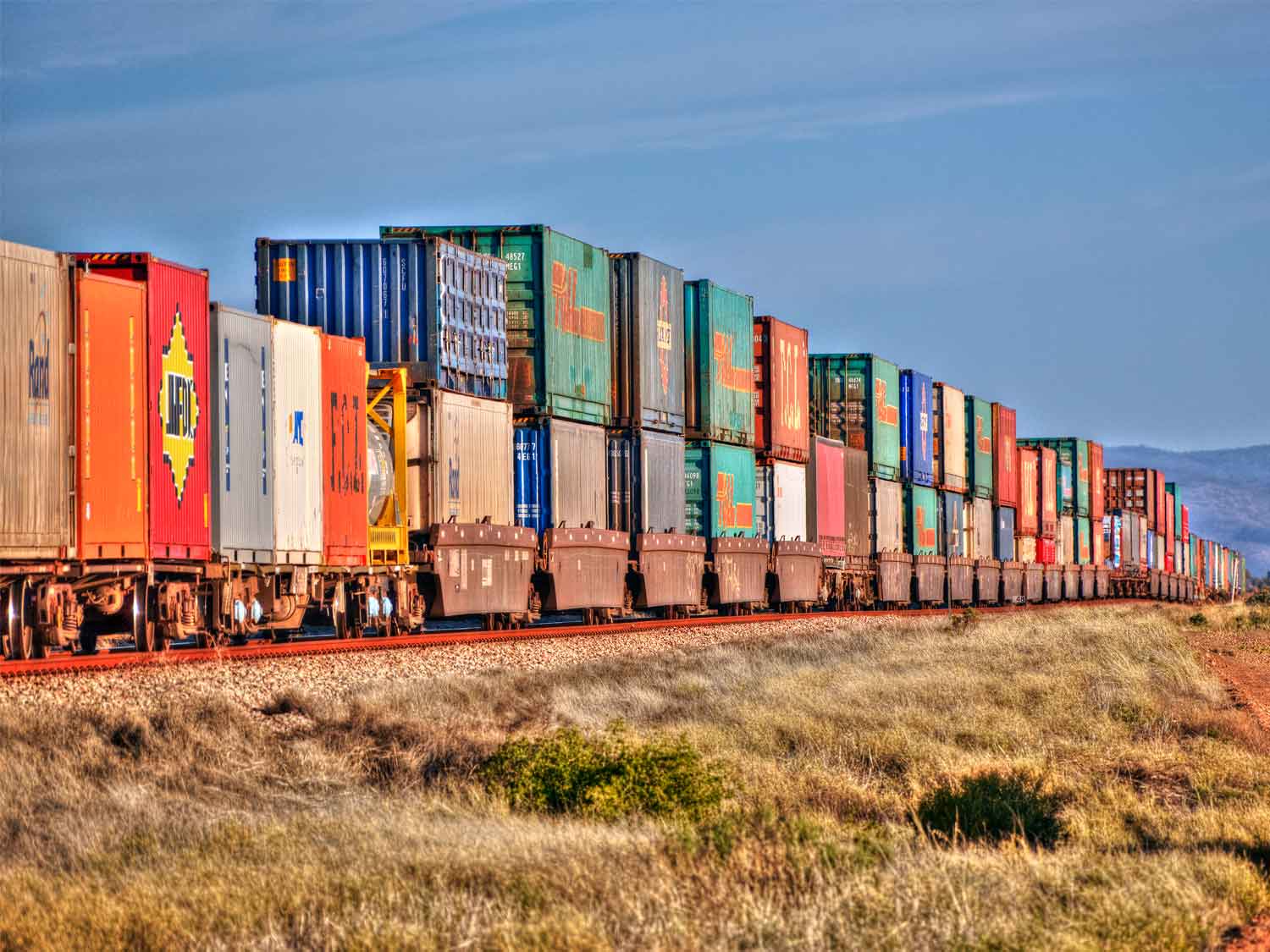
double stack container train

India export surge puts pressure on inland networks

India’s export surge is tightening ocean capacity, creating equipment shortages and increasing pressure on the inland road and rail networks that support its container gateways.

Premier carrier sailings from West India, including Nhava Sheva and Mundra, remained largely sold out through September on key trades, with market conditions expected to stay firm as exporters compete for available capacity.

The pressure is particularly evident at JNPA, where exporters are reporting growing difficulties securing empty containers. Forty-foot equipment is proving especially scarce, while shortages have also been reported at inland container depots (ICDs) across northern India.

The result is a supply chain challenge extending well beyond ocean freight availability.

Record exports tighten the equipment cycle

JNPA handled a record 832,000 TEU in August, rising approximately 12% month on month and 20% year on year.

More unusually, export containers exceeded imports during the month. India traditionally operates as a container-deficit market and relies heavily on repositioned equipment and boxes arriving from the Far East to replenish stocks.

Stronger exports are therefore consuming available equipment faster, while disrupted vessel schedules are making it harder for shipping lines to return empty containers to the locations where exporters need them.

Freight stations around JNPA have reported vehicles waiting in long queues at container yards without being able to collect equipment. Similar problems are emerging inland, with difficulties securing empty boxes reported at several northern Indian ICDs.

With Indian exporters traditionally increasing shipments during the January-March final fiscal quarter to meet annual targets, equipment positioning and advance planning could become increasingly important over the coming months.

Port performance shifts attention inland

The pressure also highlights a broader issue facing India's rapidly expanding container trade, because moving a box through a port efficiently is only one part of the journey.

Around 20,000 TEU leave JNPA by road each day, compared with approximately 2,000 TEU by rail. As port throughput increases, that imbalance places additional pressure on highways, container freight stations and other supporting infrastructure around the Mumbai region.

Earlier disruption caused by trailer-driver shortages demonstrated how quickly the land-side network can become constrained, slowing container movements between terminals and CFS facilities even when quayside operations continue normally.

Mundra has faced its own challenges. Container train operators reported significant congestion earlier this year, including more than 16,000 TEU awaiting movement and a rail pipeline exceeding 60 trains at one stage.

More recent disruption affecting empty-container yards has reinforced the importance of looking at the complete land-side operation when planning Indian shipments.

Rail investment and demand is growing

The completion of the Western Dedicated Freight Corridor (DFC) connection to JNPA in September represents an important development.

The 1,506km corridor connects the Mumbai gateway with northern India's major industrial and logistics regions, allowing freight trains to bypass much of the conventional passenger railway network.

Together with the Eastern DFC, India now has almost 2,850km of dedicated freight railway. However, demand is building rapidly.

The two corridors averaged around 438 trains a day in August against nominal capacity of 480, representing approximately 91% utilisation. The Western corridor was operating at around 88%, while the Eastern corridor was approaching 95%.

Double-stack and longer trains provide additional throughput potential, but the figures illustrate how quickly India's expanding trade is absorbing new infrastructure.

Meanwhile, other gateways are working to increase rail's share of inland movements. Chennai has restored its container rail connection with ICD Sanathnagar in Hyderabad and is exploring further inland services, potentially providing shippers with additional gateway and routing choices.

India movements require end-to-end planning

India's expanding ports and dedicated freight corridors are transforming the country's logistics infrastructure, but the current export surge demonstrates that capacity cannot be considered in isolation.

Sold-out sailings, shortages of export equipment, pressure at container yards, busy inland terminals and congested road connections can all influence whether cargo reaches its vessel as planned.

For importers and exporters, that increases the value of booking early, maintaining visibility of equipment and inland conditions and considering alternative gateways, routings and consolidation options where appropriate.

Metro India: local reach, global options

Metro's extensive footprint across India connects customers with the country's principal ports, ICDs, manufacturing regions and logistics centres, supported by established global carrier relationships and an international freight network.

Our local teams combine ocean and air freight, consolidation and inland transport capabilities to manage the complete movement. When capacity, equipment availability or congestion affects established supply chains, we can assess alternative carriers, gateways, routings, modes and consolidation options to help keep cargo moving.

If you have shipments moving to, from or across India, talk to Metro about current conditions and the options for protecting your upcoming movements.
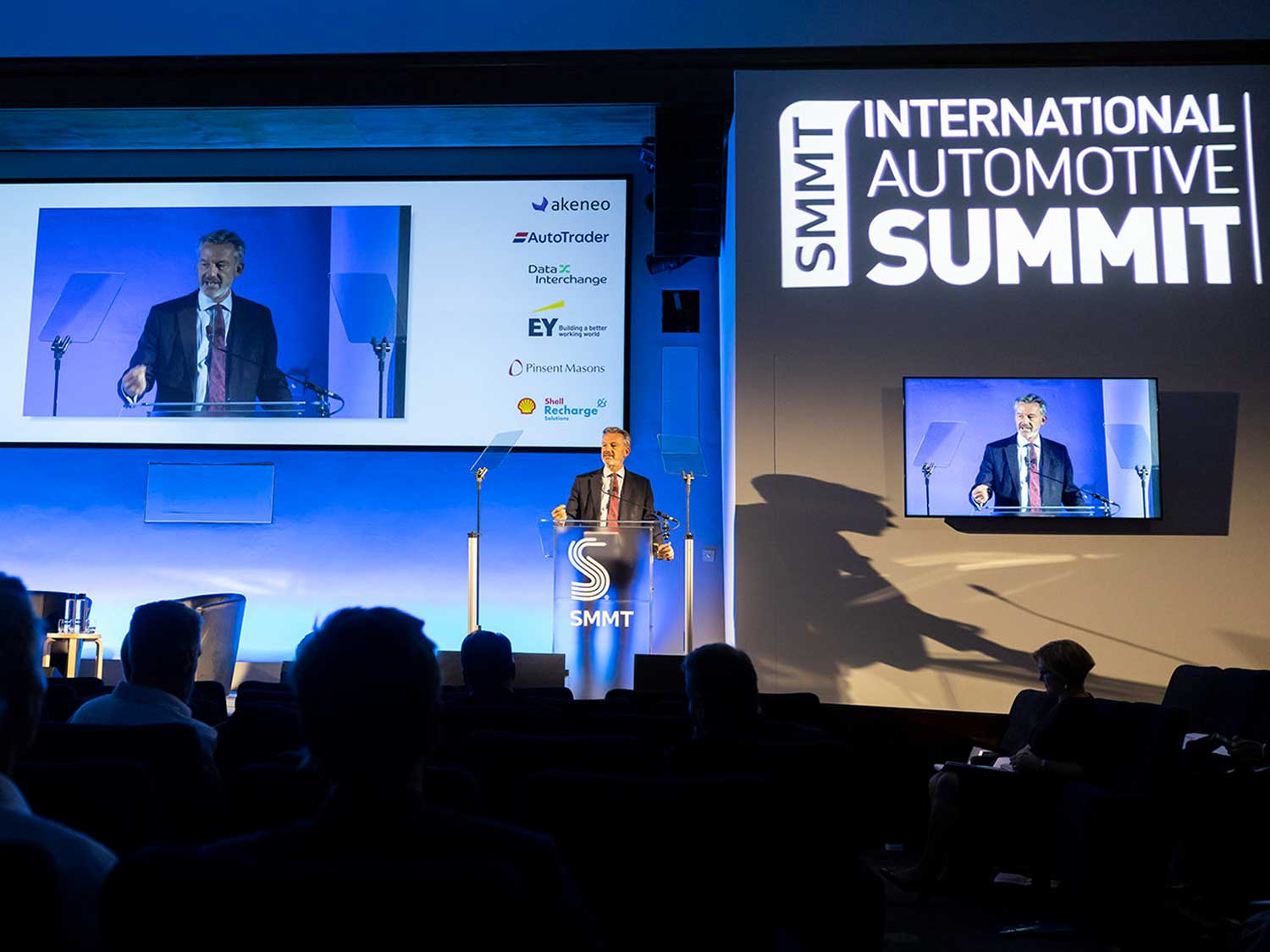
SMMT summit

EU urged to keep British auto supply chains within “Made in Europe” framework

The UK automotive industry is urging the European Union to preserve close manufacturing integration with Britain as Brussels advances new industrial policies designed to strengthen European supply chains and accelerate domestic electric vehicle production.

The Society of Motor Manufacturers and Traders (SMMT) has warned that proposed EU “Made in Europe” measures could unintentionally damage one of the world’s most integrated automotive manufacturing relationships if UK operations are excluded from future incentives and industrial support mechanisms.

The concerns centre on the EU’s proposed Industrial Accelerator Act (IAA), a key part of the bloc’s wider “Made in Europe” strategy aimed at strengthening European manufacturing, accelerating decarbonisation and improving competitiveness against the US and China.

UK and EU automotive manufacturing remains deeply interconnected

The SMMT recently met EU representatives in Brussels to discuss how the proposed legislation could affect cross-border automotive manufacturing and whether UK operations would remain eligible for support linked to the “Made in Europe” framework.

The industry body argues that the UK and EU automotive sectors remain fundamentally interdependent despite Brexit, with the EU exporting over €9bn worth of automotive components to UK manufacturers every year, making Britain the largest single export market globally for EU automotive parts.

These flows include battery systems, electric motors, traditional powertrain components, electronics, body panels and high-value engineered parts that move repeatedly between the UK and EU during the manufacturing cycle.

The wider UK–EU automotive relationship is now estimated to be worth around €80bn annually, while UK factories remain the EU’s largest export market for passenger vehicles, worth almost €40bn per year to European manufacturers.

SMMT chief executive Mike Hawes said, “Brexit put the resilience of our shared industry under enormous stress, but manufacturers have overcome those challenges to grow our trade in electrified vehicles alone to record levels.”

The organisation argues that excluding UK operations from future “Made in Europe” incentives could weaken both UK and EU manufacturing competitiveness by disrupting deeply integrated supply chains that have evolved over decades.

Industrial policy becoming increasingly tied to supply chain geography

The proposed Industrial Accelerator Act forms part of a broader shift towards more interventionist industrial policy across major global economies.

The EU’s objective is to accelerate decarbonisation, strengthen domestic manufacturing capability and reduce strategic dependence on overseas supply chains, particularly in areas linked to electric vehicles, batteries and advanced technologies.

The concern for UK manufacturers is whether British suppliers, assembly operations and associated supply chains would qualify for the same incentives and support structures as EU-based competitors.

The SMMT has warned that excluding UK operations from the framework could create new friction across automotive supply chains at precisely the moment manufacturers are trying to accelerate investment into electrification, battery production and low-emission vehicle technology.

Global trade pressure adds further complexity

The debate also comes as the automotive industry adapts to increasingly fragmented global trade conditions.

Following the 2025 UK–US trade agreement, the United States became the UK’s largest export market for cars, with more than 101,000 UK-built vehicles shipped to the US during 2024, worth around £7.6bn. The agreement reduced US tariffs on British-built vehicles from 27.5% to 10% within a quota of 100,000 vehicles, providing important support for premium and luxury manufacturers serving the American market.

At the same time, European automotive manufacturers continue pushing for progress on EU–US trade negotiations amid concerns that tariff disputes and industrial competition could create further instability across international manufacturing networks.

Despite these global shifts, UK automotive leaders continue to stress that Europe remains operationally critical from a manufacturing, sourcing and logistics perspective.

Metro supports automotive manufacturers, suppliers and aftermarket businesses with integrated freight forwarding, customs support and multimodal logistics solutions designed for highly time-sensitive international supply chains. 

From UK–EU customs coordination and inbound production logistics to time-critical component distribution and international freight management, Metro helps automotive customers maintain continuity across complex manufacturing networks operating under changing regulatory and trade conditions.

EMAIL Managing Director, Andrew Smith, today to learn more.

image

GB Global backs major Liverpool distribution centre

GB Global, Metro’s holding group, is supporting the development of a new 950,000 sq ft multi-user distribution centre in Speke, Liverpool, reinforcing the group’s ability to handle growing and more complex freight flows.

The 50 acre site will accommodate a single cross docked facility of over 950,000 ft2 incorporating 31,000 ft2 of two storey offices, a 902,000 ft2 warehouse as well as two transport offices of 6,000 ft2 and a gatehouse.

The property will have 21m eaves, 118 dock and 12 level access doors as well as 55m yards to both sides and parking for 238 HGVs and 600 cars. The scheme will target BREEAM Excellent and an EPC A+ rating with the warehouse roof being 100% PV ready.

The redevelopment has received planning approval from Liverpool City Council, attracting national attention, including coverage by the BBC, which reflects the strategic importance of logistics infrastructure to regional growth and national supply-chain capability.

An economic impact assessment published by Brookdale Consulting estimates the £96m scheme would generate £42m in business rates over 10 years and create 500 jobs.

Located close to key motorway links, ports and air cargo gateways, the Speke site is designed to support multi-user, multi-sector distribution, offering scale, flexibility and modern facilities aligned with today’s logistics requirements.

For Metro customers, the new Speke facility will:

  • Expand available UK distribution capacity at a time when space remains constrained
  • Support faster inland connectivity between ports, airports and end markets
  • Enable more flexible inventory positioning and fulfilment strategies

As supply chains become more fragmented and risk-aware, access to high-quality, well-located logistics infrastructure is increasingly central to service reliability.

Looking ahead

The Speke development underlines how investment at group level supports stronger execution across the supply chain as a whole. For Metro customers, it reinforces the value of working with a logistics partner that sits within a broader network committed to long-term infrastructure, people and capability.

As supply chains continue to shift from cost-led optimisation toward resilience and performance, this type of strategic investment provides an important foundation for consistent service delivery in the years ahead.

About GB Global

GB Global is a privately owned international group comprising a diverse portfolio of specialist businesses spanning logistics, supply chain, technology, education, customs, consultancy, sustainability, and property development.

Employing over 3,000 people worldwide, the Group operates across all major global markets, delivering fully integrated, end-to-end solutions that connect every stage of the supply chain – from global freight and warehousing to customs compliance, digital trade management and environmental consultancy.

GB Global operates through a network of independently managed specialist businesses, each with its own leadership, expertise and customer focus, supported by shared strategic oversight, investment, assets and group-wide capabilities. This structure enables agility at company level, while providing customers with the scale, resilience and integrated services of a global organisation.

For more information, visit www.gbglobal.world

Med satellite 1440x1080 1

Smart 2026 supply chains are being engineered for pressure

Supply chains are no longer judged on efficiency alone, in 2026 they will be expected to anticipate disruption and adapt at speed to actively support growth. The experience of the past year confirmed that stability is no longer a realistic planning assumption, but performance under pressure is.

Rather than a single crisis, 2025 delivered constant friction. Congestion resurfaced across ports and inland networks, capacity existed but was selectively deployed, and geopolitical and regulatory shifts altered trade flows long before any formal policy changes took effect. 

The result was a decisive shift in mindset: supply chains must be designed to operate in volatility, not merely recover from it.

That shift accelerates in 2026, as technology, resilience and sustainability converge to redefine how supply chains are planned, financed and executed.

Resilience becomes a competitive advantage

If 2025 proved anything, it was that capacity on paper does not guarantee performance in practice. Across ocean, air and road freight, service reliability was dictated by execution: blank sailings, schedule volatility and inland bottlenecks determined what actually moved.

In response, supply chain design is moving beyond simple continuity planning toward resilience, where networks are designed to adapt and improve under stress.

Common characteristics include:

  • Multi-route and multimodal playbooks rather than single-lane optimisation
  • Near-shoring and regionalisation to shorten lead times and reduce exposure
  • Centralised planning paired with regional execution for faster response

These approaches reflect a broader shift away from cost-minimisation toward risk-adjusted performance.

Warehousing becomes a strategic control point

Warehousing emerged as one of the most critical differentiators in 2025 — a trend that intensifies in 2026. With transit times less predictable and congestion harder to avoid, inventory positioning and fulfilment speed have become central to supply-chain resilience.

High-performing shippers increasingly treat warehousing as an active control layer, not passive storage. Key developments include:

  • Greater use of strategically located facilities to buffer disruption
  • Tighter integration between warehousing, transport and customs planning
  • Investment in automation and robotics that flex with demand and seasonality

This is particularly important as omnichannel and e-commerce pressures continue to grow, demanding seamless support for direct-to-consumer, BOPIS and rapid fulfilment models alongside traditional B2B flows.

From reactive networks to intelligent systems

One of the most significant changes heading into 2026 is the role of technology within supply chains. What began as analytical support is now moving into operational control.

AI-enabled tools are increasingly embedded across planning, procurement, inventory management and risk assessment, enabling supply chains to:

  • Anticipate disruption through predictive insights
  • Optimise routing, inventory and capacity decisions in near real time
  • Coordinate responses across multiple functions and geographies

As these systems become more connected, cybersecurity and data governance also rise sharply in importance. Protecting sensitive operational, commercial and customs data is now a core supply-chain requirement, not an IT afterthought.

Data quality, skills and execution define winners

Technology alone is not enough. The past year also highlighted a widening gap between organisations that could convert insight into action and those constrained by fragmented systems and poor data quality.

In 2026, competitive advantage depends on:

  • Clean, trusted and consistent data across logistics, customs and finance
  • Integrated platforms rather than disconnected tools
  • Teams with the skills to manage AI-driven, data-rich operations

Workforce transformation is therefore as important as digital investment. Roles are evolving toward data analytics, systems oversight and exception management, requiring targeted up-skilling to unlock value from new technologies.

Sustainability and compliance move into the operating core

Environmental and regulatory pressures are no longer peripheral considerations. Carbon pricing, emissions transparency, stricter customs enforcement and evolving trade rules are now shaping routing, mode selection and inventory strategy.

For most shippers, progress in 2026 will come less from premium “green” options and more from practical levers:

  • Smarter planning and consolidation
  • Modal optimisation and regionalisation
  • Stronger traceability and data governance

Sustainability and compliance have become operational constraints — inseparable from cost, resilience and service performance.

Designing supply chains that perform under pressure

Taken together, the direction of travel for 2026 is clear. Supply chains are being rebuilt as intelligent, integrated systems — shifting from reactive cost centres to strategic growth engines.

The most resilient networks are those that:

  • Integrate finance, procurement, logistics and technology decisions
  • Combine centralised control with regional agility
  • Invest equally in data, platforms, people and process

The objective is not to eliminate disruption, but to design networks that continue to perform when conditions are uncertain.

At Metro, this same mindset underpins how supply chains are assessed and supported. Stress-testing assumptions, strengthening visibility and applying execution-focused logistics, warehousing and transport strategies. In 2026, the differentiator will not be avoiding disruption, but owning a supply chain designed to operate through it.