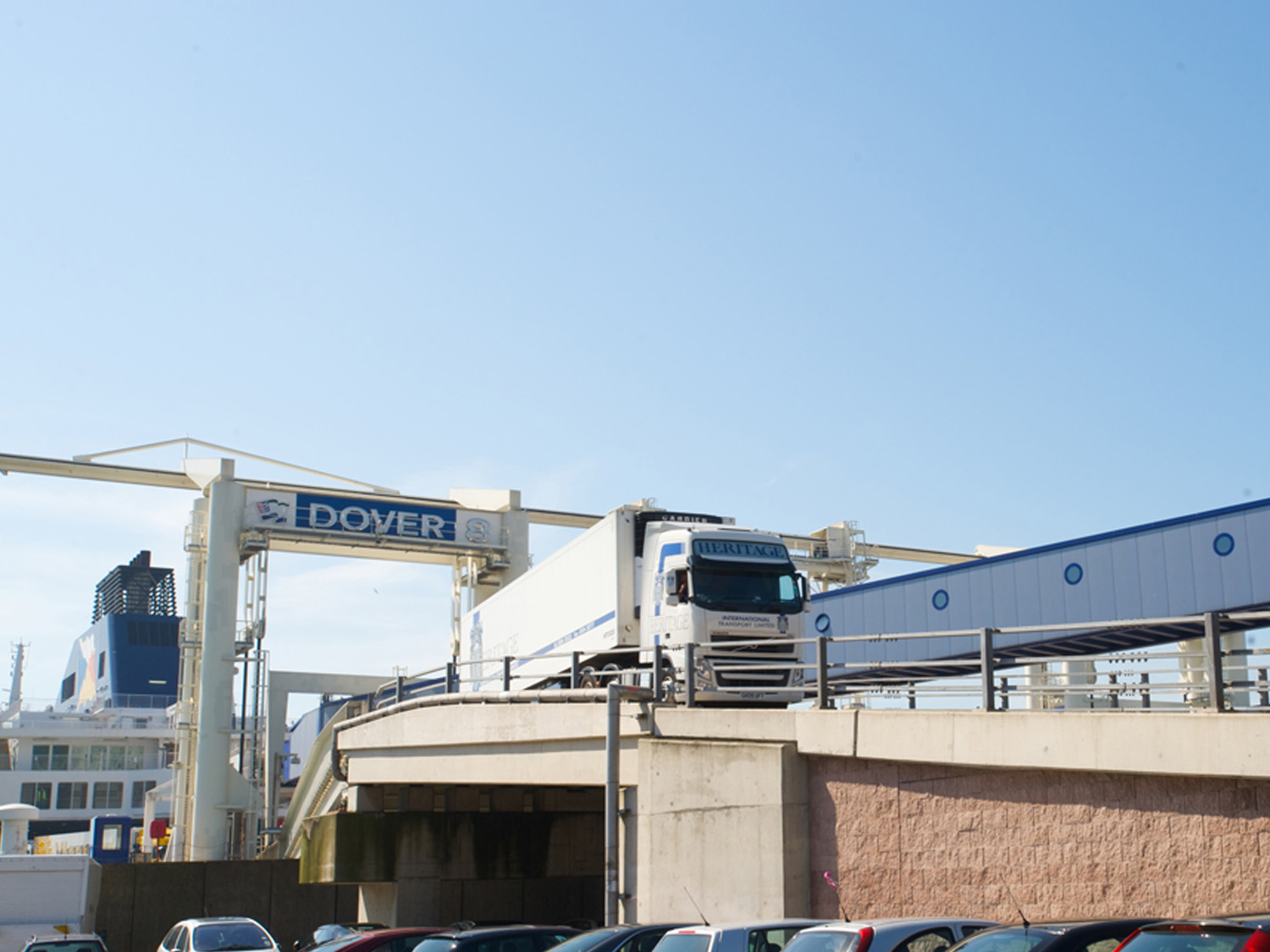
Dover truck arrival

UK and EU customs border changes

ICS2 advance filings will be used by EU customs to identify high-risk shipments from the 3rd June, while post-Brexit import charges which come into effect on the 30th April have raised fears of UK food price inflation.

The UK Common User Charge (CUC)
The CUC will apply to each commodity line in a Common Health Entry Document (CHED) and the maximum charge for one CHED will be limited to 5 commodity lines, even if there are more than 5 commodity lines present in the CHED.

The CHED is an import notification, that is submitted on the Import of Products, Animals, Food and Feed System (IPAFFS) to notify authorities in Great Britain about the import, and each commodity line defines a quantity of goods that are entered as a separate item in the CHED.

Delayed by the government five times to give businesses time to prepare and to reduce disruption to supply chains, the CUC will come into effect on the 30th April and applies to imports of products such as fish, salami, sausage, cheese and yoghurt, with the flat-rate of £10 or £29 per commodity, capped at £145.

The Fresh Produce Consortium said the charges would add £200m in costs for the fresh produce sector, at a time it is already struggling with inflation.

CUC rates only apply to goods entering the UK via Eurotunnel or the port of Dover, while the other (circa 30) commercially run entry points will set their own rates.

EU Import Control System 2 (ICS2)
The third release of the European Union’s customs pre-arrival safety and security system, the Import Control System 2 (ICS2), will go live on 3rd June 2024. 

The advanced filing of Entry Summary Declarations (ENS) for deep sea and short sea cargo will still apply to all cargo either discharging or transhipping in the EU, Northern Ireland, or Norway and to cargo remaining on board.

With the new release, the ENS will have to contain more mandatory data elements than today, including Buyer and Seller data, EORI of supplementary declarant in case of multiple filing and data elements such as the 6-digit HS Code with a complete and accurate cargo description. 

We have been sending EU Customs advanced security data in then Entry Summary Declaration (ENS) for years and are continuously developing our CuDoS customs platform and carrier integrations to receive additional data. We will be approaching affected customers with additional information on this process and any additional requirements.

When the ENS information is not provided to EU customs, shipments will be stopped and will not be processed for customs clearance, which will lead to delays and potential fines.

We can guide you on the CUC and ICS2 changes, help you to educate your suppliers and provide full support for all your import and export documentary needs.

Metro are at the forefront of customs brokerage solutions, with our automated CuDoS declaration platform and dedicated team of customs experts, reacting swiftly to any changes in the UK and EU’s trading regimes.

To learn more about CUC or ICS2, or to see how we can simplify and automate customs declarations for your businesses, please EMAIL Andy Fitchett, Brokerage Manager.
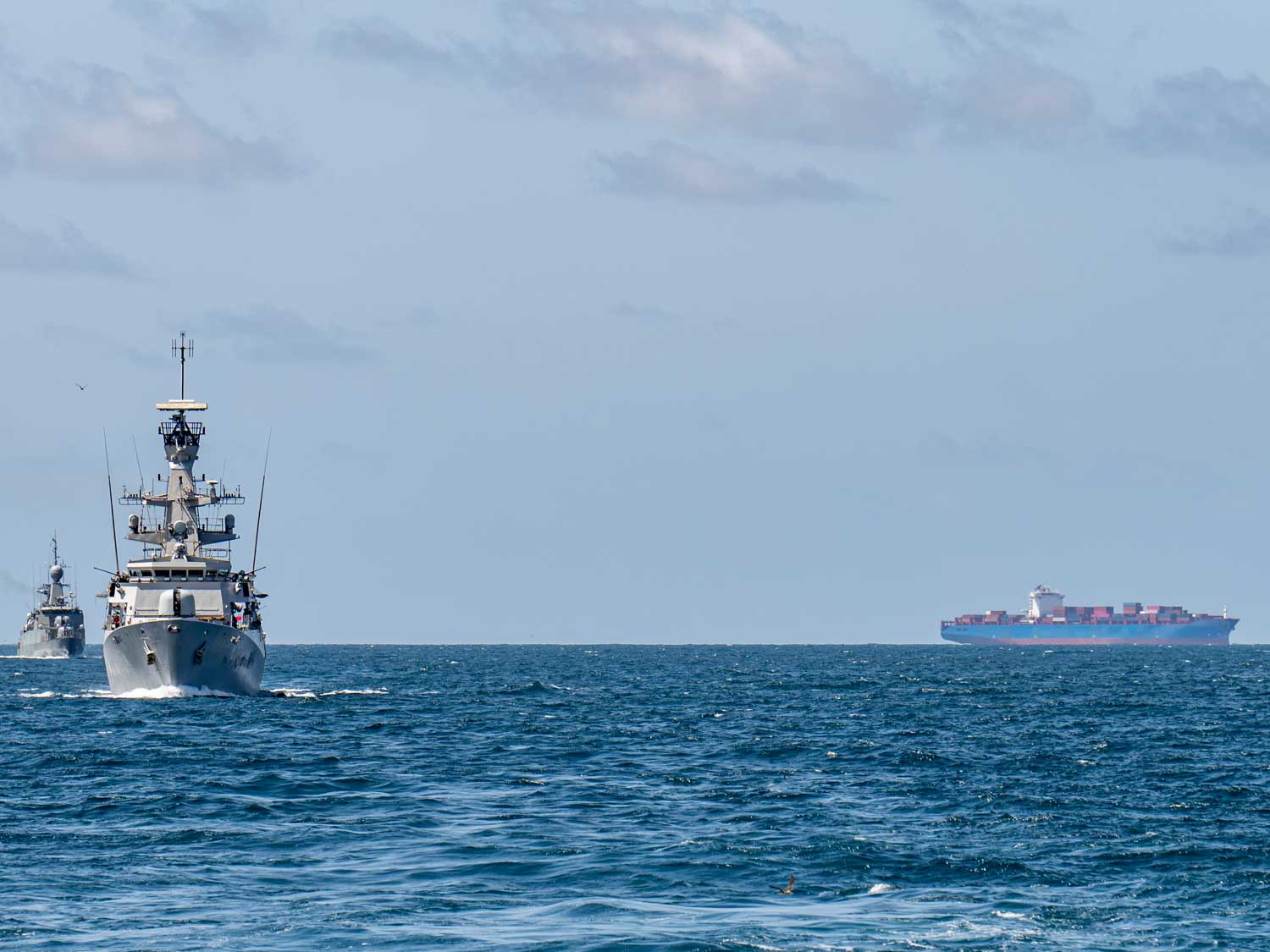
container ship and naval escort

Red Sea update

The last three months of 2023 were some of the worst for liner shipping’s finances in recent years, while early volume indications for this year suggest the coming months could bring stronger trading conditions for shipping lines, especially with the Red Sea diversions and capacity management techniques learned during the early phase of the pandemic.

Amidst the Red Sea crisis, global schedule reliability continued to decrease, dropping over 5% in January, but it does seem that schedule reliability may have improved slightly in February and the delays experienced for vessels arriving late were also reduced.

Performance overall is still very poor, but this does indicate that the new round-Africa services are beginning to slowly normalise, making supply chains slightly more predictable, albeit obviously with longer transit times. We would expect to see further improvements once we get the March data.

After eight consecutive days without incident, in the Red Sea on Monday the master of a vessel reported being hailed on the radio by an entity claiming to be the Yemeni Navy, while a crew member reported having heard gunshots and US naval forces destroyed a drone boat.

Despite the ongoing attacks, the US said it would consider revoking its recent designation of Yemen’s Houthis as terrorists if the Iran-backed militants cease their shipping attacks in and around the Red Sea.

Joe Biden’s special envoy for Yemen, Tim Lenderking, said the Houthis’ could “show good faith” and an “intent to de-escalate” if they released the 25-member crew of the Galaxy Leader, the RoRo car carrier that they hijacked in November.

Russia has sent several naval vessels from the Pacific Fleet into the Red Sea, though the purpose of the Russian vessels in the Red Sea area is unclear.

Air freight volumes jump

As a result air freight volumes have jumped up. February was the third consecutive month of double-digit year-on-year demand growth for air cargo, according to data released by IATA, with air cargo demand up 12% compared to 2023.

The rise comes as the market stabilises amid improved economic performance worldwide, with capacity up over 13% due to the continued return of belly capacity.

The strong start for 2024 could see demand surpass the exceptionally high levels of early 2022, with booming eCommerce and increased demand for sea/air services linked to Red Sea concerns.

If you have any questions or concerns about the impact of the Red Sea crisis on your Asia supply chain, or would like to discuss its wider implications, please EMAIL our Chief Commercial Officer, Andy Smith.

For questions about air freight, sea/air and our suite of time-sensitive solutions EMAIL Elliot Carlile, Operations Director, for insights, prices and advice.

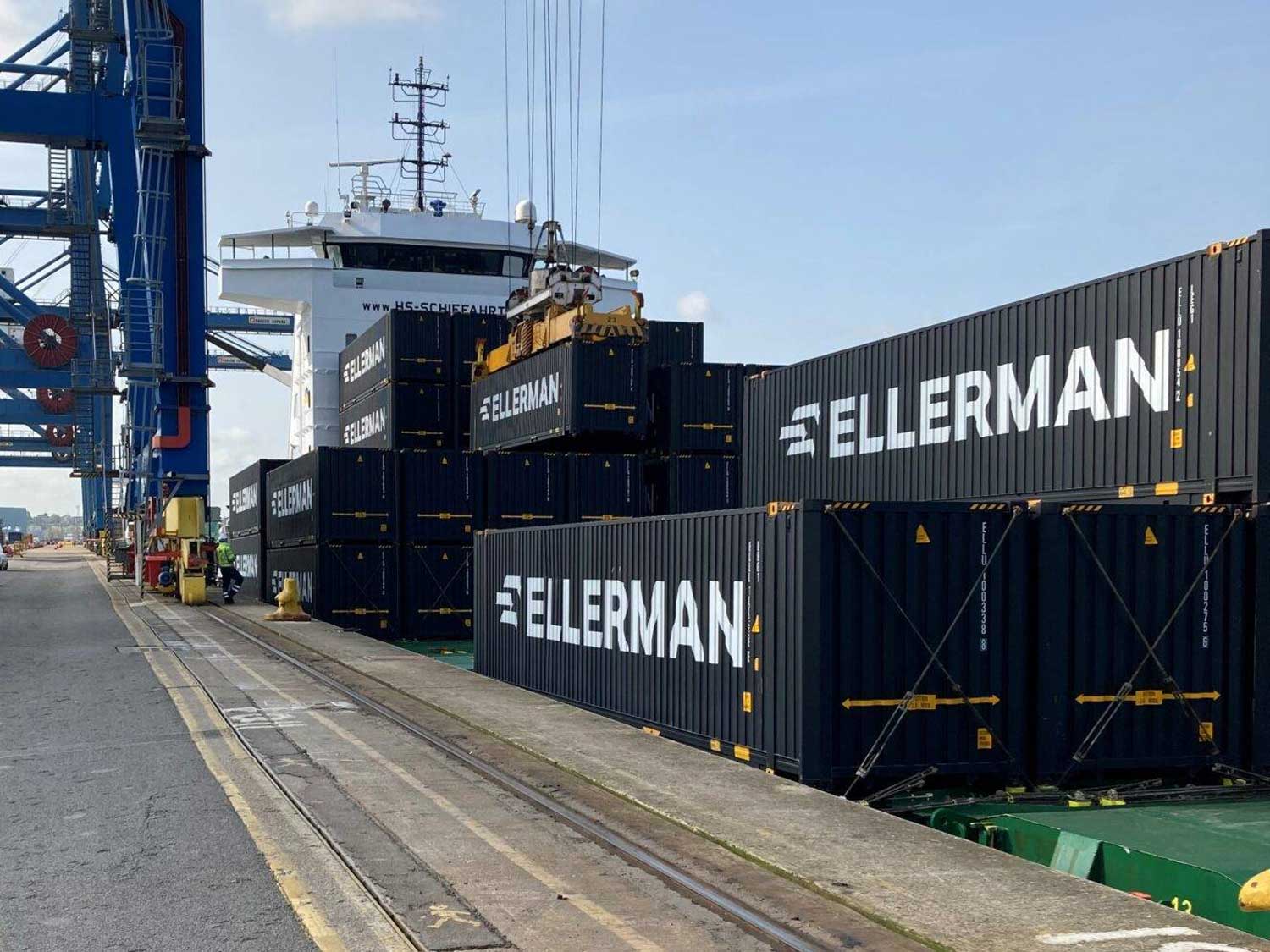
Ellerman boxes

Baltimore supply chain contingencies

In Baltimore work to remove the 9,662 TEU vessel Dali and damaged bridge has begun, with seven floating cranes and 30 vessels on scene, but with 4,000 tons of steel pinning the ship to the riverbed port officials suggest vessel diversions could last three months.

The bridge collapse will mean that for the time being it will not be possible for vessels to depart or berth at container terminals in Baltimore, so inbound vessels will need to re-route through other ports in the region.

It remains to be seen what the primary alternative ports will be for the most popular services and carriers, but from a sheer size perspective Norfolk and New York are the obvious choices to handle diverted vessels.

Moving Baltimore’s container traffic to Norfolk and New York would mean an increase of around 10% in volume handling in those two ports, but both had a volume drop in 2023, that could mean they have sufficient capacity. However, there may still be some disruptive effects and some bottlenecks meaning delays should be anticipated in the short term.

And while Maersk, MSC and Hapag-Lloyd have advised the discharge and load are happening in either Norfolk or New York, some of the smaller ports in the region such as Philadelphia, Charleston, Jacksonville and Delaware river ports may also be worth consideration.

Automotive adjusts to Baltimore Port closure
Baltimore is the busiest US port for vehicle imports and exports, with 850K cars and light trucks processed in 2023. Car makers that use Baltimore for shipping vehicle and parts shipments include GM, Toyota, Jaguar Land Rover, Mazda, Mercedes and Volvo.

Wilmington, Delaware and Brunswick ports in Georgia are handling the first wave of diverted vehicle carriers from Baltimore. However, one of the four roll-on/roll-off (Ro/Ro) terminals at Baltimore port continues to receive shipments, due to its upstream location, on the seaward side of the collapsed bridge.

The privately-owned terminal handles imports of Volkswagen and BMW vehicles and its location on the seaward side of the Francis Scott Key bridge, means it will remain open despite the closure of the rest of the port.

The specialist automotive RoRo carriers are pursuing alternative solutions in nearby ports, while Wallenius Wilhelmsen’s 8,000-CEU Carmen completed its call at Baltimore prior to the bridge collapse but is now unable to leave the port.

While Baltimore is an important RoRo call virtually all services linking North America with key vehicle exports markets in Asia and Europe call at Brunswick, which makes it a viable option for manufacturers and automotive shippers.

While most displaced cargo will be bound for the Northeast US, the Port of Jacksonville, Florida, has spare berth and terminal capacity to handle additional cargo volumes, should contingency plans consider a southern-based solution.

Metro have alternative solutions to Baltimore gateway and we can provide containerised services for vehicles into other US gateways.

Our weekly transatlantic Ellerman US Express (USX) service serves New York, Philadelphia, Norfolk and Jacksonville, with direct port calls in the UK, Europe, Scandinavia and Baltics.

If you would like any further information on this, or our other contingency solutions please do not hesitate to EMAIL our Automotive Account Director, Ian Tubbs.

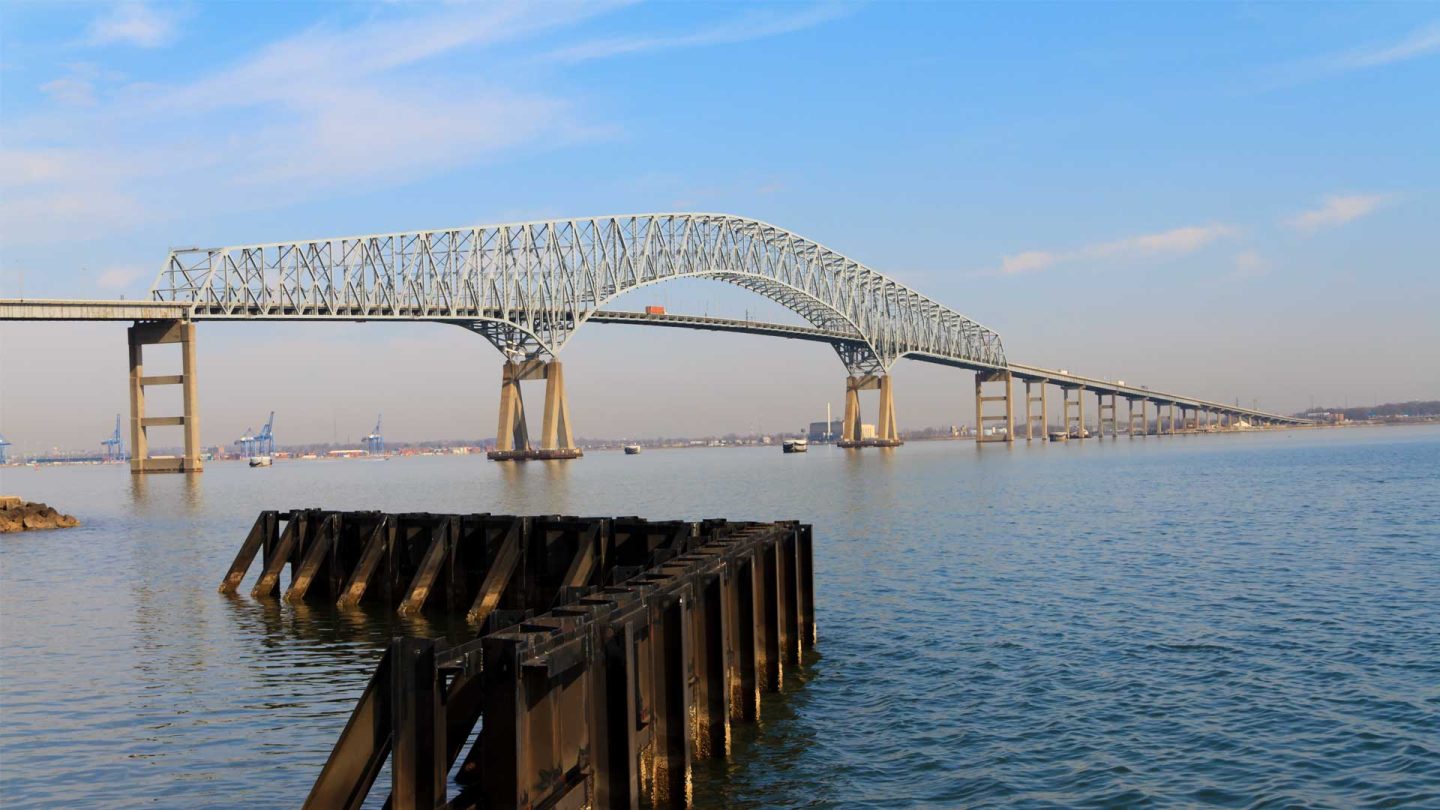
Francis Scott Key Bridge 1 1440x810 1

Maersk vessel collapses Baltimore bridge

The Dali, a time chartered Maersk container vessel with two pilots onboard, crashed into a support pylon of the Francis Scott Key Bridge in Baltimore, Maryland, in the early hours of Tuesday 26th February, collapsing a large section of the 1.6 mile bridge into the Patapsco River.

The Francis Scott Key bridge was the main thoroughfare for drivers between New York and Washington who sought to avoid downtown Baltimore. It was one of three ways to cross the Baltimore Harbour, with a traffic volume of 31,000 cars per day or 11.3 million vehicles a year.

The collapse of the bridge has cut off access in and out of the port for vessels. Around the world, about 40 ships, including 34 cargo vessels, have Baltimore listed as a destination, including 10 commercial ships with anchors dropped in nearby waters, according to MarineTraffic.

Baltimore port’s private and public terminals handled 847,158 autos and light trucks in 2023, the most of any U.S. port.

On top of the RORO operations Baltimore port handles around 21,000 TEU a week, which will have to be re-routed via other ports in the region until access is restored.

It is still unknown how long the port will be cut off due to the incident, but any length of downtime will greatly impact RORO capacity into the US East Coast, as well as cause additional congestion at alternative ports that will need to take on the overflow of ocean containers that would naturally route through Baltimore.

This also comes at a time when there is an element of uncertainty regarding the future situation at the US East and Gulf Coast ports due to the International Longshoremen’s Association and the United States Maritime Alliance current contract set to expire on 31st September 2024. Whether this incident will have any impact on the negotiations remains to be seen but Metro will be monitoring the situation closely and will be keeping our customers informed.

Automotive logistics contingency

The impact on RoRo, container and conventional freight moving into Baltimore is going to be significant. Baltimore is one of the largest RoRo ports for global vehicle movements into and out of the US East Coast. Carriers have already began to advise of diversions and avoidance of the port for the foreseeable future across all ocean freight modes.

We anticipate that there will be a consequential effect on vessel rotations and schedules ongoing to and from Europe and that vehicle compounds at alternative ports will become congested adding further to the impact, especially on the automotive sector.

RoRo carriers are already seeing a surge in bookings, adding further pressure on the high demand routes to the US. We will continue to update on the situation and market intelligence as it unravels. The impact will be ongoing for many weeks, and as experienced from the pandemic and Red Sea situations it is likely that indirect issues will arise as an outcome of the initial tragedy.

Metro have alternative solutions to Baltimore gateway and we can provide containerised services for vehicles and also other gateways into the US.

We are currently compiling the alternative options that we have and can share these with you in conjunction with our partner shipping lines and local offices in the US.

Please contact us for further information and speak with your account manager who will be delighted to arrange a meeting or Teams call to discuss the options available and your own specific needs and forecasts during the period of closure.

If you would like any further information on this solution and how it can work for you please do not hesitate to EMAIL our Automotive Account Director, Ian Tubbs.

SEE ALSO THIS BBC ARTICLE: Fears of disruption to global supply chains after Baltimore bridge crash