Qatar unloading

Air freight enters a new supply‑constrained phase

Global air freight markets have shifted abruptly from gradual recovery to a far more volatile, supply‑constrained environment, with the Middle East crisis now the dominant driver of pricing, routing and capacity decisions.

Rates have risen quickly in recent weeks, with fuel costs, network disruption and capacity reallocation creating a more complex operating environment. Despite the recent US–Iran ceasefire, conditions remain very far from normal, and will take far longer to unwind than the political headlines might imply.

Recent data points to a clear inflection. Over a four-week period to early April, global air freight rates increased by more than 25%, returning towards peak season levels. On some key corridors, the increases have been significantly steeper. India–Europe rates, for example, have more than doubled, while Hong Kong–Europe lanes have seen sustained upward pressure. These shifts reflect tightening supply rather than a surge in demand.

At the same time, global airfreight tonnage declined by around 4% in March, underlining the disconnect between demand and pricing. The market is no longer demand-led. Instead, it is being shaped by constrained effective capacity and rising operating costs.

Capacity disruption, fuel costs and network reconfiguration

Airspace restrictions, security concerns and operational risk have reduced flexibility, forcing airlines to reroute flights and extend transit times. While a ceasefire has eased immediate tensions, it has not resolved the structural challenges now embedded in the market.

At the peak of disruption, an estimated 15–20% of global air cargo capacity was effectively offline. Although some capacity has since returned, longer routings and operational inefficiencies mean that usable capacity remains significantly below nominal levels.

This is reflected in network behaviour. Capacity has not disappeared entirely, but it has been redistributed. Freighter capacity increased by approximately 9% month-on-month in March, as operators responded to gaps left by reduced belly-hold availability through Middle Eastern hubs. However, this growth has been uneven.

Routes directly affected by the crisis have seen double-digit capacity declines, while others have expanded rapidly. Asia–Europe has emerged as a key beneficiary, with airlines shifting towards more direct routings and alternative hubs. By contrast, Asia–North America lanes have softened, reflecting weaker demand and ongoing policy uncertainty.

Fuel is now a central factor in this shift. Jet fuel prices have risen sharply, in some regions by as much as 160% year-on-year, driven by supply constraints and extended replenishment cycles. In practical terms, this is increasing operating costs across all long-haul routes, particularly those requiring rerouting around restricted airspace.

These cost pressures are feeding directly into pricing, with carriers adjusting pricing to reflect higher fuel exposure and reduced network efficiency.

The combined impact of capacity constraints and fuel inflation is reshaping the structure of the air freight market. Growth expectations have already been revised downwards, with several percentage points of anticipated expansion lost in a matter of weeks.

More significantly, the market is no longer moving in a synchronised way. Instead, it is fragmenting into a series of regional and corridor-specific dynamics. Some lanes are experiencing acute capacity shortages and sharp rate increases, while others remain relatively stable or are softening.

Even with signs of stabilisation, a return to pre-disruption conditions is not expected in the near term. Rebuilding network efficiency, rebalancing fuel supply chains and restoring operational confidence will take time. Extended transit times, reduced routing flexibility and ongoing geopolitical uncertainty will continue to shape the market.

Metro delivers resilient air freight solutions built around your priorities. Combining strong airline relationships, global gateway options and flexible routing to secure space, maintain transit reliability and keep your cargo moving, even as market conditions shift. EMAIL our Managing Director Andy Smith to learn more.
Jet fuel

Jet fuel crisis escalates

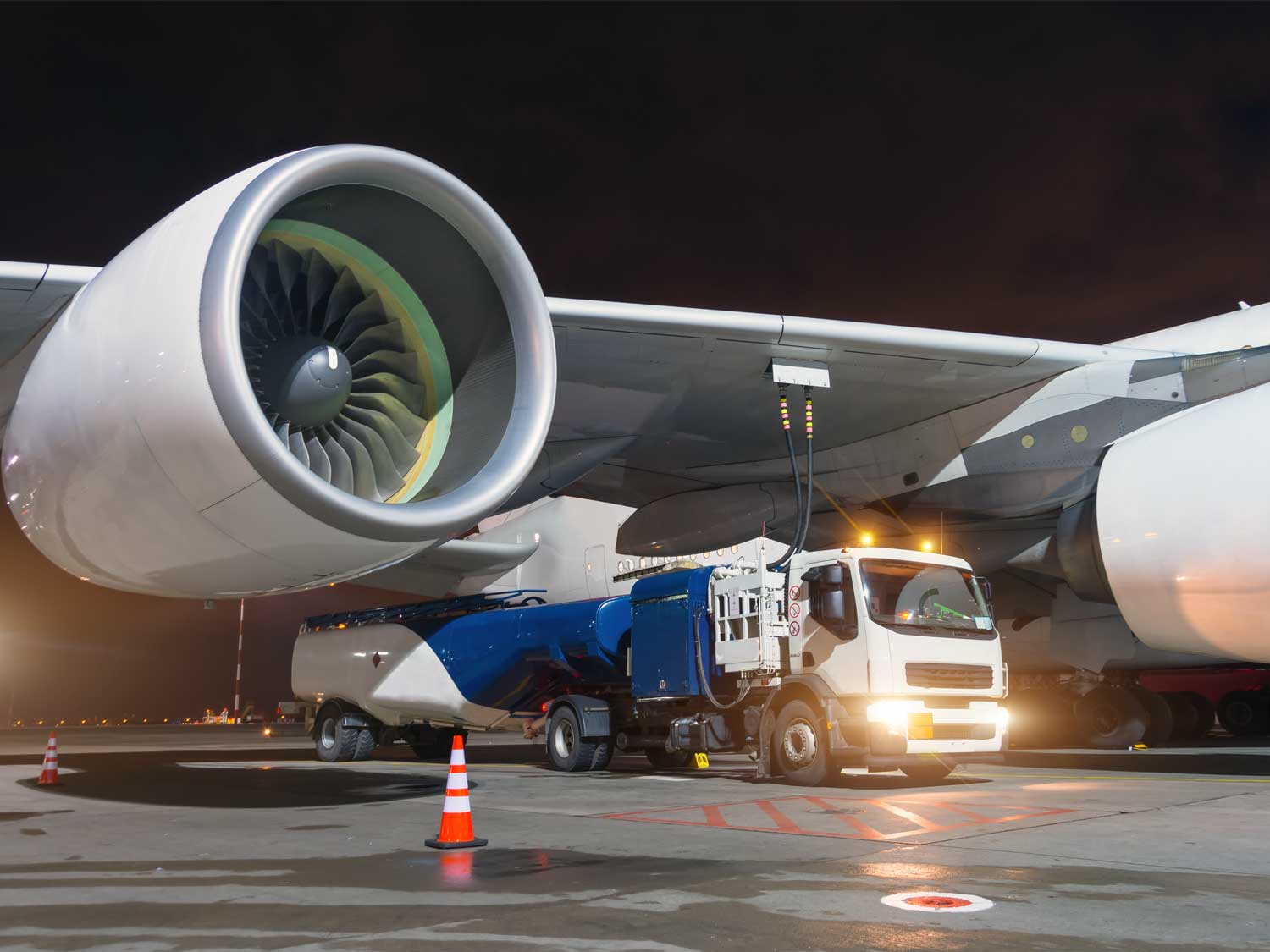
The global air freight market is entering a more critical phase, as a deepening jet fuel crisis begins to threaten operational stability through the second quarter and beyond. What initially appeared as a short-term shock linked to Middle East disruption is now developing into a structural constraint on global air cargo operations.

The continued closure of the Strait of Hormuz has removed a key artery for global energy flows, restricting access to around 20–25% of the world’s oil supply. While a ceasefire has eased immediate geopolitical tensions, fuel supply chains remain disrupted, with refining output constrained and replenishment cycles extended.

As a result, jet fuel prices have more than doubled since late February, significantly outpacing the rise in crude oil prices. In some regions, prices have increased by over 100%, while forward markets indicate elevated levels that will persist through the rest of the year. This has fundamentally altered cost structures across the aviation sector, where fuel typically accounts for close to 30% of operating expenses.

Capacity cuts spread

In response to the fuel crisis airlines are implementing capacity reductions across multiple regions, with several major carriers trimming services to manage rising operating costs and preserve profitability.

Cathay Pacific has announced capacity cuts of around 2% from mid-May through June, alongside the suspension of certain Middle East routes. Other carriers, including United Airlines, Air India, Air New Zealand and Vietnam Airlines, have taken similar steps, reducing flight frequencies, cancelling services and tightening operational expenditure.

In Asia, where reliance on Gulf-sourced fuel is particularly high, the impact has been more severe. Some carriers have reduced flight activity significantly, while others have moved into cost-control or contingency modes. Across key Gulf-facing hubs, flight volumes have fallen to roughly one-third of normal levels, reflecting both operational constraints and reduced network viability.

European markets are now beginning to feel the effects. Industry bodies have warned that airports across the EU could face a systemic jet fuel shortage within weeks if supply routes are not restored. With the summer travel season approaching, rising demand for aviation fuel is expected to intensify pressure on already constrained supply chains.

Airlines are responding by reviewing contingency plans. These include further capacity reductions, grounding older aircraft and reallocating fleets towards more fuel-efficient operations. In some cases, carriers are preparing to cut capacity by up to 5% if conditions deteriorate, highlighting the scale of the challenge now facing the sector.

Surcharges surge as cost pressures feed through to rates

On key routes, fuel surcharges have risen dramatically. In some cases, increases of nearly 300% have been recorded month-on-month, with additional uplifts in security-related charges on lanes affected by Middle East disruption. Across global markets, around half of all monitored airfreight routes have seen monthly price increases of 20% or more.

These changes are being driven by a dual pressure: reduced effective capacity and rising operating costs. The withdrawal of capacity from Middle Eastern hubs, which previously handled a significant share of Asia–Europe cargo flows, has forced a reconfiguration of global networks. At the same time, higher fuel costs are increasing the cost per available tonne kilometre across all long-haul routes.

A prolonged disruption with structural implications

The jet fuel crisis is no longer a short-term disruption. Even if geopolitical conditions stabilise, the structural impacts on fuel supply chains, refining capacity and global air networks will take time to resolve.

Europe’s reliance on imported jet fuel has been exposed, with limited domestic refining capacity increasing vulnerability to external shocks. Calls are growing for coordinated action, including joint procurement, alternative sourcing strategies and regulatory adjustments to improve supply resilience.

For air freight markets, the outlook remains uncertain. Capacity is tightening, costs are elevated and volatility is likely to persist through May, June and beyond. The balance between supply and demand is being shaped less by cargo volumes and more by the availability and cost of fuel.

Metro supports customers through these conditions with agile air freight solutions, proactive routing strategies and real-time market insight. As fuel-driven disruption reshapes global air cargo, having the right partner in place is critical to maintaining flow, controlling cost and protecting supply chain performance.

EMAIL Managing Director Andy Smith.

Qatar unloading

Middle East disruption reshapes air freight market as capacity tightens and rates surge

Air freight markets are entering a more volatile phase as disruption across the Middle East removes critical capacity from the system, forcing rapid network adjustments and driving sustained upward pressure on rates.

The immediate impact has been a sharp contraction in available lift. Middle East carriers, which play a central role in connecting Asia, Europe and Africa, have significantly reduced operations, with some periods showing capacity declines of up to 49% week-on-week. 

Globally, capacity remains below pre-crisis levels, still down around 11% compared with early February, despite partial recovery from initial losses. Although airlines are adding direct services on alternative routings, including Asia–Europe and transpacific lanes, these increases are not sufficient to offset the loss of hub connectivity through the Gulf.

Strong demand and rising costs drive rate pressure

The result is a tightening market where demand continues to outpace supply. Air freight volumes had already been growing steadily, with global demand up by around 6–8% in the early months of the year.

This combination of constrained capacity and resilient demand is now feeding directly into pricing. Spot rates on key lanes have risen sharply, with Asia–Europe pricing increasing by around 30% in recent weeks, while India–Europe and India–US routes have seen increases of between 50% and 80%. In some cases, rates have more than doubled compared with pre-disruption levels.

India has been particularly affected, where capacity reductions of up to 70% at major gateways have created acute shortages of available lift. With limited freighter capacity and reduced wide-body schedules, competition for space has intensified, pushing pricing higher and making it increasingly difficult to secure capacity at short notice.

Rising fuel costs are adding further pressure. Jet fuel typically accounts for 30–40% of airline operating costs, and increases linked to the disruption are being passed through into freight rates, reinforcing the upward pricing trend.

Backlogs build across global supply chains

Beyond pricing, the operational impact is becoming more visible across global supply chains. Cargo backlogs are building at origin, transit and destination points as shipments compete for limited space. 

At the same time, disruption in ocean freight networks is driving modal shift into air freight, adding further demand into an already constrained market.

Even with some capacity returning, recovery is expected to be gradual. Aircraft repositioning, schedule rebuilding and the clearing of accumulated backlogs will take time, meaning disruption is likely to persist even if conditions stabilise in the near term.

Overcoming air freight disruption

By combining strong carrier relationships with real-time market visibility, Metro is securing capacity across constrained trade lanes, identifying viable alternative routings and implementing multimodal solutions where traditional air networks are under pressure.

Through Metro’s MVT platform, customers benefit from enhanced tracking, milestone visibility and data-led decision-making, helping to maintain control even as conditions change. Where disruption is most acute, Metro works proactively to reposition cargo, manage backlogs and protect transit times.

With global coverage, local expertise and the ability to adapt quickly as networks evolve, Metro helps you stay ahead of disruption rather than react to it.

To discuss your current air freight requirements or contingency planning, EMAIL Andrew Smith, Managing Director,

Trucks Middle East

Middle East overland networks under strain

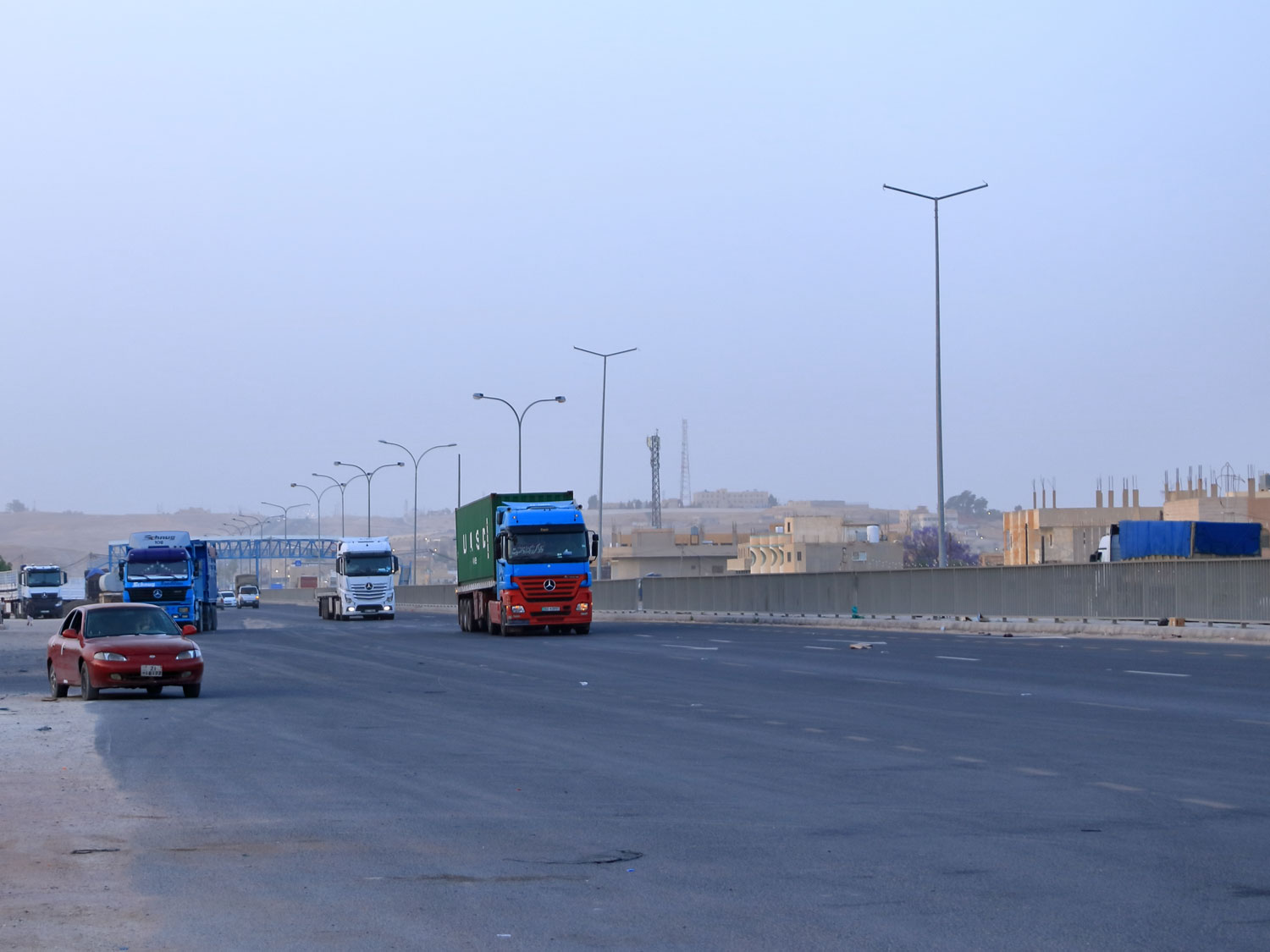
Overland transport across the Middle East has moved from a contingency option to a critical component of regional supply chains, as disruption to ocean and air networks forces cargo onto road-based alternatives. The result is a rapidly tightening environment, where capacity, infrastructure and cross-border processes are all under increasing pressure.

With ocean access into the Gulf restricted, containers are being discharged at ports outside the region and redirected inland via road networks. Oman, alongside locations such as Khor Fakkan, Sohar and Jeddah, has become a central staging point for cargo moving into Gulf Cooperation Council (GCC) markets.

In practice, this means cargo originally destined for major hubs such as Jebel Ali or Hamad is now entering the region through a variety of entry points, with no standardised routing approach. As a result, overland transport is playing a far greater role in bridging gaps between discharge locations and final delivery points.

However, the infrastructure supporting this shift was not designed for sustained, high-volume container flows over long distances, and pressure is building quickly.

Trucking capacity shortages and border constraints

The rapid increase in inland volumes is exposing structural limitations across regional road networks. Trucking capacity is tightening across key corridors linking Oman, Fujairah and Saudi Arabia, with shortages extending transit times and delaying cargo recovery.

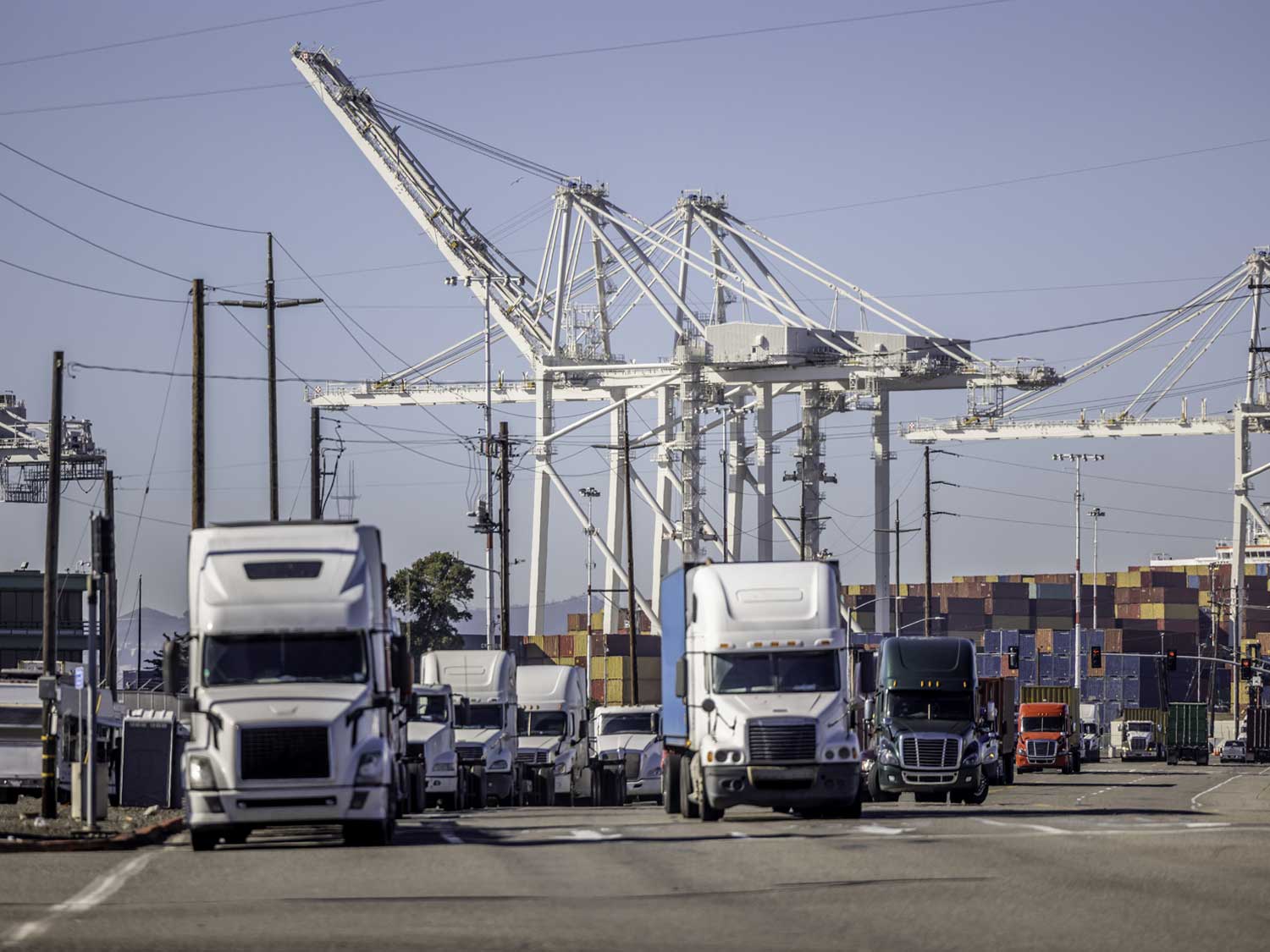
Congestion is intensifying at key nodes. In some locations, terminals are operating at full capacity, with vessel queues and dwell times extending beyond 10 days, while long truck queues are forming as cargo competes for onward movement.

At the same time, cross-border complexity is increasing. Driver availability is constrained by visa processing delays, with queues extending for hours and reducing the number of journeys each vehicle can complete. Additional restrictions on driver nationality are further limiting capacity on certain routes.

Operational constraints are also emerging at a regulatory level. Cross-border trucking is not always seamless, with limitations on where vehicles can operate and additional charges being introduced in some markets, increasing both cost and administrative complexity.

As a result, transit times are becoming less predictable and costs are rising sharply. In extreme cases, urgent shipments have seen trucking rates escalate significantly above typical market levels, reflecting both scarcity of capacity and the urgency of demand.

The weekend drone strike on the Port of Salalah has highlighted how exposed overland networks are to disruption at key staging points. The temporary closure of the terminal interrupted a critical gateway for cargo being discharged and moved inland to Gulf markets.

Although operations are set to resume from Tuesday 31st March, constraints are expected to continue, limiting throughput and adding further pressure to already congested road corridors.

Overland not scalable at current volumes

As disruption continues, overland transport is becoming a core part of regional supply chains rather than a temporary workaround. Road, rail and multimodal solutions are being deployed extensively to maintain flow into the Gulf, supported by a growing network of alternative corridors.

However, these solutions are not scalable at the level required to fully replace traditional ocean routes. Capacity limitations, border delays and infrastructure constraints are creating a bottleneck that is likely to persist as long as disruption continues.

For shippers, the challenge is operational as much as strategic — managing cargo already in transit, navigating changing routing decisions and securing inland capacity in a highly constrained environment.

Keep cargo moving with integrated solutions

By combining regional expertise and coverage with established multimodal networks, Metro is coordinating road, air-road and alternative routing strategies to bridge gaps created by disrupted ocean and air services.

Metro works proactively to secure trucking capacity, manage cross-border movements and identify the most effective corridors based on real-time conditions, reducing delays and maintaining control in a highly fluid environment.

With full visibility through the MVT platform, customers can track cargo across inland networks, monitor congestion and adapt quickly as routes and constraints evolve.

If your cargo is impacted or at risk of delay, EMAIL Andrew Smith, Managing Director, to secure capacity and define a clear route forward.