
factory emissions

The Carbon Border Adjustment Mechanism

There are 195 signatories to the Paris Agreement to limit their greenhouse gas (GHG) emissions, though some including the EU and UK have undertaken to cut carbon emissions faster than others.

The EU’s Emissions Trading System (ETS) continuously expands to include new sectors to encourage industrial decarbonisation. However, it also drives carbon prices upwards, which risks carbon leakage if consumers switch from buying EU-produced goods to purchasing substitutes from non-EU countries, that have lower emission requirements.

To combat this, the Carbon Border Adjustment Mechanism (CBAM) came into place on 17th May 2023 and is expected to be fully implemented by 2026. It is designed to counter the risk of carbon leakage by imposing a charge on the embedded carbon content of certain imports that is equal to the charge imposed on domestic goods under the ETS.

The UK CBAM is about a year behind the EU’s version and means that specified goods imported into the UK from countries with a lower or no carbon price will have to pay a levy by 2027.

Like the EU CBAM, unprepared businesses who import or export to the UK could face higher costs and carbon reporting challenges.

The UK CBAM is designed to tackle the most carbon-intensive industrial goods imported to the UK, by putting a price on the carbon footprint of the manufacture of products in the aluminium, cement, ceramics, fertiliser, glass, hydrogen, iron and steel sectors, with a consultation currently determining the precise list of products in the CBAM’s scope.

The consultation launched on 21st March 2024 and seeks views on proposals for the design and administration of CBAM. It is available on this LINK and closes on 13th of June.

The calculation of UK CBAM certificate price will be based on the carbon footprint of imported goods. Companies exporting to the UK will be required to pay a carbon price, reflecting the difference between the carbon price in the country of origin (if applicable) and the UK’s carbon price (which is currently one of the highest of all major trading partners).

The measurement of emissions for UK CBAM reporting is likely to be similar to the EU’s methodology for calculating CBAM emissions and declaring CBAM emissions.

In addition to the upcoming UK CBAM for imported goods, the UK already requires companies to report their carbon information through the Streamlined Energy and Carbon Reporting (SECR) policy.

Our MVT Eco module measures and monitors the emissions of every shipment, by every mode, with offsetting alternatives, so our customers can work towards carbon neutrality in their global supply chain. 

The MVT Eco module incorporates powerful reporting tools, which may be adapted to measure liabilities under the ETS and CBAM regimes.

To request an MVT Eco demo or to discuss any of the issues raised here, please EMAIL our CCO Andrew Smith.
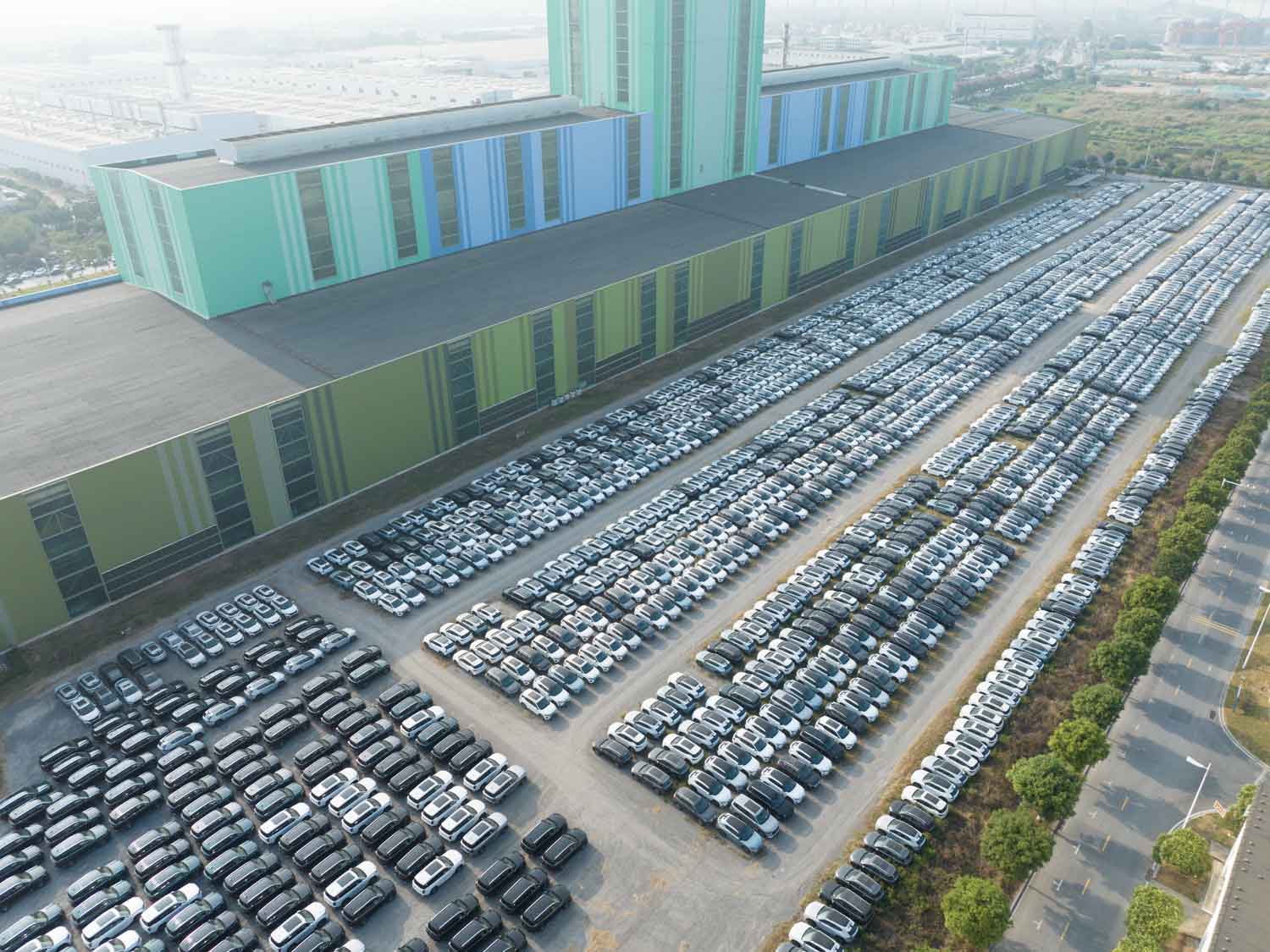
China car factory parking lot

China dumping fears growing

The United States is voicing increasing concerns that Chinese manufacturing overcapacity will hit world markets, while the EU launched an anti-dumping investigation into China’s EV industry last year.

Senior US Treasury officials told the Financial Times this week that a visiting US delegation made its concerns clear that Chinese policies are focused on supply and that overcapacity will hit world markets.

The US is most concerned about advanced manufacturing and clean energy sectors such as electric vehicles, solar panels and lithium-ion batteries, while the EU has already launched its own anti-subsidy probe into imports of Chinese electric vehicles.

Chinese brands exported 280,000 vehicles to the EU in the first ten months of last year, with BYD, China’s biggest EV maker, selling 526,400 EVs globally last year. Yet the carmaker wants to increase its sales in Europe to 10% of global volumes by 2030, equal to 800,000 vehicles a year.

Elon Musk has already gone on record to say that China’s EVs are extremely good and that if there are no trade barriers established, they will pretty much demolish most other car companies in the world.

However, exports from China have been affected by RoRo capacity shortages, with BYD among the manufacturers that have commissioned their own RoRo vessels.

The EU launched its anti-subsidy probe into China’s EV industry last year, alongside several other investigations into allegedly unfair Chinese trade practices, including punitive tariffs on imports of plastic for bottles and opening a probe into suspected dumping of biofuel.

China has launched reciprocal anti-dumping investigations and their commerce ministry this month announced plans to support the healthy development of overseas EV expansion, with BYD planning to build an assembly plant in Hungary.

The Chinese point to the fact that the US Inflation Reduction Act makes it cost-prohibitive to import Chinese lithium batteries and EVs, while nearly one-third of Chinese EV exports last year were cars of Elon Musk’s US company Tesla, produced at its factory in Shanghai.

And while US Treasury secretary Janet Yellen is expected to raise Chinese overcapacity with her G20 counterparts when they meet in São Paulo later this month, western manufacturers are facing US pressure to sever links with China following claims of forced labour in its supply chain.

US Customs impounded several thousand new VW vehicles because a Chinese subcomponent is alleged to have been manufactured in breach of forced labour laws.

And while we have seen significant spikes in demand from Thailand and Vietnam, with fashion brands in particular diversifying sourcing, there is still a huge proportion of the global supply chain reliant on China.

While leading global brands including Apple, Samsung, Sony and Adidas have shifted some production out of China, it only represents an incremental shift and it is clear that they are not leaving the region.

We continue to monitor the diversifying growth in production around south-east Asian countries, Latin America and EMEA, to support our customers’ diversification and sourcing strategies.

We have fixed price and long-term global capacity agreements in place with sea and air carrier partners, to support all your sourcing requirements with resilient, consistent and reliable supply chain solutions.

Our cloud-based supply chain management platform, MVT, simplifies global sourcing and vendor management, by making every milestone and participant in the supply chain transparent and controllable, down to individual SKU level.

EMAIL Andrew Smith to review our current freight profile movements to and from China and Asia.

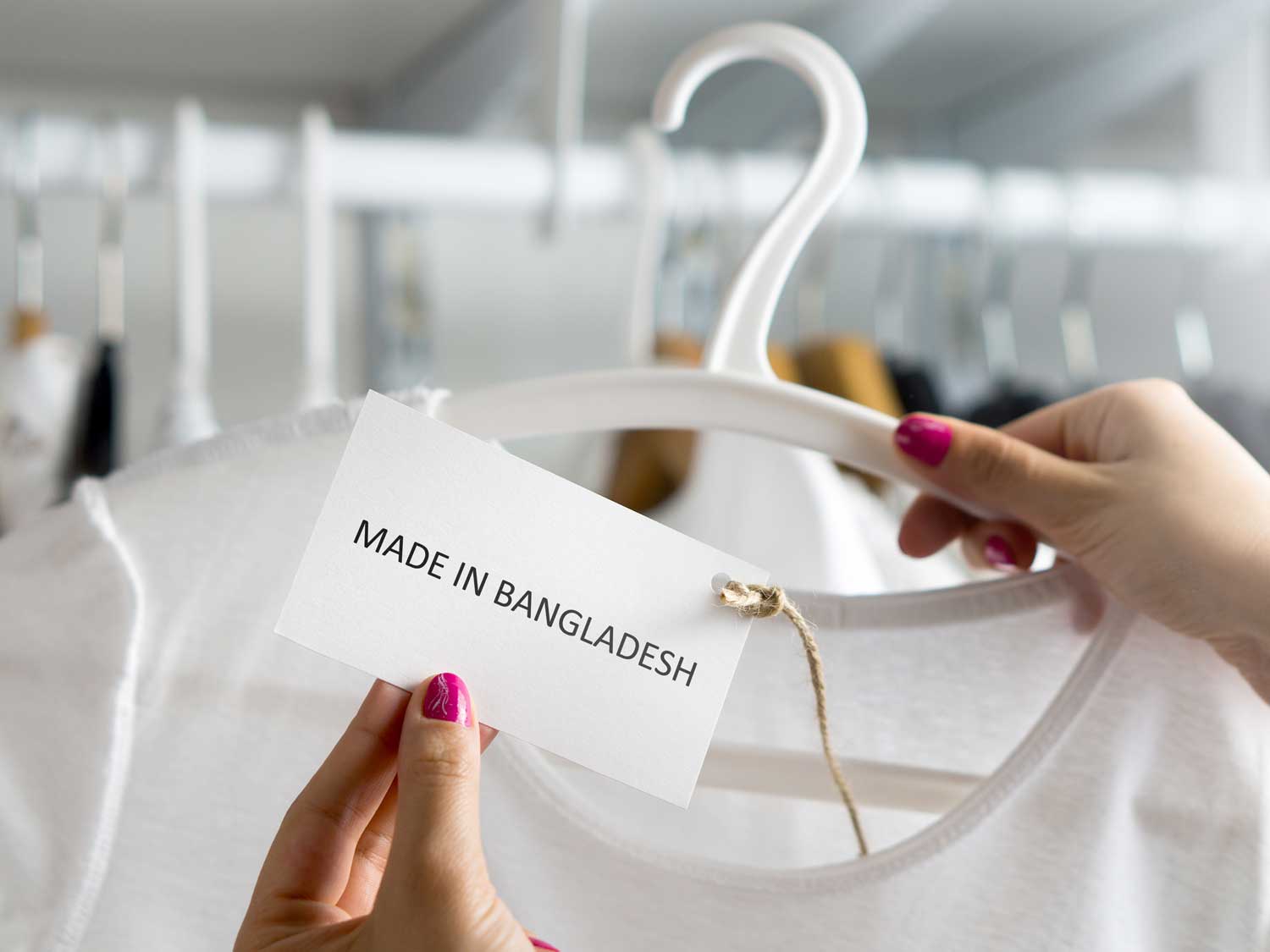
Bangladesh label

New Developing Countries Trading Scheme

The UK government launched a new preferential trading scheme, The Developing Countries Trading Scheme (DCTS) last year, to provide tariff concessions for developing countries exporting to the UK market.

The DCTS replaces the Generalised Scheme of Preferences (GSP) and extends tariff cuts to hundreds of products, including clothes and food, from specified developing countries, as part of the UK government’s efforts to replace similar EU schemes.

Like GSP, DCTS has three tiers of countries. On the first tier are LDCs; the second tier consists of countries classified by the World Bank as a low-income (LICs) or lower-middle income countries (LMICs); and the third tier includes countries that are economically vulnerable LICs or LMICs due to a lack of export diversification.

An expanded cumulation for LDCs, means they can have extended cumulation with other DCTS countries and countries with Economic Partnership Agreements with the UK and reduces trade barriers for LDCs in regional and global supply chains serving the UK.

The DCTS offers developing countries a simpler and more generous set of trading preferences and simplifies rules such as rules of origin, which dictate what proportion of a product must be made in its country of origin and removes some seasonal tariffs, in a bid to reduce red tape and lower costs, as an incentive to firms to import more goods from developing countries.

An additional 156 products are eligible for tariff reductions and more than 85% of eligible goods now benefit from zero-rated tariffs and the renaming of preference tiers from GSP to DCTS aligns with the UK's offerings in each tier, to reflect the progression of countries as their economies grow:

DCTS Comprehensive Preferences (previously GSP LDC Framework)
DCTS Enhanced Preferences (previously GSP Enhanced Framework)
DCTS Standard Preferences (previously GSP General Framework)

Under the comprehensive preference, 46 LDCs will get zero tariff facilities on all products except arms and ammunition, which means that LDC countries like Bangladesh will enjoy zero-duty tariff lines for its products until it graduates to the next level. 

After graduation from LDC, Bangladesh may be entitled to an enhanced preference regime as it is an "economically vulnerable" country based on the absence of export diversification criteria. 

Furthermore, the DCTS will allow qualifying countries like Bangladesh to access global supply chains for importing raw materials from 95 countries to export their final products to the UK duty-free under regional cumulation.

Bangladesh can also utilise the benefits of extended cumulation with UK-DCTS and UK-EPAs  (UK-Pacific economic partnership agreement with 95 countries). Cumulation with the UK, British Overseas Territories, EU, Norway, Switzerland, and group 2 countries (for intra-regional cumulation: SAARC countries except the Maldives and Afghanistan) — and in such a case, Bangladesh's tariff rates in the UK under EPA will apply. 

For such cumulation, the country must follow minimum processing rules to count as originating. For inter-regional cumulation, culminating with group 1 countries (Cambodia, Indonesia, Laos, Myanmar, and the Philippines — with Vietnam's FTA soon excluding it), a case-by-case application is needed.

DCTS is a bit more liberal than that of the EU GSP+. Under the EU's draft GSP proposal for 2024–34, Bangladesh's apparel products may face safeguard measures when the share of relevant products exceeds both 6% of total EU imports of those products as well as the product graduation threshold during that year. 

Under the new agreement, access to the enhanced preferences is based purely on the economic vulnerability of LICs and LMICs, which is considered to be a more generous approach, with eight countries becoming immediately eligible for enhanced preferences. 

The DCTS retains power to suspend any country that violates human rights or labour rights, including violations in relation to anti-corruption, climate change and environmental conventions.

Overall, the DCTS offers more generous benefits than the existing GSP and any business currently utilising GSP should review the application of the DCTS frameworks.

Our CuDoS customs brokerage platform is optimised continuously, in line with HMRC regime changes, automating and submitting customs declarations, for simple and compliant preference processing. 

To discuss your trading strategy, access to preferential tariffs and documentary requirements please EMAIL our customs expert, Andy Fitchett, who can talk you through your opportunities and options.

metro tech

Metro’s new LCL guru

With over 20 years' experience in freight and logistics, the majority of which has been in the ocean freight environment and specifically the LCL product, in the UK and overseas, we are pleased to introduce our new Senior LCL Commercial Manager, Jane Kenny, who is leading this critical service area.

Our comprehensive LCL services provide predictability and reliability at a competitive price. Flexible solutions, which are integrated within our global sea freight network to provide fully-managed, adaptable, reliable and customisable solutions, that meet the demands of the most demanding supply chains.

Talking about 'LCL Shipping' or 'Groupage Shipping’, when we literally group your goods with other consignments, that need to take the same route, to make up full containers, Jane said. “Our focus within LCL is on offering cost savings and sustainable solutions, especially where customers are shipping under-utilised containers.”

“We are always thinking outside of the box to keep our customers’ freight moving and rates low and because we constantly have consolidated containers moving on the major trade-routes, we are able to offer sailing schedules which meet critical transit deadlines to keep supply chains moving efficiently.“

“LCL has always been a true passion of mine, as it is such an adaptable solution for moving freight, especially when the market is facing challenges and it is the perfect choice for shippers when rate inflation and lack of space threatens traditional shipping”. 

“Geographically Metro have a powerful presence on all the major trade-routes and are particularly strong in the United States and China, with really well supported LCL services out of critical cities like Shanghai, Yantian, Shenzhen and Hong Kong, which is so important when regular FCL traffic is facing massive rate increases and service disruption.”

Metro’s global LCL solutions:

 - Dedicated pricing team for fastest quote turnaround
- In-house Metro control from load point to arrival point
- Regular LCL services covering all major trade lanes
- Fastest ocean services utilised for our consolidated containers
- LCL containers packed/unpacked at our dedicated facilities for speed and security
- Facilities linked to customs CuDoS system and our in-house specialists

Metro’s LCL services are the most cost-effective method of moving freight over long distances, offering immense cost and emission savings on air, with an exceptional number of weekly import and export departures, and the fastest transit times.

LCL services depart from all major ports worldwide and can be linked to upstream and downstream warehousing, consolidation and distribution support. We handle global customs brokerage and declarations through our CuDoS system and you can track your shipments with our AI-powered ocean visibility tools.

EMAIL Jane Kenny, to discuss your ocean freight requirements, to learn more about our LCL product, or to request a quote.