car mirror 1440x1080 1

2024: Reflecting on a Dynamic Year in Global Supply Chains

As 2024 comes to an end, we look back at a year filled with extraordinary events that shaped the global supply chain landscape. From geopolitical challenges to shifts in logistics trends, the past year has underscored the importance of resilience, adaptability, and innovation in our industry.

Here are just a few of the major supply chain developments we covered and that defined 2024:

Houthi attacks in the Red Sea: The crisis continues, forcing vessels to divert around the southern tip of Africa, creating new delays and challenges for global trade.

Global RoRo capacity shortages: The shipping of automobiles was heavily impacted as carriers grappled with fleet reductions from the pandemic.

Labour unrest: Strikes surged 42% year-over-year, including a six-week standstill at the Ports of Los Angeles and Long Beach.

Port of Baltimore closure: The collision and collapse of the Francis Scott Key Bridge caused a three-month disruption.

eCommerce growth: Air freight demand soared on Asia-North America lanes as online shopping reached new heights.

ILA strike: A three-day US East Coast dockworker strike in October highlighted ongoing tensions over automation, with another strike looming in January 2025.

Global reefer shortages: The demand for refrigerated containers remains unmet, impacting perishable goods transport.

Political shifts: The re-election of Donald Trump signals potential changes in trade policies, with protectionism and tariffs on the horizon.

Shipping alliances: New alliances reshaped container shipping routes, including Maersk’s departure from Felixstowe.

Metro’s Highlights

2024 was also a year of achievements for Metro Shipping:

Air Freight Business of the Year: We were proud to receive this accolade at the Logistics UK Awards.

Road freight expansion: Our growing road freight division continues to support our clients’ evolving needs.

Publishing sector portfolio launch: We introduced tailored logistics solutions for the publishing industry.

Great Place to Work: Metro was officially accredited, reflecting our commitment to a positive and empowering workplace culture.

As we get ready to step into 2025, we are prepared to face challenges head-on, supporting our customers with expert insights, seamless operations, and innovative solutions.

Thank you for your trust and partnership in 2024.

Wishing you a wonderful holiday season and a successful year ahead.

Metro model truck 1440x1080 1

Road freight market update and Metro review

The road freight market in the UK and Europe is grappling with structural cost challenges, evolving regulations, and capacity constraints, while Metro’s road freight division continues to expand, delivering innovative solutions and outperforming market trends.

In the UK and Europe, road freight rates have remained under pressure due to structural cost drivers. The market stabilised in Q3 as softer short-term demand provided some relief. However, higher costs associated with fuel, tyres, insurance, and maintenance are sustaining elevated freight prices.

New truck registrations in Europe have fallen by 7.5% year-to-date, limiting capacity growth. As a result, many carriers are extending vehicle lifespans, with the average truck age now at 14.2 years. This decline in fleet renewal, combined with new EU regulations banning non-compliant rubber imports by year-end, has further tightened capacity and increased costs.

The TEG Road Transport Index showed a slight month-on-month decline but remains 4.4 points higher than the same period last year. Similarly, the haulage price index rose marginally in November but has seen a 10.4-point increase year-on-year.

Consumer demand around Black Friday offered a brief boost to the sector, with UK retail destinations seeing an 11% rise in footfall compared to the previous Friday. However, this temporary spike is unlikely to offset the ongoing challenges posed by inflationary pressures and volatile diesel prices, which continue to drive rates higher.

Metro’s road freight performance
Metro has made significant strides in its road freight division, upgrading its groupage services to France and Germany to deliver greater speed, efficiency, and customer satisfaction. These enhanced services ensure regular, reliable departures and seamless distribution throughout key regions.

France: Metro’s groupage services remain a standout feature, offering efficient, dependable shipping across the country.

Germany: Metro has expanded its presence, particularly in the Ruhr area, a vital industrial hub. Frequent departures ensure swift distribution through a trusted partner network.

Metro’s commitment to excellence extends beyond speed and cost. By prioritising communication, reliability, and trust, the company has built a reputation for hassle-free European shipping. Features such as GPS-tracked vehicles, dedicated routes, and door-to-door solutions ensure customers benefit from transparency and timely updates throughout the process.

Metro’s growth and outlook for 2025
The road freight division has seen exceptional growth, outpacing the market. While many competitors have experienced flat volumes, Metro has achieved over 50% year-on-year expansion, with a 60% increase in team size in the last year alone. The division is projected to grow by a further third in 2025, targeting an additional 40% volume increase.

Key priorities for 2025 include:
New groupage services: Recently launched lanes to the Netherlands, Poland, and Iberia are expected to play a significant role in Metro’s growth strategy.

French and German services: Continued development of these high-demand routes will remain a focus, with plans to enhance service frequency and efficiency.

Pan-European LTL and FTL services: The bulk of Metro’s volume is expected to come from its less-than-truckload (LTL) and full-truckload (FTL) offerings, supporting both inbound and outbound trade across Europe.

The road freight market faces continued pressure from rising costs and capacity constraints, but Metro’s proactive approach and investment in innovative solutions position it as a leader in the sector. By prioritising customer satisfaction and expanding its services, Metro is set to maintain its strong growth trajectory in 2025, even as the broader market navigates challenging conditions.

To explore the potential and benefits of our road freight services EMAIL Richard Gibbs to begin a conversation.

Ellerman boxes

European market review and group developments

The European freight market continues to face a complex landscape, characterised by fluctuating demand and evolving capacity challenges. In this review, we examine the current state of the road freight market and highlight recent group developments, including the acquisition of a Portuguese intermodal specialist and the launch of a new container shipping service.

Road Freight Market
Despite some positive economic developments, the road freight sector remains challenged by uncertain demand, with no indication of a trend reversal over the summer. This persistent issue is also evident in the capacity trends reported by TIMOCOM’s index. Significant capacity bottlenecks were noted in the first quarter, primarily due to reduced truck fleets.

This trend persisted into the second quarter, with the ratio of freight to cargo space standing at 77:23, dropping further to 73:27 in July, which is typical for the summer months. Despite these challenges, freight rates remain high. Although diesel prices have moderated, other costs, such as driver wages, continue to rise.

The TEG Index tracked a 6% year-on-year increase in haulage prices in July 2023, reflecting the rising costs that hauliers face. This index typically shows prices stalling over the summer before recovering in September, indicating that current trends are in line with historical patterns.

Acquisition of Portuguese Intermodal Specialist
We are pleased to announce the acquisition of Portuguese intermodal specialist KLOG. This acquisition allows us to enhance our intermodal transport capabilities, particularly for customers with significant continental volumes or those aiming to meet decarbonisation targets.

KLOG is renowned for its efficient, reliable, and cost-effective intermodal services to and from the Iberian Peninsula, serving some of Europe’s largest retailers, brands, and manufacturers. Their established rail services to and from Germany and Poland, via hubs in Spain and France, present significant opportunities for shippers trading between Northern Europe and Iberia.

KLOG currently operates two block train departures a week to and from their Portuguese rail hub to Poznan in Poland and Duisburg in Germany, routing via France and Spain. 

These services are complemented by short sea/rail connections. Additionally, four block trains run weekly between Entroncamento (Portugal) and Tarragona (Spain), with a further three block trains operating weekly in Spain between Tarragona, Bilbao, Valladolid, and Sevilla.

A wide range of 45’ equipment is available for all services, including curtain-side, dry container, and refrigerated containers, as well as 20’ ISO tanks. Last-mile delivery and/or collection from the Tarragona hub is available with e-trucks as an option.

Key Benefits:
– 24/7 Control Tower Service
– High rail frequency with daily departures
– Reliable lead-time comparable to road transport
– Sustainable solutions available year-round
– Reduction in truck usage and reliance on scarce driver resources
– CO2 emission reductions of 90% compared to road alternatives

New container shipping service connecting Spain, Portugal, and Northern Europe
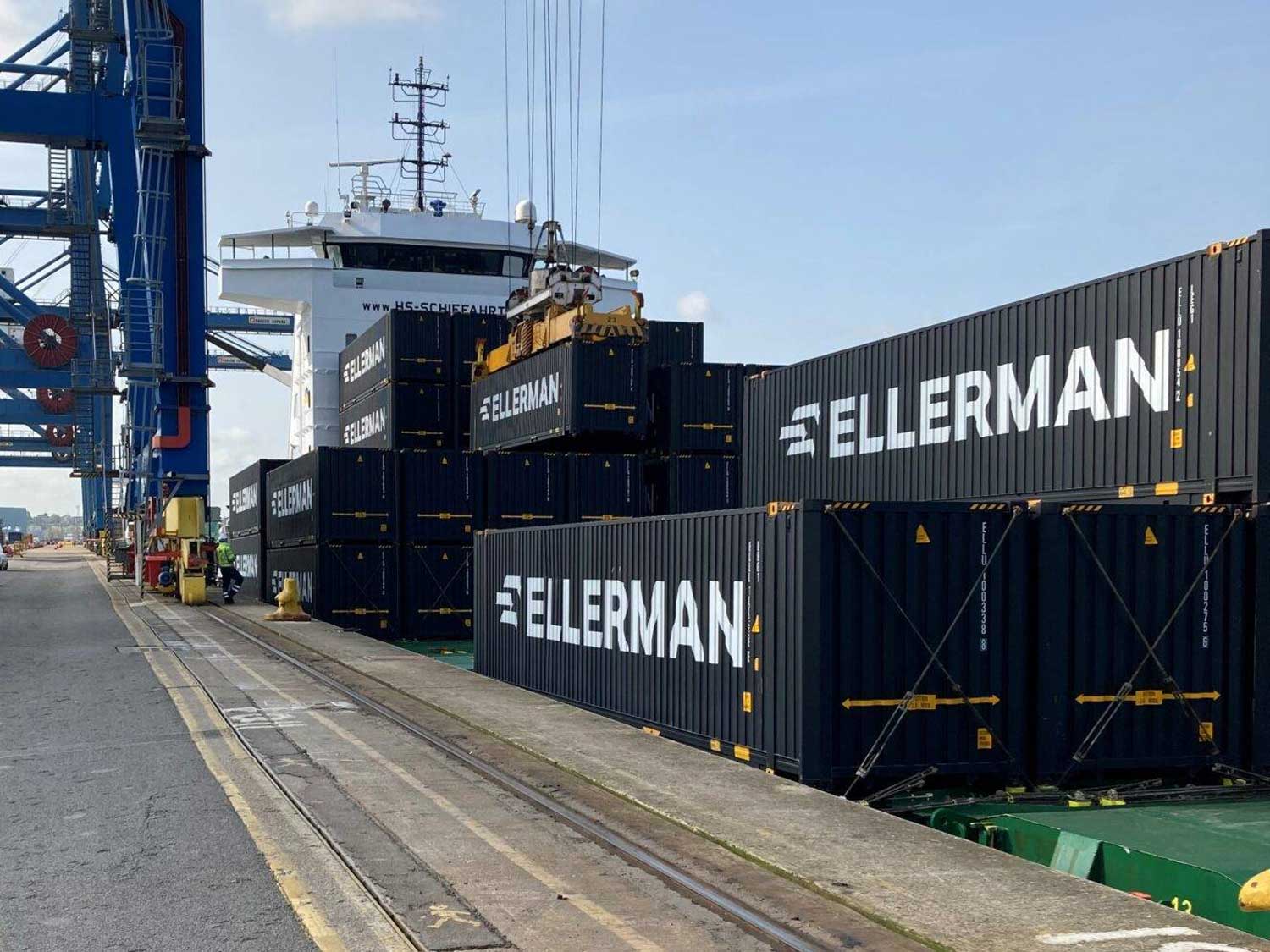
Ellerman City Liners, a group container shipping line with over 120 years of history, has introduced a new joint service with CMA CGM, connecting Spain, Portugal, and Northern Europe. This service aims to address ocean freight capacity shortages on key trade lanes, providing speed, service, and certainty to supply chains.

The first vessel of the new iNEX service departed Rotterdam on 9th July 2024. This service enhances efficiency, expands geographical scope, and reduces the carbon footprint for shippers. Operated with two 1,400 TEU vessels, the weekly sailing schedule includes the ports of Cadiz, Setubal, Leixoes, Ferrol, Tilbury, Dunkirk, and Rotterdam.

By working closely with partners Ellerman and KLOG, we are expanding the intermodal options available to our customers, delivering cost-effective and sustainable services as part of our commitment to decarbonising the supply chain.

Metro’s integrated transport services streamline import and export product flows across Europe, North Africa, and Turkey. By combining road, intermodal, and short sea modes, we ensure more efficient cargo transportation, reduced delivery times, and cost savings.

Our extensive partner network, multi-modal transport solutions, and MVT supply chain platforms are designed to meet even the most complex requirements across multiple regions, vendors, and customers.

Discover how we can enhance your trans-continental trading. EMAIL our Chief Commercial Officer, Andrew Smith, to arrange a consultation and scoping discussion.

Parliament blur

A New Government – a New Britain; Strengthening UK Supply Chains for Economic Resilience

The Labour party’s manifesto outlines a commitment to bolster the resilience of supply chains in key sectors, a task that Transport Secretary Louise Haigh will spearhead.

Recent global events, such as the war in Ukraine and pandemic-induced disruptions, have underscored the necessity of this mission. These crises have driven up energy prices and disrupted the supply of critical goods, exacerbating inflation.

Enhancing supply chain resilience not only mitigates risks but also presents growth opportunities and as the world faces more frequent external shocks, a resilient supply chain becomes crucial to safeguard the economy, because vulnerabilities can halt or divert production.

Labour’s plan includes several key policies to strengthen supply chains:

  • Investing £1.8 billion to upgrade ports and build supply chains across the UK
  • Ensuring a robust defence sector and resilient supply chains through long-term business-government partnerships
  • Maximising the economic and security potential of AUKUS, the trilateral security partnership with Australia and the US
  • Adopting a strategic approach to managing UK-China relations
  • Striking targeted trade agreements aligned with the UK’s industrial strategy
  • Leading international efforts to modernise trade rules and agreements, promoting deeper cooperation through organisations like the WTO and CPTPP
  • Seeking a new strategic partnership with India, including a free trade agreement, and enhancing cooperation with Gulf partners on security, energy, and trade

The government will work with international partners to align capacities in key sectors and advance international standards for supply chain diversification. Labour’s plan includes creating a Cabinet Subcommittee on National Resilience, conducting a COBRA review, and appointing a Minister for Resilience to coordinate responses.

Looking to a New EU Relationship
Labour’s manifesto also includes policies to improve the UK’s trade and investment relationship with the EU, which includes negotiating a veterinary agreement to reduce border checks and lower food costs. 

Upcoming EU legislation, such as the Corporate Sustainability Reporting Directive (CSRD) and the Corporate Sustainability Due Diligence Directive (CSDDD), will impact UK companies. These regulations will require companies to disclose data on suppliers and emissions, impacting those with substantial EU activity or those part of the EU value chain.

For example, a UK auto parts manufacturer selling to an EU car company will need to comply with these directives. Labour’s approach aims to remove unnecessary trade barriers and improve economic cooperation with the EU, ensuring UK businesses remain competitive and compliant with new regulations.

For over 40 years Metro has been providing stable and effective solutions for customers entering new export markets, or sourcing from new suppliers.

Supporting their regulatory compliance and finance requirements, with multi-modal transport services and guidance on insurance and packing, to protect their products.

Our MVT supply chain platform incorporates a suite of reporting modules, including the tracking of global CO2 emissions and templates for CSRD reporting.

If you have any questions, rate requests or would like further information on our global export capability, please EMAIL our Chief Commercial Officer, Andy Smith.