Auto industry Brexit warning

Europe may experience its own near-shoring boom

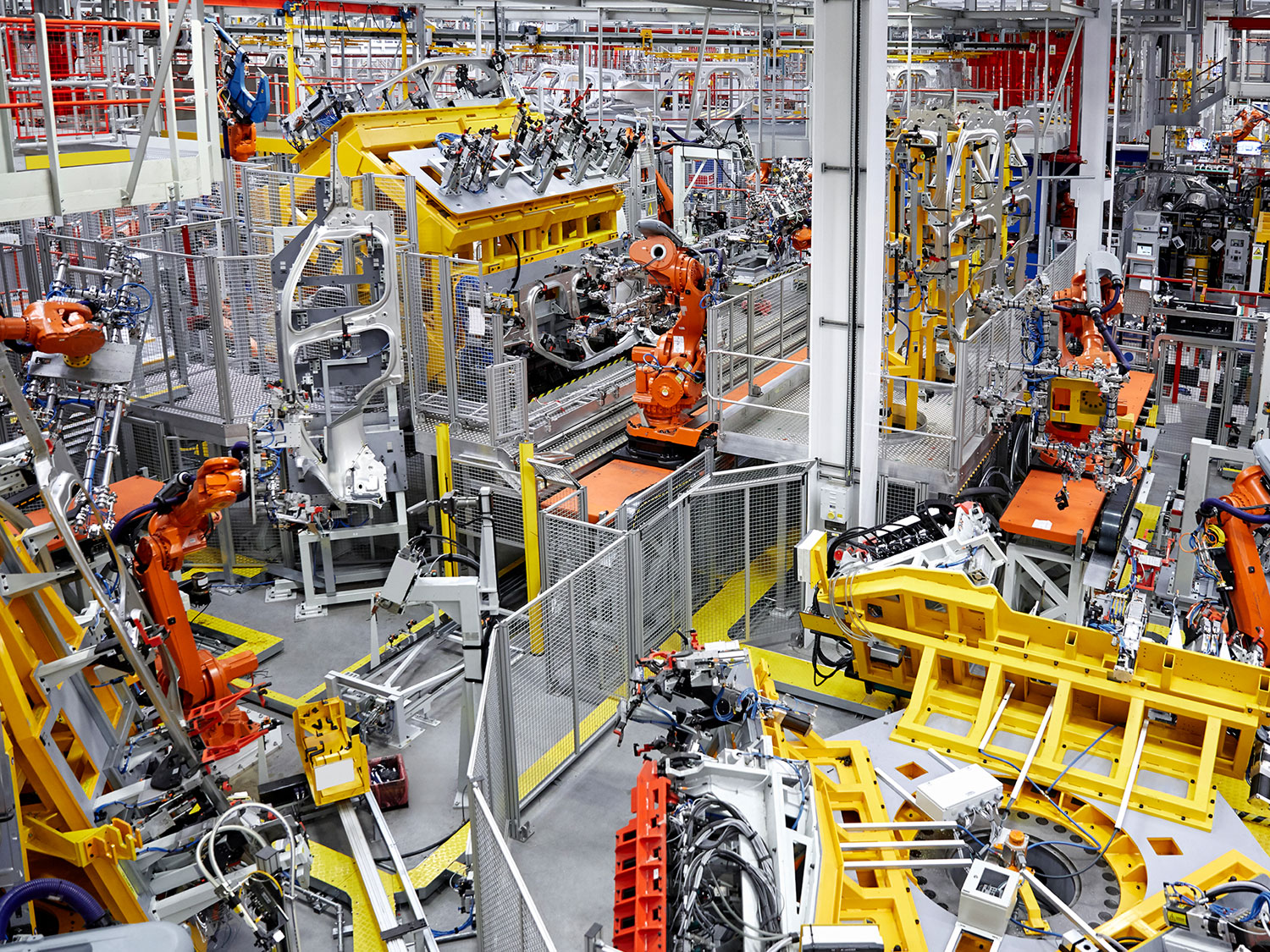
As planes descend into Monterrey airport, an expanse of warehouses and manufacturing complexes stretches out for miles, exemplifying the near-shoring boom that has swept through Mexico in recent years, as Asian companies and their supply chains move closer to the United States.

Drivers of Mexican Industrial Growth
One might argue that this surge in Mexican industrial production and exports to the US is part of a 30-year evolution, initially driven by the North American Free Trade Agreement (NAFTA), which established a free trade area among Canada, the US, and Mexico.

However, additional factors have recently propelled Mexico to replace China as the US’s most important trading partner.

1. US-China Trade War: Trade has shifted from China to countries like Mexico due to the ongoing trade conflict
2. Biden Administration’s Supply Chain Strategy: Emphasis on near-shoring has highlighted Mexico’s role in the China+1 strategy
3. Production-Sharing Schemes: Mexico’s longstanding expertise in these schemes makes it a valuable partner in regional manufacturing and trade
4. Low Labor Costs: Average manufacturing wages in Mexico are lower than those in China

Ironically, many of the companies that are being set up for manufacturing and transition to Mexico are actually owned by Chinese entities and companies. It is a migration of Chinese manufacturing to Mexico and this also has the benefit of lowering supply chain and shipping costs and the big one – reducing some of the duty and anti-dumping duty that has been, and will likely continue to be, levied on Chinese origin goods and raw materials.

Lessons for Europe
A critical element is the presence of a long-standing free trade agreement, because near-shoring thrives in an environment that fosters supply chain relationships and networks over time and effective near-shoring relies on a regulatory and trading environment that supports such activities. 

Expecting near-shoring to emerge without a developed and supportive environment is unrealistic. The EU, with its well-developed internal free trade and regulatory framework, together with external trade agreements with countries like Egypt and Morocco is well-positioned to adopt near-shoring strategies.

In Europe, geopolitical relations with China are a concern, but recent supply chain disruptions are increasingly driving the adoption of China+1 strategies. Europe has been shifting its manufacturing and supply chain activities eastward and into North Africa.

Opportunity
Countries like Turkey, Hungary, Egypt, Morocco, Poland, and Romania offer compelling near-shoring opportunities due to their lower wage rates and higher productivity compared to Western Europe.

The EU is well-positioned to capitalise on near-shoring activities and so too is the UK, with its close EU ties and inherited trade agreements. This has already been highlighted by the new UK government, as a goal to re-negotiate trade agreements with the EU and could make closer sourcing a more prevalent and cost effective strategy going forward in the next few years.

We are seeing regular migration of manufacturing and sourcing closer to the UK and EU and this has many benefits, as long as the material price is comparable with Far East manufacturing costs, which have been the big incentive.

Metro and our associate companies, are well positioned to give advice, recommendations and adapt supply chains regardless of the areas that you are sourcing from or selling to.

We have a variety of services and solutions covering overland trucking, rail freight, short-sea containerised solutions on our own vessels and local warehousing and distribution at most industrial hubs throughout Europe and North Africa. 

Please arrange a call/meeting and we can go through the current and future options, to add value to your global development strategy. We can guarantee that it will not be time wasted!

Stable, well-regulated trading environments and cost-effective, high-productivity production locations in Central and Eastern Europe and North Africa provide a strong foundation for supporting near-shoring initiatives.

Metro’s integrated transport services are designed to support JIT manufacturing requirements across the EU, North Africa and Turkey and are ideally positioned to support new near-shoring requirements.

Our partner network, multi-modal transport solutions and MVT supply chain platforms are all geared towards supporting an evolving sourcing programme and on-boarding new suppliers. 

If you would like to learn how we can boost your ability to source from alternative manufacturing regions, EMAIL our Chief Commercial Officer, Andrew Smith, to arrange a consultation and scoping discussion.
fxt derailment 1440x1080 1

Felixstowe train derailment

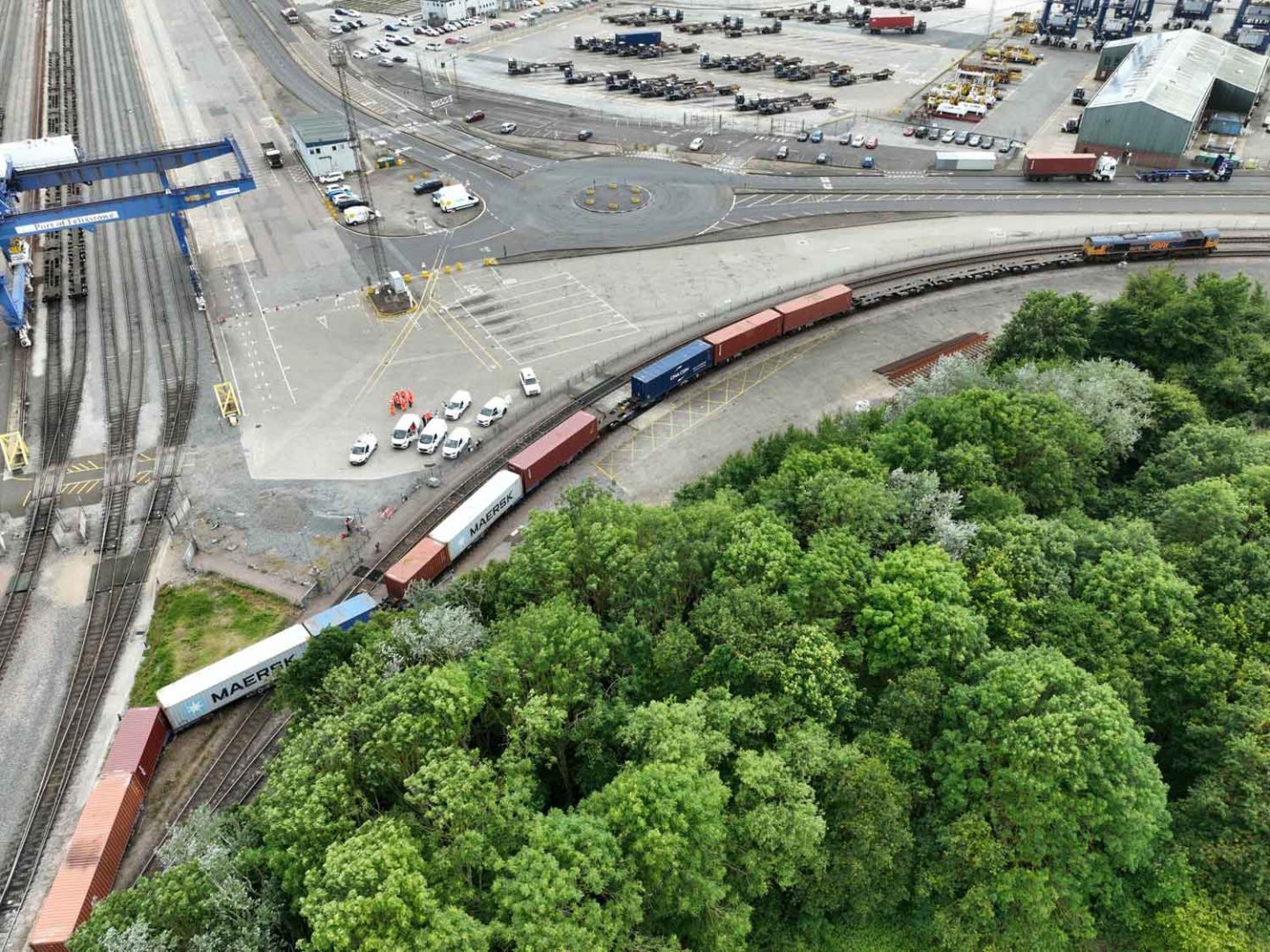
At 22:09 on Wednesday 19th June a GB railway locomotive and loaded wagons en-route to the Port of Felixstowe derailed on the branch line approaching the main Central and Northern railheads, causing significant damage to the track and closing both terminals to train movements.

The Central and Northern terminals, the main railheads at Felixstowe were closed, and while the Southern terminal continued operating, a large majority of import/export services were suspended, with rail throughput at 40% last Friday.

While access to all other areas of the container terminal remains unaffected, with shipping and haulage operations continuing as normal, the derailment impacted all train services serving the port, including those by Freightliner, GB Railfreight and Maritime Transport.

To help mitigate the impact, Felixstowe released additional vehicle booking slots for hauliers, which was welcome, but this does not entirely replace the lost collection/delivery capacity.

Network Rail engineers have been on site since the incident, clearing and repairing the damaged track, with the derailed wagons cleared at the weekend.

The Central terminal is now operating alongside the Southern terminal and rail throughput is back to 50%, but having undertaken a full assessment of required repairs the Network Rail engineers estimate that the port’s rail capacity may not be fully operational until next week.

Update 26th June 2024 – Port of Felixstowe confirm that normal rail service will resume on the 4th July 2024, from 12:00.

With rail companies cancelling services we are unfortunately being impacted by the consequential issues, for example exports missing booked trains as operators work around the situation.

Issues will continue to arise in the coming days, and potentially after normal service is resumed, as empty containers are left inland and not returned, as laden containers will be prioritised where space is limited.

These issues will work through and in the meantime we will continue with our contingency planning. If you have concerns about any consignments, or would like to discuss our transport strategy, please EMAIL Simon Balfe, our Multimodal Transport Manager.

Image courtesy of the Ipswich Star

Dubai

New Silk Road will link the Gulf to Europe

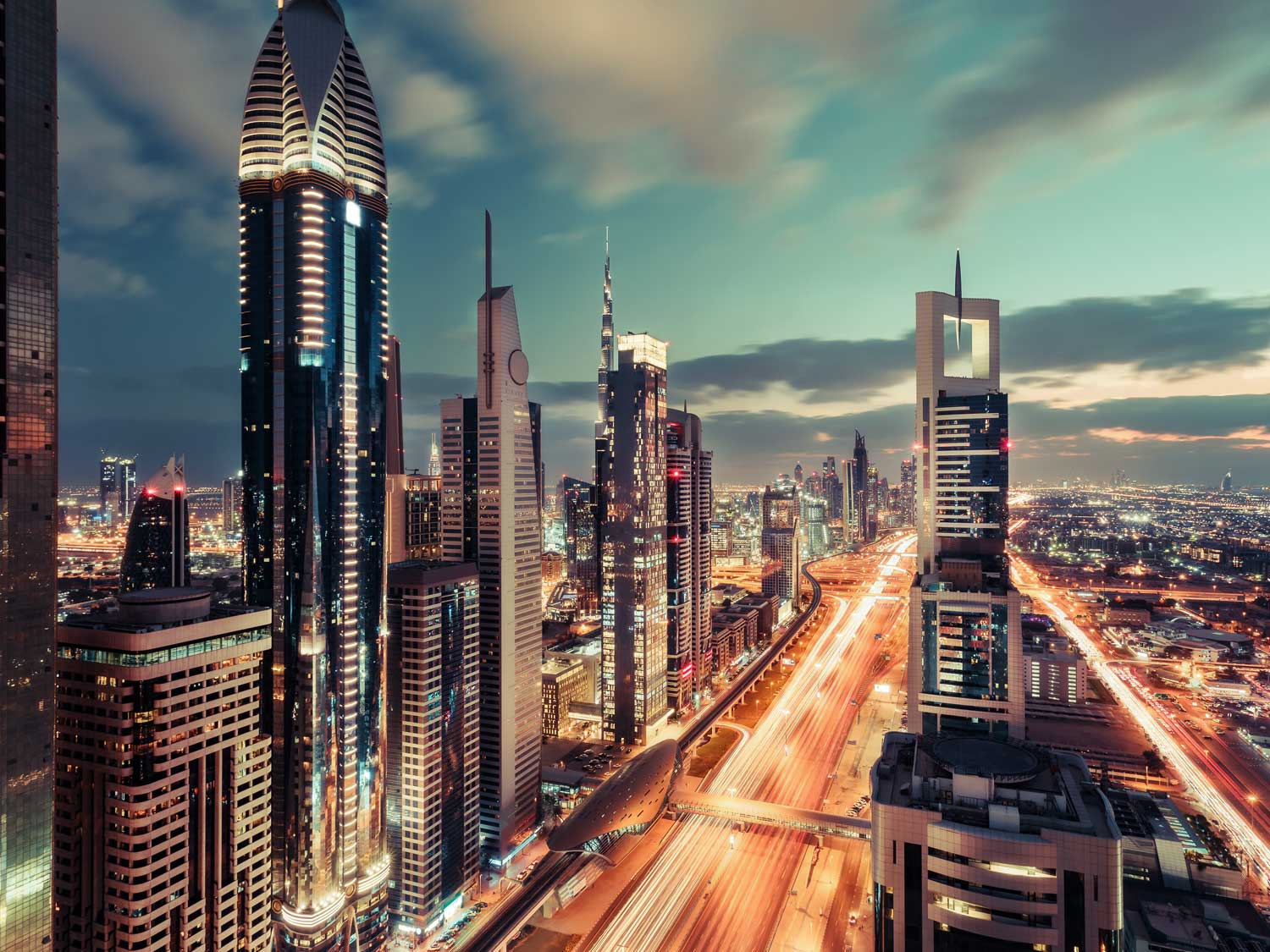
Turkey, Qatar, and the UAE are joining with Iraq to develop a new land corridor – Development Road Project – which will connect the Gulf to Europe.

The Development Road Project is a multi-billion dollar land corridor that will stretch 750 miles from the Persian Gulf to the Mediterranean Sea, establishing a network with railways, roads, ports and cities, to significantly reduce travel time between Asia and Europe via Turkey.

Estimates for the costs of the Development Road Project range from $8 billion to $15 billion, and possibly up to $20 billion, which may be financed by the UAE, Qatar, or another country, with the entire project expected to be completed within five years, once the funding is secured.

In May 2023, Baghdad hosted a summit which brought together transport ministers and officials from the European Union, the World Bank, GCC, Iran, Turkey, Syria and Jordan to discuss the establishment of the Development Road initiative.

The Development Road, dubbed the “Iraqi Silk Road”, gained further attention during the G20 Summit in New Delhi last September, when the project was discussed as an alternative route to the Suez Canal, to aid faster and more efficient trade between Asia and Europe.

The project is expected to turn Iraq into a transit hub and compete with Egypt’s Suez Canal, strengthening Iraq’s geopolitical position in the region and the world, while supporting security and stability in the region.

In April 2024, a quadrilateral memorandum of understanding, regarding cooperation in the Development Road project was signed by the transportation ministers of Iraq, Turkey, Qatar and UAE, with railways and highways connecting to Iraq’s Great Faw Port, aimed to be the largest port in the Middle East.

The project is planned to be completed in three stages by 2028, 2033 and 2050 and will open Iraq to the world through Turkey. It will generate $4 billion annually and create at least 100,000 jobs.

We will keep you advised and updated as this initiative proceeds, sharing any important developments and seeking market opportunities as they materialise.

If you have any questions or concerns about the ‘new Silk Road’, or would like to discuss the potential implications and benefits of this initiative, please EMAIL our Chief Commercial Officer, Andy Smith.

Paris grandstand 1440x1080 1

Summer 2024; France supply chain alert

This summer, a number of large-scale sporting events are likely to create some supply chain disruption, with the Olympic and Paralympic Games taking place in Paris between the 26th of July to the 11th of August, and the 28th of August to the 8th of September.

The Paris 2024 Olympic Games, which begin on the 26th July, will take place in 36 locations and are expected to attract about 13.5 million people, with parts of Paris closed off and drivers expected to gain access through online applications.

We are following the situation closely with our French partners, but it is inevitable that the current installation of infrastructure, movement of athletes and visitors and the subsequent dismantling and clearing of temporary traffic routes to the end of October, will require widespread access restrictions to routes in Paris and the wider Metropolitan area during the summer, which will impact local distribution.

OPERATIONAL TIMELINE AND ROAD CLOSURES
April: Infrastructure assembly began at Grand Palais, Point Alexandre III, and Invalides
June: Assembly begins on the docks in the Opening Ceremony area
Early July: Assembly begins on the bridges at the area of the Opening Ceremony
Mid-July: Olympic Village is opened
26th July: Olympic Games begin, accompanied by the introduction of reserved lanes
Early August: Bridges and docks will start to open up again
September – October: Dismantling phase and gradual release of competition sites

As stated above most impacts will be caused due to infrastructure assembly and disassembly operations throughout the 35 Olympic sites, with on-road or road-adjacent sporting events also having impacts on road transportation due to road closures.

Delays and re-routings of cargo moving through this area during the summer are inevitable and we are aware of carriers announcing surcharges for transportation through the Île-de-France area. 

We are reorganising our activities to cope with all the restrictions and will keep you informed as the situation evolves. 

To discuss the potential impact of the Olympics on your French traffic EMAIL Richard Gibbs to begin a conversation.