Panama COSCO ship

Panama Canal constraints add another layer of pressure to transpacific shipping

The transpacific market is entering an even firmer phase, with stronger cargo demand, restricted vessel capacity and new Panama Canal constraints combining to increase costs and tighten space, particularly into the US East and Gulf coasts.

Spot rates indexes have continued to strengthen through the summer, with Shanghai–New York increasing 10% and Shanghai–Los Angeles rising 6% WoW. These rises extend the rebound seen since July and reflect sustained demand from Asia, with deliberate capacity management by the container shipping alliances.

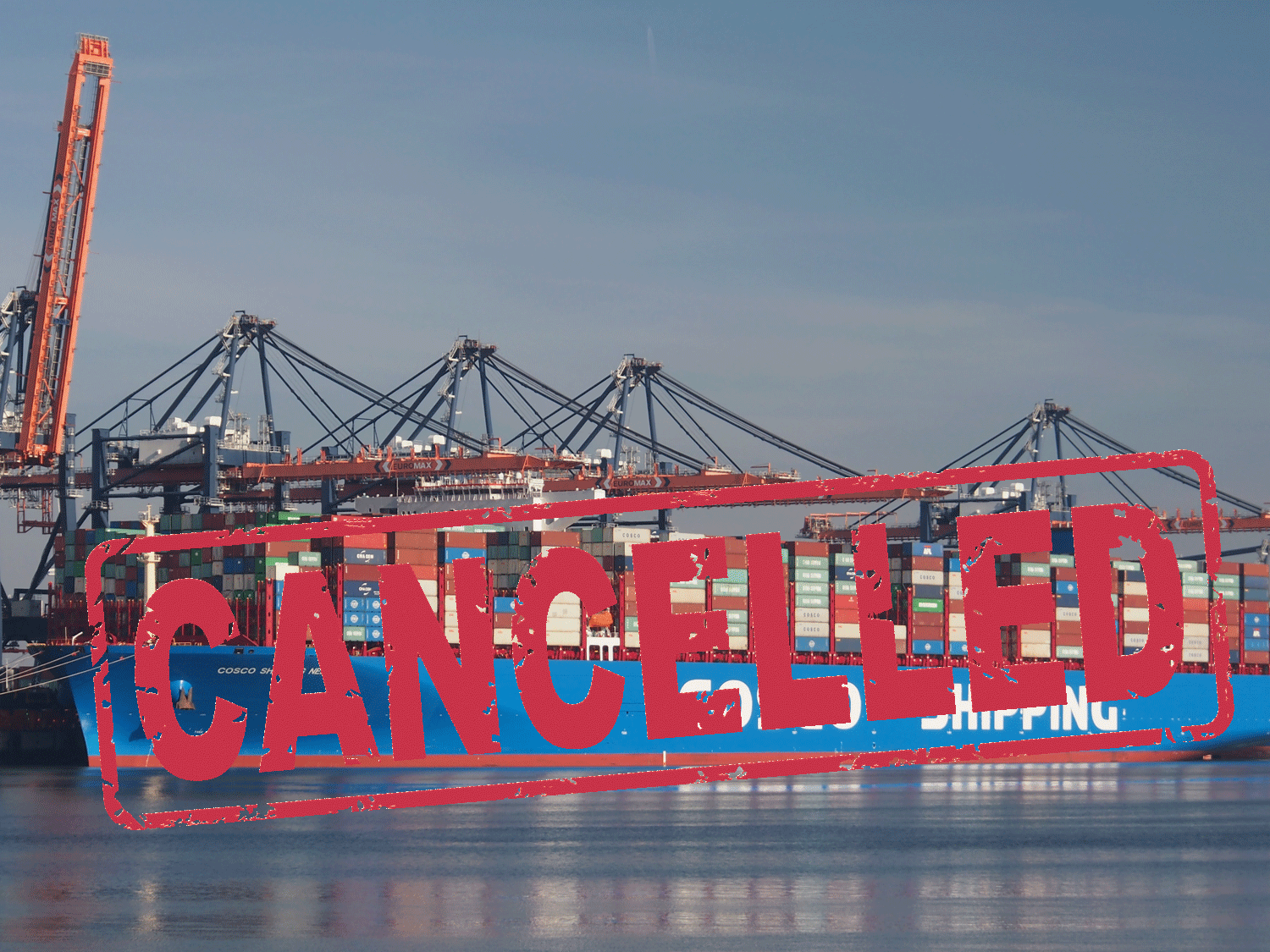
Carriers cancelled ten transpacific sailings in each of the past two weeks, with another seven cancellations planned for this week. By removing capacity, lines are supporting vessel utilisation and rates at a time when congestion and equipment availability in China are already restricting effective supply.

Panama becomes a capacity issue

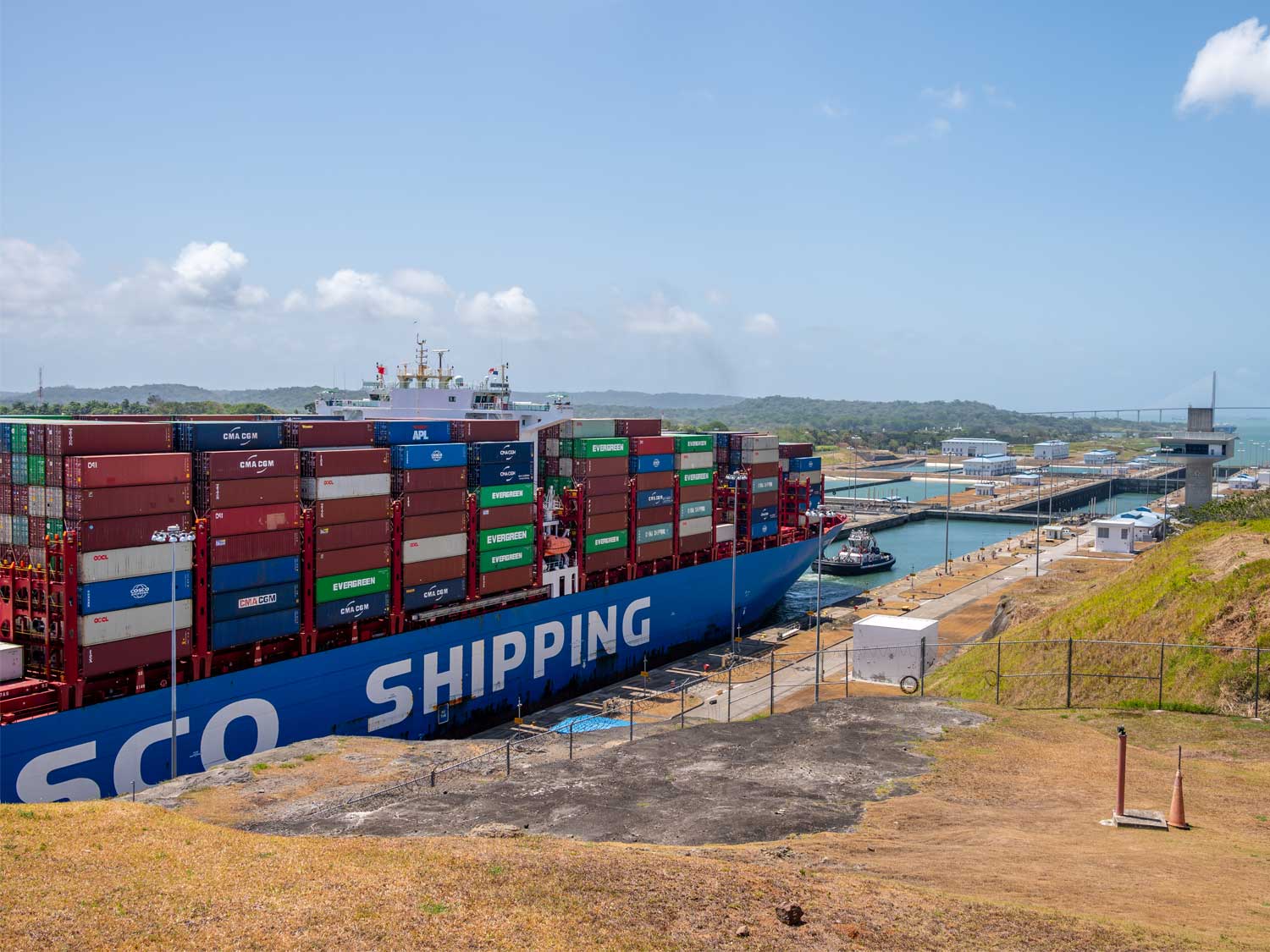
The Panama Canal is adding another significant factor for Asia–US East Coast and Gulf Coast services.

Water management measures are reducing the maximum permitted draft for vessels using the Neopanamax locks. The Canal has progressively tightened draft allowances during 2026 as it manages Gatun Lake water levels and prepares for the potential effects of El Niño.

The restrictions do not necessarily reduce the number of vessels able to transit each day. Instead, they do affect how many containers individual ships can carry. A lower maximum draft can force heavily laden containerships to reduce their loads before transiting, effectively removing container capacity from services even when scheduled sailings continue operating.

That matters because more than half of the Neopanamax vessels serving the US East and Gulf coasts currently transit Panama. The effect could therefore extend well beyond the Canal itself, tightening available space on some of the transpacific's most important services.

The Canal's normal Neopanamax specification allows a maximum draft of 50 feet, illustrating how progressively lower limits can constrain vessel utilisation.

Costs are beginning to reflect the restrictions

Carriers are already responding commercially. Several lines have announced Panama Canal surcharges for Asia–US East Coast and Asia–Gulf Coast cargo, with further charges scheduled to take effect from September.

These additional costs arrive as freight rates are already strengthening. With carriers controlling capacity through blank sailings and Canal restrictions potentially reducing the amount of cargo individual vessels can carry, there is less spare capacity available to absorb increases in demand.

The result could be a less volatile but structurally firmer transpacific market through the remainder of the traditional peak season. Rather than dramatic week-to-week movements, shippers could face sustained pressure on rates, space and equipment availability.

West Coast routings gain strategic importance

US West Coast services avoid the Panama Canal altogether, potentially giving shippers another option when East and Gulf Coast capacity becomes constrained. However, any significant diversion of cargo towards Los Angeles, Long Beach and other Pacific gateways could increase pressure on vessel space, port capacity, rail connections and inland transport.

That inland element is becoming particularly important because US trucking costs are rising sharply. National dry-van spot rates remain more than 40% above 2025 levels, while the average shipper-paid spot rate including fuel increased by almost 50% year on year in July.

Pressure is particularly evident around the West Coast gateways. In Los Angeles, outbound shipper-paid spot rates rose more than 50% year on year in July, as stronger inland movements from the country's largest container gateway coincided with reduced available trucking capacity.

Higher costs do not simply reflect stronger freight volumes. In some US regions, expenditure has increased substantially despite falling shipment volumes, demonstrating how capacity withdrawal, carrier pricing and operating costs can drive rates higher even when demand remains subdued.

US diesel prices are around 40% higher year on year, increasing carrier costs and fuel surcharge exposure. Less-than-truckload pricing is also strengthening, with general rate increases typically around 7% and some contract renewals moving into double-digit increases.

For transpacific shippers, this changes the calculation. Rerouting cargo through the West Coast may avoid Panama Canal restrictions and surcharges, but higher inland transport costs could offset some or all of the ocean freight advantage.

Metro connects Asia with a growing US network

The lowest ocean rate does not always deliver the lowest overall cost. With transpacific capacity tightening, Panama Canal restrictions adding complexity and US inland transport costs rising, shippers need to consider the entire journey across ocean, port, rail and road.

Metro's established Asian network and growing US footprint give shippers the flexibility to compare East Coast, Gulf Coast and West Coast options based on total landed cost, capacity, transit time and final destination. From securing ocean space and selecting the right gateway to coordinating inland transport and final delivery, Metro optimises the supply chain as a whole.

To learn more, EMAIL Managing Director Andrew Smith today.

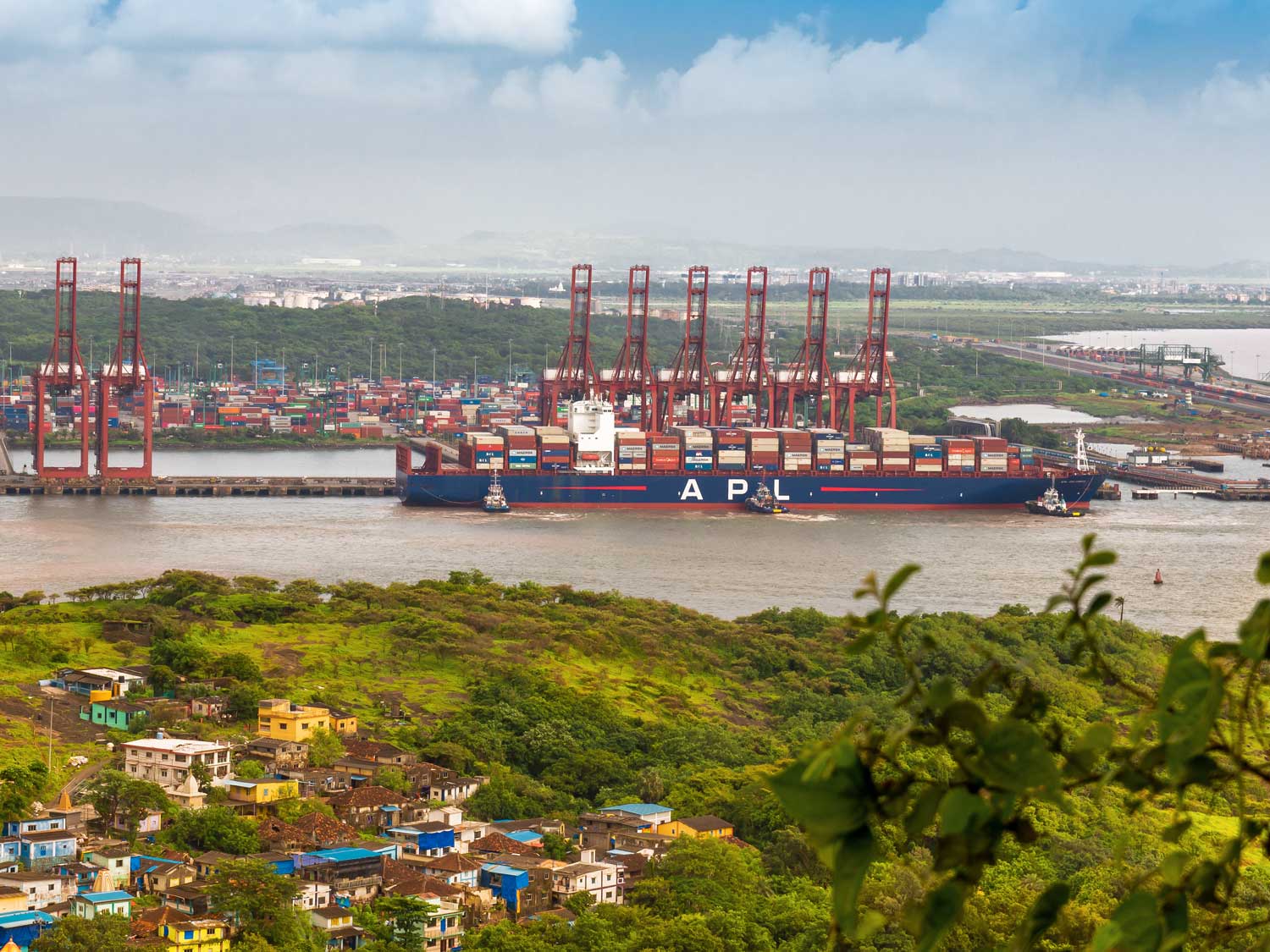
Nhava Sheva

Customer Advisory: India and China Container Shipping Disruption

Container shipping markets in India and China are experiencing significant operational disruption, resulting in longer transit times, reduced schedule reliability, constrained equipment availability and rising freight costs.

Metro is working closely with shipping lines, terminals and inland partners to minimise disruption and identify practical alternatives for affected cargo. Customers are advised to plan shipments as early as possible and allow additional time throughout their supply chains.

India market update

The Indian container market is under sustained pressure across both export and import supply chains.

A combination of strong export demand, restricted carrier capacity, equipment shortages and ongoing congestion at key gateway ports is making vessel space increasingly difficult to secure. These conditions are contributing to vessel rollovers, revised sailing schedules, extended transit times, peak season surcharges (PSS) and highly volatile freight rates.

The India–US and Latin America trades remain under the greatest pressure, particularly for cargo moving to the US East Coast.

Freight rates and surcharges

Spot-market freight levels for India–US East Coast shipments are currently ranging from approximately USD 10,000–12,000 per 40HC, depending on port pairing, routing and available capacity.

Carriers continue to introduce Peak Season Surcharges for both spot and contract cargo. These charges increased through August, with further increases being announced for September.

On the India–US East Coast trade:

  • Average August PSS levels are around USD 5,000 per 40HC
  • Maersk has announced a PSS increase to USD 7,500 per 40HC, effective 1 September
  • Further PSS increases remain possible across other India export markets

Rate volatility is expected to continue into September as carriers maintain tight capacity controls and place further pressure on allocations.

Port congestion and equipment availability

Active monsoon conditions are affecting port operations and inland transport across India’s west coast. The disruption is expected to continue in the near term and may cause further delays to container movements, terminal operations, rail services and road transport around major gateways. 

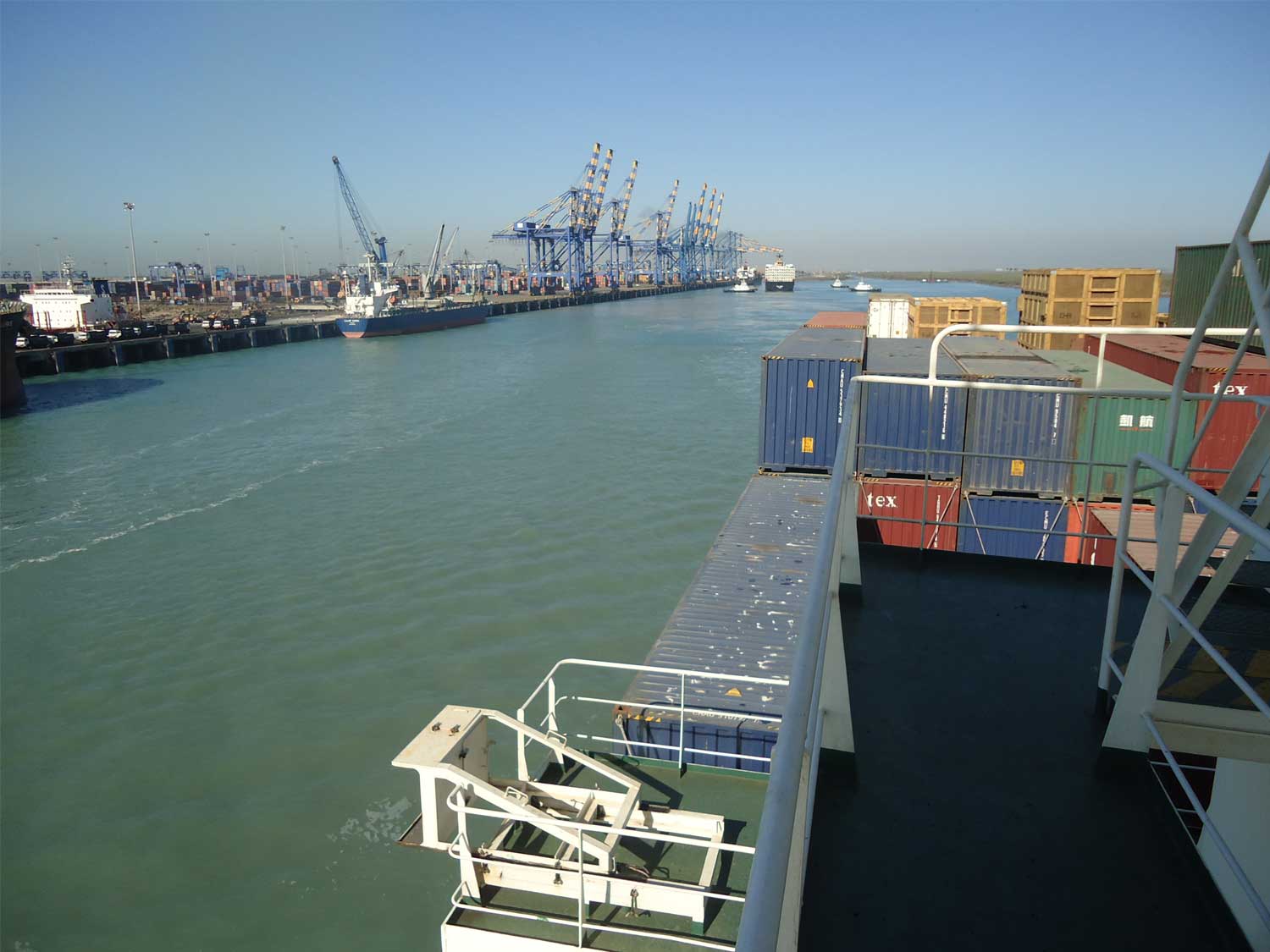
Major Indian gateways, particularly Nhava Sheva/JNPT, continue to experience congestion caused by vessel bunching, terminal capacity pressure, rail delays and limited transport equipment availability.

Key gateways potentially affected include:

  • JNPT / Nhava Sheva: India’s busiest container gateway and a major export hub for US-bound cargo
  • Mundra: India’s largest private container port, handling significant volumes of US-bound exports
  • Hazira: An important feeder and export gateway for manufacturing cargo from Western India

Container availability, particularly for 40HC equipment, remains inconsistent at several export locations. This may delay booking confirmation and require longer lead times for exporters.

Customers should anticipate additional variability in shipment timing, particularly where cargo depends on inland positioning or feeder connections.

China port disruption

Typhoon Dolphin has created further disruption at Chinese ports following the impact of Typhoon Bavi just weeks earlier.

The storm brought heavy rain and strong winds to Zhejiang province before moving on as a tropical storm. Authorities have warned of continued risks from torrential rain, flooding and landslides, while flight cancellations and transport disruption have also affected the wider region.

Port and vessel impact

Temporary closures at Shanghai, Ningbo-Zhoushan and surrounding feeder ports disrupted cargo handling and vessel movements.

Current impacts include:

  • Vessels delayed, held at anchorage or diverted to alternative ports
  • Service schedules changing at short notice
  • Delays of 7–21 days remaining common on affected services, with some potentially longer
  • Ongoing congestion as terminals process accumulated cargo
  • Localised disruption to rail, road and barge transport, despite conditions gradually improving

Port productivity is beginning to recover in some locations, but congestion and schedule disruption are expected to persist while backlogs are cleared.

Metro will continue to monitor developments closely and work with carriers and partners to secure capacity, explore alternatives and keep customers informed of material changes.

customer survey 1440x1080 1

Peak season survey reveals cautious confidence as demand strengthens

Metro's Q3/26 Peak Season Survey suggests businesses are entering the second half of the year with growing confidence, despite ongoing uncertainty across global supply chains.

While current shipping volumes remain mixed, the outlook for the next three months is positive. More than three-quarters of respondents expect shipping volumes to either increase or remain stable, with no respondents anticipating a decline. 

The findings indicate that businesses are continuing to adapt to market disruption, focusing on flexibility, resilience and proactive supply chain planning rather than waiting for conditions to return to normal.

Demand is being driven by real business growth

Unlike previous peak seasons, where activity was often influenced by front-loading or supply chain disruption, this year's demand appears to be supported by underlying market conditions.

Half of respondents identified genuine customer demand as the primary driver of shipping activity, while 37.5% pointed to inventory replenishment and restocking. Only 12.5% believed customers were bringing orders forward, and the same proportion cited carrier actions creating tighter supply. No respondents believed an earlier-than-usual seasonal peak was driving demand. 

Current shipping volumes remain varied. While 37.5% reported moderately higher volumes than the same period last year and 12.5% reported increases of more than 20%, an equal 37.5% said volumes were lower than a year ago. 

Looking ahead, confidence remains encouraging.

A quarter of respondents expect shipping volumes to increase significantly over the next three months, while 37.5% anticipate a slight increase and a further 37.5% expect volumes to remain stable. Significantly, none of those surveyed expect demand to decline during the remainder of the peak season. 

The results suggest businesses are planning for sustained activity rather than a short-lived seasonal spike.

Peak season has already begun

Three-quarters of respondents believe the traditional peak shipping season is already well underway, while only 12.5% believe it has yet to begin. A further 12.5% remain unsure. 

This reflects the continued resilience of international trade despite geopolitical tensions, longer shipping routes and higher transport costs.

However, an early start does not necessarily mean peak season will finish early. Over the past three years, an earlier summer peak has typically been followed by a second, smaller surge in demand during the fourth quarter, bookended by Golden Week in early October and the build-up to Chinese New Year. Many shippers are therefore planning for sustained demand through the remainder of 2026 rather than a single seasonal spike.

Red Sea transits remain under close review

As container carriers continue trial transits through the Suez Canal and Red Sea, businesses are monitoring developments carefully.

Three-quarters of respondents were already aware of the resumed transits. However, only a minority have fully reviewed their cargo insurance arrangements. Instead, 62.5% said insurance reviews are currently underway, while 25% have yet to assess whether their existing cover is suitable for regular Red Sea transits. 

The findings suggest confidence in the route is improving, but these results came before the recent Houthi attacks, so risk management remains a priority.

Flexibility is becoming the preferred strategy

Businesses are responding to market conditions by adapting existing supply chains rather than making wholesale changes to transport modes.

The most common response (37.5%) has been to alter shipping routes while maintaining the same mode of transport. Another 25% are considering alternative transport solutions if conditions deteriorate further, while 12.5% have already introduced sea-air services and a further 12.5% have switched some shipments to road transport. Meanwhile, 37.5% have not changed their transport strategy. 

Among those making changes, every respondent (100%) cited long transit times as the primary reason, with vessel capacity and port congestion receiving no responses. 

Agility is becoming more important than storage

When asked about warehousing priorities, 83.3% of respondents identified flexible transport alternatives as their greatest requirement, compared with 33.3% who highlighted low-cost short-term storage solutions. 

The findings suggest businesses are placing greater emphasis on maintaining supply chain agility than simply increasing storage capacity.

What the survey tells us

The results paint the picture of a market that remains resilient despite continued disruption.

Demand is being driven primarily by genuine customer activity rather than precautionary ordering, businesses are broadly optimistic about shipping volumes over the coming months, and most believe peak season is already underway.

At the same time, companies continue to manage risk carefully. Red Sea insurance arrangements are being reviewed, alternative routing remains under consideration, and flexibility has become a higher priority than simply securing additional warehouse space.

As peak season develops, Metro can help keep your supply chain agile. We'll review your transport strategy, identify opportunities to improve resilience and help you respond quickly to changing market conditions while maintaining service levels and controlling costs.

We’d be interested in your views too. EMAIL Managing Director, Andrew Smith

Blanking is biting

Why blank sailings have become the new normal for container shipping

Spot freight rates have eased from their summer highs, but the container market remains far from settled. While demand has softened following an unusually early peak season, ocean carriers continue to tightly control available vessel space through blank sailings. 

The result is a market where freight rates are easing only gradually, despite significant growth in the global container fleet.

For shippers, this represents an important change. Blank sailings are no longer simply a response to weak demand, they have become a fundamental part of how carriers manage capacity and support market stability. 

Capacity is growing but available space isn't

Since 2019, container shipping lines have invested heavily in new vessels, significantly increasing fleet capacity across the major East-West trades.

However, much of that additional capacity is never reaching the market.

Sea-Intelligence data shows that blanked capacity has grown substantially faster than overall fleet capacity on every major trade lane. On Asia-North America East Coast services, scheduled capacity has increased by 46% since 2019, yet blanked capacity has risen by 215%. Similar trends can be seen on Asia-Mediterranean (56% versus 159%), Asia-North Europe (20% versus 83%) and Asia-North America West Coast (16% versus 62%). 

Rather than allowing new vessel deliveries to create excess supply, carriers are actively withdrawing sailings to maintain higher vessel utilisation and prevent freight rates falling too quickly.

This represents a significant shift from the pre-pandemic market, when fleet growth generally translated into greater shipping availability.

Blank sailings remain high through August

The latest market data suggests carriers have no intention of relaxing that discipline.

Across the major East-West trades, 58 blank sailings are scheduled between weeks 32 and 36 (3 August to 6 September), representing around 8% of all planned departures. 

Despite these cancellations, 92% of scheduled sailings are still expected to operate, demonstrating that carriers are making targeted adjustments rather than widespread service reductions. 

The greatest concentration of cancellations is on the Transpacific eastbound trade, followed by Asia-North Europe/Mediterranean services and the Transatlantic. 

Freight rates are softening but only gradually

Container spot rates have softened through the end of July, but, the pace of decline remains measured, because rather than allowing prices to fall sharply after the early summer peak, carriers are relying on blank sailings, selective discounting and careful capacity management to support the market. 

Additional attempts to introduce general rate increases during August suggest shipping lines remain determined to defend current pricing levels, even as demand becomes more balanced. 

For shippers, this means freight rates are likely to remain more resilient than previous market cycles would suggest, with a Q4 spike likely to apply further upward pressure.

Network disruption hasn't disappeared

Capacity management is only one factor influencing schedules. As Chinese ports continue to recover from recent typhoon disruption and prepare for the arrival of Typhoon Dolphin, ongoing congestion and vessel bunching is still affecting service reliability across several trade lanes. Although roll pools have reduced significantly since the summer peak, carriers continue to omit selected port calls and adjust networks to maintain schedule integrity. 

These operational pressures reinforce the importance of securing space well in advance, particularly as the market approaches the expected fourth-quarter demand increase.

The container market is becoming more disciplined rather than more predictable and lower demand no longer leads automatically to sharply lower freight rates. Instead, carriers are using blank sailings as a strategic tool to balance supply with demand and maintain network efficiency.

For shippers, planning assumptions based on pre-pandemic market behaviour are becoming increasingly unreliable.

Booking earlier, allowing greater flexibility around sailing schedules and reviewing inventory strategies will help businesses manage a market where capacity remains carefully controlled even as freight volumes become more balanced.

As carrier networks continue to evolve, Metro helps customers stay ahead of changing market conditions. From securing capacity and monitoring sailing schedules to identifying alternative routings and managing inventory risk, we'll help keep your supply chain moving efficiently, whatever the market throws at it.

EMAIL Managing Director, Andrew Smith to learn more.