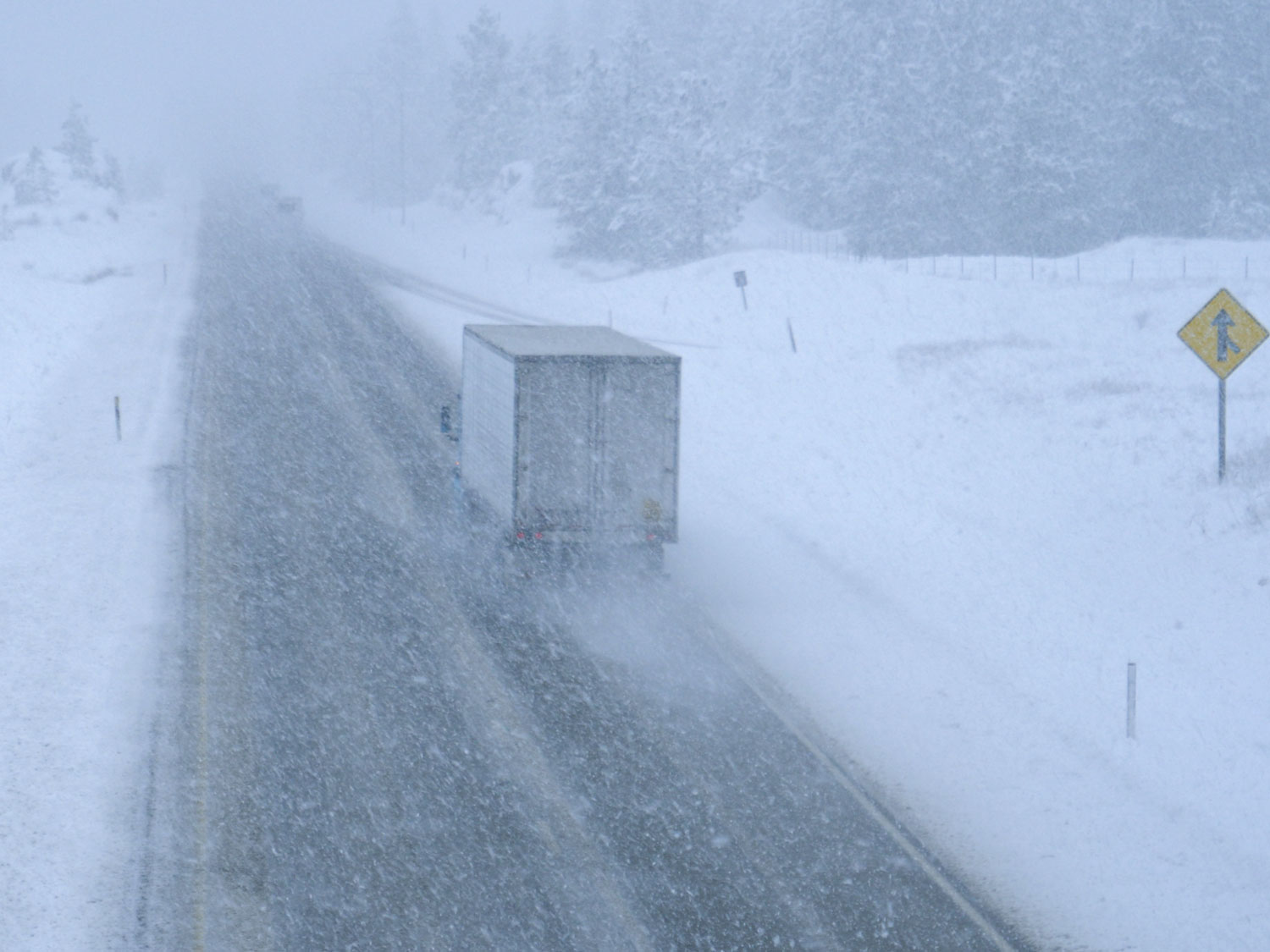
Severe winter weather across the United States has triggered the sharpest short-term trucking spot rate spike in more than three years, with disruption now filtering upstream into inland rail and intermodal hubs.
Snow and ice blanketing large parts of the eastern US drove a 40% week-on-week increase in spot market load posts. Dry-van spot rates climbed 11 cents in seven days, the steepest weekly rise since early 2021, while temperature-controlled (reefer) capacity jumped 15 cents week over week as shippers scrambled for freeze protection.
Unlike previous disruption events, the system now has less “buffer” capacity. Market reaction to the latest storm has been more severe than that seen after Hurricane Helene in September 2024, when spot loads rose 17% and rates increased just 4 cents week over week.
With tighter latent capacity, even short-lived weather events are producing outsized pricing swings.
Structural factors could extend pressure
January manufacturing data from the Institute for Supply Management moved back above the 50 baseline into expansion territory for the first time in more than a year, fuelling speculation that the freight recession may be bottoming out.
At the same time, federal enforcement activity around non-domiciled commercial driver’s licences (CDLs) and English-language proficiency requirements is reportedly pushing shippers towards asset-based carriers with company drivers. That shift could reduce available independent capacity, adding structural support to contract and spot rate increases, particularly as the spring produce season approaches.
If reefer markets tighten sharply during produce season, rate pressure is likely to cascade into dry-van networks, making elevated pricing more durable through 2026.
Rail and intermodal congestion follows the storm
While Class I rail line-haul performance has largely normalised, disruption has migrated inland. Rail terminals including Memphis, Chicago and Cincinnati are now experiencing post-storm congestion.
At key inland hubs, container availability times have doubled from around one day to two days. Data from technology provider E-Dray shows that average availability at Union Pacific’s Memphis terminal rose from 0.7 days pre-storm to 2.9 days after the event.
Transit times between Kansas and Illinois spiked to nearly 80 hours before easing to around 35 hours. Mississippi–Illinois transits briefly doubled to 19 hours before settling closer to 10 hours.
Drivers report waiting up to five hours inside terminals, missing delivery windows and triggering demurrage exposure. The issue is not chassis shortages but crane and yard capacity constraints in freezing conditions.
Union Pacific’s decision to levy “flip fees” for lifting containers from stacks, a charge not typically applied by other North American Class I railroads or major US ports, has added further cost pressure for drayage providers, costs that are not being absorbed by cargo owners.
What this means for importers and exporters
For international shippers moving freight into and out of the US, the key risk lies in the inland leg:
- Higher US trucking spot rates can quickly erode landed-cost assumptions.
- Intermodal congestion extends container dwell time and increases demurrage and detention exposure.
- Reefer market tightening during produce season could distort both temperature-controlled and dry-van pricing.
- Inland rail volatility can delay export positioning, affecting vessel cut-offs and schedule integrity.
Weather-related disruption may ease, but reduced capacity buffers mean price and service volatility can persist longer than the storm itself.
How Metro supports shippers through US inland volatility
Metro works with importing and exporting customers to reduce exposure to short-term inland shocks through:
- Pre-planned multimodal routing strategies
- Secured trucking and intermodal capacity with vetted asset-based partners
- Active dwell-time and demurrage monitoring
- Early visibility of rail terminal congestion
- Contingency planning ahead of seasonal inflection points such as produce season
In volatile inland markets, control and foresight matter as much as headline freight rates.
If your US supply chain is exposed to trucking or intermodal risk, EMAIL our managing director, Andrew Smith, to learn about building resilience into your routing strategy, before the next disruption hits.