Med satellite 1440x1080 1

UK Bid to Join Pan-Europe Trade Area Blocked

The UK government’s attempt to join the Pan-Euro-Mediterranean (PEM) Convention, a framework that simplifies supply chains and reduces tariffs across Europe, North Africa, and parts of the Middle East has been blocked by the EU.

Established in 2012 and modernised in 2025, the PEM Convention allows manufacturers in member countries to “cumulate” inputs, counting components sourced from any PEM country as local when determining a product’s origin for tariff purposes. 

So, if a Turkish manufacturer made a machine from EU-sourced parts, the item would be considered as “made in Turkey” when exported to France, benefiting from preferential trade agreements. This enables goods like cars, chemicals, and processed foods to move across borders with reduced  paperwork and lower tariffs.

The convention’s 25 members include the EU, Norway, Switzerland, Turkey, Ukraine, Egypt, Morocco, and Israel. The UK, notably, is one of the few European countries not included.

Joining PEM could ease post-Brexit trade friction, particularly for UK manufacturers relying on complex, multinational supply chains. It would:

– Reduce rules-of-origin paperwork
– Provide greater sourcing flexibility
– Support industries like automotive, chemicals, and food processing

While some experts say the impact would be moderate, others argue it’s a pragmatic step that offers clear benefits without requiring a return to the EU single market or customs union.

Why Is the UK Blocked?
Despite initially signalling openness, the European Commission has withheld support for UK accession, citing concerns that UK-made goods could unfairly qualify for low-tariff access to EU markets.

Technically, incorporating PEM provisions into the EU–UK Trade and Cooperation Agreement (TCA) would require reopening parts of the Brexit deal and EU officials have indicated they want to stick closely to the “common understanding” agreed at the May UK–EU summit, to avoid further complications.

This block has frustrated UK trade bodies, including the British Chambers of Commerce, which see PEM as a practical tool to improve trade flows.

The UK government has said it will continue to review the potential benefits of PEM and engage with the EU and other PEM members. However, with Brussels signalling little appetite to renegotiate TCA terms, short-term progress may be unlikely.

Metro’s customs specialists design tax-efficient supply chains using bonded warehousing, IPR/OPR, duty drawback, and other regimes to protect your cash flow, minimise duty exposure, and keep you fully compliant. EMAIL Managing Director, Andy Smith, to learn more

RoRo in US 1440x1080 1

U.S. RoRo Port Fees Set to Disrupt Automotive Logistics

The U.S. Trade Representative (USTR) has confirmed it will introduce new fees on foreign-built roll-on/roll-off (RoRo) car carriers calling at U.S. ports from October 14, 2025, as part of a broader push to counter China’s maritime influence.

The initial fee of $150 per Car Equivalent Unit (CEU) is designed to incentivise shipping lines to invest in U.S. built vessels. A temporary remission is offered to companies that order and take delivery of a U.S. built car carrier of equal or greater capacity within three years. They can avoid the charges during that period.

However, recent USTR updates suggest the fee may shift to a $14 per net ton charge to simplify administration and reduce the risk of fee evasion. The final decision is pending following public consultations.

Impacts on RoRo Operators and Automotive Logistics
Major global vehicle carriers operating between Europe, Asia, and the U.S. are warning of significant cost increases, potentially reaching hundreds of millions of dollars annually. 

A leading Nordic carrier estimates its annual liability could reach $300 million, based on 300–350 annual voyages to the U.S, while another major Norwegian operator projects $60–70 million per year in additional fees.

Major carriers impacted include Japanese operators “K” Line, Mitsui O.S.K. Lines, NYK Line, and South Korea’s Hyundai Glovis, all of whom have extensive U.S. vehicle import operations.

While some carriers plan to pass costs onto customers, there is growing concern that surcharges will ripple through supply chains, raising prices for manufacturers, dealers, and ultimately consumers.

There is also confusion over how mixed-use vessels, those carrying both cars and containers will be classified, with some operators calling for fees to be based on actual cargo moved, not total vessel capacity.

The risk of double charges on multi-port U.S. calls is further raising alarm, with some carriers warning they may be forced to reduce or withdraw U.S. services altogether if the fee regime is not clarified or adjusted.

The fees will not apply to U.S. government cargo or vessels operated directly for the government by agents or contractors.

Critics argue that the USTR’s blanket approach to all foreign-built RoRo vessels may create unintended market distortions, harming non-Chinese carriers, squeezing capacity, and undermining U.S. automotive supply chains, while doing little to curb China’s maritime ambitions.

Final regulations are expected before the end of the summer, and the industry is watching closely.

Stay ahead of global logistics shifts, with Metro’s technology and expertise helping you overcome change. Drive automotive supply chain performance with Metro’s specialised logistics solutions. From finished-vehicle transport to after-sales support, we deliver precision, resilience, and cost efficiency across global automotive supply chains. EMAIL Managing Director, Andy Smith, to learn more

LHR BA landing

Preparing for Air Cargo Peak Season Amid Tariff Uncertainty

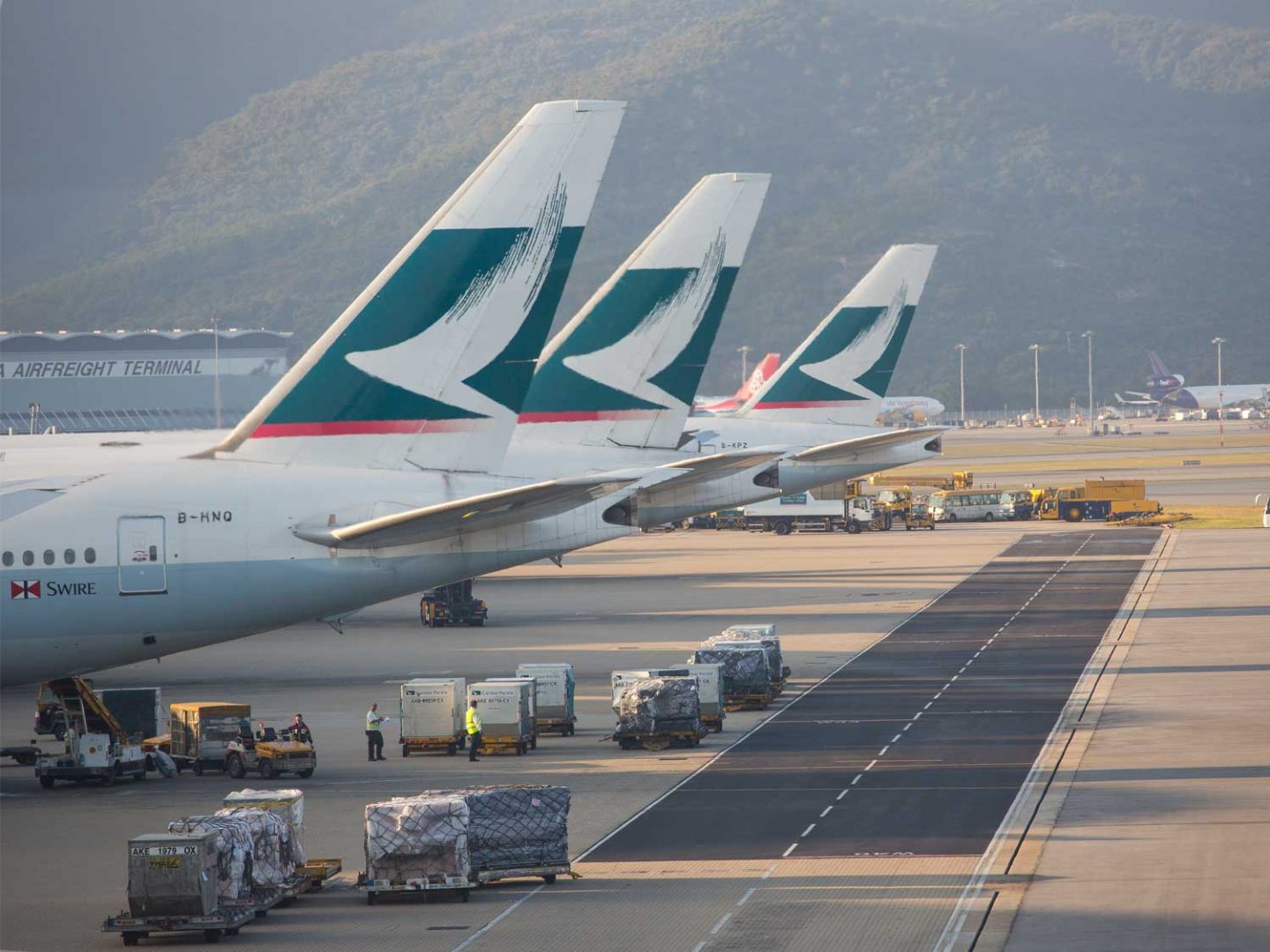
Air freight markets are entering the second half of 2025 in a state of volatility, as early signs of peak season demand clash with consumer caution and a shifting tariff landscape.

Despite President Trump suggesting that the next round of US tariffs may not take effect until August, the legal reality is firmer: the executive order issued on 9 April mandates that reciprocal tariffs will be enforced from 12:01 am EDT on 9 July, unless a further Executive Order is made. This deadline is already influencing behaviour across key trade routes and sectors, with shippers attempting to front-load freight and adjust their sourcing strategies.

As expected, June saw a seasonal lull across many air freight corridors. Rates out of Hong Kong to both Europe and North America softened slightly month-on-month, falling by low single digits, while year-on-year declines were sharper to North America, reflecting weaker consumer demand and reduced eCommerce.

The removal of de minimis exemptions combined with the imposition of tariffs on many goods, has triggered a pronounced shift in flows: air cargo volumes from China to the US have fallen around 15% since March, while rates have dropped by more than 15% over the same period. In contrast, tonnage from China to Europe is up 15% year-on-year, supported by stable rates and reallocated capacity.

Transatlantic lanes also reflect the summer dynamic. With increased belly-hold capacity from passenger flights, rates between Europe and North America dipped slightly in June. However, spot freight prices on both directions of the transatlantic remain higher than a year ago, suggesting underlying resilience.

Spot Market Dominance and Capacity Volatility
One of the most significant developments this quarter has been the dramatic shift toward the spot market on Asia Pacific–US lanes. By June, more than 70% of general cargo bookings on these routes were made on spot terms, up from around 50% in the same period last year. This trend reflects carrier uncertainty, volatile demand, and diverging expectations around tariff timing and impact.

For comparison, spot market activity on Asia-Europe lanes has remained relatively stable, with roughly 47% of cargo moving under short-term rates. The growing disparity between contract and spot pricing points to the challenges of forecasting capacity needs in politically sensitive markets.

Peak Season Prospects: Uncertainty Over Tradition
Traditionally, air freight demand accelerates from mid-August as retailers ramp up inventory for back-to-school, autumn sales, and the holiday period. However, the current market is anything but traditional. Consumer confidence remains fragile due to rising living costs and trade friction, with the largest shippers increasingly hesitant to commit to long-term air freight contracts.

Global air cargo volumes rose by just 1% year-on-year in June, with capacity growth outpacing demand for the first time in over 18 months. This imbalance is likely to pressure rates across many lanes, even as jet fuel prices spike and geopolitical risks persist.

While some Southeast Asia–US routes saw modest rate gains in June, buoyed by pre-tariff demand and capacity rebalancing, overall expectations for Q3 remain muted. Analysts warn that weaker consumer spending and ongoing tariff complications could limit any meaningful peak season surge, especially on transpacific routes.

Outlook 
Despite the structural pressures, there are opportunities for shippers in the current environment. Short-term rates are more flexible, capacity is more available than in past peak seasons, and carriers are actively repositioning services to match evolving demand patterns.

The real wildcard remains US trade policy. Without a new executive order, 9 July marks the start of a new tariff chapter that will ripple across global supply chains, just as the air freight industry typically gears up for its busiest season.

Now is the time to plan ahead.
With more flexible short-term rates, improved capacity availability, and carriers adapting to demand shifts, shippers have a unique window to secure cost-effective and reliable air freight solutions before peak season pressure builds.

EMAIL our managing director, Andrew Smith today to assess your options and take advantage of current market conditions.

Rachel Reeves 1440x1080 1

Budget Pressures Raise Questions for Business

Chancellor Rachel Reeves has triggered fresh uncertainty after cancelling a planned welfare reform expected to save £5.5 billion, leaving a significant hole in the Treasury’s accounts and raising the prospect of tax increases later this year.

Markets reacted swiftly: sterling dipped and government borrowing costs rose, reflecting investor concerns over how a growing £40 billion fiscal shortfall will be addressed. A revised budget is due this autumn, with attention turning to how the burden might be shared.

While no measures have been formally proposed, the freight industry is on alert. Possible changes include:

– Higher fuel duty, which would increase transport and delivery costs
– Stricter customs enforcement, potentially adding friction and delay
– Corporate tax rises, squeezing already tight logistics margins

The British International Freight Association (BIFA) has urged the government to consult with the sector before taking action, stressing the need for stability and recognising logistics as vital to UK trade.

Offering a broader view, the Bank of England’s latest financial stability report suggests most UK companies remain resilient. Even under pressure from global shocks, including tariff hikes, rising interest rates, and a 10% fall in earnings, most are expected to meet their debt obligations.

For business, the message is clear: policy uncertainty may be unavoidable, but financial agility and early engagement will be key to overcoming what comes next.

EMAIL Laurence Burford, Chief Financial Officer, today to explore how Metro can support your business through ongoing global disruption.