Road freight market sees failure and consolidation

Road freight market sees failure and consolidation

The UK road freight market is facing severe pressures from rising operational expenses and ongoing labour shortages, with Q3 rates surging 10% year-on-year, reflecting widespread cost increases.

This tough economic climate has led to the failure of nearly half of all haulage companies launched between 2019 and 2023, with fierce competition and volatile costs proving too much for smaller operators. Over 50,000 firms have exited the market, particularly in the container freight sector, with many drivers moving to alternative industries.

The failures of these smaller firms have opened the door to consolidation within the market. One of the most significant moves is MSC’s acquisition of Maritime Transport, the UK’s largest haulier. Maritime Transport operates a fleet of 1,600 trucks and has a significant presence at major UK ports.

MSC’s acquisition is part of a wider strategy to consolidate control of overland logistics throughout Europe and is likely to raise concerns among other shipping lines, potentially reshaping customer relationships in the industry.

Simultaneously, hauliers are dealing with significant challenges at UK ports. While DP World’s £1bn development of new berths at London Gateway is progressing, there are continuing political tensions between the operator and UK government officials.

Construction of two new berths will go ahead as part of a long-term plan to make London Gateway the UK’s largest container port, potentially handling six ultra-large container vessels simultaneously by the end of the decade. This expansion will significantly increase capacity and create around 400 new jobs.

Elsewhere, other UK ports are facing infrastructure delays, which are putting essential development projects at risk. The British Ports Association (BPA) has raised concerns over the backlog of harbour orders that ports require to make infrastructure upgrades and expand capacity. These delays threaten billions of pounds in investment and the ability of ports to meet growing trade demands. The situation is particularly dire for ports like Southampton and Plymouth, which have been waiting years for regulatory approvals to begin critical development work.

As the road freight industry faces these mounting pressures, larger operators are increasingly consolidating power while smaller firms struggle to survive.

The efficiency of the haulage sector remains dependent on the performance and expansion of the UK’s key ports, where delays and congestion could have far-reaching implications for supply chain resilience.

Metro offers secure road transport solutions with dedicated vehicles running on fixed routes, ensuring timely deliveries and GPS tracking for full visibility across the UK and continental Europe.

Our road freight teams are strategically located near major manufacturing and transport hubs throughout the UK, enabling efficient logistics support.

To learn more about our domestic and European services, please EMAIL Richard Gibbs to start a discussion tailored to your specific needs.

European market review and group developments

European market review and group developments

The European freight market continues to face a complex landscape, characterised by fluctuating demand and evolving capacity challenges. In this review, we examine the current state of the road freight market and highlight recent group developments, including the acquisition of a Portuguese intermodal specialist and the launch of a new container shipping service.

Road Freight Market
Despite some positive economic developments, the road freight sector remains challenged by uncertain demand, with no indication of a trend reversal over the summer. This persistent issue is also evident in the capacity trends reported by TIMOCOM’s index. Significant capacity bottlenecks were noted in the first quarter, primarily due to reduced truck fleets.

This trend persisted into the second quarter, with the ratio of freight to cargo space standing at 77:23, dropping further to 73:27 in July, which is typical for the summer months. Despite these challenges, freight rates remain high. Although diesel prices have moderated, other costs, such as driver wages, continue to rise.

The TEG Index tracked a 6% year-on-year increase in haulage prices in July 2023, reflecting the rising costs that hauliers face. This index typically shows prices stalling over the summer before recovering in September, indicating that current trends are in line with historical patterns.

Acquisition of Portuguese Intermodal Specialist
We are pleased to announce the acquisition of Portuguese intermodal specialist KLOG. This acquisition allows us to enhance our intermodal transport capabilities, particularly for customers with significant continental volumes or those aiming to meet decarbonisation targets.

KLOG is renowned for its efficient, reliable, and cost-effective intermodal services to and from the Iberian Peninsula, serving some of Europe’s largest retailers, brands, and manufacturers. Their established rail services to and from Germany and Poland, via hubs in Spain and France, present significant opportunities for shippers trading between Northern Europe and Iberia.

KLOG currently operates two block train departures a week to and from their Portuguese rail hub to Poznan in Poland and Duisburg in Germany, routing via France and Spain. 

These services are complemented by short sea/rail connections. Additionally, four block trains run weekly between Entroncamento (Portugal) and Tarragona (Spain), with a further three block trains operating weekly in Spain between Tarragona, Bilbao, Valladolid, and Sevilla.

A wide range of 45’ equipment is available for all services, including curtain-side, dry container, and refrigerated containers, as well as 20’ ISO tanks. Last-mile delivery and/or collection from the Tarragona hub is available with e-trucks as an option.

Key Benefits:
– 24/7 Control Tower Service
– High rail frequency with daily departures
– Reliable lead-time comparable to road transport
– Sustainable solutions available year-round
– Reduction in truck usage and reliance on scarce driver resources
– CO2 emission reductions of 90% compared to road alternatives

New container shipping service connecting Spain, Portugal, and Northern Europe
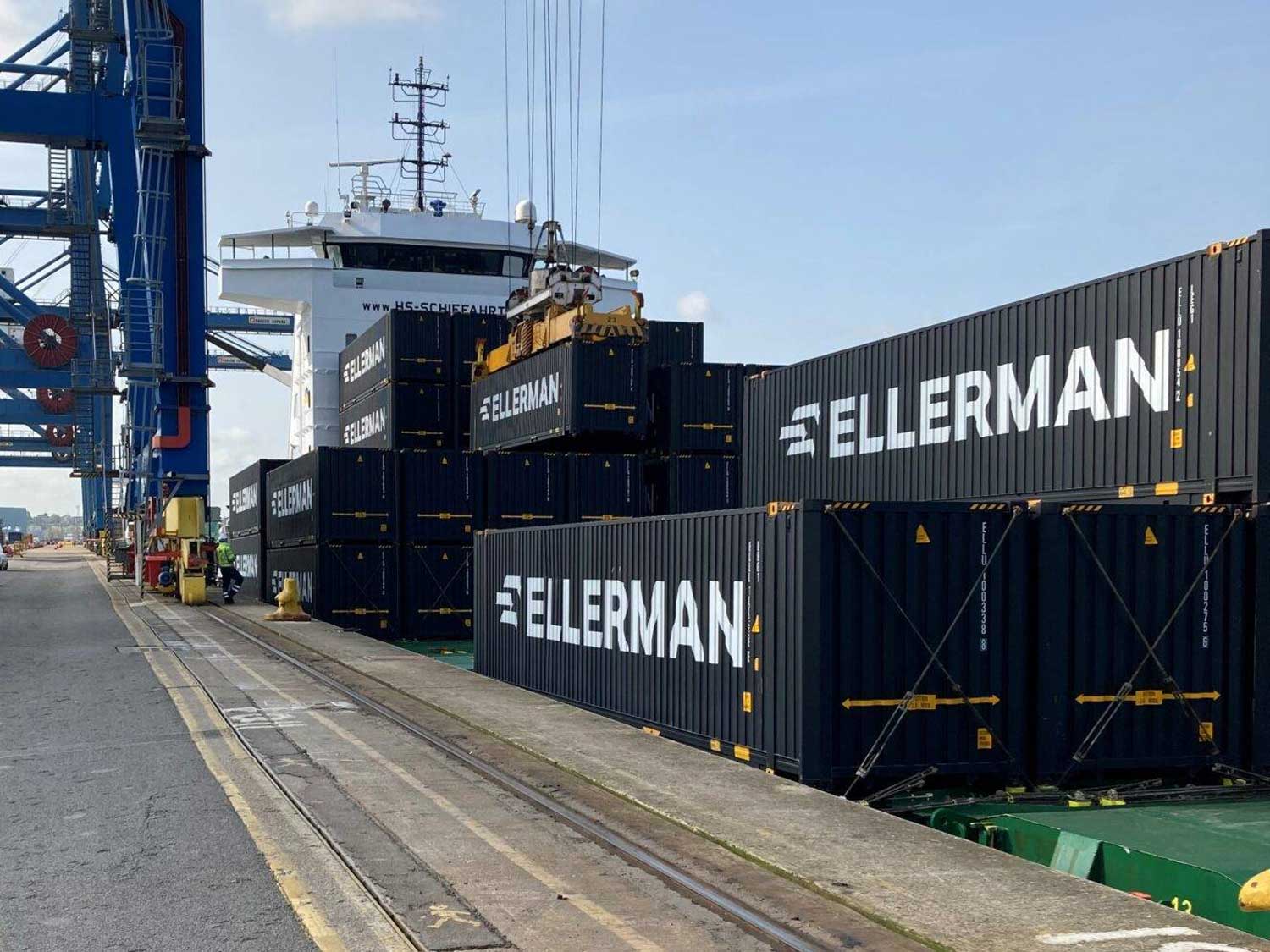
Ellerman City Liners, a group container shipping line with over 120 years of history, has introduced a new joint service with CMA CGM, connecting Spain, Portugal, and Northern Europe. This service aims to address ocean freight capacity shortages on key trade lanes, providing speed, service, and certainty to supply chains.

The first vessel of the new iNEX service departed Rotterdam on 9th July 2024. This service enhances efficiency, expands geographical scope, and reduces the carbon footprint for shippers. Operated with two 1,400 TEU vessels, the weekly sailing schedule includes the ports of Cadiz, Setubal, Leixoes, Ferrol, Tilbury, Dunkirk, and Rotterdam.

By working closely with partners Ellerman and KLOG, we are expanding the intermodal options available to our customers, delivering cost-effective and sustainable services as part of our commitment to decarbonising the supply chain.

Metro’s integrated transport services streamline import and export product flows across Europe, North Africa, and Turkey. By combining road, intermodal, and short sea modes, we ensure more efficient cargo transportation, reduced delivery times, and cost savings.

Our extensive partner network, multi-modal transport solutions, and MVT supply chain platforms are designed to meet even the most complex requirements across multiple regions, vendors, and customers.

Discover how we can enhance your trans-continental trading. EMAIL our Chief Commercial Officer, Andrew Smith, to arrange a consultation and scoping discussion.

Global IT outage disrupts supply chains

Global IT outage disrupts supply chains

On Friday, a faulty update to Microsoft software by cyber-security firm Crowdstrike, saw global supply chain operations significantly disrupted, with the fallout expected to take weeks to fully resolve.

Thousands of flights were grounded or delayed at major air freight hubs in Europe, Asia, and North America, creating severe impacts on the complex air supply chains.

Experts warn that planes and cargo are not where they should be, leading to extended recovery times and depending on the scale of the IT failure and current market conditions, these disruptions could take much longer to resolve than the duration of the outage itself.

This situation is further exacerbated by limited airfreight capacity, with global demand increasing by 13% in June compared to 2023, with the surge in demand largely driven by traffic from China to Europe and the US, putting additional strain on already limited available capacity.

While sea port operations were less affected, initial disruptions were reported in several European container terminals, including Poland’s Baltic Hub, Felixstowe and Rotterdam. These ports have since recovered, but the main issues could lie inland with truck and rail services, potentially increasing congestion if containers cannot be moved in or out of the ports efficiently.

Some air cargo operations are gradually returning to normal, with ground handler Swissport and Lufthansa Cargo reporting only minor impacts. However, Schiphol Airport and US airlines such as Delta, United, and American Airlines faced significant disruptions, with hundreds of flights cancelled or delayed, including 700 cancellations by Delta on Monday.

While most airlines have resumed operations, residual delays are anticipated due to the sheer number of disrupted flights.

Supply chain experts are concerned about the long-term effects of the Crowdstrike outage on global deliveries. The Chartered Institute of Export & International Trade warned that the disruption could create further problems in planning and scheduling for importers, exporters, and consumers globally. Time-sensitive air freight is particularly affected, with one thousand flights cancelled worldwide, by mid-morning on Friday.

Although a fix has been deployed by Crowdstrike, the full resolution of the outage issue may take some time, as IT staff may need to access individual machines to remove the faulty update.

The fallout from the outage has once-again highlighted the vulnerability of global supply chains and as the industry works to recover, the importance of robust contingency plans and marine insurance cannot be overstated, ensuring protection against financial risks and maintaining supply chain resilience in the face of unforeseen challenges.

To learn how we can develop and support your supply chain resilience or for more information about our Marine Insurance products, please EMAIL our Chief Commercial Officer, Andy Smith.

Europe may experience its own near-shoring boom

Europe may experience its own near-shoring boom

As planes descend into Monterrey airport, an expanse of warehouses and manufacturing complexes stretches out for miles, exemplifying the near-shoring boom that has swept through Mexico in recent years, as Asian companies and their supply chains move closer to the United States.

Drivers of Mexican Industrial Growth
One might argue that this surge in Mexican industrial production and exports to the US is part of a 30-year evolution, initially driven by the North American Free Trade Agreement (NAFTA), which established a free trade area among Canada, the US, and Mexico.

However, additional factors have recently propelled Mexico to replace China as the US’s most important trading partner.

1. US-China Trade War: Trade has shifted from China to countries like Mexico due to the ongoing trade conflict
2. Biden Administration’s Supply Chain Strategy: Emphasis on near-shoring has highlighted Mexico’s role in the China+1 strategy
3. Production-Sharing Schemes: Mexico’s longstanding expertise in these schemes makes it a valuable partner in regional manufacturing and trade
4. Low Labor Costs: Average manufacturing wages in Mexico are lower than those in China

Ironically, many of the companies that are being set up for manufacturing and transition to Mexico are actually owned by Chinese entities and companies. It is a migration of Chinese manufacturing to Mexico and this also has the benefit of lowering supply chain and shipping costs and the big one – reducing some of the duty and anti-dumping duty that has been, and will likely continue to be, levied on Chinese origin goods and raw materials.

Lessons for Europe
A critical element is the presence of a long-standing free trade agreement, because near-shoring thrives in an environment that fosters supply chain relationships and networks over time and effective near-shoring relies on a regulatory and trading environment that supports such activities. 

Expecting near-shoring to emerge without a developed and supportive environment is unrealistic. The EU, with its well-developed internal free trade and regulatory framework, together with external trade agreements with countries like Egypt and Morocco is well-positioned to adopt near-shoring strategies.

In Europe, geopolitical relations with China are a concern, but recent supply chain disruptions are increasingly driving the adoption of China+1 strategies. Europe has been shifting its manufacturing and supply chain activities eastward and into North Africa.

Opportunity
Countries like Turkey, Hungary, Egypt, Morocco, Poland, and Romania offer compelling near-shoring opportunities due to their lower wage rates and higher productivity compared to Western Europe.

The EU is well-positioned to capitalise on near-shoring activities and so too is the UK, with its close EU ties and inherited trade agreements. This has already been highlighted by the new UK government, as a goal to re-negotiate trade agreements with the EU and could make closer sourcing a more prevalent and cost effective strategy going forward in the next few years.

We are seeing regular migration of manufacturing and sourcing closer to the UK and EU and this has many benefits, as long as the material price is comparable with Far East manufacturing costs, which have been the big incentive.

Metro and our associate companies, are well positioned to give advice, recommendations and adapt supply chains regardless of the areas that you are sourcing from or selling to.

We have a variety of services and solutions covering overland trucking, rail freight, short-sea containerised solutions on our own vessels and local warehousing and distribution at most industrial hubs throughout Europe and North Africa. 

Please arrange a call/meeting and we can go through the current and future options, to add value to your global development strategy. We can guarantee that it will not be time wasted!

Stable, well-regulated trading environments and cost-effective, high-productivity production locations in Central and Eastern Europe and North Africa provide a strong foundation for supporting near-shoring initiatives.

Metro’s integrated transport services are designed to support JIT manufacturing requirements across the EU, North Africa and Turkey and are ideally positioned to support new near-shoring requirements.

Our partner network, multi-modal transport solutions and MVT supply chain platforms are all geared towards supporting an evolving sourcing programme and on-boarding new suppliers. 

If you would like to learn how we can boost your ability to source from alternative manufacturing regions, EMAIL our Chief Commercial Officer, Andrew Smith, to arrange a consultation and scoping discussion.