HMRC export deadline and rogue hauliers

HMRC export deadline and rogue hauliers

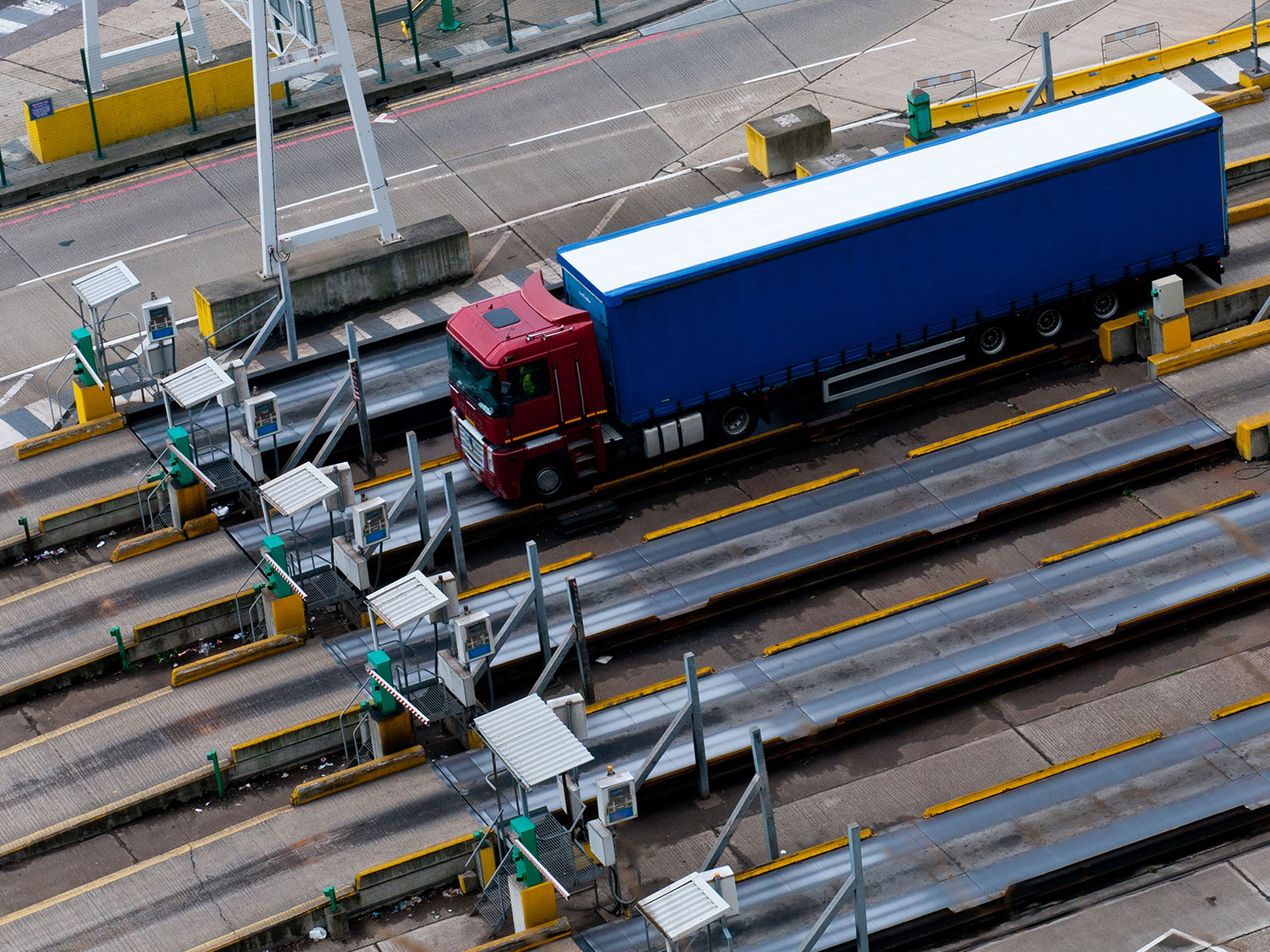
With the deadline fast approaching for export declarations moving to the Customs Declaration Service HMRC are highlighting a worrying trend at the border, with misuse of valid documents leaving innocent exporters potentially non-compliant and exposed to penalties. 

In their latest Customs Declaration Service (CDS) update HMRC remind traders that all export declarations must move from their legacy Customs Handling of Import and Export Freight (CHIEF) system to CDS by Saturday 30th March 2024. 

We are continuing to work with our customers, setting them up on CDS for all export routes and the different types of export declaration submitted at the UK border, including Transit (TAD) and the Goods Vehicle Movement Service (GVMS).

It is these latter two that HMRC focused on, in highlighting Goods Movement Reference (GMR) errors by hauliers that are leading to issues at the UK and EU border.

Consistent misuse of valid export CDS documents where the transit document is being used for the convenience of the haulier means that shipments are not arrived in the correct manner.

Exporters have a legal obligation to pre-lodge declarations if they are moving their goods through a location using GVMS and pass evidence of this for a haulier to complete a GMR.

Hauliers have a legal obligation to carry evidence that pre-lodged customs declarations or reference numbers for Simplified Customs Procedure authorised traders are in place for all the goods they are moving.

This is met by hauliers completing a GMR which must include a declaration reference for each consignment as proof that a pre-lodged declaration has been made.

Carriers require a valid GMR to be presented at the port of departure before allowing the vehicle or trailer to board.

HMRC’s issue is that hauliers are inappropriately using TAD MRN (transit document) as suitable evidence for the export MRN reference, irrespective of what else is loaded to the trailer, which is not the case when a DUCR has been issued..

The correct use of DUCR or MUCR being advised to customs allows the authorities to “arrive” the customs entry, which means that there is a permanent record of the despatch of the goods so the VAT liability for the shipment is discharged and the zero rated document raised by the shipper becomes validated.

Incorrect GVMS entries by hauliers leads to missing data on exporters MSS reports, missing critical data in terms of managed Customs facilities such as stock records for CFSP locations, which leads to extra admin and inventory shortages, both serious matters.

These export process are incredibly complex and should be of no concern to exporters, but unfortunately many (non-Metro customers) are being caught out by the carriers’ non-compliance.

We work closely with our road transport partners to ensure they have the correct documentation and submit the correct information to GVMS through CDS.

Our CuDoS customs platform automatically monitors the status of export declarations and will flag potential non-compliance issues.

If you have any concerns or questions, regarding CDS or export compliance please EMAIL Andy Fitchett, Brokerage Manager.
EU road toll increases start in Germany

EU road toll increases start in Germany

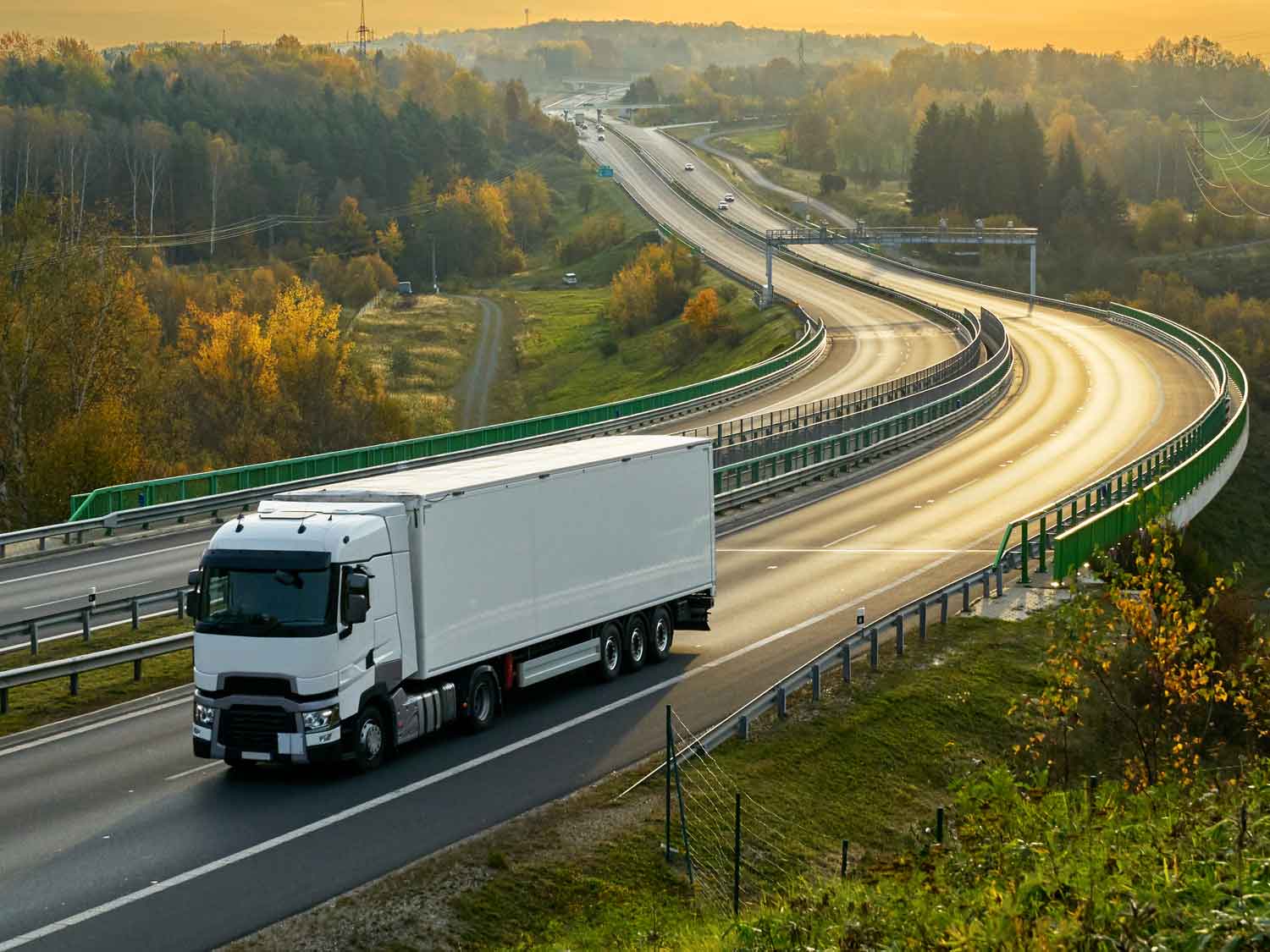
Increases in HGV road toll charges in Germany, which includes an additional CO2 emissions tax of €200 per tonne began on the 1st December 2023 and for vehicle combinations with a gross vehicle weight of up to 40 tons, prices will increase by almost 86% – giving 35.4 cents per kilometre.

The German MAUT, officially known as the Infrastructure Usage Charge or Levy, was introduced to finance and maintain Germany’s highway infrastructure.

Funding is therefore paid not only by German carriers, but all those delivering, collecting or transiting the country, with the increase in freight prices passed on by the hauliers to their customers.

Depending on the vehicle weight capacity, number of axles and the emission class there will be an increase in German MAUT ( Toll ) of circa €0.158 per km.  Therefore, if transiting through Germany from the Netherlands border to Poland, a distance of circa 700 kms using the Toll roads, this is an increase of circa €110.00 per trip. 

The 1st December was the start date for trucks with a gross vehicle weight of more than 7.5 tons, while from 1st July 2024 the German Maut system will be expanded to include vehicles with a technically permissible total weight of 3.5 tons or more.

The toll is a fixed government tax and will be charged as a cent amount per kilometre driven. In particular, the CO2 emission class, the weight, the number of axles and the pollutant class of a vehicle have an influence on the amount of the surcharge.  

On the 1st October 2023, there was a 17.6% increase in the cost of the Hungarian toll system, while Austria and the Czech Republic are raising tolls in January and March 2024, following Germany’s Maut increase. 

Austria’s tolls will increase by 20-30%, and the Czech Republic’s tolls will increase by 10-15%

The toll increases are a result of an EU directive to introduce road tolls based on CO2 emissions and ALL member states are tasked with implementing such a system by the 24th March 2024 at the latest.

Metro’s road freight teams are located close by major manufacturing and transport hubs in Birmingham, Desford and Wythenshawe.

To learn more about our expanded European capability, including our Customs Brokerage (CuDoS), European Distribution (EU/DDP), short-sea services and intermodal solutions, EMAIL Richard Gibbs. 

Road freight review; August 2023

Road freight review; August 2023

Despite the European road freight sector largely showing a picture of weak recovery, amidst an uncertain, challenging and complex market environment, our European operations are expanding and the team continues to grow.

The market moderation seen in the second half of 2022 has spilled over into 2023 and as a result, the European road freight market is projected to lose speed in 2023, expanding by only 1.4% in real terms. 

Ti’s latest State of Logistics Road Freight Survey 2023 reveals that 84% of road freight operators are currently experiencing increased pressure on margins as costs soar and demand from their customer base weakens. 

The market appears to be recalibrating after experiencing a hefty double-digit surge in 2022, but it’s doubtful that it will return to pre-pandemic conditions, especially with capacity shortages and any jump in demand from European economies might further exacerbate the shortage of drivers. 

As volumes dropped off in Q1 and 2, the correlated increase in available capacity eased pressure on rates, but capacity is often constrained by driver shortages. 

The outlook is for rates to stabilise, although seasonal demand may support higher rates and they are expected to remain at a higher level than their pre-pandemic base. 

Despite shrinking industrial production and rising costs, the need for road transport remains high in many sectors, with targeted growth and expansion within the EU road freight sector a strategic priority for Metro’s support of customers, particularly in the automotive, manufacturing, chemical and food industries.

Major investments are being ploughed into European rail freight infrastructure, including in the UK, while UK Export Finance (UKEF) is helping finance a high-speed 286 km electric rail connection in southern Turkey, conditional to UK exporters supplying the project.

On a less positive note, road transport in Germany is facing a drastic increase in the HGV motorway toll charge, to fund the development of rail infrastructure.

Berlin plans to increase the LKW-Maut toll for a 40-tonne truck from €0.19 to between €0.35 and €40 per kilometre, depending on various factors, from 1st January 2024, which means hauliers could face up to a 70-80% increase in road toll charges. 

The motorway freight traffic toll was previously used exclusively for road improvements, but from 2024 Berlin wants the increase in road tolls from the new CO2 surcharge to be earmarked for rail infrastructure modernisation, which would be a significant boost for the rail sector.

Metro’s road freight teams are located close by manufacturing hubs in Birmingham, Desford and Wythenshawe, with new recruits recently joining the latter location and commercial teams.

To learn more about our expanded European FTL/LTL capability, including our Customs Brokerage (CuDoS) and European Distribution (EU/DDP) solutions EMAIL Richard Gibbs. 

Longer lorries OK from next week

Longer lorries OK from next week

From next Wednesday the 31st May operational road transport equipment can include longer semi-trailer (LST) combinations up to 18.55 meters in length, which is an increase of 2.05 meters on today’s standard size.  

The government has calculated that the additional volume created by the extra 2.05 meter length will result in 8% fewer journeys than current trailers and take one standard-size trailer off the road for every 12 trips.

The use of longer lorries on British roads follows an 11-year safety trial, which showed that LSTs were involved in around 61% fewer personal injury collisions than conventional lorries.

The Department for Transport (DfT) says that introducing LSTs, is an important, easy and affordable measure to continue to reduce CO2 emissions from the haulage industry without significant technological and infrastructure development.

The road freight industry welcome the move, saying it would mean more goods could be transported by fewer vehicles.

Under the new rules, operators will be legally required to carry out LST risk assessments and ensure they take appropriate routes.

In addition to these new legal requirements, operators will also be expected to put in place extra safety checks including driver training and scheduling, record keeping, training for transport managers and key staff, and loading of LSTs.

Despite their extra length, the new LSTs will be subjected to the same 44-tonne weight limits as standard HGVs, but are expected to create almost £1.4 billion in net economic benefits by ensuring more goods are carried on fewer vehicles.

However the Road Haulage Association urged the government to go further by increasing the permitted weight to 48 tonnes, which will be increasingly important when the industry roll out zero-emission trucks to compensate for the increased weight from batteries.

Grant Liddell, Metro managing director commented, “Our manufacturing, retail and shipping customers depend on road transport and these new longer lorries will make a big difference, by increasing operational capacity, while reducing carbon impact and driving economic efficiencies. We welcome an initiative that will add value, while reducing congestion, lowering emissions and enhancing the safety of British roads.”

For the right type of cargos and transport situation LSTs will be a cost-efficient, environmentally prudent alternative to conventional vehicles. 

If you would like to explore the potential of LSTs and the benefits of our road transport solutions, EMAIL Matt Paxton-Rhodes to begin a conversation.