Bangladesh label

New Developing Countries Trading Scheme

The UK government launched a new preferential trading scheme, The Developing Countries Trading Scheme (DCTS) last year, to provide tariff concessions for developing countries exporting to the UK market.

The DCTS replaces the Generalised Scheme of Preferences (GSP) and extends tariff cuts to hundreds of products, including clothes and food, from specified developing countries, as part of the UK government’s efforts to replace similar EU schemes.

Like GSP, DCTS has three tiers of countries. On the first tier are LDCs; the second tier consists of countries classified by the World Bank as a low-income (LICs) or lower-middle income countries (LMICs); and the third tier includes countries that are economically vulnerable LICs or LMICs due to a lack of export diversification.

An expanded cumulation for LDCs, means they can have extended cumulation with other DCTS countries and countries with Economic Partnership Agreements with the UK and reduces trade barriers for LDCs in regional and global supply chains serving the UK.

The DCTS offers developing countries a simpler and more generous set of trading preferences and simplifies rules such as rules of origin, which dictate what proportion of a product must be made in its country of origin and removes some seasonal tariffs, in a bid to reduce red tape and lower costs, as an incentive to firms to import more goods from developing countries.

An additional 156 products are eligible for tariff reductions and more than 85% of eligible goods now benefit from zero-rated tariffs and the renaming of preference tiers from GSP to DCTS aligns with the UK's offerings in each tier, to reflect the progression of countries as their economies grow:

DCTS Comprehensive Preferences (previously GSP LDC Framework)
DCTS Enhanced Preferences (previously GSP Enhanced Framework)
DCTS Standard Preferences (previously GSP General Framework)

Under the comprehensive preference, 46 LDCs will get zero tariff facilities on all products except arms and ammunition, which means that LDC countries like Bangladesh will enjoy zero-duty tariff lines for its products until it graduates to the next level. 

After graduation from LDC, Bangladesh may be entitled to an enhanced preference regime as it is an "economically vulnerable" country based on the absence of export diversification criteria. 

Furthermore, the DCTS will allow qualifying countries like Bangladesh to access global supply chains for importing raw materials from 95 countries to export their final products to the UK duty-free under regional cumulation.

Bangladesh can also utilise the benefits of extended cumulation with UK-DCTS and UK-EPAs  (UK-Pacific economic partnership agreement with 95 countries). Cumulation with the UK, British Overseas Territories, EU, Norway, Switzerland, and group 2 countries (for intra-regional cumulation: SAARC countries except the Maldives and Afghanistan) — and in such a case, Bangladesh's tariff rates in the UK under EPA will apply. 

For such cumulation, the country must follow minimum processing rules to count as originating. For inter-regional cumulation, culminating with group 1 countries (Cambodia, Indonesia, Laos, Myanmar, and the Philippines — with Vietnam's FTA soon excluding it), a case-by-case application is needed.

DCTS is a bit more liberal than that of the EU GSP+. Under the EU's draft GSP proposal for 2024–34, Bangladesh's apparel products may face safeguard measures when the share of relevant products exceeds both 6% of total EU imports of those products as well as the product graduation threshold during that year. 

Under the new agreement, access to the enhanced preferences is based purely on the economic vulnerability of LICs and LMICs, which is considered to be a more generous approach, with eight countries becoming immediately eligible for enhanced preferences. 

The DCTS retains power to suspend any country that violates human rights or labour rights, including violations in relation to anti-corruption, climate change and environmental conventions.

Overall, the DCTS offers more generous benefits than the existing GSP and any business currently utilising GSP should review the application of the DCTS frameworks.

Our CuDoS customs brokerage platform is optimised continuously, in line with HMRC regime changes, automating and submitting customs declarations, for simple and compliant preference processing. 

To discuss your trading strategy, access to preferential tariffs and documentary requirements please EMAIL our customs expert, Andy Fitchett, who can talk you through your opportunities and options.


shopping 2

Retailers warn of delays after Red Sea attacks

Leading retailers including IKEA and NEXT have warned that the diverting of vessels aways from the Suez canal and around southern Africa will result in delays and may restrict the availability of certain products.

Re-routing container ships around Africa adds 3,500 nautical miles to a typical journey from Asia to Europe and potentially adds three or four weeks to product delivery times and with delays to deliveries threatening the availability of some products retailers are evaluating other supply chain options.

The problems have not impacted Christmas or New Year sales stock, which arrived more than a month ago, but could squeeze spring trade if not resolved shortly.

While it is not yet clear what impact late deliveries will have, it is possible that the problems could renew pressure on inflation, which has fallen to 3.9% in the UK, with the disruption already putting pressure on oil prices.

In the short term retail goods will take longer to be shipped, as they are redirected via longer routes, which means a knock-on impact to availability and prices as a result of higher transportation and shipping insurance costs.

About 19,000 ships navigate the Suez canal every year, which represents about 30% of global container traffic, so the diversion accounts for about 23.5% of current global container traffic.

The Suez Canal is consequently one of the world’s key trade routes, particularly for goods moving between Asia and Europe, and the disruption comes at a time when many retailers are trying to move orders ahead of Chinese New Year in February, when factories will close.

Some retailers have warned that with container shipping costs increasing due to the disruption, prices in the shops could rise further. 

The London Textile Fair took place this week with 300 global manufacturers including from Europe, Pakistan, Vietnam and China exhibiting.

Manufacturers have been wary about the additional expenses incurred as a result of the African diversion, with shipping costs increasing between 20% and 400%, although it appears that many retailers are taking on the surcharges. 

A number of UK retailers are instructing their vendors to ship all orders by air freight and are covering the extra costs.

Despite the Red Sea challenges the retailer and manufacturer feedback from the fair has been largely positive, with production prices in many regions stabilising compared to last year and buyers optimistic, as economic pressures ease.

Metro support retail customers’ success, by protecting their supply chains, with innovation and resilience.  

Our unique blend of experience, systems and processes means that we can introduce new methods and efficiencies to optimise global inventory, reduce shipping costs and streamline the entire supply chain. 

Please EMAIL Elliot Carlie to discuss how we can optimise your supply chain and help you overcome the challenges you currently face.

metro tech

Metro’s new LCL guru

With over 20 years' experience in freight and logistics, the majority of which has been in the ocean freight environment and specifically the LCL product, in the UK and overseas, we are pleased to introduce our new Senior LCL Commercial Manager, Jane Kenny, who is leading this critical service area.

Our comprehensive LCL services provide predictability and reliability at a competitive price. Flexible solutions, which are integrated within our global sea freight network to provide fully-managed, adaptable, reliable and customisable solutions, that meet the demands of the most demanding supply chains.

Talking about 'LCL Shipping' or 'Groupage Shipping’, when we literally group your goods with other consignments, that need to take the same route, to make up full containers, Jane said. “Our focus within LCL is on offering cost savings and sustainable solutions, especially where customers are shipping under-utilised containers.”

“We are always thinking outside of the box to keep our customers’ freight moving and rates low and because we constantly have consolidated containers moving on the major trade-routes, we are able to offer sailing schedules which meet critical transit deadlines to keep supply chains moving efficiently.“

“LCL has always been a true passion of mine, as it is such an adaptable solution for moving freight, especially when the market is facing challenges and it is the perfect choice for shippers when rate inflation and lack of space threatens traditional shipping”. 

“Geographically Metro have a powerful presence on all the major trade-routes and are particularly strong in the United States and China, with really well supported LCL services out of critical cities like Shanghai, Yantian, Shenzhen and Hong Kong, which is so important when regular FCL traffic is facing massive rate increases and service disruption.”

Metro’s global LCL solutions:

 - Dedicated pricing team for fastest quote turnaround
- In-house Metro control from load point to arrival point
- Regular LCL services covering all major trade lanes
- Fastest ocean services utilised for our consolidated containers
- LCL containers packed/unpacked at our dedicated facilities for speed and security
- Facilities linked to customs CuDoS system and our in-house specialists

Metro’s LCL services are the most cost-effective method of moving freight over long distances, offering immense cost and emission savings on air, with an exceptional number of weekly import and export departures, and the fastest transit times.

LCL services depart from all major ports worldwide and can be linked to upstream and downstream warehousing, consolidation and distribution support. We handle global customs brokerage and declarations through our CuDoS system and you can track your shipments with our AI-powered ocean visibility tools.

EMAIL Jane Kenny, to discuss your ocean freight requirements, to learn more about our LCL product, or to request a quote.

LHR BA landing

Sea freight shippers opt for air and sea/air alternatives

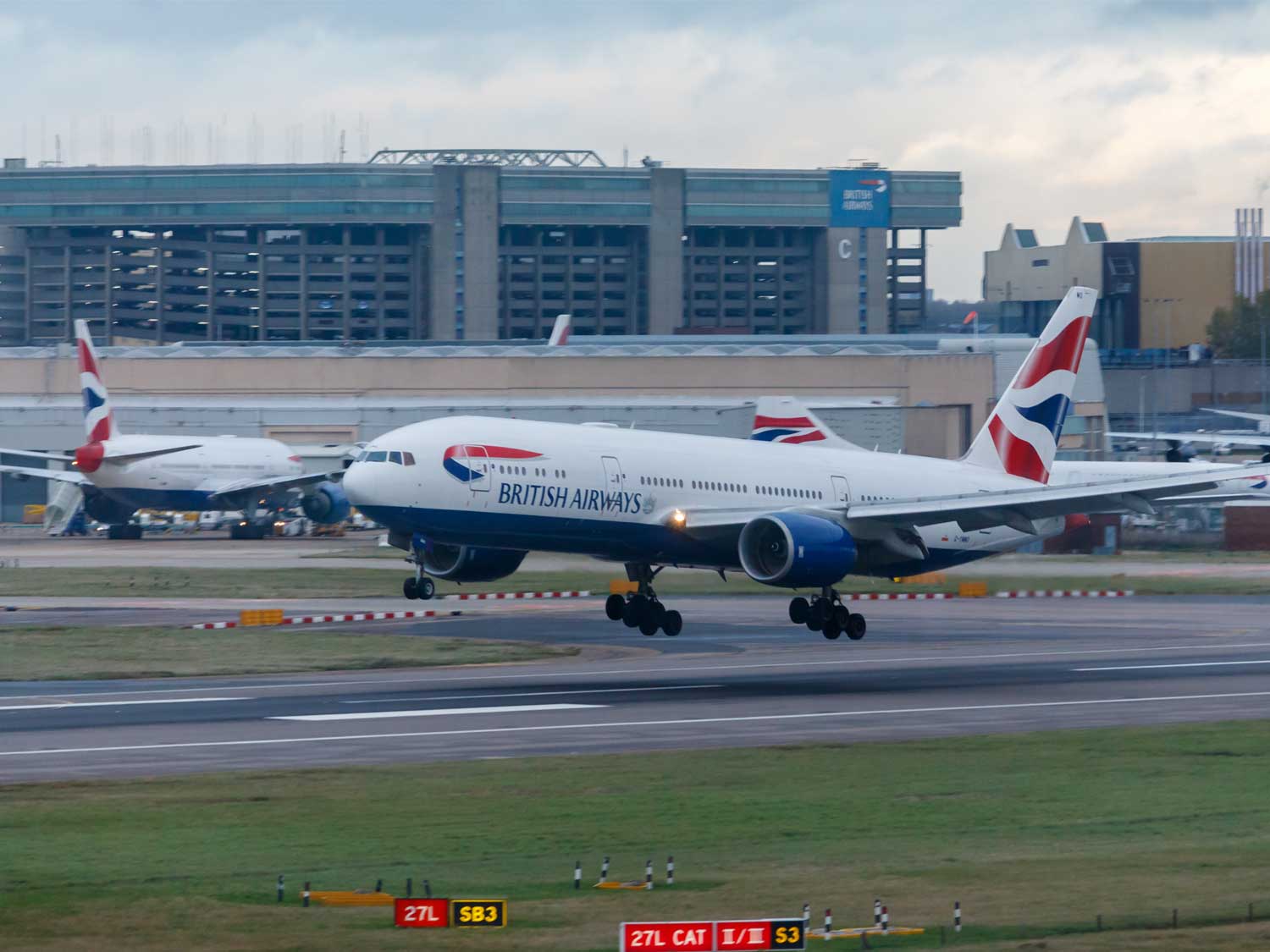
With the container shipping lines diverting around Africa until the Red Sea maritime security situation improves, the uncertainty and unpredictability that surrounds schedules could fuel demand for air cargo as shippers seek stability of services and certainty of transit times.

Air cargo demand data for last month showed a 9% year on year increase, with spot rates reaching their highest level in nine months and the dynamic load factor increasing by 3% to reach 59%.

The Red Sea ship diversions around the Cape of good Hope will inevitably cause ships to cluster at ports, leading to port congestion, worsening equipment shortages and gaps in sailing schedules, which may significantly impact global supply chains. 

Carriers will need to adjust schedules and networks, and would need to add more ships to achieve weekly or nearly weekly service frequency.

The diversion of ships away from the Suez Canal will swiftly see a million-plus containers delayed and when you factor in the knock-on effects of cash (in stock) tied up for longer, together with the fact that you don’t know how long this situation will continue means that some shippers will opt for the predictability of air cargo costing and reliability, to overcome the impact of the current sea freight disruption.

Improved stability in air cargo is encouraging a switch back to long-term, fixed-rate contracts, with deals for over six months rising to 45% of all contracts signed In the last quarter of 2023. Six-month contracts amounted to another 28% of the total market, while the share of up-to-one-month rates was just 14%.

This latest data appears to reflect stronger local market performance on key lanes and a global economy that is doing much better, but the market outlook forecast for 2024 remains modest, with an anticipated 1-2% growth in demand and a 2-4% rise in supply, though this does not take into account the potential ‘Red Sea’ effect.

Air cargo spot rates from Europe to the US were up +21% month over month in December, with the reduction in capacity helping to push up rates on this lane, while spot rates from China and Southeast Asia to Europe both rose 9% and strong eCommerce demand pushed the China to US air spot rate up 6% in December. Though these gains have subsequently fallen back, they may well recover if ocean shippers do start to look for time dependable alternatives, to hit supply chain deadlines.

Sea/Air; the effective and cost-efficient alternative

Sea/Air solutions offer an attractive blend of fast movement, defined transit times and significant economies over direct air freight.

The multimodal solution’s relative low-cost comes courtesy of a significant part of the cargo transit being undertaken by ship, from Asia, or the Indian subcontinent to Dubai, where cargo is transhipped securely and swiftly for the second transit leg, which is undertaken via air, directly to our UK hub airports, thereby completely avoiding the Red Sea problems and reducing transit times significantly.

Multimodal transport solutions like our Sea/Air solution are the best way for shippers to avoid delays between Asia and Europe and any potential land-side disruption.

Many of our customers are increasing the use of this solution, alongside their pure sea and air options, to avoid potential issues. We believe that Sea/Air should be considered to be a natural part of supply chain planning, due to the increased resilience and flexibility it offers over other modes and its lower carbon footprint compared to regular air freight.

For valuable, special and time-sensitive shipments we have a range of air freight and Sea/Air solutions, with extremely competitive rates and service combinations, to meet every deadline and budget requirement.

EMAIL Elliot Carlile, Operations Director, for insights, prices and advice.