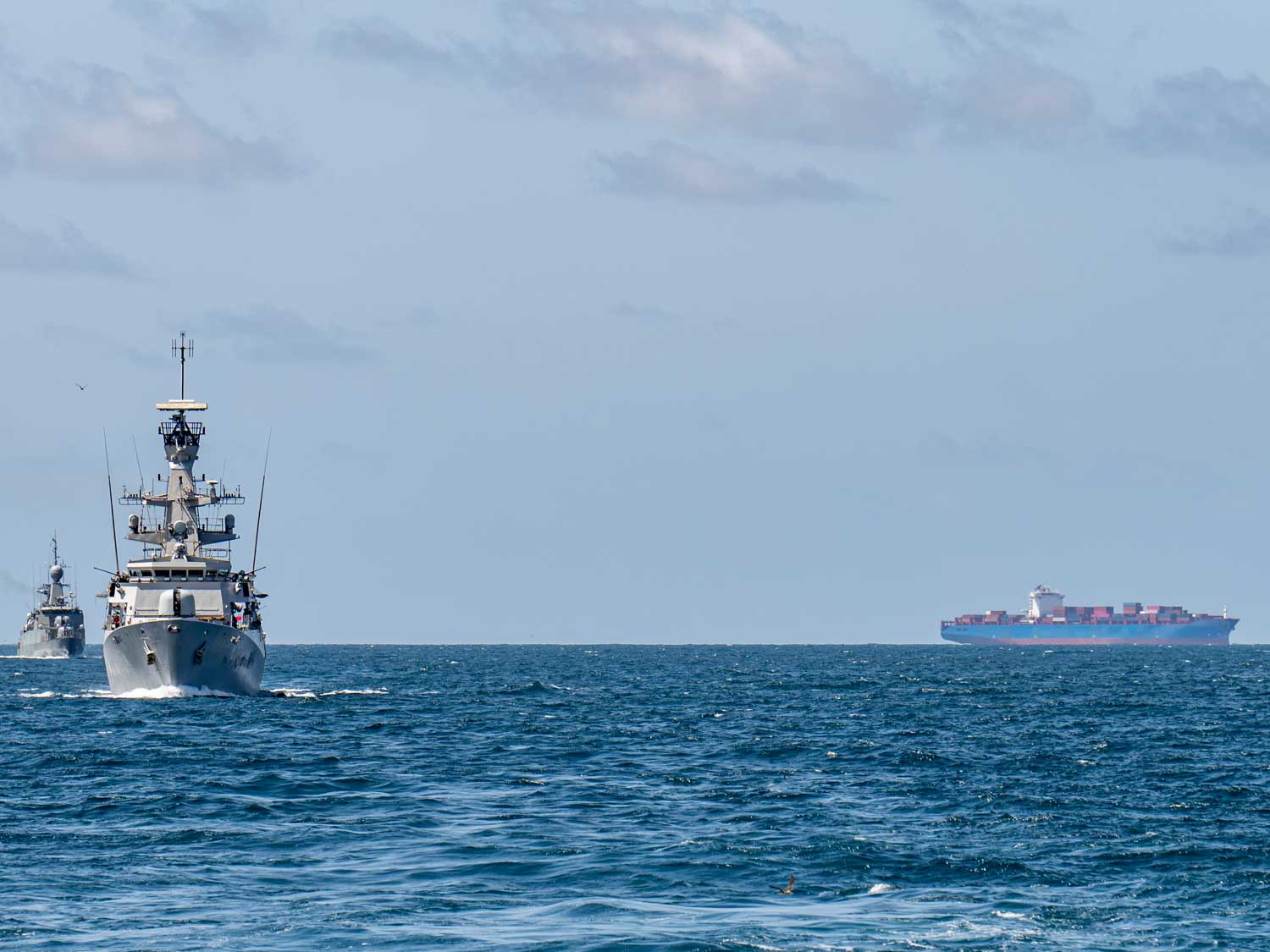
container ship and naval escort

Shipping routes likely to remain diverted until August

The diversion of container shipping around the Cape of Good Hope is expected to continue well into 2025 as carriers prioritise stability over the potential risks of returning to the Red Sea, despite recent advancements in the Suez Canal’s infrastructure

The reluctance to return to the Red Sea stems from attacks on commercial shipping by Iran-backed Houthi forces, which have created a precarious operating environment. Earlier incidents prompted carriers to divert ships around the Cape of Good Hope, and the industry remains cautious about resuming transits until the risks are fully mitigated.

Efforts by carriers like CMA CGM to reintroduce Suez services under naval protection have met resistance from shippers who fear both financial and operational uncertainties. As a result, even if the Red Sea crisis were resolved, it is likely that diversions around the Cape of Good Hope would persist for several months while confidence is rebuilt.

The logistical complexity of reconfiguring networks, combined with the risk of potential attacks, has led carriers to maintain their Cape of Good Hope detours and with the lines set to phase in new networks over February and March, further adjustments to accommodate Suez transits are unlikely before August at the earliest.

Shippers, too, are hesitant to support a return to the Red Sea. The concern is not just the extended transit times around Africa but the financial risks associated with general average (GA). If a ship were to be attacked and damaged, resulting in environmental cleanup or other liabilities, insurers may not cover GA in such high-risk zones.

Egypt has successfully tested a new 10 km extension of the Suez Canal, which allows for two-way traffic and increases the canal’s daily capacity by an additional 6 to 8 ships. This improvement also reduces the likelihood of severe disruptions, such as the grounding of the “Ever Given” in the single-lane section of the canal.

As conditions stabilise, the Suez will likely regain its position as the preferred route, but for now the added capacity is not required.

With geopolitical risks casting uncertainty over the industry, building resilient supply chains, securing comprehensive cargo insurance, and managing budgets effectively will be essential for shippers navigating the complexities of the 2025 sea freight landscape.

In this volatile market, our marine insurance cover and fixed-rate agreements on key shipping routes help minimise risk and provide budgetary stability.

To discover how Metro’s insurance solutions and fixed-rate options can support your business in 2025, please EMAIL Managing Director Andy Smith.


computer down 1440x1080 1

Freight market outlook 2025: Navigating uncertainty and change

The freight industry faces a challenging 2025, with ongoing diversions around Africa, potential labour strikes, and looming tariff changes shaping the air and sea freight landscape. 

While best and worst-case scenarios could unfold, the most likely outcome lies somewhere in between, creating a complex and dynamic environment for shippers and carriers alike.

Red sea disruptions and capacity adjustments

Persistent attacks in the Red Sea continue to divert container traffic via the Cape of Good Hope, extending transit times and keeping freight rates elevated. Even if hostilities end, a lengthy adjustment period is likely as shipping lines reintroduce Red Sea routes.

With carriers set to phase in new networks in February and March, further changes to accommodate Suez transits may not occur before August. This transitional phase could temporarily worsen congestion and delays. However, once stabilised, the market would benefit from restored transit times and reduced rates.

The reintroduction of capacity also raises concerns about overcapacity. Carriers are actively working to mitigate this risk through measures like scrapping older vessels, reducing charter fleets, slow steaming, and blank sailings. While these steps may stabilise rates, their effectiveness will depend on demand levels throughout the year.

Labour strikes and tariff impacts

Despite agreement on outstanding issues on the 8th January, the threat of strikes at US East and Gulf coast ports has not entirely lifted. And while they are theoretically unlikely, they could remain a possibility until Summer 2025.

Tariffs, on the other hand, remain a critical factor. New US tariffs in 2025, particularly on Chinese imports and goods from Canada and Mexico, could drastically reshape trade flows. Anticipation of these tariffs has already led to front-loading, as shippers move goods early to avoid higher costs. This behaviour may disrupt seasonality, creating spikes in demand and rates before tariffs take effect, followed by lower volumes afterwards. Additionally, tariffs could encourage sourcing shifts to countries like Vietnam and India, further altering global trade dynamics.

Air freight under pressure

Air freight, driven by strong eCommerce demand from Asia, enjoyed robust growth in 2024, but 2025 presents significant headwinds. Potential changes to the US ‘de minimis’ thresholds could curb eCommerce shipments, while Trump’s proposed tariffs may disrupt transpacific flows further.

Capacity constraints, already a challenge, could ease slightly if eCommerce demand slows. This would benefit transatlantic shippers, who saw air cargo spot rates from Western Europe to the US double during the 2024 peak season. However, other pressures loom, including the EU’s ReFuelEU Sustainable Aviation Fuel (SAF) mandate, which took effect on 1st January 2025, requiring a minimum of 2% SAF at EU airports—raising airline costs.

A year of uncertainty

2025 will be a year of adjustment for the freight industry as carriers and shippers navigate geopolitical risks, evolving capacity challenges, and shifting trade policies.

In addition weather related issues as a result of global warming and other environmental impact need to be considered during certain months and seasons. Hurricanes, typhoons, flooding, fires, volcanic occurrences could all have an impact in certain regions at different times.

Shippers must prepare for fluctuating demand and rates, anticipate potential disruptions, and stay informed. Flexibility and proactive planning will be key to navigating the complexities of 2025 and ensuring long-term success.

For urgent and sensitive shipments, Metro offers tailored airfreight, charter, and sea/air solutions. With block space agreements (BSA) and capacity purchase agreements (CPA), to guarantee space and competitive rates on the busiest routes.

In a volatile sea freight market, our fixed-rate agreements on popular shipping routes reduce risk and provide essential budgetary certainty. 

To explore how Metro’s carrier agreements could optimise your supply chains and save you money in 2025, please EMAIL our Managing Director Andy Smith.

car mirror 1440x1080 1

2024: Reflecting on a Dynamic Year in Global Supply Chains

As 2024 comes to an end, we look back at a year filled with extraordinary events that shaped the global supply chain landscape. From geopolitical challenges to shifts in logistics trends, the past year has underscored the importance of resilience, adaptability, and innovation in our industry.

Here are just a few of the major supply chain developments we covered and that defined 2024:

Houthi attacks in the Red Sea: The crisis continues, forcing vessels to divert around the southern tip of Africa, creating new delays and challenges for global trade.

Global RoRo capacity shortages: The shipping of automobiles was heavily impacted as carriers grappled with fleet reductions from the pandemic.

Labour unrest: Strikes surged 42% year-over-year, including a six-week standstill at the Ports of Los Angeles and Long Beach.

Port of Baltimore closure: The collision and collapse of the Francis Scott Key Bridge caused a three-month disruption.

eCommerce growth: Air freight demand soared on Asia-North America lanes as online shopping reached new heights.

ILA strike: A three-day US East Coast dockworker strike in October highlighted ongoing tensions over automation, with another strike looming in January 2025.

Global reefer shortages: The demand for refrigerated containers remains unmet, impacting perishable goods transport.

Political shifts: The re-election of Donald Trump signals potential changes in trade policies, with protectionism and tariffs on the horizon.

Shipping alliances: New alliances reshaped container shipping routes, including Maersk’s departure from Felixstowe.

Metro’s Highlights

2024 was also a year of achievements for Metro Shipping:

Air Freight Business of the Year: We were proud to receive this accolade at the Logistics UK Awards.

Road freight expansion: Our growing road freight division continues to support our clients’ evolving needs.

Publishing sector portfolio launch: We introduced tailored logistics solutions for the publishing industry.

Great Place to Work: Metro was officially accredited, reflecting our commitment to a positive and empowering workplace culture.

As we get ready to step into 2025, we are prepared to face challenges head-on, supporting our customers with expert insights, seamless operations, and innovative solutions.

Thank you for your trust and partnership in 2024.

Wishing you a wonderful holiday season and a successful year ahead.

Year of the Snake 1440x1080 1

Preparing for Chinese New Year: Avoiding supply chain disruption in 2025

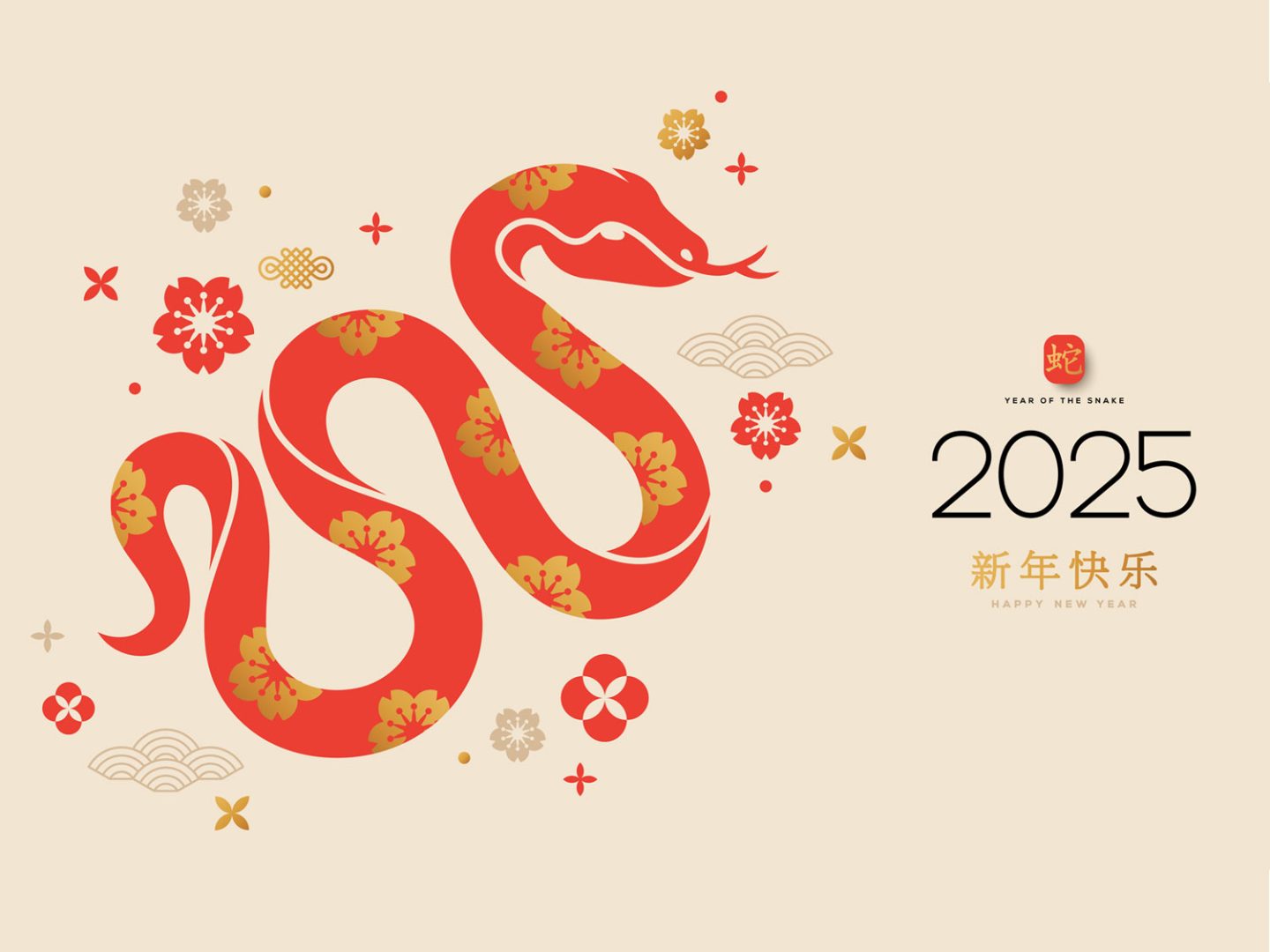
Chinese New Year (CNY) is a time of celebration across China but presents significant challenges for shippers and careful planning is essential to navigate the disruption effectively.

In 2025, the holiday officially runs from 29th January to 4th February, with its effects on production and logistics stretching weeks before and after these dates.

Production and logistics in China begin slowing well before the official holiday period. Workers start taking leave in early January, significantly reducing manufacturing output by mid-month. During the official CNY public holidays, factories, ports, and freight services shut down entirely. Although operations resume after the Lantern Festival on 12th February, it can take until mid-March for production and shipping networks to return to normal capacity.

This extended downtime creates a ripple effect across industries dependent on Chinese manufacturing, including electronics, textiles, toys, and automotive parts. The period is characterised by delayed production schedules, increased freight costs, and severe supply chain bottlenecks.

Key challenges during CNY
1. Severe delays: Factory closures lead to delayed production and delivery schedules, particularly for industries with complex supply chains.

2. Increased costs: Freight rates spike before the holiday due to high demand, often including peak season surcharges. Post-CNY, container shortages and port congestion further inflate costs.

3. Labour shortages: Even after the holiday ends, the staggered return of workers impacts production capacity, causing additional delays.

4. Inventory challenges: Businesses relying on “just-in-time” manufacturing face stock shortages as lead times lengthen significantly.

Mitigation strategies for businesses
To minimise disruption, businesses must adopt proactive strategies to maintain continuity during and after the CNY period.

Plan shipments early: Secure carrier bookings well in advance to avoid delays or last-minute surcharges. Less-than-container loads (LCL) can offer flexibility if full container capacity is unavailable.

Diversify suppliers and routes: Reduce dependency on single suppliers or ports. Consider alternative shipping methods, such as air freight, to mitigate delays.

Optimise inventory management: Build up stock levels for high-demand products before January to account for production slowdowns.

Enhance communication: Collaborate with suppliers, logistics providers, and customers to align timelines and contingency plans. Clear communication ensures all parties are prepared for potential delays.

Post-holiday recovery: Prepare for a gradual return to normalcy by staggering production schedules and allocating resources to handle delayed shipments.

Key dates to consider
22nd January to 9th February 2025: Potential for reduced production.
29th January to 4th February 2025: Official public holidays.
12th February 2025: Lantern Festival; operations typically resume.

Metro’s proactive strategies, powered by our advanced MVT technology, keep your supply chain running smoothly during Chinese New Year.

With our MVT technology, vendor management is seamless and fully transparent down to SKU level. This powerful tool empowers you to monitor every milestone in your supply chain, enabling timely and informed decisions to effectively navigate challenges.

Chinese New Year doesn’t have to disrupt your operations. With Metro’s expertise, global partnerships, and cutting-edge MVT technology, you can avoid delays, optimise costs, and maintain critical inventory levels.

EMAIL Andrew Smith, Chief Commercial Officer, today to discover how Metro can support your supply chain through Chinese New Year 2025.