US Iran flags

Middle east Crisis: global network implications

The evolving security situation across the Middle East is now materially affecting both ocean and air freight networks, with implications extending far beyond the region itself.

The Middle East is currently classified as high-risk for international transport operations, and the resulting disruption is creating a supply chain shock with no modern precedent.

Unlike isolated regional events, this situation affects two of the world’s most critical trade corridors simultaneously: the Persian Gulf and the Red Sea/Suez route.

The ripple effects are already visible.

Ocean freight: structural disruption, not just diversion

Over 2% of the global container fleet is currently positioned in or near the Persian Gulf. Several major carriers have suspended Gulf bookings or limited transits through the Strait of Hormuz.

Whereas the Red Sea disruption allowed vessels to reroute via the Cape of Good Hope, extending transit times but preserving destination access, a full restriction in the Persian Gulf removes the destination entirely for Gulf-bound cargo.

This includes major transhipment hubs handling significant volumes between Asia, the Indian Subcontinent and Europe.

Carrier responses include:

  • Suspension of high-risk sailings
  • Diversion around Southern Africa
  • Vessels instructed to seek safe anchorage
  • Potential discharge of Gulf-bound cargo at intermediate hubs

Emergency war-risk and conflict surcharges are now being applied across specific Gulf and Red Sea routes, alongside sharply rising marine insurance premiums.

The likely secondary impact:

  • Port congestion at alternative hubs such as Salalah, Khor Fakkan, Sohar, Duqm and Colombo
  • Knock-on bottlenecks at Singapore, Port Klang and Tanjung Pelepas
  • Upward pressure on spot rates as effective capacity tightens

The displacement of volume may take weeks, potentially months, to stabilise.

Air freight: capacity shock across a critical corridor

Air cargo networks are also under pressure.

Regional airspace closures affecting the United Arab Emirates, Qatar, Kuwait, Bahrain, Iraq, Iran, Israel and Jordan have significantly reduced available lift.

Global air cargo capacity is currently down by approximately 18%, with Asia–Middle East–Europe capacity falling by around 26%.

Airlines are bypassing traditional Gulf hubs such as Dubai, Abu Dhabi and Doha, resulting in:

  • Increased direct Asia–Europe flights
  • Extended routings for India–Europe and India–North America
  • Congestion at alternative technical stops
  • A potential 7–10 day backlog, even with rapid reopening

Sustained disruption could result in upward rate movement, particularly on Asia–Europe lanes.

Wider Market Impact

Energy markets have reacted sharply, increasing fuel costs for both ocean carriers and airlines. This adds further upward pressure on operating costs and may feed through into freight pricing.

What This Means for Shippers

In practical terms, customers should expect:

  • Extended transit times
  • Volatile routing patterns
  • Increased surcharges
  • Greater congestion risk at transhipment hubs
  • Potential rate fluctuations

Visibility and proactive planning are now critical

At Metro, we are maintaining continuous liaison with carriers, airlines and insurers, actively reviewing alternative routing options and communicating directly with affected customers.

As geopolitical disruption reshapes trade flows, agility and early visibility will determine how effectively supply chains absorb the shock.

We will continue to provide structured updates as the situation develops.

If you would like to review exposure across your current shipments or upcoming bookings, our team is available to support scenario planning and contingency routing.

BHX

Birmingham airport investment will enhance cargo capability

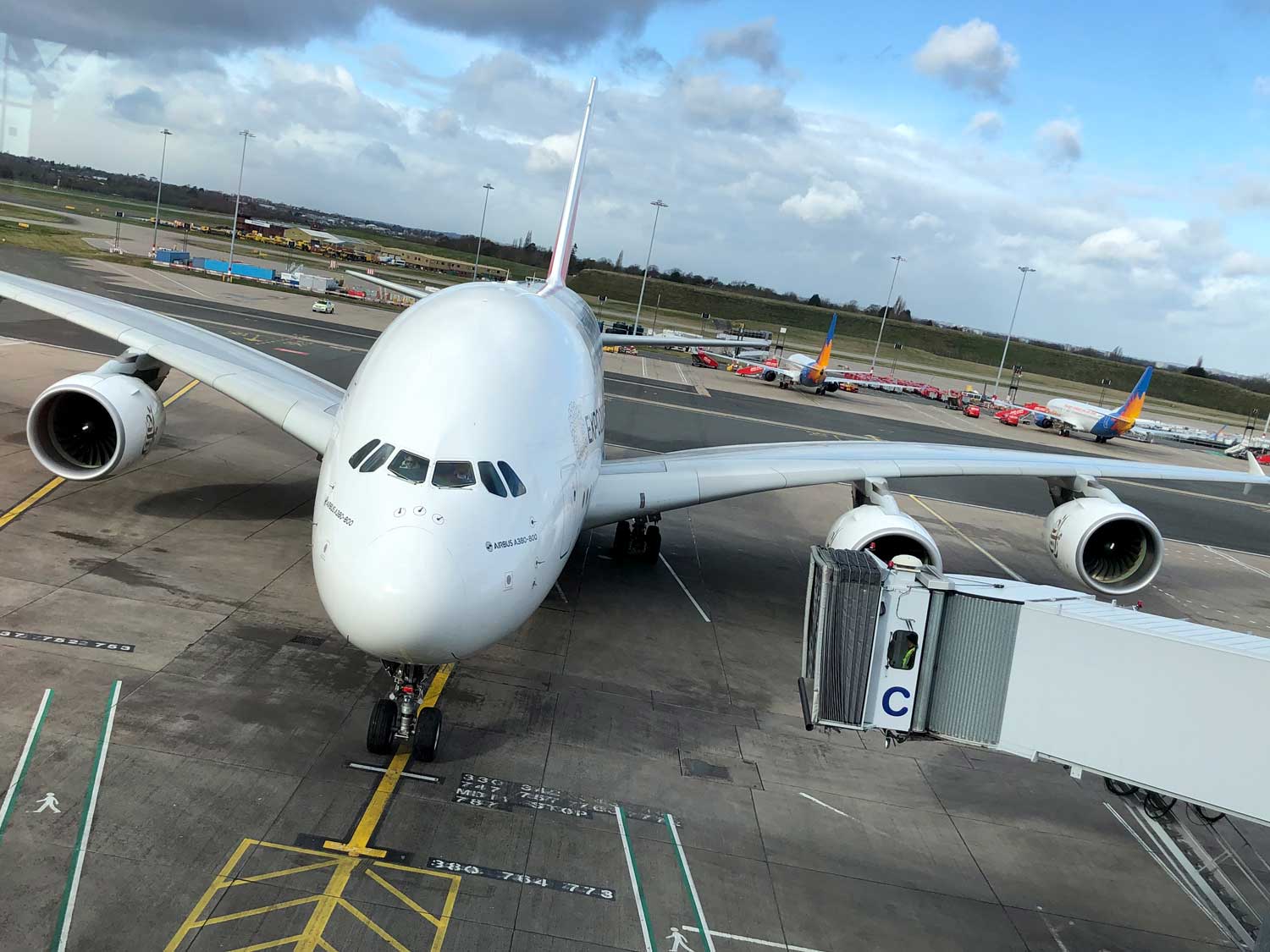
Birmingham International Airport, a long-standing strategic hub partner of Metro, has confirmed an ambitious growth programme that will strengthen its infrastructure and bolster its role in air cargo logistics and global connectivity.

Building on years of collaborative development with Metro and ground-handling partners, which have already improved cargo turnaround efficiency, expanded value-added services, and supported new freighter services into key markets, the airport is now moving into a new phase of investment. 

Major investment plan sets framework for growth

The airport has outlined a £300 million capital programme aimed at modernising key facilities and preparing for anticipated increases in passenger and freight demand. This investment includes:

  • A significant capital commitment toward terminal and airfield enhancements designed to improve operational resilience. 
  • Upgraded airfield infrastructure, including taxiway reconstruction, new aircraft stands and runway works, which will support more frequent and diverse cargo aircraft operations. 
  • Enhanced baggage and cargo handling systems, to contribute to greater throughput capacity and speed of processing for both inbound and outbound consignments. 

While the initial focus of much recent investment has been on passenger facilities, these infrastructure improvements will also benefit cargo flows by increasing overall operational efficiency and flexibility across the airport.

In parallel with capital spending, the airport has appointed a leading international consultancy to help develop its next long-term masterplan. This forthcoming blueprint will define how the airport evolves over the coming decade, taking account of technological, sustainability and market trends. 

This forward-looking strategy reaffirms Birmingham Airport’s role as a regional and international gateway that supports economic growth and cargo connectivity across the Midlands and beyond.

Complementing physical investment, broader transport links being developed around the airport — including future rail connections and improved surface access — are expected to enhance the airport’s appeal as a logistics centre. These improvements will widen the airport’s catchment area and could unlock further opportunities for cargo route development and new airline services. 

Implications for Metro’s shippers

For Metro and its customers, these expansions reinforce the strategic value of Birmingham Airport:

  • Faster turnaround times, with greater handling capacity reducing potential bottlenecks during peak periods.
  • Improved reliability and service quality as infrastructure upgrades take effect.
  • Enhanced route potential, supporting ambitions for more diverse cargo services to and from key global markets.
  • Stronger regional freight hub, strengthening the airport’s competitive position relative to other UK gateways.

Birmingham Airport’s investment and planning activities signal confidence in the growth of both passenger and cargo traffic. By modernising infrastructure and preparing for future needs, the airport is positioning itself as a more capable and flexible partner for Metro’s client community.

Metro are able to offer time critical ‘JIT’ services through the airport where freight can be transferred in minutes rather than hours from aircraft to the road. Additional customs formalities such as ATA carnets are handled swiftly and efficiently. 

Birmingham International is the UK’s fastest-growing airport and our central air freight hub, with proximity to major clients and manufacturing regions, for speed of first/final mile logistics and 90% of the UK population within a few hours drive. EMAIL our managing director, Andrew Smith, to learn more.

shopping

EU insights for ambitious UK retailers and brands

As global trade patterns shift and US tariffs reshape export economics, many UK fashion brands are re-evaluating where growth will come from next.

For an increasing number, the answer is closer to home. The European Union — a £250bn clothing market — is once again becoming a strategic priority for scalable, lower-risk international expansion.

At Metro, we are seeing a clear trend: brands that previously focused on the US are now actively re-establishing or expanding EU operations. The commercial logic is compelling, but success depends on understanding the operational realities.

Europe makes strategic sense again

Under the UK-EU Trade and Co-operation Agreement, most qualifying UK goods can enter the EU tariff-free, provided rules of origin are met.

Compared with elevated US baseline tariffs and longer transatlantic lead times, the EU offers:

  • Shorter transit times
  • Lower freight costs
  • Established e-commerce and wholesale networks
  • Cultural and style alignment
  • A large, affluent consumer base

However, while tariffs may be reduced, compliance complexity remains.

The EU opportunity is real — but it is not frictionless. Brands need to approach it strategically, with proper customs planning, VAT management and logistics alignment from day one.

Choosing your route to market

There is no single entry model. Most successful brands adopt a hybrid approach.

Marketplace Partnerships

Many UK retailers are leveraging major EU marketplaces to accelerate scale.

Benefits:

  • Immediate access to multiple markets
  • Localised checkout and VAT handling
  • Established logistics networks
  • Faster delivery and returns

However, marketplace integration is not a silver bullet. Service charges, data integration, and margin considerations must be assessed carefully.

Establishing an EU entity

Setting up a legal entity in an EU member state has become more streamlined post-Brexit.

While it requires tax and legal advice, having an EU-based operation can:

  • Simplify VAT registration
  • Improve customer experience
  • Reduce cross-border friction
  • Enable more seamless returns management

Many exporters continue to route EU goods via the Netherlands due to infrastructure strength and customs efficiency.

Wholesale & distribution

Wholesale partnerships remain a powerful growth lever.

Brands are:

  • Partnering with department stores and independents
  • Appointing local distributors in key territories
  • Entering market-by-market rather than pan-EU immediately

Europe is not homogenous. Germany is not Spain. Italy is not Poland.

Localised strategy is essential.

De-minimis changes & customs evolution

The EU is ending its €150 de minimis duty exemption.

In 2024 alone, 4.6 billion low-value consignments entered the EU under this regime. 

Regulatory tightening aims to improve compliance and level competition.

Key implications:

  • Additional handling fees likely
  • Greater customs scrutiny
  • VAT management changes
  • Phasing out of the Import One Stop Shop (IOSS)
  • Introduction of the EU Customs Data Hub (from 2028)

Regulatory tightening increases compliance cost in the short term, but it also creates opportunity. Brands that invest in structured customs processes now will gain competitive advantage as enforcement strengthens.

Ship from UK or hold EU stock?

Many retailers initially ship EU orders from their UK hub, often supported by limited EU warehousing.

As volumes grow, models evolve toward:

  • EU-based fulfilment centres
  • Regional distribution capability
  • Consolidated inventory hubs
  • Faster returns processing

Efficient third-party logistics support is critical, particularly for managing VAT, customs documentation, and reverse logistics.

Sustainability & regulatory compliance

The EU remains at the forefront of sustainability regulation.

Fashion exporters must prepare for:

  • Ecodesign for Sustainable Products Regulation (ESPR)
  • Digital product passports
  • Product Environmental Footprint (PEF) requirements

Sustainability compliance in the EU is no longer a branding choice, it is market access infrastructure.

Brands that build traceability into supply chains now will be better positioned globally as similar standards emerge elsewhere.

Long-term thinking wins

Recent tariff volatility has reinforced one lesson: international expansion requires a long-term horizon.

Successful EU strategies typically:

  • Combine DTC, wholesale and marketplace channels
  • Phase entry by priority markets
  • Invest in compliance early
  • Build local partnerships
  • Use logistics as a competitive advantage

Europe’s scale, proximity and consumer alignment make it a logical next growth chapter for UK fashion brands.

But operational detail determines commercial success.

Final thoughts

The EU is not a return to pre-Brexit simplicity, but it is a structured, opportunity-rich market for brands willing to approach it strategically.

Entering Europe successfully isn’t about finding demand — demand is there. Metro’s experts can help you design the right logistics, compliance and localisation model to serve it efficiently.

For UK retailers ready to expand, Europe is no longer a fallback market.

It is becoming the priority again.

To learn about our EU-wide logistics, compliance and localisation services, and how we can help you grow your business in the EU with confidence, please EMAIL our Managing Director Andrew Smith.

ALL supply chain workers are essential

What a cooling labour market means for supply chains

The opening months of 2026 are bringing clearer signs of a cooling UK labour market — a notable shift after several years of acute skills shortages and sustained wage inflation. 

In the logistics and supply chain sector, this transition marks a move away from emergency recruitment conditions toward a more balanced, but economically cautious, environment.

UK unemployment has risen to 5.2%, its highest level since 2021 and 0.7 percentage points above this time last year. At the same time, HMRC payroll data shows employment continuing to contract, with 43,000 fewer pay-rolled employees between November and December 2025. Overall payroll employment is now 184,000 lower year on year — the fifth consecutive monthly decline.

For logistics employers who have faced intense competition for HGV drivers, warehouse operatives and fulfilment staff, this represents a structural shift. Labour availability is improving, but it is unfolding alongside broader economic moderation rather than strong growth.

Wage growth eases

After several years of elevated pay growth, particularly in driving and last-mile delivery roles, wage pressures are now easing. Posted wage growth fell to 4.3% in December, the weakest reading since early 2022. Official ONS data shows regular pay growth at 4.5%, with real pay increasing only marginally once inflation is accounted for.

This moderation will be closely monitored by the Bank of England, as softer wage growth reduces persistent inflation risks and supports expectations of potential interest rate adjustments later in the year.

For supply chain operators, the easing in pay growth provides a degree of cost stabilisation after prolonged upward pressure on driver wages, recruitment premiums and retention incentives.

Vacancies and hiring fall

Vacancies across the UK economy have fallen to around 730,000, roughly half their mid-2022 peak. Competition for talent has therefore eased, with approximately 2.5 jobseekers per vacancy. Business surveys also point to weaker hiring intentions and a gradual rise in redundancy rates, reflecting a more fragile confidence backdrop.

In practical terms, this means recruitment pipelines are less constrained. Agency reliance may fall, lead times could shorten and workforce planning may become more predictable, particularly ahead of seasonal peaks.

After years of acute shortages, especially in HGV driving, warehousing, and forklift operations, the increasing unemployment rate and declining payrolls could lead to:

  • More applicants per role
  • Reduced recruitment lead times
  • Lower reliance on costly agency labour
  • Greater stability when planning peak‑season staffing

A Year of recalibration

Taken together, the data suggests 2026 will be characterised by labour-market recalibration rather than crisis conditions. Unemployment is rising, wage growth is normalising and hiring sentiment remains cautious. 

For Metro, the focus remains on resilience and forward planning. As global trade conditions evolve and domestic economic pressures adjust, stable workforce dynamics will play a central role in maintaining service reliability and competitive cost structures throughout the year.

EMAIL Laurence Burford, Chief Financial Officer, to find out how Metro can assist in your 2026 growth plans