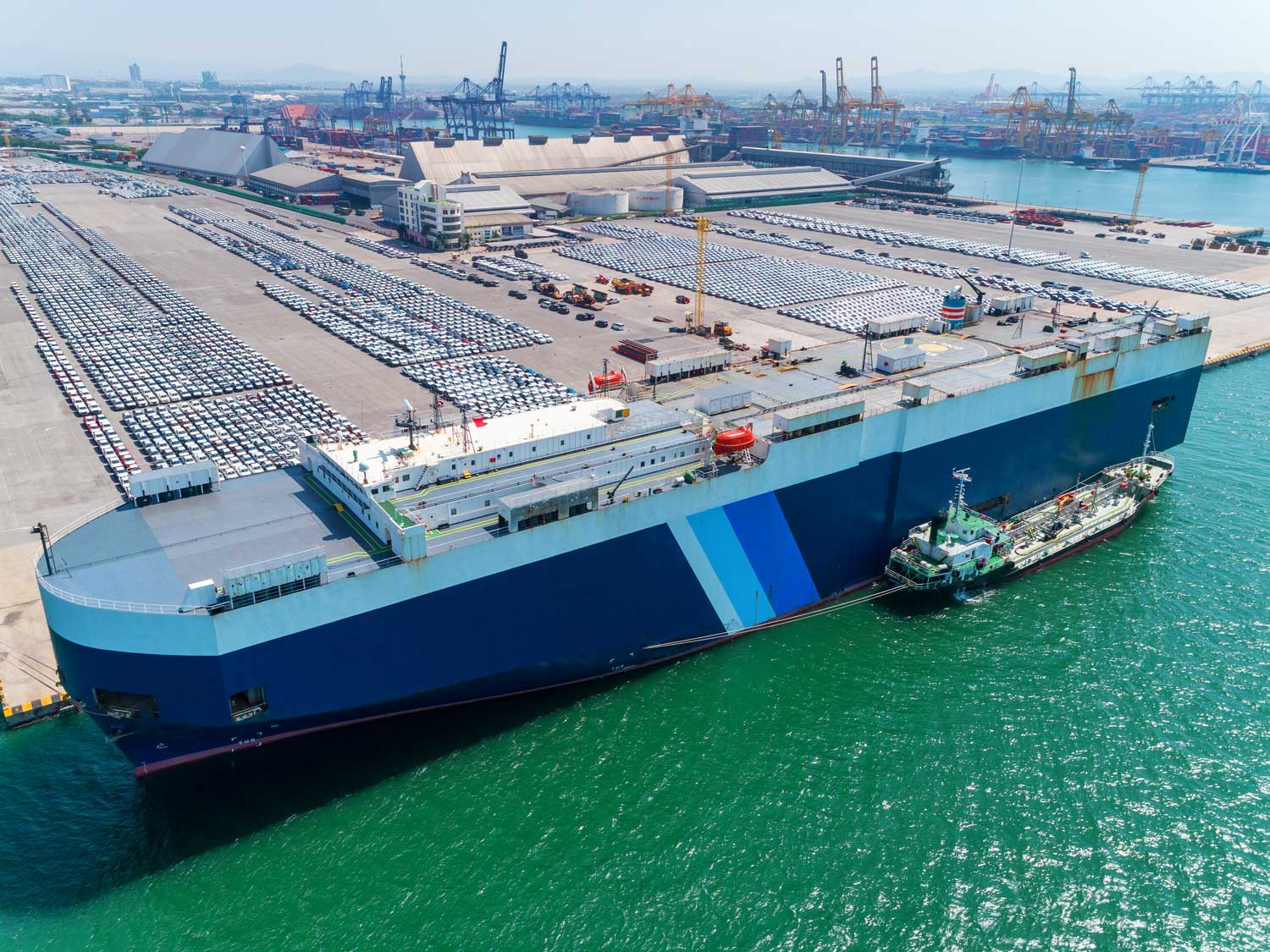
Coronavirus hits car carrier fleet

Momentum for UK Carmakers in Landmark US Trade Deal

British car manufacturers will benefit from cost savings and improved export competitiveness, following the formal implementation of the first stage of the UK–US ‘Economic Prosperity Deal’ signed at the G7 Summit on 16 June 2025.

Under the deal, up to 100,000 UK-built vehicles per year can now enter the United States at a reduced 10% tariff, down from the previous 25%. The change is part of a broader executive order issued by President Donald Trump to “operationalise” the agreement announced in May. 

The automotive tariff changes are already being enacted, with the US Commerce Secretary directed to implement them formally within seven days of the executive order and the UK government expects the new rates to take effect by the end of June.

Prime Minister Starmer described the development as “a very good day for both of our countries – a real sign of strength”, adding: “This now implements on car tariffs and aerospace our really important agreement.”

The deal represents a significant strategic win for the UK automotive sector, which relies heavily on US exports and was previously burdened by high tariff barriers. The new quota-based relief delivers meaningful margin gains for UK carmakers and positions them to grow market share in the world’s second-largest car market.

The agreement also eliminates US tariffs on UK aerospace components and jet engines, providing immediate benefits to another high-value manufacturing sector. UK exporters in both industries are now exempt from levies introduced under Trump’s broader national security tariffs, which have seen global rates surge as high as 50% for some goods.

Steel and aluminium remain under review. While the UK has been granted a temporary exemption from the newly doubled 50% global tariff, the original 25% rate still applies. Trump’s executive order outlines plans for a future tariff-rate quota on UK metal imports, with details to be finalised by the US Department of Commerce based on UK compliance with broader trade commitments and security measures.

In return for the reduced tariffs, the UK has agreed to allow expanded US market access for beef, ethanol, and select industrial goods. The inclusion of a 1.4 billion litre tariff-free ethanol quota, equivalent to the UK’s entire annual demand, has drawn criticism from domestic bioethanol producers who warn of damaging effects on local industry.

Despite this, the agreement is being hailed as a breakthrough for key UK export sectors. Speaking after the announcement, UK Business and Trade Secretary Jonathan Reynolds noted. “We agreed this deal with the US to ensure jobs and livelihoods in some of our most vital sectors were protected, and we are delivering on the first set of agreements in a matter of weeks.”

For the automotive sector, the speed of implementation, clarity on tariff relief, and reaffirmed transatlantic cooperation point to a more promising and profitable trading future.

To explore how Metro supports leading automotive brands with global logistics, visit metglob.azurewebsites.net/automotive or EMAIL our managing director, Andrew Smith, to discuss post-deal opportunities.


Trump on graph 1440x1080 1

Tariff Pause Triggers Surge in Ocean Freight Rates – But Legal Roadblocks Lie Ahead

Container shipping lines are driving spot rates sharply higher, with the 2025 transpacific peak season likely to begin earlier than usual, fuelled by a surge in US imports from Asia.

Spot rates on key routes are rising faster than during the pandemic-era boom. Carriers implemented general rate increases (GRIs) on 1 June and plan further hikes for mid-June and 1 July, seizing the moment while demand is high.

According to the WCI, Shanghai–Los Angeles rates surged 57% week-on-week, while Shanghai–New York climbed 39%. Since mid-April, West Coast rates are up 173%, and East Coast rates have more than doubled. For comparison, rates rose just 20% over the same period in 2021. Asia–Europe lanes are also rallying, with the Shanghai–Rotterdam index up 32% and Shanghai–Genoa rising 38%, the highest weekly increases in many months.

But this momentum may be short-lived, as a wave of new capacity is entering the market. On Asia–West Coast routes, supply will grow by 13% in June and 16% in July. This additional capacity is expected to blunt the impact of further rate hikes, and limit the length of the current rally.

At the same time, the legal outlook for Trump ‘reciprocal’ tariffs remains highly uncertain. On 29 May, a federal appeals court temporarily reinstated the tariffs, just one day after the US Court of International Trade ruled that the former president had exceeded his authority and ordered an immediate block. The Court of Appeals for the Federal Circuit in Washington paused that decision to consider the government’s appeal, with final briefs due by 9 June.

However, legal experts suggest that the original court ruling is on strong footing. Under the current framework, principally the International Emergency Economic Powers Act (IEEPA), presidential authority to impose broad-based tariffs is limited. The Court of International Trade ruled that Trump’s use of IEEPA to impose tariffs on non-emergency, peacetime imports likely overstepped constitutional bounds.

If the appeal fails, Trump’s tariffs will face two remaining paths: either a legislative push to expand presidential tariff authority through Congress, or a ruling from the Supreme Court. The latter remains a real possibility if the administration persists and seeks to test the constitutional limits of executive trade powers.

In the meantime, the legal limbo is prompting importers to accelerate orders while the tariffs remain suspended, adding further pressure to ocean freight markets. But with front-loading already well advanced, this year’s peak season is expected to be earlier and shorter than the usual August–October window. While carriers are determined to ride the wave of high rates, fundamentals suggest the next one or two GRIs may be the last before rates begin to level off.

With legal uncertainty surrounding US tariffs and ocean freight markets under intense pressure, early planning and expert guidance are more critical than ever.

Metro’s experienced sea freight and customs brokerage teams are here to support your transpacific and Asia–Europe supply chains, with in-market expertise and local operations in the US.

Whether you’re juggling critical shipments, reviewing tariff exposure, or seeking end-to-end compliance support, Metro has the insight and capability to keep your cargo moving.

EMAIL our managing director, Andrew Smith, today to stay ahead of disruption and secure your space at the best possible rates.

Freighter

Air Cargo Outlook Strengthens

Global air cargo demand continues to show signs of recovery, driven by seasonal trends, front-loaded shipments and shifting trade flows. However, market conditions remain volatile, with varying regional dynamics, capacity fluctuations and ongoing uncertainty.

Air cargo demand, measured in cargo tonne-kilometres (CTKs), rose nearly 6% year-on-year in April, supported by the seasonal uplift in fashion and consumer goods, pre-emptive shipping ahead of US tariff changes, and falling jet fuel prices. Month-on-month, demand rose 2.3%, building on a strong March performance and growing again in May.

Freighter capacity returns to the trans-Pacific
Freighter capacity is rising again, especially on the transPacific, as airlines cautiously reintroduce wide-body lift in response to improving demand. Asia–Europe and Middle East–Asia freighter supply grew 11%, while Asia Pacific–North America increased 8% in the first week of June.

After a sharp fall in eCommerce volumes triggered by new US tariff rules, capacity had shifted away from China–US lanes. But as volumes recover, albeit slowly, freighters are returning.

Freighter services are also being bolstered through indirect routings. Chinese carriers, for example, have added new air–air links via Hanoi to support Vietnam–US demand, while capacity from South Korea is tightening, especially for high-tech and perishables.

Tariff volatility driving unpredictable rate trends
The Baltic Air Freight Index rose 1.2% month-on-month in May, but was over 5% down win the same period in 2024. Spot freight rates on lanes out of China softened in early May before rising sharply later in the month. The spot rate index for Hong Kong was up 1% compared to April but down 6.3% year-on-year.

A patchwork of changing US tariff rules created considerable mid-month turbulence. eCommerce shipments, which made up 50% of China–US air freight in 2024, have been hit hard. The May 2 removal of the de minimis exemption for low-value shipments was followed by a brief truce and a reduction in duties. First from 145% to 120%, then to 54%, with a flat $100 fee on postal items. These changes triggered both short-term front-loading and momentary drops in volumes.

Carriers are warning that further disruptions may arise if shippers wait too long to secure capacity, especially with the current 90-day tariff truce due to end in mid-August. Late-quarter demand and compliance bottlenecks could create pressure points, especially on high-traffic lanes such as China–US and intra-Asia.

Regional variation and trade lane shifts
Rates and demand trends continue to diverge across regions. Intra-Asia demand is firm, supported by high-tech and perishables, while South Korea–US routes require bookings up to two weeks in advance. Rates from Japan to Europe are rising, though capacity from Guangzhou and other hubs has been reduced. Meanwhile, outbound rates from Vietnam and India remain lower year-on-year.

In the Americas, rates from the US to South America are significantly higher than a year ago, although some observers are beginning to flag early signs of overcapacity. Rates from Europe are mixed, and seasonal factors like cherry and peach exports are also starting to influence flows and capacity allocation.

Jet fuel remains a bright spot for airlines. Prices were 21% lower year-on-year and 4% down month-on-month, offering margin support even in the face of softening yields.

As air cargo markets navigate shifting demand and volatile rates, securing reliable space at the best rates is more critical than ever. Metro’s global air freight specialists work across key trade lanes, including Asia, Europe and the Americas, to help you air freight with confidence.

Whether you’re moving high-tech, fashion, perishables, eCommerce or anything else, our team ensures fast, reliable and cost-effective air freight solutions tailored to your needs.

EMAIL managing director, Andrew Smith, today to secure capacity, avoid disruption and keep your supply chain moving efficiently.

Bank of England

Policy Shifts and Market Volatility

As the freight and logistics sector navigates a complex global landscape, the coming week marks a period of significant policy recalibration.

From fiscal reforms in the UK and US to central bank updates and ongoing geopolitical tensions, the external environment is shifting and with it, the operational and strategic considerations for logistics providers worldwide.

UK Spending Review 2025: A Reset for Public Investment and Infrastructure
The UK’s 2025 Spending Review, delivered by Chancellor Rachel Reeves on 11 June, represents a pivotal moment in the government’s fiscal strategy. It is the first multi-year review since 2021 and is being conducted under a “zero-based budgeting” approach, meaning all departmental budgets are being rebuilt from the ground up, rather than adjusted incrementally.

For the freight and logistics industry, the review carries several key implications:

  • Infrastructure Investment: The government has committed to a 10-year infrastructure strategy, with capital spending plans extending to 2029–30. An additional £113 billion is earmarked for capital infrastructure over the next five years. Logistics operators should closely monitor how this funding is allocated, particularly for road, rail, and port projects, which are critical to freight efficiency and network resilience.
  • Skills and Labour: A new construction skills package aims to train up to 60,000 additional workers, addressing chronic labour shortages in logistics-adjacent sectors. This may ease pressure on warehousing and construction timelines while supporting the development of new logistics hubs.
  • Public Procurement and Regional Development: The review is expected to shape procurement strategies and regional investment priorities. With a renewed focus on productivity and value for money, logistics firms engaged in public contracts or operating in economically underdeveloped regions, may see new opportunities or face tighter scrutiny.
  • Sustainability and Net Zero: While full details are pending, the review is likely to align with the UK’s broader decarbonisation goals. This may include funding for green transport initiatives, clean energy infrastructure, and incentives for low-emission freight solutions.

The Spending Review also comes amid a challenging economic context, shaped by inflation, global trade disruptions, and rising borrowing costs. Freight operators should prepare for a policy environment focused on efficiency, resilience, and long-term value creation.

Compounding these challenges, UK exports fell sharply in April, with a £2 billion decline in goods exports—driven primarily by new US import tariffs. This marked the largest monthly drop on record in exports to the United States and affected most categories of goods. Manufacturing output also fell, notably in the automotive and pharmaceutical sectors, as businesses scaled back production in anticipation of higher tariffs. After months of strong performance, export activity was further disrupted by firms pulling forward shipments earlier in the year to avoid newly imposed US levies.

US Tax Reform: A New Era for Trade and Investment?
In the United States, President Trump’s proposed “big, beautiful” tax bill is advancing through Congress. The legislation includes sweeping corporate tax cuts and incentives for domestic manufacturing, which could accelerate re-shoring trends and alter trade patterns. For logistics providers, this may result in:

  • Increased Domestic Freight Demand: As US-based production expands, demand for domestic transport, warehousing, and last-mile services is expected to rise.
  • Cross-Border Complexity: Changes to trade incentives and tariffs may shift the flow of goods between the US, Mexico, and Canada, requiring agile route planning and customs expertise.
  • Capital Investment Shifts: New tax incentives may drive clients to invest in automation, fleet upgrades, or new distribution centres—creating knock-on effects across the logistics value chain.

The new tariff regime is also contributing to global trade volatility. In the UK, the economic impact of the US tariffs is already being felt, with export volumes contracting and trade-dependent sectors seeing reduced investment activity. This highlights the need for logistics providers to stay alert to evolving bilateral trade risks and respond with adaptive planning.

Central Bank Updates: Currency and Credit Market Impacts
Both the Bank of England and the US Federal Reserve have held key monetary policy meetings. The Fed is expected to update its economic outlook, while the BoE continues balancing inflation control with economic stability. The implications for logistics include:

  • Currency Volatility: Exchange rate movements can affect international freight pricing, fuel costs, and contract margins.
  • Interest Rate Sensitivity: Higher borrowing costs may influence fleet financing, infrastructure investment, and client demand—particularly in capital-intensive sectors such as construction and manufacturing.

As ever, the geopolitical landscape offers little certainty for confident decision-making. In this climate, Metro can help drive your business forward by:

  • Diversifying supplier and route networks to reduce exposure to geopolitical and trade risks
  • Enhancing supply chain resilience and responsiveness through our advanced MVT platform

EMAIL Laurence Burford, Chief Financial Officer, today to explore how Metro can support your business through ongoing global disruption.