ships at anchor

Middle East Conflict Is Rewriting the Airfreight Peak

Airfreight has always played a dual role in supply chains, providing a reliable core mode for some flows and a pressure‑relief valve when ocean networks clog up. 

The current Middle East crisis has upended that safety‑valve function; because instead of a short, sharp bottleneck, the market has shifted into a higher‑cost, more volatile place, that is already reshaping the 2026 peak season.

The initial fear was that conflict around the Gulf would trigger a sudden collapse in air capacity and an uncontrollable spike in jet fuel costs. That fearful initial phase has now passed, but pricing has not returned to pre‑crisis norms. Freight indices show global air rates holding well above early‑2026 levels, with some Asia–Europe spot rates doubling by April and still sitting nearly 75% above pre-war levels.

Fuel surcharges are no longer climbing week by week, but they remain dramatically higher than at the start of the year. The air cargo market is not spiralling upward, but it has clearly found a new, elevated pricing floor.

Capacity returns, but on new terms

Freighter lift grew around 3% month‑on‑month in April, reversing earlier declines, although week‑on‑week growth has slowed as airlines add capacity cautiously. Gulf carriers have been rebuilding their schedules, with strong month‑on‑month growth on Asia–Middle East and Europe–Middle East lanes, and major integrators have restored intercontinental flights into Bahrain, Dubai and other Gulf hubs from Europe and Asia.

Regional airspace is open again, albeit with corridors, pre‑approvals and routing constraints. Network operators have re‑established connections that link Europe, Asia and Africa through the Middle East, and are gradually extending services deeper into the region. Backup hubs in places such as Riyadh and Muscat remain in use while the security picture stabilises, but some carriers have also found alternative “mid‑points” in India and South‑East Asia to recover Asia–Europe capacity.

Other operators remain more cautious. Some European freighter airlines are still avoiding most Middle East stops, citing airspace and security concerns, and are waiting on further guidance from aviation security authorities before fully reopening networks. Major Asian carriers have delayed the resumption of certain passenger and freighter services into Riyadh and Dubai, even as they add freighter capacity into Bangkok, Vietnam and other South‑East Asian gateways.

Recent rate data shows some easing out of major Asian hubs and on Europe–US and Europe–Gulf routes, but pricing remains historically high. Outbound Heathrow rates, for example, are still more than 40% above last year. Refineries in Europe, the US and West Africa have shifted output towards aviation fuel, airlines have rerouted networks and trimmed weaker services, and capacity is being deployed with unusual discipline. Together, these factors are preventing a rapid collapse in pricing.

What this means for the “traditional” air peak

In a normal year, shippers would expect a relatively quiet summer followed by a steady build‑up into the late‑Q3/Q4 peak. Middle East disruption has scrambled that pattern in three important ways:

  • The market has already experienced “mini peaks” in Q2, as conflict‑related diversions and fuel shocks pushed rates to levels normally associated with peak season.
  • With airspace constraints, elevated fuel costs and tight capacity discipline, the system has less slack than usual. The ability to “pivot to air” from ocean at short notice is weaker.
  • Geopolitical risk now appears to be permanently repriced into airfreight. Even if the Gulf situation stabilises, fuel surcharges and base rates are likely to remain volatile, and the industry is planning around that assumption with more frequent surcharge adjustments.

For UK shippers, the implication is that 2026’s airfreight peak is less about one clear season and more about a longer period of heightened risk, with short, unpredictable demand spikes layered onto an already expensive base. Treating the whole second half of the year as potentially “peak‑like”, budgeting for higher air costs, and pre‑booking critical flows on key lanes will be essential to avoid being caught out.

Metro works closely with airlines and partners to secure capacity, identify alternative routings and maintain reliability in a disrupted market. If your supply chain depends on airfreight, EMAIL our Managing Director, Andrew Smith, to protect space, manage cost exposure and keep your cargo moving.

China flag and ship

China’s New 2026 Supply Chain Laws: What You Need to Know

China is rewiring the legal framework around its ports and supply chains and that matters for every UK shipper moving goods to, from or via China. 

Two new sets of rules in 2026 change who controls disputes, how far you can probe your supply chain, and how China may respond to Western sanctions and due‑diligence demands.

Below we set out what’s changing and what Metro’s customers should be thinking about.

New maritime law puts China’s courts in the driving seat

From 1 May 2026, China’s revised Maritime Code gives Chinese law a much stronger role in contracts of carriage linked to Chinese ports. Where the port of loading or discharge is in China, Chinese courts can apply Chapter IV of the Code to carriage contracts even if the bill of lading or sea freight agreement points to English law.

Law firm HFW has called this a “substantive change”, noting that “chapter four of the Chinese Maritime Code will apply to a contract of carriage regardless of whether or not another law has been incorporated or chosen by the parties”. In effect, if governing‑law and jurisdiction clauses are unclear, Chinese courts now have more room to assert jurisdiction over disputes involving cargo moving through their ports.

Trading agreements often choose English law and London arbitration, while the carrier’s bill of lading may point a different way. The question is whether, in a dispute, a Chinese court will treat the bill of lading as the main contract and apply Chinese law, despite what the trade agreement says.

Some industry experts see this as part of a broader strategic move, to encourage a switch from FOB to CIF terms so that Chinese exporters control freight, insurance and crucially litigation on home turf.

However, any FOB to CIF shift is commercial, not legal, and Incoterms are an international standard which means that FOB remains fully available for China–UK trade, where the buyer wants to control the main–carriage contract and freight costs.

So, China’s legal changes don’t cancel FOB, and UK buyers can still insist on FOB terms and book their own freight, provided the contracts and practical behaviour match that intention.

Supply chain security rules: due diligence under pressure

Alongside the maritime reforms, China has introduced its first comprehensive Regulations on Industrial and Supply Chain Security, effective 31 March 2026. These rules treat supply chains as part of national security rather than a purely commercial matter, bringing them under the oversight of economic, security and cyber authorities.

The most sensitive provision for Western companies is Article 13, which restricts “information gathering activities” related to industrial and supply chains where these are found to breach Chinese law. The language is broad and undefined, creating uncertainty about whether standard due‑diligence activities, which can include supplier questionnaires, ESG audits, human‑rights assessments or on‑site inspections, could fall within the scope.

This sits uneasily alongside emerging Western rules such as the EU Corporate Sustainability Due Diligence Directive and US forced‑labour legislation, which expect companies to map supply chains and scrutinise suppliers in detail. Legal commentators warn that “the new law creates a direct and unresolved conflict between Chinese law and Western due diligence obligations”, with companies potentially facing legal risk in China for work they are required to do under EU or US law.

The regulations also give authorities wide powers to respond to perceived threats to supply‑chain stability. Investigations can target foreign organisations and individuals where there is a “risk or threat” of harm, not just proven damage, and can lead to restrictions on trade, investment and cooperation in China, along with travel or work limits for individuals.

Counter‑measures against foreign sanctions

A companion set of rules – the Regulations on Countering Foreign Improper/Unjustifiable Extraterritorial Jurisdiction, in force from early April – strengthens China’s ability to push back against foreign sanctions, export controls and data‑disclosure demands applied extraterritorially.

These sit alongside the Anti‑Foreign Sanctions Law, blocking rules and the “unreliable entities” regime, creating what one firm describes as an “integrated counter‑sanctions system”. Authorities can investigate and penalise organisations and individuals who implement or even “promote” foreign measures seen as discriminatory towards China, with tools ranging from import and export restrictions to asset seizures and visa bans.

This framework has emerged against a backdrop of heightened geopolitical tension, including Western tariffs and probes into China’s exports, secondary‑sanctions risks around Iran and disputes over strategic assets like the Panama Canal.

What shippers should do

None of this means that trading with China will suddenly stop or that every UK shipper is about to be investigated. But the risk environment has clearly changed, and it is worth taking some practical steps:

  • Check bills of lading, trade agreements and framework contracts to see where Chinese ports are involved, what law and jurisdiction are specified.
    Strengthen English‑law and arbitration provisions and clarify that higher‑tier agreements take precedence.
  • Talk to your insurers about how the revised Maritime Code might affect liability, claims handling and cover for China‑linked moves.
    Consider obtaining Chinese‑law input on key routes or contracts where your exposure is greatest.
  • Map which parts of your ESG and human‑rights due diligence involve Chinese suppliers or sites.
  • For higher‑risk work, such as auditing sensitive regions or investigations linked to sanctions, seek specialist advice on how to stay compliant with both Western obligations and Chinese restrictions.
  • Be mindful of public statements about “decoupling from China” or “boycotting” particular regions. These may be read as aligning with foreign measures and may increase regulatory attention in China.
  • Align messaging between compliance, procurement and communications so that necessary changes to your supply chain are framed around resilience, quality and legal compliance, not politics.

For Metro’s customers, the key takeaway is that China is now using law as an active tool of supply‑chain strategy. Understanding how these new rules work, and adjusting contracts, due‑diligence programmes and communication strategies accordingly, will help keep goods moving while managing a more complex risk landscape.

If you have questions or concerns about any of the developments outlined here EMAIL our Managing Director, Andrew Smith.

EU UK negotiations 2

UK–EU reset could ease border friction for importers and exporters

On 13 May 2026, the King's Speech set out the government's plans for the next Parliamentary session, including efforts to reset post-Brexit relations, forge closer economic ties with the EU and reduce unnecessary barriers to trade.

The reset is not a return to the single market or customs union. Instead, it is being presented as a targeted attempt to stabilise the trading relationship through closer alignment in specific areas where the government believes reduced friction could support growth, cut costs and improve supply chain efficiency. 

SPS alignment could simplify GB–EU border processes

The government intends to pass legislation by the end of 2026 to enable an SPS agreement with the EU to take effect by mid-2027. The agreement would cover animal and plant health, food safety and related agri-food rules, with the UK aligning to relevant EU legislation in order to ease border procedures.

SPS controls have been among the most disruptive post-Brexit trade barriers, creating additional documentation, inspection, certification and timing challenges at the GB–EU border.

A veterinary-style agreement could reduce the need for some routine checks and help make border movements more predictable. For exporters, this may improve access into EU markets. For importers, it could reduce delays, compliance costs and uncertainty when bringing goods into Great Britain.

Emissions trading alignment could reshape supply chain costs

Alongside the SPS agreement, the government is also negotiating closer alignment between the UK and EU emissions trading schemes (ETS), designed to reduce regulatory divergence and support longer-term industrial and energy cooperation. 

For businesses involved in manufacturing, energy-intensive production, transport and international trade, the implications could extend well beyond environmental policy.

A linked or more closely aligned ETS framework could help reduce friction for exporters trading into Europe, particularly as the EU continues expanding carbon-related trade measures and compliance requirements. It may also provide greater long-term certainty for businesses operating across both UK and EU markets.

Dynamic alignment brings certainty but also new compliance considerations

The proposed reset relies on dynamic alignment in selected areas, meaning UK rules would keep pace with relevant EU law as it evolves. This is central to the government’s ambition to reduce border friction, because smoother trade processes depend on both sides recognising equivalent standards.

For logistics and supply chain teams, this could provide greater medium-term certainty over the regulatory framework affecting GB–EU trade. However, it also means businesses will need to monitor changes in EU rules that may flow into UK requirements over time.

The wider political debate remains active. Critics argue that dynamic alignment could reduce UK regulatory flexibility, while others want the government to go further and pursue a customs union. 

What this means for UK traders

The direction of travel may point toward a less burdensome GB–EU trading environment, but the more realistic reading is:

  • Customs declarations are not going away simply because an SPS deal is agreed.
  • Rules of origin issues are not being removed by the reset as described in this briefing.
  • What may improve is the regulatory layer sitting on top of customs processes for certain categories of goods, especially agri-food.

That distinction matters, because a truck can still need customs processing even if SPS checks become lighter or less frequent.

So the likely benefit is not “no border”, but a border with fewer SPS-related interruptions, fewer compliance mismatches and a lower chance that a shipment is delayed because UK and EU technical rules have drifted apart.

Importers and exporters should now review where SPS controls, border checks, certification or documentary requirements are creating cost, delay or uncertainty in their supply chains. They should also assess whether current customs and compliance processes are flexible enough to adapt as the UK–EU framework develops.

As the UK–EU reset develops, Metro is helping customers assess how changing customs procedures, SPS requirements and evolving regulatory alignment could affect their supply chains, transit times and compliance obligations. 

Through integrated freight forwarding, customs support and cross-border logistics expertise, Metro helps businesses prepare for changing GB–EU trade conditions and maintain efficient cargo flow across European supply chains.

EMAIL Managing Director, Andrew Smith, today to learn more.

Hormuz satellite

Middle East disruption continues as Metro scales contingency solutions

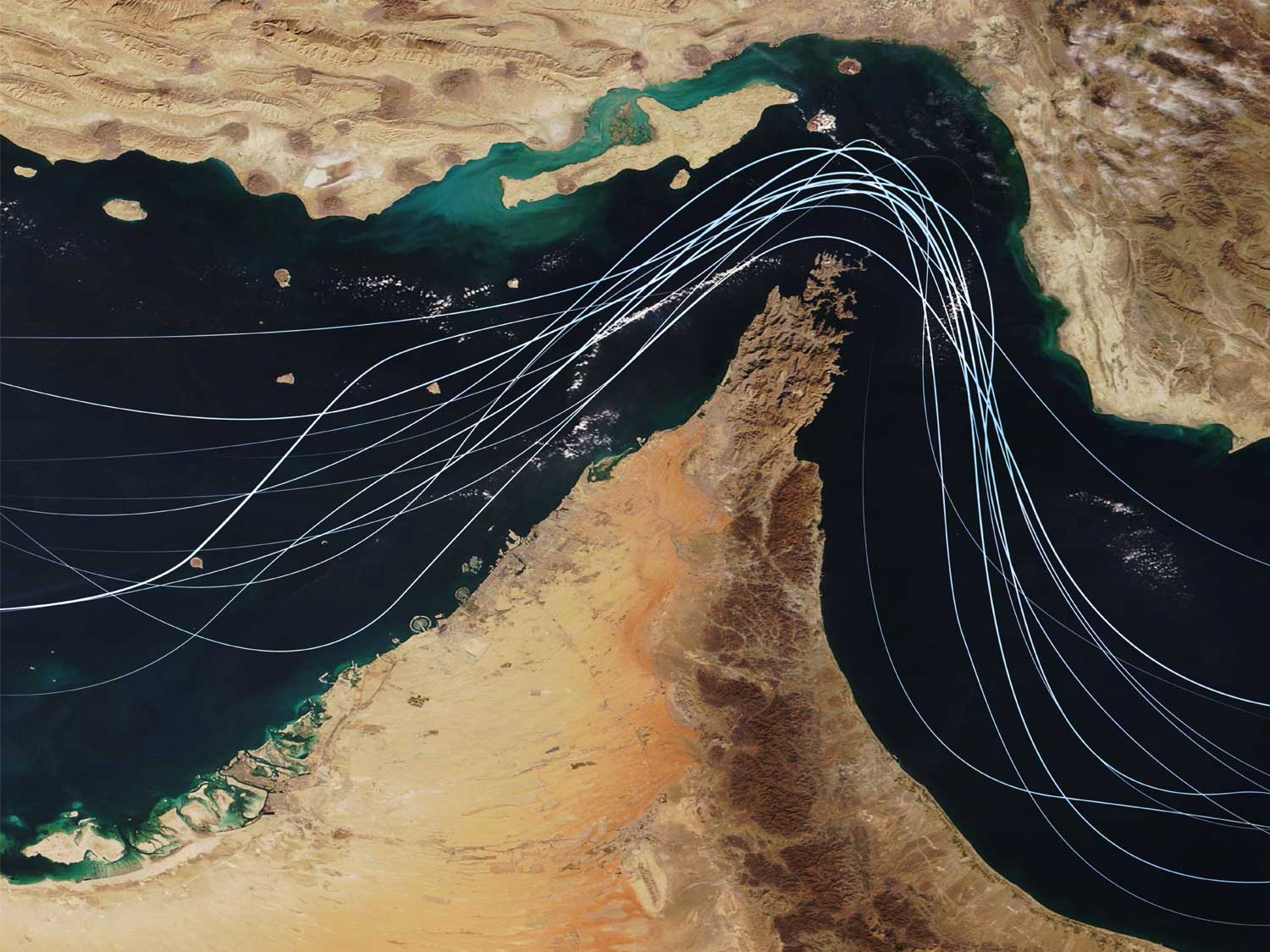
The extension of the US–Iran ceasefire has done little to stabilise operating conditions in the region, with last week’s seizure of two MSC-managed container vessels by Iran’s Islamic Revolutionary Guard Corps in the Strait of Hormuz. 

The incident highlight the ongoing risk to commercial shipping and reinforces the reality that access through Hormuz remains severely constrained, with container flows through the Strait largely suspended.

Land-bridge solutions under pressure as demand surges

As traditional shipping routes have been disrupted, supply chains have shifted rapidly towards alternative solutions, particularly land-bridge routes across the Gulf.

However, these corridors are now under significant strain. Demand for trucking capacity has surged well beyond available supply, with rates on key lanes such as Jeddah to the UAE rising four to five times above pre-conflict levels.

Jeddah has become the primary gateway following security concerns at Khor Fakkan and Salalah, concentrating volumes into a single entry point and creating further bottlenecks. In some cases, demand for road capacity has reached multiples of available supply, driving sharp price escalation and limiting flexibility for shippers.

Operational disruption now outweighs capacity availability

One of the defining characteristics of the current market is that disruption is being driven less by a lack of physical assets and more by how networks are operating.

Ocean carriers are navigating around both the Red Sea and Hormuz, adding 15–20% to voyage distances, increasing fuel consumption and reducing effective capacity. At the same time, global port congestion has exceeded 3 million TEU, further impacting reliability. 

Airfreight networks are also adjusting to restricted airspace and reduced Gulf capacity, while road freight is absorbing increased volumes through regional corridors, adding complexity and extending transit times.

The result is a market where capacity exists, but is harder to access, less predictable and more expensive to deploy.

Pricing volatility accelerates as fuel and disruption outpace contracts

Freight pricing is struggling to keep pace with the speed of change.

Across ocean freight, emergency bunker surcharges are now widely applied, while traditional fuel adjustment mechanisms lag behind real-time cost increases. In airfreight, fuel surcharges are being revised more frequently as jet fuel prices continue to rise. In road freight, fuels costs typically represent over 30% of operator costs, placing short-term pressure on carriers and increasing the likelihood of further cost pass-through. 

The situation is further complicated by simultaneous pressure across multiple global chokepoints.

Disruption linked to the Strait of Hormuz is occurring alongside continued Red Sea instability and wider geopolitical friction across key corridors. This has created a structurally higher-risk operating environment, where any escalation can quickly remove capacity, extend transit times and increase costs across all modes. 

Scaling solutions to maintain cargo flow

In response, Metro has significantly increased its operational focus on the region, with time dedicated to resolving Middle East-linked problems rising by more than 1000%.

The focus is on execution: ensuring cargo continues to move and that shipments already in transit are delivered using the most effective available solution.

Metro is actively supporting customers through:

  • Dynamic re-routing of in-transit cargo, avoiding disruption hotspots
  • Alternative gateway strategies, identifying viable entry points outside high-risk zones
  • Airfreight deployment, where speed and reliability are critical
  • Land-bridge and multimodal solutions, maintaining flow where ocean routes are constrained

This flexible, hands-on approach is essential in a market where conditions are changing rapidly and pre-planned routes are no longer sufficient.

If you have cargo moving to, from or through the Middle East, or shipments currently held en route, Metro can help you identify and implement the most effective resolutions.

EMAIL Managing Director, Andrew Smith, today to secure capacity, protect transit times and keep your supply chain moving in a rapidly changing environment.