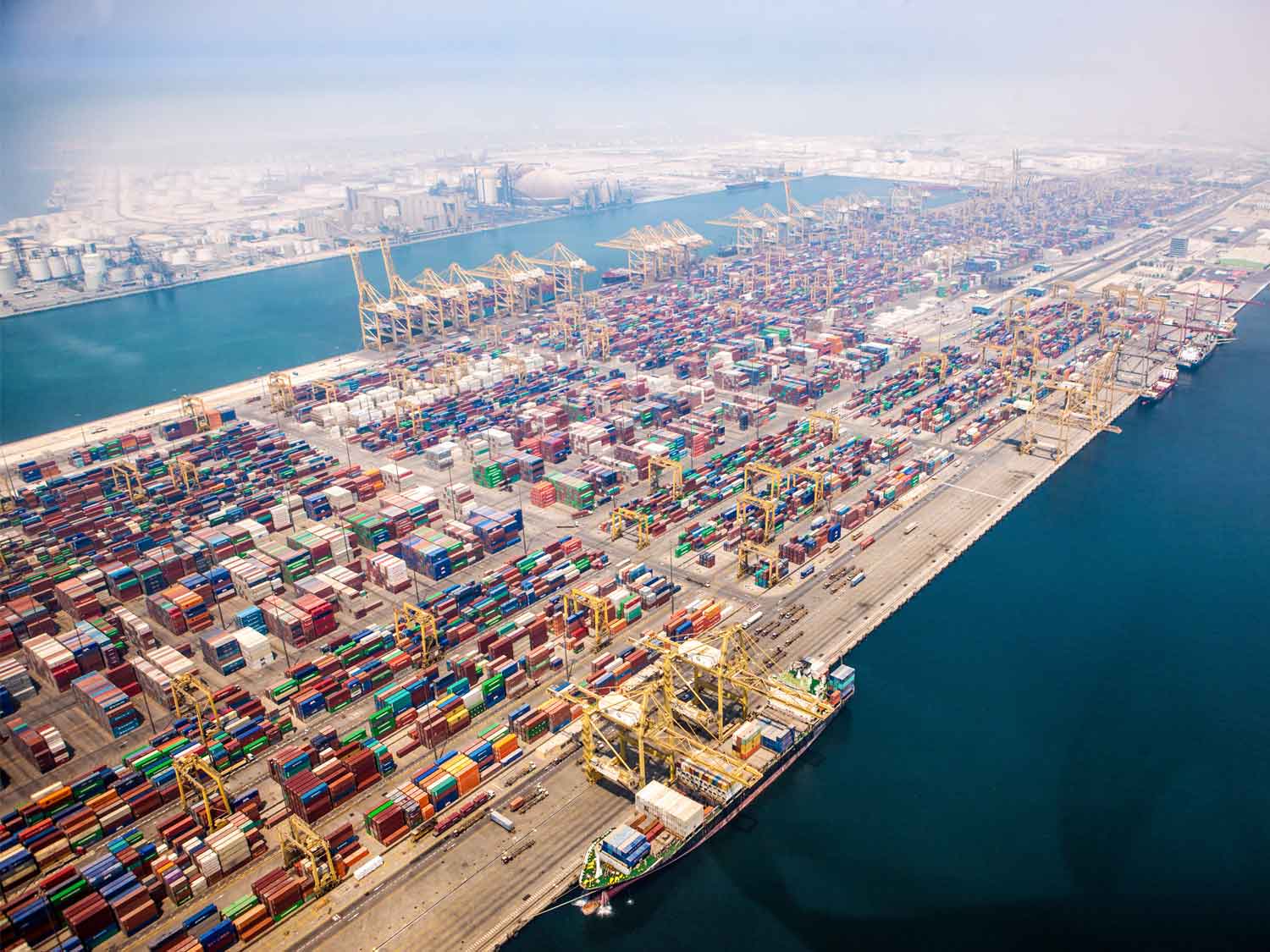
Jebel Ali

Middle East disruption continue to reshape global supply chains

Middle East linked disruption extends well beyond the region, with growing implications for global supply chains. 

As capacity tightens, routes are reconfigured and costs come under pressure, supply chains are entering a more complex and less predictable phase.

Air freight capacity tightens

Air freight markets are among the most immediately affected. Reduced capacity through key Gulf hubs — which typically handle a significant share of global cargo flows and particularly Asia — has forced airlines to reroute services and limit network coverage.

Market data indicates that capacity reductions in parts of the Middle East and South Asia have been significantly steeper than the decline in volumes, creating a sharp imbalance between supply and demand. As a result, rates on some key east–west corridors have risen by more than 50% week on week, with spot pricing increasing at an even faster pace.

Cargo is increasingly being redirected via alternative gateways such as China and Hong Kong, placing additional pressure on corridors that were previously less affected. This is tightening capacity across Asia–Europe routes and contributing to delays, space shortages and short-notice schedule changes.

At the same time, rising fuel costs and the introduction of war risk-related surcharges are adding further upward pressure, while rate validity is shortening as carriers respond to rapidly changing conditions.

Ocean disruption drives congestion, diversion and equipment imbalances

Ocean freight is facing a different but equally significant set of challenges. The effective closure of the Strait of Hormuz — a corridor that typically handles a substantial share of global energy flows — has led to a dramatic reduction in vessel transits, with movements down by around 95% compared to normal levels.

Shipping lines have suspended services into the Arabian Gulf and are diverting vessels to alternative ports, where cargo is being discharged and held for onward movement. This is creating a knock-on effect across surrounding regions.

Ports outside the Gulf are now absorbing unexpected volumes. Congestion levels at key contingency hubs have reached critical levels, with some locations operating at or near full capacity and vessel waiting times extending well beyond normal ranges.

At the same time, an estimated 200,000+ TEU of capacity remains effectively trapped within the Gulf, contributing to equipment shortages in Asia as empty containers are unable to return to origin markets. This imbalance is expected to place further pressure on export flows in the coming weeks.

Rising bunker costs are also beginning to influence vessel operations, with some operators reducing sailing speeds to manage fuel consumption, adding further variability to transit times.

Costs rise as surcharges and fuel pressures build

Across both air and ocean freight, cost pressure is becoming more pronounced. Emergency surcharges linked to fuel volatility, war risk and network disruption are being introduced or expanded across multiple trade lanes.

Air freight rates have already increased sharply on key routes, while ocean carriers are implementing additional charges to reflect higher operating costs and longer routing distances. In parallel, regulatory scrutiny is increasing, particularly around how surcharges are applied and communicated.

For shippers, this is creating a more complex cost environment, where pricing can change quickly and visibility is reduced.

The past few weeks have highlighted how quickly supply chain assumptions can change and how important it is to have flexible, well-informed contingency options in place.

Metro is supporting customers by identifying alternative routings, securing capacity across air and ocean networks, and maintaining close operational control as conditions evolve.

To discuss how this situation could impact your supply chain, or to review practical routing and cost options, EMAIL Andrew Smith, Managing Director at Metro, for a direct and informed response.

rail freight

Cross-Channel rail freight set to strengthen UK–Europe intermodal links

Plans to reintroduce regular cross-Channel rail freight services are moving forward, signalling a potential shift in how goods move between the UK and mainland Europe. 

As investment in infrastructure gathers pace, rail is re-emerging as a viable complement to established road and sea routes.

A government-backed agreement to redevelop the Barking Eurohub in east London is expected to play a central role in restoring regular rail freight services through the Channel Tunnel.

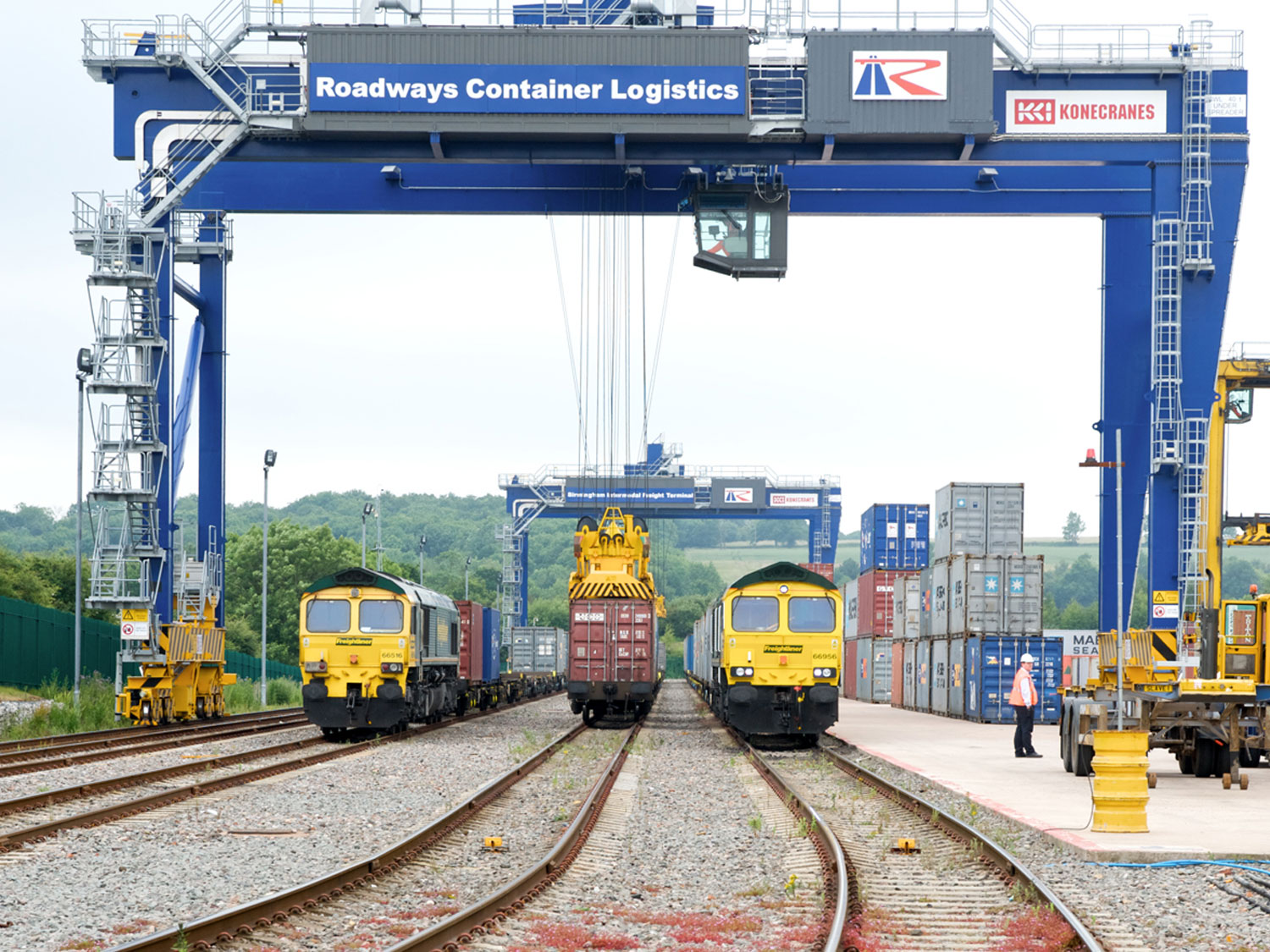
The site is being positioned as an international logistics hub, supporting intermodal trains that can move containers seamlessly between rail, road and sea. This would enable more direct connections between the UK and key European markets including France, Germany, Italy and Spain.

Currently, only a limited volume of rail freight passes through the Channel Tunnel, with most UK–EU cargo continuing to rely on short sea crossings and onward road transport. 

The planned expansion of intermodal rail services is intended to rebalance that model and provide greater flexibility for cross-border supply chains.

Rail offers an alternative to congested road and port networks

The renewed focus on rail comes at a time when road and port infrastructure across the UK and Europe is under increasing pressure.

Shifting a greater share of freight onto rail has the potential to reduce congestion on key corridors in the south-east of England, while also improving transit predictability for certain flows. For shippers, this introduces an additional routing option that sits between road and sea in terms of both speed and cost.

Rail freight volumes have already been growing steadily, with increases of around 5% year on year and further gains in intermodal traffic. Forecasts suggest continued growth over the coming decade, supported by both infrastructure investment and policy commitments to expand rail’s role in the supply chain.

Unlocking new options for UK–Europe trade

The return of regular cross-Channel rail services could create new opportunities for both imports and exports.

For UK businesses, this includes more direct access to European markets for a wide range of goods, as well as improved inbound flows of time-sensitive products such as food and consumer goods. Intermodal rail also offers a more structured and predictable alternative for moving containerised cargo across borders.

However, realising this potential will depend on how effectively rail services are integrated into wider logistics networks. Efficient onward connections, competitive pricing and reliable scheduling will all be critical to making rail a commercially viable option at scale.

Rail is unlikely to replace road or sea, but it can play a valuable role as part of a broader intermodal strategy, particularly for flows that benefit from a balance of speed, cost and sustainability.

This is where coordination becomes critical. Moving containers efficiently between ports, rail terminals and final delivery points requires a joined-up approach across multiple modes and geographies.

Metro has extensive experience in pan-European intermodal transport, combining road, sea and rail solutions, alongside regular UK rail services connecting primary ports with inland destinations.

If you are looking to explore how cross-Channel rail could support your European flows, or how to integrate rail into your wider transport strategy, EMAIL Andrew Smith, Managing Director at Metro, for a practical discussion tailored to your network.

CBP 1440x1080 1

US tariff refunds move closer as customs systems adapt to process large-scale repayments

The process of refunding tariffs to US importers is beginning to take shape following the Supreme Court’s decision to strike down duties imposed under emergency powers. 

US Customs and Border Protection (CBP) is developing a dedicated system within its Automated Commercial Environment to handle what is expected to be one of the largest refund exercises undertaken by the agency.

The process is being designed around four key stages: claim submission, automated validation and recalculation of duties, review and liquidation, and final refund payment. Importers will be required to submit detailed entry data, which the system will validate before calculating the amounts owed and issuing repayments electronically.

Although progress is being made, the scale of the task remains considerable. Tens of millions of entries are potentially affected, and the volume of data required means the process cannot be implemented immediately. Current timelines suggest the system will take several weeks to become fully operational, with further updates expected as development continues.

Data requirements will increase scrutiny on historical entries

The refund process will require importers to provide a comprehensive dataset covering entries where tariffs were paid. This includes classification details, country of origin, entry numbers, duty amounts and supporting documentation.

As a result, the process is likely to do more than simply return funds. By consolidating this level of information into a single submission, it effectively creates a detailed audit trail of past imports.

For businesses, this increases the importance of data accuracy and consistency. Any discrepancies in classification, valuation or origin could trigger further review, potentially extending timelines or leading to additional compliance checks.

Despite the scale of the opportunity, readiness across the importing community remains relatively low.

Only a small proportion of eligible importers have completed the necessary setup to receive refunds electronically. Until this process is finalised, any payments issued may be rejected, delaying recovery of funds.

At the same time, recent changes to US customs requirements mean that more detailed shipment information is already being requested earlier in the import process. Combined with the refund requirements, this is increasing the administrative burden on importers.

Submitting claims without fully validating the underlying data may expose businesses to additional scrutiny. Conversely, delaying preparation could result in slower access to funds once the system becomes fully operational.

This creates a balance between speed and compliance, where careful preparation is likely to be the most effective strategy.

Technology and expertise will play a critical role

Given the volume of entries and the level of detail required, technology is expected to play an increasingly important role in managing the process.

Automated systems can help organise entry data, validate submissions and identify inconsistencies before claims are filed. At the same time, experienced customs oversight remains essential to ensure that filings are accurate and aligned with regulatory requirements.

For many importers, this combination of technology and expertise will be key to navigating what is likely to be a complex and closely monitored process.

The tariff refund process presents a clear financial opportunity, but it also requires careful handling of data, compliance and submission timing.

Metro combines its US presence, local customs brokerage expertise and advanced systems, including its AI and machine-learning powered CuDoS platform, to support the CBP refund process - helping customers prepare accurate, compliant claims.

If you want to understand what you may be owed and how to approach the refund process with confidence, EMAIL Andrew Smith, Managing Director at Metro, to discuss how Metro’s US customs team can support your submission strategy.

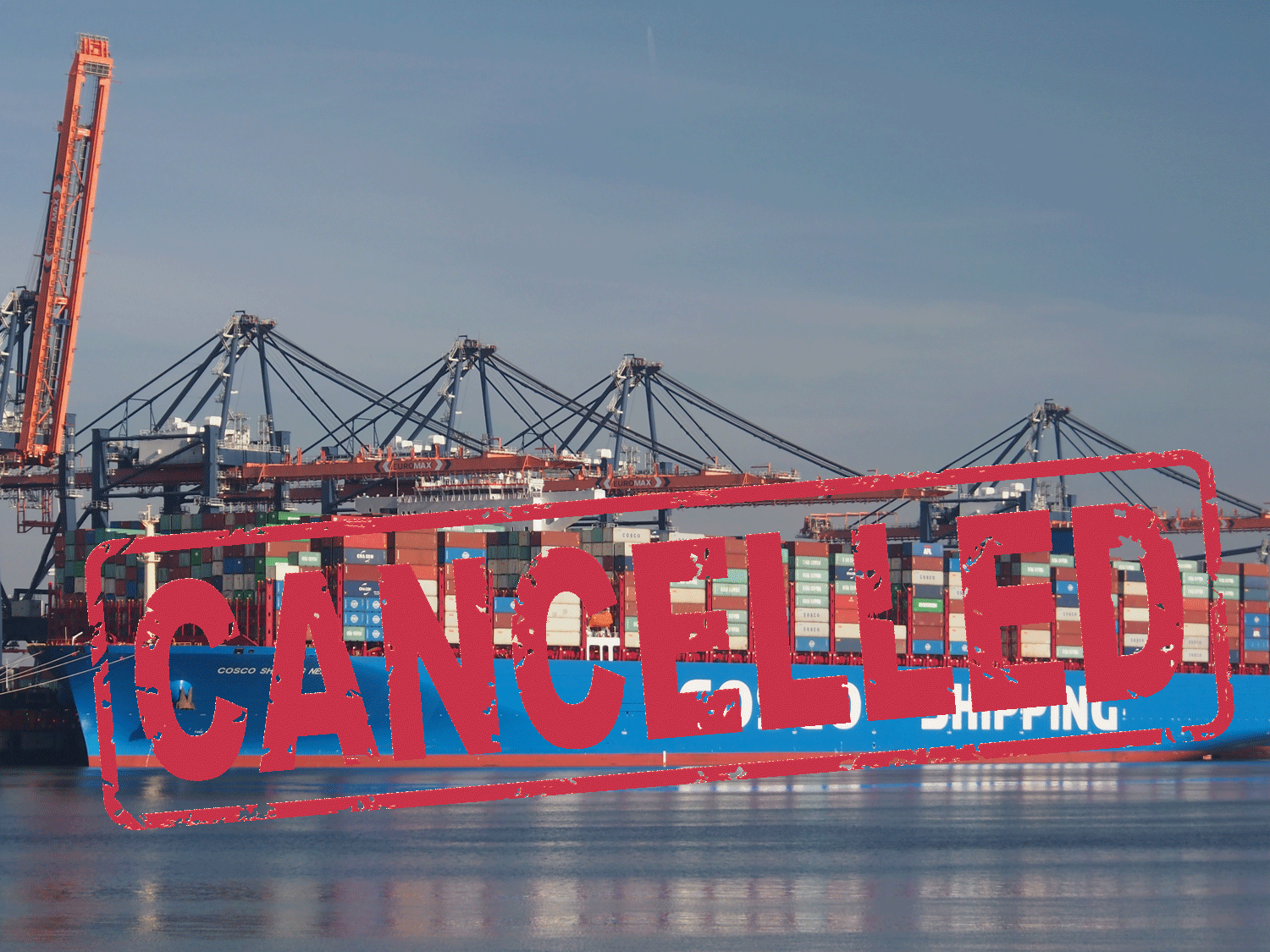
Blanking is biting

Blanked sailings surge as congestion and reliability continue to constrain capacity

Container shipping capacity remains under pressure as carriers increase blanked sailings, schedule reliability weakens and port congestion ties up vessels across key gateways.

According to maritime researchers Drewry, 136 sailings were cancelled in February across the transpacific, Asia–Europe and transatlantic trades, a 122% increase compared with January. The surge coincides with the traditional Lunar New Year slowdown, as carriers anticipate a seasonal contraction in export volumes from Asia.

The majority of blanked sailings are concentrated on the transpacific eastbound route. While cancellations are expected to ease in March, with only 53 blank sailings currently announced, February’s reductions represent a material short-term withdrawal of capacity from the market.

Reliability slips back

Schedule reliability also deteriorated in December. Global on-time performance fell by 1.2 percentage points month-on-month to 62.8%, the second-lowest reading since May. 

Average vessel delay increased to 5.04 days, the second-highest level since April.

While reliability remains 9% higher year-on-year, performance across the major carrier groups remains uneven. Maersk recorded 76.7% schedule reliability in December, followed by Hapag-Lloyd at 75.2%. Eight of the top 13 carriers operated within the 50–60% range, while Wan Hai recorded 47.8%.

Alliance performance also diverged. In November and December, Gemini Cooperation achieved 92.3% reliability across all arrivals, compared with 73.5% for MSC and 58.8% for Ocean Alliance.

Lower reliability effectively reduces usable capacity. Late arrivals compress schedules, extend port stays and create knock-on disruption across subsequent rotations.

Northern Europe congestion continues

Port congestion continues to tie up vessels, particularly across Northern Europe. Winter weather has reduced terminal productivity in Antwerp, Hamburg and Rotterdam, with berth delays of three to five days reported. Le Havre is experiencing delays of up to eight days following temporary terminal closures.

Yard utilisation levels remain elevated across major European hubs, including UK ports. London Gateway and Southampton are reporting intermittent delays of one to two days, while Felixstowe has seen delays of up to five days.

Operational disruption is also reported in Poland, where snow and frozen equipment have affected both port and inland transport productivity.

Analysts estimate that congestion can effectively absorb around 6% of the global fleet at any given time, limiting available vessel supply.

Outlook remains challenging

Despite a global order-book equivalent to 34% of the existing fleet, the highest level since before the financial crisis, effective capacity remains sensitive to operational constraints.

Sea-Intelligence forecasts structural overcapacity could approach 10% by 2027, even when factoring in slow steaming, congestion, Red Sea diversions and scrapping of older tonnage.

In the near term, however, blanked sailings, reliability slippage and port congestion continue to determine how much capacity is actually available to shippers, regardless of headline fleet growth.

Metro’s sea freight team continuously model the potential impact of blank sailings, so we can secure space, optimise routings and build contingency plans around our customers’ specific flows.

By sharing your forecasts and critical SKUs early, we can ring-fence capacity, minimise disruption and shield you from service disruption and last-minute surcharges.

EMAIL Andrew Smith, Managing Director, today to arrange a strategic review and lock in the resilience you need for 2026 and beyond.