history banner 2

Enhanced groupage services to France and Germany

In our continued efforts to provide exceptional trans-European logistics solutions, we have recently upgraded our groupage services to France and Germany, offering greater speed and efficiency, alongside competitive rates and our top-tier customer care.

Our French groupage services continue to excel, offering regular, efficient departures and seamless distribution throughout the country. In addition, we have expanded our reach in Germany, a vital hub for European trade. With frequent departures, including into the Ruhr area, one of Germany’s most important industrial regions, we ensure that goods are swiftly distributed across the country thanks to our trusted network of partners.

In today’s fast-paced and ultra-competitive markets, it’s not just about speed and cost—it’s about communication, reliability, and trust. By carefully selecting carrier and network partners in France and Germany, who share our customer-first mindset, we ensure that our clients benefit from smooth communication, timely updates, and a full door-to-door (DDP) solution. Our goal is to make European shipping as hassle-free as possible, providing a service that values our customers’ time and business.

However, businesses shipping to and from Germany should be aware of some potential changes that may impact the logistics landscape. Recently, Germany has enforced stricter border controls aimed at curbing migrant activity. While the long-term effects on freight traffic remain unclear, it is a development that could impact trucks entering and leaving the country.

Additionally, as of November 2024, UK passport holders will be required to register their biometric details, such as fingerprints or a photo, when entering the Schengen area, which could cause some delays for trucks crossing from the UK into the EU.

Despite these challenges, our French and German groupage services remain reliable and dependable, ensuring that goods are delivered efficiently while providing the highest level of customer care.

Metro’s road transport solutions incorporate dedicated vehicles moving on set routes for security, with defined delivery deadlines and GPS tracked trucks, to provide full transparency on transit schedules throughout the UK and continental Europe.

Our road freight teams are located close by major manufacturing and transport hubs across the UK. To explore the potential of our German and other European services EMAIL Richard Gibbs to begin a conversation.


BMSB 1440x1080 1

Seasonal measures for Brown Marmorated Stink Bug (BMSB)

The 2024/25 Brown Marmorated Stink Bug (BMSB) season is now underway, which means strict import regulations are implemented by Australia and New Zealand, with the United Kingdom a target risk country.

The BMSB is an agricultural pest native to China, Japan, the Korean peninsula, and Taiwan, and is renowned for the widespread damage it may cause to fruit and vegetable crops.

Accidentally introduced into the United States twenty years ago, the BMSB is now also established in South America and Europe.

Seasonal measures are crucial to protect agricultural industries from the significant biosecurity threat posed by BMSBs, which are known to damage over 300 plant species and can cause serious economic and ecological harm.

From the 1st September 2024 to 30th April 2025, Australia and New Zealand are enforcing seasonal measures on goods originating from 41 target risk countries.

This year, China and South Korea have been added to the heightened vessel surveillance list, alongside existing risk countries like the United Kingdom, which is subject to random inspections of shipments. Australia will randomly inspect UK-origin goods between 1st December and 30th April, while China-origin shipments will face inspections between 1st September and 31st December.

The BMSB measures apply to high-risk goods, including those shipped in break bulk, open containers, or on flat racks. These goods must undergo mandatory offshore treatments, such as fumigation or heat treatment, to mitigate the BMSB threat before arrival.

Treatment and packaging regulations
Both Australia and New Zealand require that all high-risk goods be packaged to allow for effective treatment. Packaging must permit fumigants or heat to reach all surfaces, meaning plastic wrapping may need to be adjusted or slashed to ensure proper infiltration. The regulations apply only to the goods themselves, not to packaging materials like cardboard or pallets, though these materials must still meet general non-commodity requirements.

To comply with these requirements, importers must ensure that their goods are treated by approved offshore BMSB treatment providers, registered with the relevant authorities. Australia’s AusTreat system and New Zealand’s Ministry for Primary Industries (MPI) offer lists of authorised treatment providers.

Minimising delays and non-compliance risks
Non-compliance with BMSB regulations can lead to severe delays, additional costs, or even exportation of the shipment. To avoid these complications, importers are strongly encouraged to complete BMSB treatments offshore before the goods arrive in Australia or New Zealand. Accurate and early documentation, including treatment certificates, is essential for expediting inspections and clearing shipments.

By staying updated with these regulations and ensuring compliance, importers can minimise potential disruptions to their supply chains during the BMSB risk season.

Dedicated staging facilities
Metro has established dedicated staging facilities at origin and destination ports to comply with seasonal measures for the Brown Marmorated Stink Bug (BMSB).

These facilities are sterilised to meet quarantine and inspection standards, such as those set by the Australian Quarantine and Inspection Service (AQIS), providing a controlled environment for the inspection, cleaning, and fumigation of high-risk cargo.

By ensuring that cargo is treated and transported within a sterile environment, it bypasses quarantine checks upon arrival and moves directly to the destination staging facility for unloading and further distribution, thus streamlining the delivery process and meeting BMSB compliance standards.

Typhoon HKG 1440x1080 1

Supply chains brace for more disruption as storm season intensifies

From wildfires and floods to scorching heatwaves, the consequences of climate change are becoming more pronounced, and as we enter the peak shipping season, businesses are scrambling to prepare for what is predicted to be one of the most disruptive storm seasons in recent memory.

So far in 2024 supply chain disruptions caused by extreme weather are estimated to have cost companies billions of pounds, and the storm season is far from over. Hurricanes, wildfires, and floods have already stretched global supply lines thin, and the arrival of storms like Typhoon Bebinca, which threatened Shanghai this week, adds a fresh layer of concern.

Increased visibility allows managers to pinpoint disruptions and adjust supply chains accordingly, and the key to weathering these events lies in preparation. Shippers are diversifying their carrier bases and building inventory buffers to keep goods moving in the face of challenges. Strategic planning, such as maintaining safety stock for high-demand items, has become essential in managing supply chain risks.

The heightened storm season comes as companies are already reeling from the effects of wildfires in California and Australia, as well as floods that have caused widespread damage to transportation networks in Asia.

While technology and data-driven insights have made supply chains more resilient, this year’s relentless barrage of natural disasters is proving particularly difficult to navigate. While technology can help predict and respond to the impact of storms, it is only effective when paired with clear communication and regular updates on shipments.

The threat posed by Typhoon Bebinca is yet another reminder of the supply chain vulnerabilities that remain, with Shanghai closing ports, cancelling, and halting transportation links to ensure safety. With more storms likely in the coming months, companies must remain agile and vigilant, ready to adapt to further disruptions.

The need for resilience and adaptability is more pressing than ever, as companies navigate the challenges ahead. This season may prove to be one of the toughest in recent memory, but for those prepared, there are still opportunities to maintain operational continuity in the face of adversity.

Extreme weather events consistently highlight the vulnerability of supply chains and the importance of robust contingency plans and marine insurance to protect against risk.

We have been maintaining supply chain resilience in the face of unforeseen challenges for decades. To learn how we can develop and support your supply chain resilience EMAIL our Chief Commercial Officer, Andy Smith.

MSC and Maersk 1440x1080 1

New shipping alliances for 2025

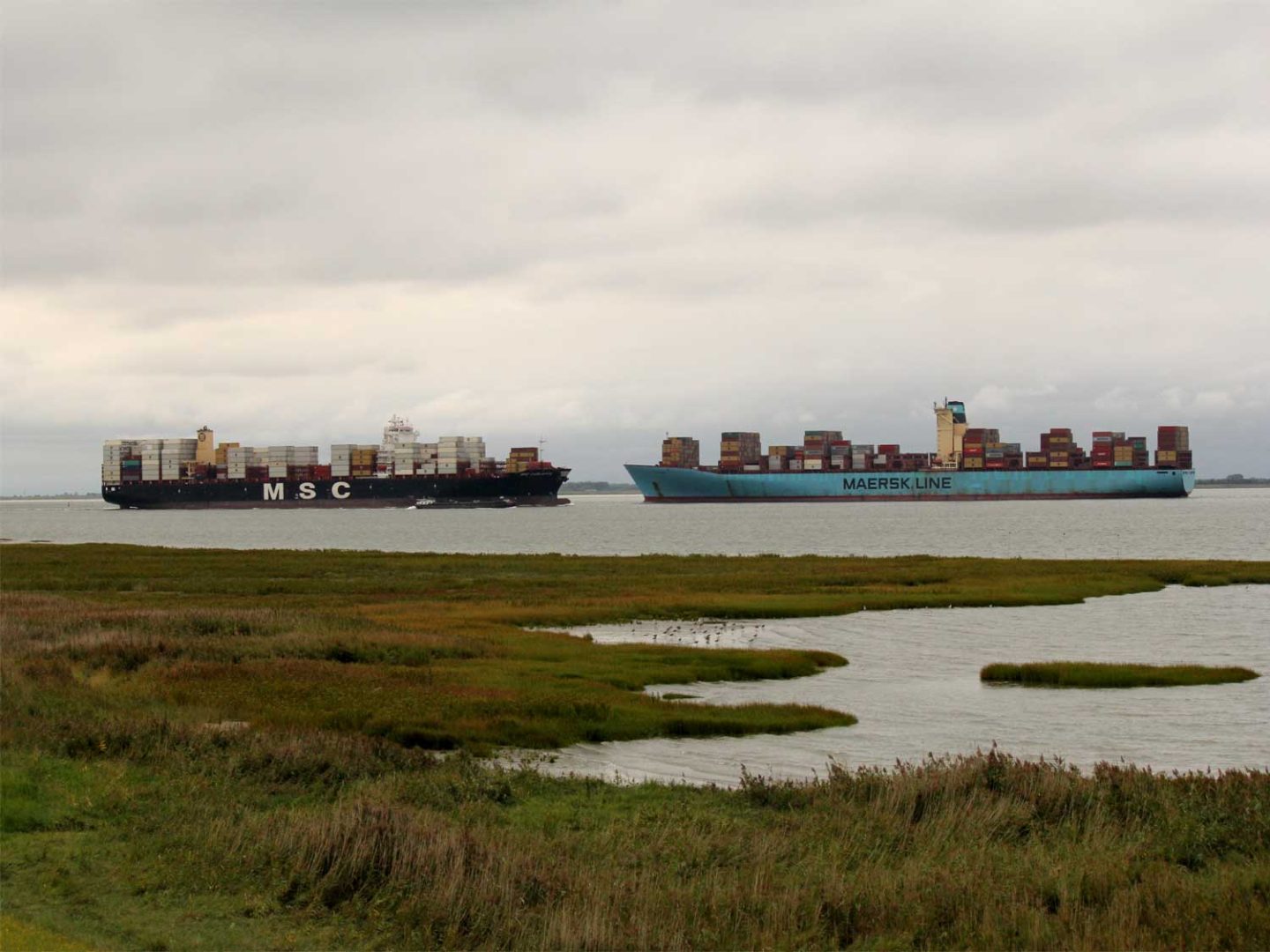
With the dissolution of the 2M partnership between MSC and Maersk in February 2025, new partnerships and slot-sharing agreements are emerging, positioning shipping companies in a transformed global market.

One of the key developments is the formation of the Premier Alliance, which will replace THE Alliance. This new partnership brings together Ocean Network Express (ONE), HMM, and Yang Ming, with MSC also entering into a vessel-sharing agreement (VSA) with the group.

The Premier Alliance will focus on key East-West trade lanes, including Asia-Europe, Asia-North America, and Asia-Mediterranean routes. The agreement will offer customers more direct coverage and frequent sailings, with plans for six Asia-North Europe services, including five in cooperation with MSC.

Now the world’s largest container shipping company, MSC has moved quickly to capitalise on its scale. Following its departure from the 2M alliance with Maersk, MSC will operate largely independently while maintaining slot-sharing agreements with the Premier Alliance and Zim.

MSC will manage 34 loops across five major trade routes, covering Asia-North America, Asia-Europe, the Mediterranean, and the trans-Atlantic. It will offer customers direct port-to-port services, providing over 1,900 direct port pairings through the Suez Canal (when it is accessible) and more than 1,800 via the Cape of Good Hope.

The formation of the Gemini Cooperation, a new alliance between Maersk and Hapag-Lloyd, adds another layer of competition. Unlike MSC’s direct coverage approach, Gemini Cooperation will focus on a hub-and-spoke service network. This divergence in strategy highlights how alliances are tailoring their operations to meet the specific needs of global trade.

As these alliances come into play, the shipping landscape will continue to evolve. The Premier Alliance and MSC, with their extensive network of direct services, will provide enhanced port coverage and flexibility, while Gemini Cooperation’s hub-based model may appeal to shippers seeking more consolidated routes.

Together, these developments signal a reshaping of global shipping routes, aimed at increasing efficiency and meeting the growing demands of international trade. With direct access to over 80 ports and expanded service options, the new alliances are set to redefine global logistics for the years to come.

We will keep you advised and updated on important developments within the container ocean freight market as they materialise.

If you have any questions or concerns about the Premier Alliance agreement, or would like to discuss the wider implications of the shipping alliance changes, please EMAIL our Chief Commercial Officer, Andy Smith.