
conservation 1440x1080 1

EU Deforestation-Free Product Law Faces Further Delays

The EU Regulation on Deforestation-Free Products (EUDR), which defines compliance obligations for businesses trading with the European market, is facing further implementation delays.

Designed to prevent the sale and export of goods linked to deforestation and forest degradation, EUDR applies to a wide range of commodities, including wood, paper, palm oil, rubber, coffee, cocoa, soy, and livestock.

On 23 September 2025, the European Commission announced it is considering another one-year delay to EUDR enforcement—postponing the application of the law from December 2025 for large companies to December 2026, and for smaller firms from June 2026 to June 2027.

This marks the second official delay as EU authorities struggle to roll out the IT infrastructure needed to handle due diligence statements and monitor supply chain transactions at scale.

Defining the EUDR

The EUDR is a core plank of the EU Green Deal, aiming to sever the link between Europe’s consumption and global forest loss. Companies placing relevant products on the EU market or exporting them from the bloc will be required to prove those goods are legal, traceable, and entirely deforestation-free.

To comply, businesses must maintain paperwork and geolocation data showing that commodities are sourced from land that has not been deforested after December 2020.

Due diligence statements will need to demonstrate negligible risk and trace every relevant batch from origin to final sale. Third-party certifications like FSC can help streamline compliance but do not serve as automatic proof; additional geolocation mapping and risk assessment remain mandatory for full EUDR compliance.

The latest delays are being linked with concerns over potential system “slowdowns” and disruptions that could stall trade and make compliance impossible for thousands of businesses.

The risk of further simplifications or legislative changes has also emerged, with some political groups pushing to amend the law’s benchmarking system and even introduce a “zero-risk” exemption for certain countries.

Implications for Metro Customers

  • The delay gives economic operators slightly more time to adapt their sourcing and compliance systems but increases uncertainty for businesses who have already invested in EUDR preparation.
  • Large and small companies alike must now track shifting requirements, especially as the regulation could change further in parliamentary negotiations.
  • Businesses sourcing affected commodities (timber, coffee, soy, cocoa, etc.) should continue mapping supply chains, aligning procurement strategies with deforestation-free criteria, and strengthening traceability processes, particularly around geolocation data and documentation.
  • If companies use FSC certification, extra steps are now needed: ensuring plot-level traceability and robust risk evaluation, not just certification documents.

What Comes Next?

The European Commission’s latest proposal is not yet final. Metro customers trading with or into the EU should stay up to date as legislative details and IT infrastructure roll out, and be ready to pivot quickly if further changes to EUDR emerge.

As enforcement eventually resumes, the EUDR is set to become a defining feature of UK–EU supply chain management and trade compliance, shaping how Metro supports customers in navigating new environmental obligations and regulatory risks.

EMAIL Andrew Smith, Managing Director, today to explore how we can support EUDR compliance and reporting.
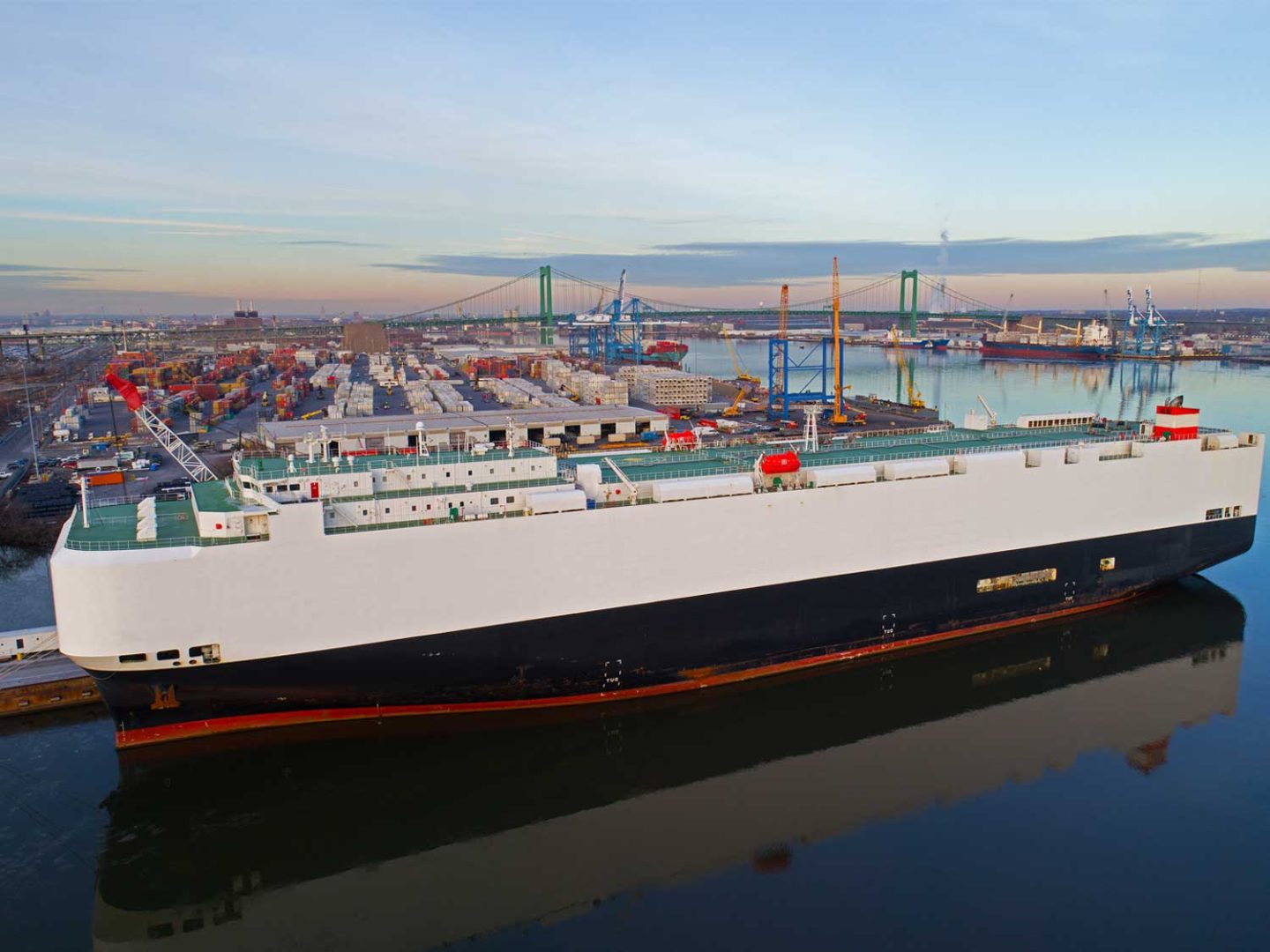

RoRo in US 1440x1080 1

Automotive RoRo Market Steadies as Asian Exports Surge

The global car carrier sector is showing renewed stability as strong vehicle exports from Asia offset earlier trade uncertainty. 

Recent tariff adjustments in the US and falling charter rates have created favourable conditions for major roll-on/roll-off (RoRo) operators, sustaining volumes and underpinning solid earnings through mid-2025.

In the second quarter, leading carriers reported record levels of Asian exports. One operator saw a 13% sequential rise to nearly 14 million cubic metres of cargo, while another posted a quarterly record of 2 million cubic metres, up 47% year on year. 

The imbalance between rising Asian exports and weaker flows from Europe and the US is stretching capacity, driving operators to charter additional tonnage.

Charter rates have fallen sharply as new vessels enter the market, dropping from around $115,000 per day in early 2024 to $45,000 this summer for a 6,500-CEU ship. This decline has enabled carriers to secure short-term tonnage at competitive rates, either on single voyages or multi-month contracts, to match Asian demand.

Profitability also remains firm. One major operator posted a 28% increase in quarterly net profit to $403 million, supported by the sale of a logistics subsidiary, while another reported $123 million in profit on revenues of $367 million. 

Long-term contracts continue to provide earnings visibility, with more than 80% of capacity for 2026 already secured under multi-year deals worth over $300 million.

Regulatory changes have also played a part in stabilising the market. A reduction of US vehicle import tariffs to 15% from higher levels has limited disruption to trade flows, while revisions to proposed US port fees cut one operator’s projected annual bill by more than half. Although carriers remain wary of longer-term cost impacts, current trading conditions remain favourable.

The current developments can be translated into positives for shippers in a few ways:

Falling charter rates: Even though capacity is tight ex-Asia, the sharp drop in charter costs means operators can add temporary capacity more affordably, reducing the risk of bottlenecks.

Strong long-term contracts: With over 80% of 2026 capacity already secured, shippers benefit from predictability and stability in service.

Tariff clarity: Lower US import tariffs and revised port fees reduce immediate cost pressures and smooth near-term trade flows, creating a more stable environment for planning.

Fleet growth: The influx of new-build vessels soften rates, boost overall carrying capacity and help to balance future trade imbalances.

For automotive shippers, recent market shifts bring opportunities as well as challenges. Lower charter rates and greater tariff clarity are helping to stabilise trade flows, while long-term carrier contracts ensure continuity of service.

Metro’s automotive logistics specialists understand the complexities of the RoRo market. We work with leading carriers to secure reliable capacity, design resilient supply chains, and optimise distribution from factory to dealer.

EMAIL Metro’s Automotive Team today to discuss how we can safeguard your vehicle flows and unlock efficiencies in your global logistics.

LHR terminal 5

Growth Sustained, But Reliability and Policy Risks Loom for Air Freight

Air cargo volumes surprised on the upside again in August, rising by around 5% year on year, the second consecutive month of growth at this pace. Capacity also increased by 4%, though yields came under pressure as rates softened.

Despite the stronger demand, the outlook for Asia–Europe and Asia–US markets in particular remains uncertain, with policy changes and operational constraints threatening to erode recent gains.

Average spot rates from Southeast Asia to North America and Europe declined by around 20% compared with last year, reflecting easing capacity pressure, while North East Asia to North America fell by just 8%. Rates on North East Asia–Europe routes were broadly stable year on year, though down slightly month on month. Transatlantic markets saw rates edge up by 5% annually, but momentum slowed as the summer holiday period cut into demand.

These shifts underline the fragility of recovery. Purchasing Managers’ indices in key exporting economies fell again in August, and American consumer sentiment softened. Growth on Asia–Europe and Asia–US trades has been sustained largely by front-loading and tariff avoidance, rather than stronger consumption.

Regulatory pressures and cost dynamics

The removal of the de minimis exemption for low-value shipments entering the US at the end of August is reshaping flows. While originally targeted at Chinese eCommerce, the new rules apply across all origins. For European and Asian exporters, this adds new administrative steps and costs, particularly for SMEs. Observers expect lower eCommerce volumes into the US, with some share shifting back towards China due to lower production costs.

Average spot rates across global markets fell by about 3% year on year in August, with sharper declines once currency depreciation is factored in. Capacity expansion has kept pressure on yields, even as jet fuel costs dropped by 7% year on year, providing some relief to carriers. The balance between steady demand and competitive pricing remains delicate, with the sustainability of current growth dependent on careful capacity management.

Reliability challenges deepen

Operational reliability has become a significant concern. On-time performance among major carriers slipped from 81% in May to 80% in June, and down again to 77% in July. For context, anything below 90% is considered mediocre, and mid-70s is cause for concern. Among the 22 airlines surveyed, the gap was wide, with punctuality as low as 57%, to a high of 94%.

For shippers, this can translates into missed connections, additional storage costs, and strained deadlines. Contributing factors include congested airports, ground-handling labour shortages, outdated facilities, and limited data integration across the air cargo chain. Without structural improvements, reliability risks may become systemic, undermining the demand growth achieved in recent months.

Outlook

The near-term outlook for air freight is mixed, with improving but weak economic fundamentals and policy changes that add friction. Key routes from Asia to Europe and the US continue to anchor growth, yet they are the lanes under constant pressure from regulatory shifts and declining schedule reliability. Unless carriers can address operational shortcomings and adjust capacity effectively, current momentum may prove short-lived.

Demand is shifting and schedule reliability is a moving target, but Metro continues to secure space and certainty by actively managing capacity, optimising routings, and leveraging trusted carrier partnerships.

On our MVT platform, real-time flight telemetry provides:
– Live aircraft position and route mapping
– Accurate departure/arrival confirmations
– Time-stamped milestones updated in real time
Plan with confidence, optimise inventory, and protect deadlines, even as conditions change.

EMAIL Andrew Smith, Managing Director, to learn how our data-driven air freight keeps your supply chain moving.

HGV driver

Road freight prices edge higher in August

Stronger August demand lifted UK road transport prices, with both haulage and courier markets firming despite fresh capacity entering the system.

The latest TEG Price Index shows overall prices rising nearly 2% month on month and sitting 2.4% above August 2024 levels. Haulage led the gains, up just over 2.5% on July and 3.6% year on year, while courier prices advanced 1.2% in the month to stand 1.3% higher than a year ago.

Seasonal spending around the late-summer Bank Holiday and warm weather drove a sharp 6.26% jump in transport demand, tilting the balance of the market. Additional supply helped restrain steeper inflation, but not enough to neutralise the upward pressure on rates.

Demand outpaces tight supply

Articulated vehicle demand surged more than 13% in August and was closely matched by an almost 15% increase in supply. Even so, articulated prices climbed over 3% month on month, reflecting continued operational constraints from annual leave and persistent driver shortages.

Recruitment challenges are feeding into wage trends: average HGV driver pay reached £42,121 in August, marking a second consecutive month above the UK national average. Fleet renewal is also lagging; SMMT data points to an 11% year-on-year decline in new HGV registrations, suggesting articulated supply could remain constrained even if demand stays elevated.

A recent cut in the Bank of England’s base rate to 4% supported consumer confidence and spending through the peak summer period, adding a further tailwind to freight demand.

Our network of national and pan-European operators provide solutions for every cargo type, shipment size and deadline, giving us the control and flexibility to shield customers from freight market price swings.

By planning the most efficient domestic and European routes, we keep your road transport moving reliably and competitively.

EMAIL our Managing Director Andy Smith to discover how our road freight solutions can strengthen and protect your supply chain.