NYC 1440x1080 1

Trade growth in a fragile environment

The latest Global Trade Observatory Outlook, based on insights from more than 3,500 senior supply chain executives, highlights a contradictory confidence in trade growth, while the conditions that support growth are increasingly fragile.

Global goods trade reached record levels in 2025, exceeding $26 trillion, but growth is expected to in 2026 slow as cost pressures and operational complexity increase.

Recent developments underline how fluid the global trade environment has become.

The European Union has approved a trade agreement with the United States, but only with strict safeguards in place. Conditional clauses and review mechanisms have been built in to protect against policy shifts and ensure compliance.

At the same time, the UK’s own trade position with the US remains under review, creating uncertainty around tariffs, market access and regulatory alignment.

For businesses, this introduces a more complex planning environment, because trade agreements are no longer fixed frameworks, but are increasingly conditional and subject to change.

Disruption Is now continuous

Alongside policy uncertainty, operational disruption continues to reshape supply chains.

The Middle East situation has already tightened capacity, extended transit times and increased reliance on alternative routing. Air freight availability has reduced in certain markets, while multimodal and inland solutions are absorbing diverted volumes.

At the same time, cost pressure is building across the supply chain, though nearly half of supply chain executives had been expecting moderate or sharp cost increases, with transport, labour and customs compliance costs rising.

These pressures are no longer isolated. They are systemic.

Inventory strategies are also shifting. With 44% of businesses increasing stock levels, delays today risk translating into availability gaps in the coming weeks. 

Buying cycles are tightening, with orders placed later but expected to arrive faster. The tolerance for delay is reducing, because there is less margin for error.

Confidence Is now built on capability

Despite these challenges, businesses remain confident.

This confidence is not reliant on improving conditions. It is based on improved capability, with 46% of businesses planning to use new trade routes, and a further 23% actively evaluating alternatives. 

It is this ability to adapt, rather than the expectation of stability, which will drive growth, with success depending on:

  • Rapid route adjustment
  • Cost control under pressure
  • Maintaining flow during disruption
  • Navigating changing regulatory conditions

Logistics is no longer a support function. It is a performance driver.

Supporting Trade in Volatile Conditions

The companies that succeed will be those that can absorb disruption, adapt quickly and maintain control across increasingly complex supply chains.

Metro works with UK importers and exporters to maintain control in exactly this environment.

Multimodal Flexibility
Integrated sea, air, road and rail solutions allow rapid adjustment to changing capacity and cost dynamics.

Route Optimisation & Corridor Expertise
Dynamic routing strategies avoid congestion, mitigate risk and maintain transit reliability as conditions shift.

Carrier Relationships & Capacity Access
Established partnerships help secure space and maintain flow when availability tightens.

Cost & Performance Control
Consolidation, mode optimisation and advisory support help manage inflationary pressure while protecting service levels.

Visibility & Decision-Making
Real-time tracking and performance insight enable faster, more informed decisions when disruption occurs.

If your supply chain is being impacted by regulatory change, rising costs or network disruption, EMAIL Andrew Smith, Managing Director to learn how we can help you adapt and continue to grow with confidence.

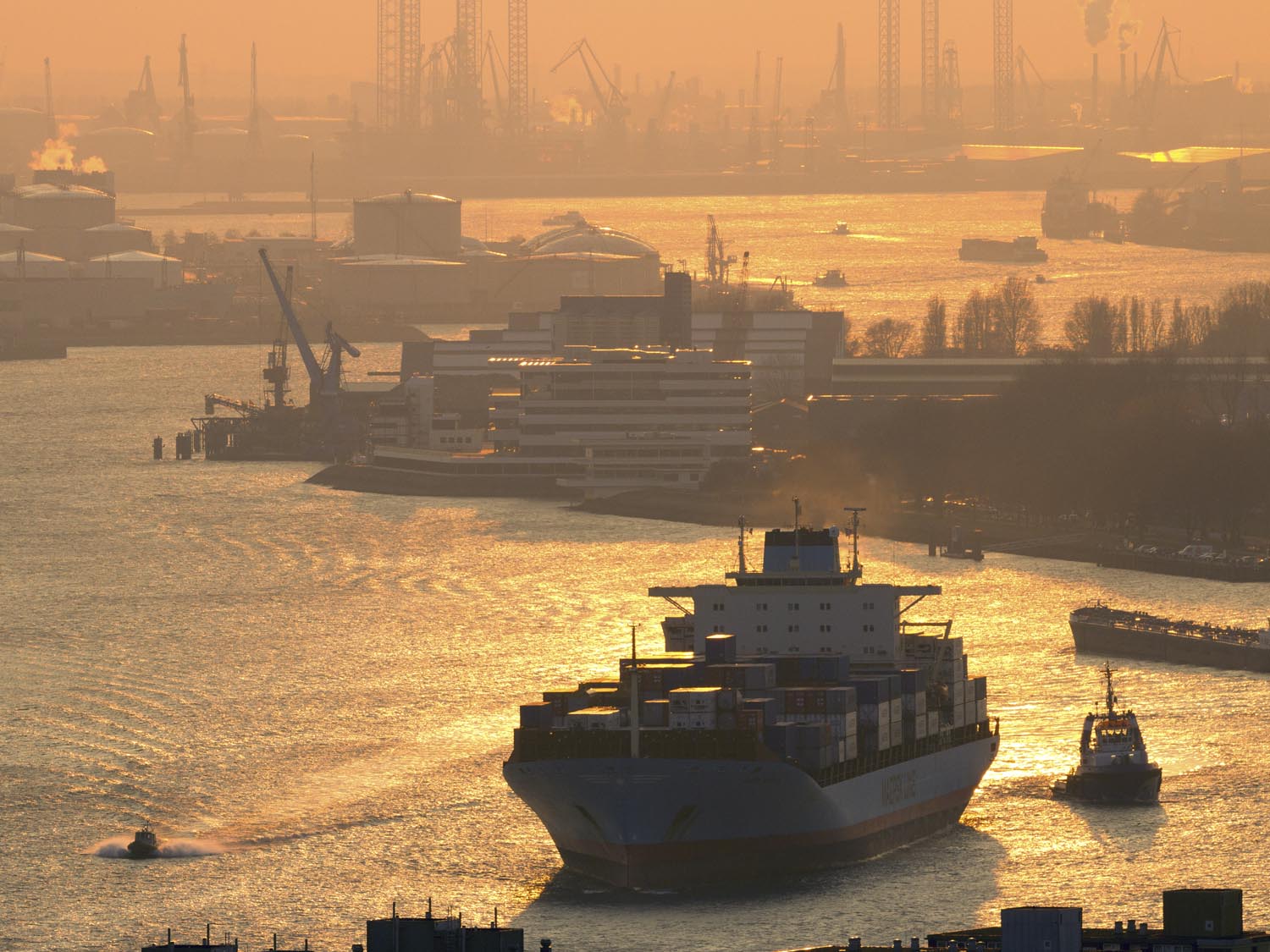
Jebel Ali

Middle East disruption continues to reshape global supply chains

Middle East linked disruption extends well beyond the region, with growing implications for global supply chains. 

As capacity tightens, routes are reconfigured and costs come under pressure, supply chains are entering a more complex and less predictable phase.

Air freight capacity tightens

Air freight markets are among the most immediately affected. Reduced capacity through key Gulf hubs — which typically handle a significant share of global cargo flows and particularly Asia — has forced airlines to reroute services and limit network coverage.

Market data indicates that capacity reductions in parts of the Middle East and South Asia have been significantly steeper than the decline in volumes, creating a sharp imbalance between supply and demand. As a result, rates on some key east–west corridors have risen by more than 50% week on week, with spot pricing increasing at an even faster pace.

Cargo is increasingly being redirected via alternative gateways such as China and Hong Kong, placing additional pressure on corridors that were previously less affected. This is tightening capacity across Asia–Europe routes and contributing to delays, space shortages and short-notice schedule changes.

At the same time, rising fuel costs and the introduction of war risk-related surcharges are adding further upward pressure, while rate validity is shortening as carriers respond to rapidly changing conditions.

Ocean disruption drives congestion, diversion and equipment imbalances

Ocean freight is facing a different but equally significant set of challenges. The effective closure of the Strait of Hormuz — a corridor that typically handles a substantial share of global energy flows — has led to a dramatic reduction in vessel transits, with movements down by around 95% compared to normal levels.

Shipping lines have suspended services into the Arabian Gulf and are diverting vessels to alternative ports, where cargo is being discharged and held for onward movement. This is creating a knock-on effect across surrounding regions.

Ports outside the Gulf are now absorbing unexpected volumes. Congestion levels at key contingency hubs have reached critical levels, with some locations operating at or near full capacity and vessel waiting times extending well beyond normal ranges.

At the same time, an estimated 200,000+ TEU of capacity remains effectively trapped within the Gulf, contributing to equipment shortages in Asia as empty containers are unable to return to origin markets. This imbalance is expected to place further pressure on export flows in the coming weeks.

Rising bunker costs are also beginning to influence vessel operations, with some operators reducing sailing speeds to manage fuel consumption, adding further variability to transit times.

Costs rise as surcharges and fuel pressures build

Across both air and ocean freight, cost pressure is becoming more pronounced. Emergency surcharges linked to fuel volatility, war risk and network disruption are being introduced or expanded across multiple trade lanes.

Air freight rates have already increased sharply on key routes, while ocean carriers are implementing additional charges to reflect higher operating costs and longer routing distances. In parallel, regulatory scrutiny is increasing, particularly around how surcharges are applied and communicated.

For shippers, this is creating a more complex cost environment, where pricing can change quickly and visibility is reduced.

The past few weeks have highlighted how quickly supply chain assumptions can change and how important it is to have flexible, well-informed contingency options in place.

Metro is supporting customers by identifying alternative routings, securing capacity across air and ocean networks, and maintaining close operational control as conditions evolve.

To discuss how this situation could impact your supply chain, or to review practical routing and cost options, EMAIL Andrew Smith, Managing Director at Metro, for a direct and informed response.

CBP 1440x1080 1

US tariff refunds move closer as customs systems adapt to process large-scale repayments

The process of refunding tariffs to US importers is beginning to take shape following the Supreme Court’s decision to strike down duties imposed under emergency powers. 

US Customs and Border Protection (CBP) is developing a dedicated system within its Automated Commercial Environment to handle what is expected to be one of the largest refund exercises undertaken by the agency.

The process is being designed around four key stages: claim submission, automated validation and recalculation of duties, review and liquidation, and final refund payment. Importers will be required to submit detailed entry data, which the system will validate before calculating the amounts owed and issuing repayments electronically.

Although progress is being made, the scale of the task remains considerable. Tens of millions of entries are potentially affected, and the volume of data required means the process cannot be implemented immediately. Current timelines suggest the system will take several weeks to become fully operational, with further updates expected as development continues.

Data requirements will increase scrutiny on historical entries

The refund process will require importers to provide a comprehensive dataset covering entries where tariffs were paid. This includes classification details, country of origin, entry numbers, duty amounts and supporting documentation.

As a result, the process is likely to do more than simply return funds. By consolidating this level of information into a single submission, it effectively creates a detailed audit trail of past imports.

For businesses, this increases the importance of data accuracy and consistency. Any discrepancies in classification, valuation or origin could trigger further review, potentially extending timelines or leading to additional compliance checks.

Despite the scale of the opportunity, readiness across the importing community remains relatively low.

Only a small proportion of eligible importers have completed the necessary setup to receive refunds electronically. Until this process is finalised, any payments issued may be rejected, delaying recovery of funds.

At the same time, recent changes to US customs requirements mean that more detailed shipment information is already being requested earlier in the import process. Combined with the refund requirements, this is increasing the administrative burden on importers.

Submitting claims without fully validating the underlying data may expose businesses to additional scrutiny. Conversely, delaying preparation could result in slower access to funds once the system becomes fully operational.

This creates a balance between speed and compliance, where careful preparation is likely to be the most effective strategy.

Technology and expertise will play a critical role

Given the volume of entries and the level of detail required, technology is expected to play an increasingly important role in managing the process.

Automated systems can help organise entry data, validate submissions and identify inconsistencies before claims are filed. At the same time, experienced customs oversight remains essential to ensure that filings are accurate and aligned with regulatory requirements.

For many importers, this combination of technology and expertise will be key to navigating what is likely to be a complex and closely monitored process.

The tariff refund process presents a clear financial opportunity, but it also requires careful handling of data, compliance and submission timing.

Metro combines its US presence, local customs brokerage expertise and advanced systems, including its AI and machine-learning powered CuDoS platform, to support the CBP refund process - helping customers prepare accurate, compliant claims.

If you want to understand what you may be owed and how to approach the refund process with confidence, EMAIL Andrew Smith, Managing Director at Metro, to discuss how Metro’s US customs team can support your submission strategy.

Salalah

Drones strike Gulf hubs as air and sea freight networks tighten

Security incidents on 11 March have added further pressure to global freight networks already affected by disruption across the Middle East.

A drone strike at the Port of Salalah in Oman hit fuel storage tanks, forcing the suspension of port operations and bunkering activity at one of the region’s key container transhipment and fuel supply hubs. Salalah is a critical location for vessel refuelling and cargo transfers in the Arabian Sea, and any interruption to bunkering services can affect shipping schedules and vessel routing across multiple trade lanes.

Initial assessments indicate both port operations and bunker supply remain suspended while the extent of the damage is evaluated. The incident follows earlier security events near the port and additional reported attacks affecting nearby Duqm, increasing concern over the resilience of key logistics infrastructure in the region.

At the same time, Dubai International Airport temporarily halted operations after a drone strike nearby wounded four people on the morning of 11 March. Flights have since resumed, but the incident briefly disrupted one of the world’s busiest international aviation hubs and a critical gateway for global air cargo flows.

Port congestion risk rising

The operational disruption comes at a time when global container shipping networks remain highly sensitive to sudden shocks.

When vessels are diverted or delayed, shipping networks can rapidly move from normal operations to congestion. Cargo diverted from disrupted Gulf ports is already being redirected to other locations, with India’s west coast ports among the first to experience increased volumes.

Shipping networks remain vulnerable because delays compound quickly across vessel rotations.  In 2025, Red Sea re-routings took about 9% of capacity out of the system, while port congestion took out a further 10%. That’s capacity lost, not because the ships didn’t exist, but because delays made them non-functional.

The current situation’s risk comes in two parts. First, as carriers abandon Suez transits because of the new strikes, schedules shift unevenly back toward the Cape of Good Hope. And as carriers move at different cadences, it creates vessel bunching, port congestion and massive service instability.

Secondly, the blockade of the Strait of Hormuz has trapped vessels and forced carriers to suspend transits, creating a sudden loss of capacity that is rippling through the whole supply chain.

Air cargo capacity tightening across global routes

Air freight markets are also tightening as disruption across Middle Eastern aviation hubs affects global cargo connectivity.

Many international air cargo supply chains rely on Gulf carriers and airports as transit points between Asia, Europe and North America. When these hubs face operational disruption or flight cancellations, cargo must be rerouted through alternative airports and airlines.

The impact is already visible in export markets heavily dependent on these connections. In Bangladesh, where around 60% of air cargo typically moves through Middle Eastern hubs, hundreds of flights have been cancelled since late February.

As a result, air freight rates to Europe have more than tripled, while rates to the United States have almost doubled, reflecting the sudden shortage of available capacity.

What this means for shippers

The attacks on Salalah and the temporary disruption at Dubai International Airport highlight how quickly events in the region can affect global logistics infrastructure.

For shippers, the immediate risks include reduced air cargo capacity, potential vessel delays linked to bunkering disruption, and increased pressure on alternative ports and airports as cargo flows are redirected.

Metro is monitoring developments across Middle Eastern ports, airports and carrier networks and will continue to provide updates as the situation evolves.

If your shipments move through affected trade lanes, contact your Metro account manager to review routing options and ensure your supply chain remains resilient as conditions develop.