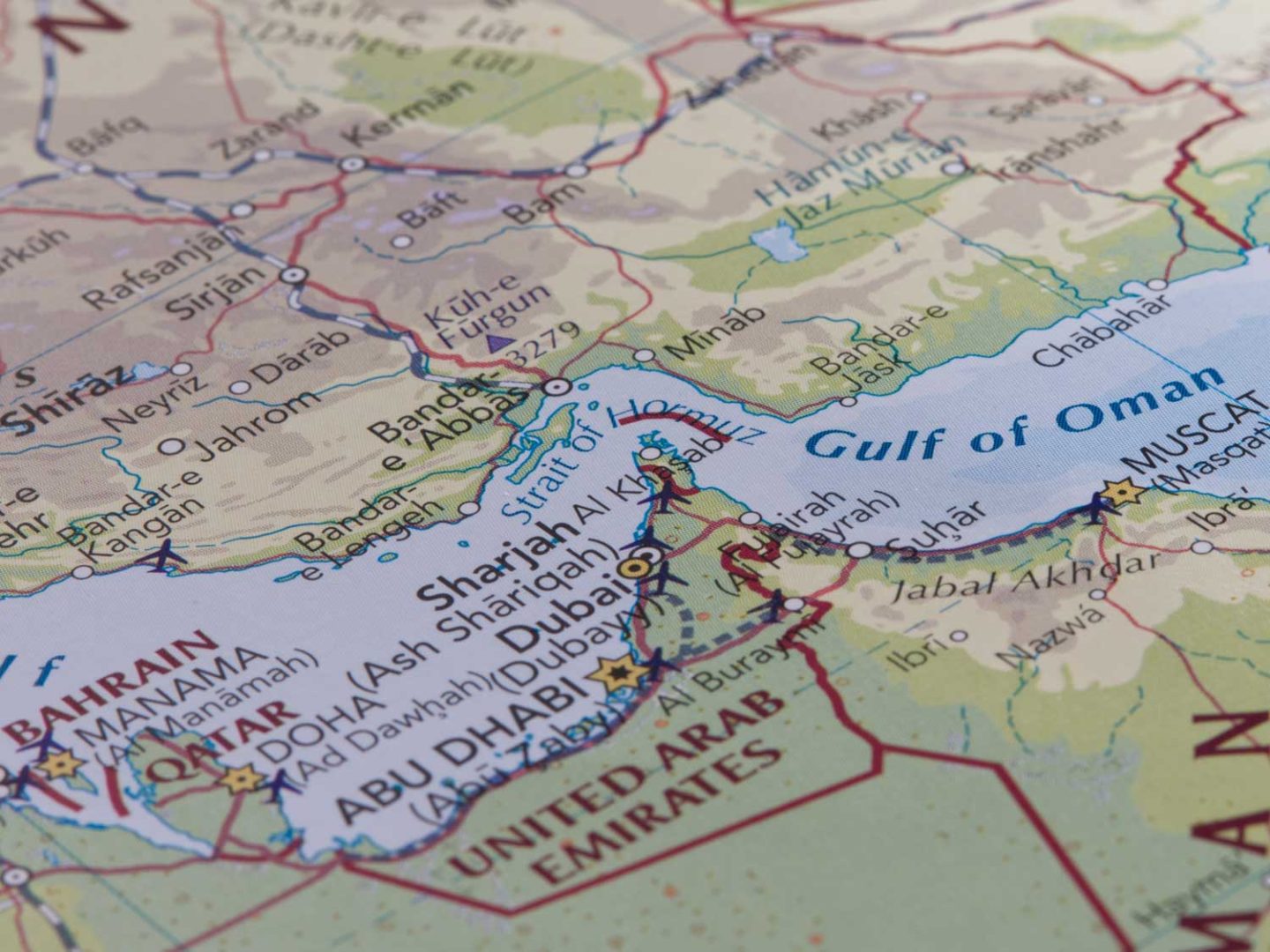
Gulf of Oman 1440x1080 1

Red Sea crisis expanding and growing

After the longest period of attack-free shipping in the Red Sea since December, the situation in the region is escalating, with an increase in Houthi attacks, fears that the ‘danger area’ may be expanding into the Arabian Sea and Indian Ocean and an Iranian vessel hijack off the Gulf of Oman.

At virtually the same time the US special envoy for Yemen indicated that the US might consider a path to revoking the terrorist designation on the Houthis if attacks on vessels are halted. The Yemeni group resumed attacks after an eight day pause and claimed to have attacked a number of warships and commercial vessels in the Arabian Sea and the Indian Ocean. 

The Houthi claims have not been corroborated and it remains uncertain if they have the capability to acquire targets that far out to sea. However, if they have been successful it may have implications for shipping, possibly forcing it to head further east and making access to the Gulf harder.

Iran hijack
In a further, unexpected development, the 15,000 teu MSC Aries was boarded and seized by Iranian Revolutionary Guard troops in international waters off the Gulf of Oman in the Straits of Hormuz on Saturday 13th April.

The Aries was managed by Zodiac Maritime, a firm controlled by the Israel-born shipping magnate Eyal Ofer, but the vessel is currently chartered to MSC and its current links to Zodiac is unclear. 

Iran’s action means the ‘maritime danger zone’ has expanded significantly and the ramifications of this illegal vessel seizure could be massive, potentially providing a catalyst for freight rates to rise in the short-term.

Insurance check
We would recommend double-checking your cargo insurance, to clarify what it covers, but also to ensure its validity should your cargo suddenly be in a war-zone, even if the planned route was not intended to transit a war-zone.

Anticipate increased risk premiums for insurance and freight to and from the Persian Gulf area, and also the Gulf of Oman, and not necessarily labelled as a risk premium but another acronym.

Scenarios
We do not anticipate a full closure of the Strait of Hormuz, it is more likely to resemble the southern Red Sea where some shipping lines will still operate and some will not. However, a partial closure could backfill, escalating port congestion problems at origins including Sri Lanka, Singapore, Port Klang and Indian ports.

Finally, it is clear that threats against shipping made by Iran, and their proxies have not been idle and it might be prudent to recollect the threat made by an Iranian Revolutionary Guards commander to target shipping in the Mediterranean. 

Groups in Algeria have received attack drones from Iran, which have the potential to impact shipping in the Eastern Mediterranean.

If you have any questions or concerns about the impact of the Red Sea crisis on your Asia supply chain, or would like to discuss its wider implications, please EMAIL our Chief Commercial Officer, Andy Smith.

For questions about airfreight, sea/air and our suite of time-sensitive solutions EMAIL Elliot Carlile, Operations Director, for insights, prices and advice.

For insurance related questions or concerns please EMAIL our Chief Financial Officer, Laurence Burford.

Lloyds

Avoiding the bill that Dali shippers will face

The Francis Scott Key Bridge in Baltimore collapsed after the container ship, Dali, collided with it last Tuesday. The eventual cost of the disaster is expected to be hundreds of millions of dollars and shippers with cargo aboard the Dali could ultimately be responsible for the ship’s damages and associated costs.

An established maritime law known as General Average (GA) where all parties involved in a sea voyage share any losses incurred, ensures that all parties have a vested interest in the vessel, because they share the risk and cost of protecting it.

General average situations can occur when a ship is lost, suffers damage or becomes stranded, or when cargo needs to be damaged or thrown overboard to save the vessel.

It’s too soon to know whether costs incurred to free the Dali will qualify as a case of General Average, or whether General Average will be called by the owners, though the latter is extremely likely due to the sheer scale of the disaster.

General Average is one of the most complex procedures in insurance, because insurers will need to calculate the total value of all the goods onboard the vessel to work out the amount owed by each shipper.

With about 4,700 full containers (just under 50% of capacity) aboard the Dali at the time of the collision, establishing the value of each container is complex and using historical data, the process can often take several years.

Adding another level of complexity and probably cost is the fact that a large proportion of the cargo aboard will inevitably be uninsured, as too many shippers either assume it’s already in place, or covered by their freight forwarders or the shipping line.

Despite several high-profile casualties in recent years, General Average remains rare in shipping and something many shippers aren’t aware of, or think of insuring against.

While there might be some coverage by a freight forwarder or carrier under their standard trading conditions, these are typically limited, as opposed to the actual value of the goods.

When General Average is called, the consignee will need to provide security for the cargo’s proportion of the General Average, typically a percentage-based deposit, or an Underwriter’s Guarantee.

Metro’s All Risk marine insurance covers the full value of your goods and protects you against all loss of cargo and the risk of General Average.

For further information on our marine insurance cover and to ensure that you have full liability, please EMAIL Laurence Burford, CFO at our Birmingham HQ.

marine insurance

Red Sea Crisis insurance withdrawals – fact or fiction?

In addition to fast-rising ocean freight rates and extended transit times, as the container shipping lines divert around Africa, shippers have been struggling to understand what (if any) insurance is in place, with insurance companies massively increasing war risk premiums and no longer willing to cover Red Sea voyages. 

In this constantly shifting situation it is critical that shippers understand what insurance covers are being referred to in current news report and what this means for their cargo.

As with all markets impacted by the Houthi rebel attacks the insurance market is changing almost daily with rumours and facts being thrown around in equal measure.

Insurance has been impacted like all areas of the supply chain, with costs increasing as the risk increases. This is true of hull insurances (to protect the vessel), as it is with the general war risk cover applied to marine cargo policies.

For those unfamiliar with insurance and when and how they apply, goods in transit insurance covers cargo against loss or damage whilst being transported from one place to another, or being stored during a journey.

If you are shipping goods by sea for example, you would take out marine cargo insurance which can be written on an annual basis, or purchased for individual shipments.

NOTE – Marine insurance is not included within the freight charges and agreements. 

For marine cargo insurance to be in place, with cover applicable to your goods, you need to specifically request insurance with a separate premium being payable.

Marine cargo insurance is different to marine hull insurance, with the latter covering the cost of repairs or replacement of the vessel, in the event of any loss and/or damage.

Hull insurance is typically purchased by ship owners, boat owners and charterers to protect against a range of risks associated with owning and operating vessels.

War risk cover, which provides insurance on losses resulting from events such as war, invasions, strikes and terrorism can be included within these policies or be purchased separately from specialist markets.

Insurers across the markets all take individual approaches to what cover they are applying, or withdrawing as the case may be.

Ships and vessel owners are being hit with high insurance premiums with reports that some insurers are refusing to cover vessels against war risk in the key commercial shipping corridor through the Red Sea.

For Lloyds insurers, their Joint War Committee has widened the areas in the Red Sea that are categorised as “high risk”, with war risk insurance premiums for vessels intending to sail through such areas rising from 0.07 to 0.7% – that’s a 900% increase in a month.

With the potential removal of some covers, including war risk cover, this can dictate the need for specific routes on the movement of goods. Whilst it may be reasonable for ship owners to request that routes through the Rea Sea be avoided, on a commercial basis, due to safety concerns. As a shipper you need to make sure that your insurers are comfortable with the changes and that the level of risk and cover you have is still sufficient to protect your cargoes.

Shipping around the coast of Africa also has its own complications, with the return of piracy off the coast of Somalia.

If you do find your insurer or insurance team changing or amending your policy and you need some advice in understanding what options are open to you, please do not hesitate to EMAIL our Chief Finance Officer Laurence Burford who will be happy to assist where possible.

There may be alternative insurance products that could protect your business more effectively in this ever changing world, but their merits need to be reviewed on a case by case basis with varying factors impacting cost and availability.

It is important to note that the surcharges that are raised by shipping lines during a time of war or crisis, despite how they may be worded, do not cover risks for the value of cargo moved on vessels.

These surcharges are designed solely to recoup additional costs incurred by the ship’s owner and/or operator, including higher insurance premiums for potential damage or destruction of a ship, and not for the container contents stowed on-board.

If you have any questions or concerns about the insurance related to the Suez situation, or would like to discuss its wider implications please EMAIL our Chief Finance Officer Laurence Burford.

Should you wish to obtain a quote on a particular insurance product please provide as much information as possible where known including but not limited to cargo type, cargo value, route, vessel details and such.

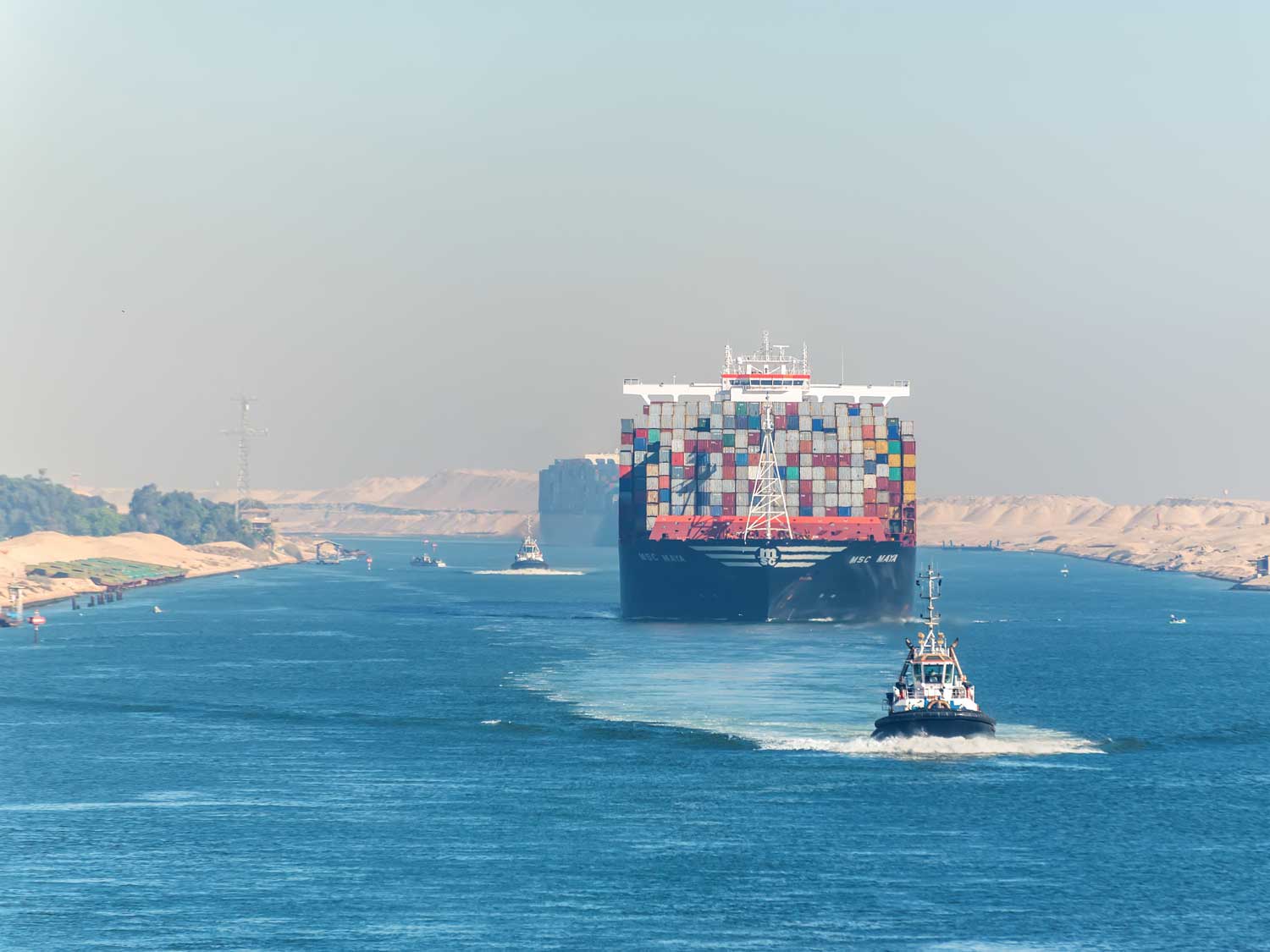
Suez MSC vessel

General Red Sea Update

The US and UK carried out eight strikes on Houthi targets in Yemen on Monday, as the Iran-aligned armed group continues to target commercial shipping in the Red Sea, with no sign that the conflict will de-escalate anytime soon.

While many hoped that the situation in the Red Sea might be a short-lived crisis, it is edging closer to the challenges that global supply chains faced during the COVID-19 pandemic. 

The ripple effects caused by the necessity of re-routing around 90% of all container ships from Asia around the Cape of Good Hope are immense. Analyst Sea-Intelligence are concluding that the vessel capacity drop is the second largest after the ‘Ever Given’ got stuck in the Suez Canal for six days during March 2021. 

With 10+ days added to the normal transit the drop in available capacity has sent freight rates rocketing, with container equipment challenges growing and expected to become far more difficult in the run up to the Chinese lunar new year. 

CMA CGM, the world’s third-largest carrier, announced an empty container imbalance surcharge of $100 per unit on top of similar equipment surcharges out of Turkey to the Mediterranean and North Africa announced last week.

There is one significant difference between now and the Ever Given situation and the pandemic, which is demand is lower and the shipping lines have injected significant capacity to maintain services. 

The Ever Given disruption occurred during a period of scarce capacity and historic peak demand, which was why rates skyrocketed and while we aren’t currently at those highs, the recent rate surge is noticeable in the short term.

The current delays and projected longer transit times are already impacting manufacturers across the globe, with many forced to halt production due to shipment delays, while many retailers have warned of product delays and cost increases. 

The next two-to-three weeks could be interesting, with bunched vessels arriving at the main ports, potentially triggering port delays driver shortages and cargo build-ups at warehouses.

The window for booking air freight ahead of Chinese New Year is closing and vessels are quickly filling, which is why we would urge you for your shipping deadlines, so that we can book your space and services at the best possible rates. 

Sharing forecasts for your forthcoming movements is an essential tool in managing your freight and expectations, and reserving the equipment you need, when you need it. 

If you have any questions or concerns about the impact of the Suez situation on your Asia supply chain, or would like to discuss its wider implications, please EMAIL our Chief Commercial Officer, Andy Smith.