US graph

Tariffs, Complexity and Opportunity

As the United States recalibrates its tariff landscape, importers (and DDP exporters) are navigating a rapidly shifting environment. With Section 301 tariffs on Chinese goods still firmly in place, it has never been more critical to understand which tariffs apply and how to calculate them.

In mid-May 2025, the US and China agreed to a temporary 90-day pause, reducing some of the steepest retaliatory tariffs introduced earlier this year. As a result the “Liberation Day” tariffs of 145% were reduced to 30% for a limited set of goods.

However, the vast majority of Section 301 tariffs of >20%, imposed since the original US-China trade war in 2018, remain fully in effect. These apply to thousands of products, from electronics and machinery to apparel, plastics, and consumer goods.

Even with the temporary relief, many Chinese imports still face aggregate duty rates between 25% and 45%, and in some categories even higher, depending on classification.

Meanwhile, other major trading blocs continue to face pressure:

  • United Kingdom: 10% for automotives, capped at 100,000 vehicles annually 10% blanket tariff for most other goods including consumer goods, machinery, and textiles
  • Canada & Mexico: A 25% duty now applies to most goods, with energy imports from Canada also hit by an additional 10% levy.
  • European Union: Proposed 50% tariffs have been postponed until 9 July, but the delay only adds to uncertainty.
  • Rest of World: Many categories of industrial and consumer goods continue to carry elevated Most-Favoured Nation (MFN) rates, while countries without a preferential trade agreement with the US face duties ranging from 5% to 25%, depending on classification.

This fragmented tariff regime has introduced significant compliance risk, particularly for shippers working across multiple geographies.

Compliance is Complex—and Getting it Wrong is Costly
With tariffs now applied differently by origin, product type, and trade agreement status, accuracy in classification and valuation is critical. Errors can lead to underpayment (and penalties), overpayment (and lost margin), or shipment delays.

Key areas of risk include:

  • HS Codes (Harmonised System codes): A single digit variation can shift a product from a 5% duty rate to 25%. For example, a screw compressor may fall under HS code 8414.80.16 (duty-free) or 8414.80.90 (5.0%).
  • Country of Origin Rules: Manufacturing in multiple countries complicates origin determination. A shirt assembled in Vietnam from Chinese fabric may not qualify for any duty relief under existing agreements.
  • Valuation: Freight, insurance and packaging must be properly declared when calculating the dutiable value. Missteps here lead to unexpected cost and audit risk.

For exporters selling DDP, the challenge is even greater: you’re liable for these duties, meaning you absorb the cost of any errors. In today’s environment, even small misclassifications can compound across shipments, eroding profitability.

Turning Tariffs into Opportunity
While challenging, this tariff environment also presents strategic opportunities for those who are prepared:

  • Supply Chain Diversification: Shifting sourcing to countries with lower US duty rates can generate meaningful savings. Even partial shifts can de-risk exposure.
  • Tariff Engineering: By adjusting product configuration or final assembly location, shippers can legally change a product’s classification or origin. For instance, repackaging or minor reassembly in a third country may reduce duty rates.
  • Bonded Warehousing & FTZs: Storing goods in US Foreign Trade Zones or bonded facilities can defer, reduce, or eliminate duty payments, especially when re-exporting or assembling in the US before domestic release.

Amid rising costs and intense global competition, such strategies can help turn tariff exposure into a competitive advantage.

We combine trade compliance expertise, global freight execution, and strategic planning to help you manage tariff risk and unlock supply chain opportunities.

  • Expert customs brokerage teams based in the US
  • Product classification and duty calculations
  • Duty mitigation strategies, including bonded warehousing
  • Trade lane analysis and landed cost modelling
  • Supply chain rerouting and logistics reconfiguration

EMAIL Andrew Smith, Managing Director, to learn how Metro help you stay compliant, minimise supply chain risk, and unlock opportunities.

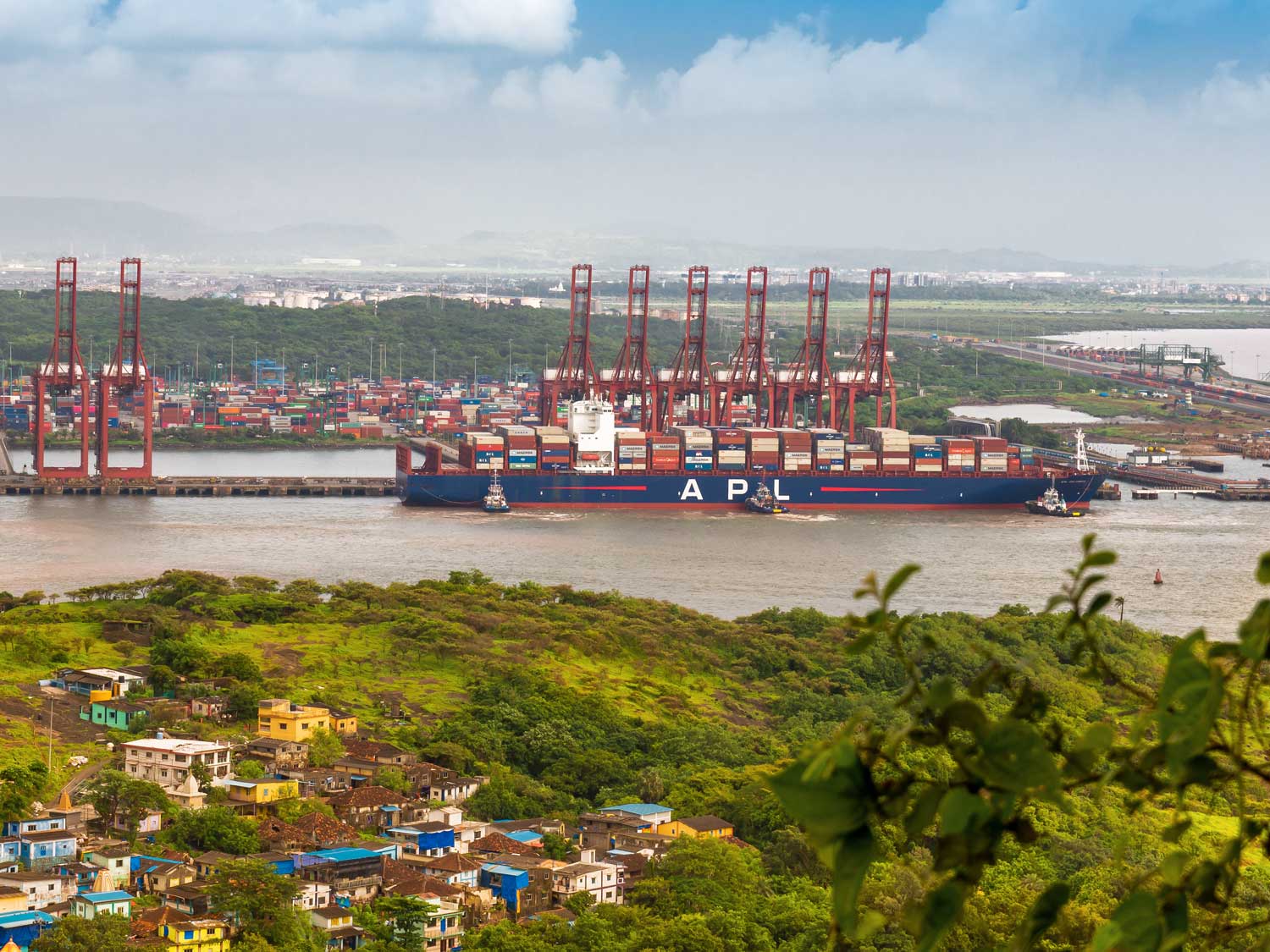
Indian port congestion looms

Cargo Rush Sparks Port Congestion and Equipment Shortages

The recent 90-day pause on US tariffs on Chinese imports has sparked a dramatic surge in demand, as American importers scramble to front-load shipments ahead of the 14 August deadline. The demand spike is now placing considerable pressure on supply chains across Asia and Europe, threatening to disrupt global freight flows into the traditional peak season.

Freight bookings from China to the US rocketed 300% in just one week, marking the highest volume levels of the year so far, as US importers use the temporary reprieve to push through previously delayed shipments.

While the tariff rate remains high at 30%, it is significantly lower than the 145% rates imposed earlier in the spring. Importers are moving quickly to take advantage of this limited window of cost certainty, but the consequences are already being felt far beyond China’s borders.

With ships now flooding back into Chinese ports, congestion has rapidly intensified:

  • Shanghai and Qingdao are experiencing berth waiting times of 24–72 hours.
  • Ningbo reports delays of 24–36 hours, while the congestion there is now worsening due to diverted volumes.
  • Busan is reporting 72-hour waits at the PNIT Terminal.
  • Singapore and Yokohama are also affected, with waiting times up to 36 and 24 hours, respectively.

Carriers are reporting widespread bunching and missed berths, forcing some vessels to skip port calls entirely. Simultaneously, container availability is tightening, especially in Shanghai and Ningbo, where carriers have begun rationing equipment based on rate levels and space commitments. Maersk and HMM are among those limiting container release in an attempt to balance capacity with available slots.

Further down the line, ports in southern China, Southeast Asia, and even intra-Asia trades are also reporting backlogs. Shenzhen, Hong Kong, Ho Chi Minh City, and Port Klang have all seen yard utilisation rise and service delays build.

Strain Spreads to Europe as Container Flows Disrupt
The congestion is not limited to Asia. As carriers reposition vessels and adjust service rotations to meet surging demand on eastbound transpacific routes, European ports are beginning to feel the knock-on effects.

In northern Europe:

  • Hamburg is facing 5–6½ days of berth delays,
  • Southampton and London Gateway are seeing 3-day waits,
  • Antwerp is experiencing severe disruption with delays extending to 15½ days,
  • Piraeus and Tangiers are also impacted, each facing waits of up to 4 and 3 days, respectively.

Labour shortages, reduced barge capacity on the Rhine, and tight schedules are compounding these delays. Meanwhile, rerouted vessels from Asia–Europe services are creating bunching at key transhipment hubs such as Bremerhaven and Hamburg, which in turn serve Scandinavia and the Baltic.

Equipment Shortages and Capacity Gaps Ahead of Peak Season
Container availability is expected to worsen in the coming weeks. With vessels already departing China at high utilisation levels, the return of empty containers and the repositioning of ships to Asia may not keep pace with demand.

If previously produced goods held in bonded warehouses are added to this surge in volumes during May, demand could increase by nearly 50%. A delay to June would ease the burden, but it could still be over 15%, which still represents a steep challenge ahead of the summer peak.

This front-loading of cargo to the US may lead to a sharp, compressed peak season starting now and stretching into mid-July, followed by potential equipment shortages and service volatility in August and beyond.

We are closely monitoring port performance, vessel schedules, and rate volatility across all major trade lanes, to support customers with:

  • Priority bookings and space management on transpacific and key routes
  • Equipment selection and container allocation strategies
  • Alternative routing and scheduling options to avoid bottlenecks
  • Global shipment visibility to SKU

EMAIL Managing Director Andrew Smith to discuss current conditions, risk mitigation, and booking options tailored to your business priorities.

Digger 1440x1080 1

Pressure Mounts on US Heavy Equipment Manufacturers

America’s machinery manufacturers have raised red flags over escalating tariff costs, reinforcing growing concern across the manufacturing sector.

With supply chains spanning the US, Europe, Mexico and China, heavy equipment manufacturers are experiencing firsthand how volatile trade policy is impacting cross-border operations, logistics flows and profitability.

Despite their strong domestic production footprints, manufacturers rely on global imports for key components—especially from Europe and China. These imports, once routine, have become financial pressure points in the wake of rising duties and retaliatory tariffs.

One leading manufacturer is forecasting up to $350 million in tariff expenses this quarter alone, while another expects annual tariff-related costs to top $500 million.

The problem isn’t just confined to import charges. Export volumes are also under pressure, as shifting trade dynamics alter demand patterns and reduce competitiveness in overseas markets.

North America-Centric, Globally Exposed
Two leading manufacturers source more than 75% of their components from within the United States, but their supply chains extend well beyond national borders. Equipment parts arrive from factories and suppliers across Canada, Europe and Latin America and a substantial proportion of inputs still come from Asia, most notably China.

With a growing share of international trade now subject to unpredictable tariffs, even these diversified sourcing strategies offer limited insulation. One manufacturer, for example, cited that half of its projected tariff costs stem from Chinese imports alone.

Even the recent 90-day tariff easing between the US and China, announced on 14 May, is unlikely to provide lasting relief. As one executive warned, the long-term environment remains uncertain: “Many mitigation strategies require clarity and certainty on tariffs, but the landscape is too volatile to act decisively.”

Sales are already reflecting these pressures. In the second quarter, one company reported a 16% drop in total revenue and a 23% fall in construction and forestry equipment sales. Its peer, reporting for Q1, posted a 10% decline in total revenue, with construction equipment hit hardest, down 19%.

Strategic Logistics Support from Metro
Metro works with world-leading manufacturers and understands the complexities of global equipment supply chains. Whether moving machinery from US heartlands like Illinois and Texas, or coordinating inbound component flows from Europe, Canada, Mexico or China, Metro helps manufacturers manage risk, maintain continuity, and adapt quickly.

We manage high-and-heavy, breakbulk and RoRo shipments across key corridors, with logistics and customs services designed specifically for industrial equipment movements. 

  • End-to-end customs expertise, including tariff classification, valuation, and compliance guidance
  • Integrated transport planning, enabling smarter decisions on routing, modal shifts, and consolidation
  • Support for North American, European and Asia-Pacific flows, backed by local teams and global visibility
  • Proactive trade advisory services, keeping clients informed and prepared as policies evolve

As political negotiations reshape tariff regimes and global supply chains remain under strain, manufacturers with international exposure need more than reactive logistics. They need strategic, agile partners that will future-proof their supply chains, reduce friction across borders, and protect performance in the face of mounting uncertainty.

EMAIL Managing Director, Andrew Smith, to discuss how Metro can support your global logistics strategy.

COSCO appoint Metro partner

US Port Fees on Chinese-Built Vessels

The United States Trade Representative (USTR) has finalised a revised plan to impose port fees on Chinese-built containerships calling at US ports.

This follows the reintroduction of the SHIPS for America Act, part of President Donald Trump’s broader push to revive the US shipbuilding industry and reduce reliance on Chinese maritime infrastructure.

While significantly less disruptive than the original February proposal, which threatened to add up to $1.5 million per port call and cost the industry $24 billion, the revised version will still increase shipping costs by approximately $1 million per voyage. These added costs may have ripple effects across global supply chains.

What’s Changing – and When?

USTR Port Fee

  • Start Date: Mid-October 2025
  • Escalation: Costs will increase every 180 days over a three-year period
  • Estimated Additional Costs:
    • Chinese operators (e.g. COSCO/OOCL): USD $250–$1,600 per TEU
    • Non-Chinese operators using China-built vessels: USD $100–$400 per TEU

Crucially, carriers will only be charged once per US rotation, not at every port call. Exemptions apply for:

  • Vessels under 4,000 TEUs
  • Voyages under 2,000 nautical miles
  • China-built vessels owned by US-based carriers

Carrier Reactions and Supply Chain Impacts
Most non-Chinese carriers are expected to redeploy tonnage to avoid the fees, shifting Chinese-built vessels away from US trades in favour of non-Chinese built ships. Some may elect to use transhipment hubs in the Caribbean to bypass direct calls to US ports.

Chinese carriers like COSCO and OOCL will be hardest hit. With limited ability to avoid the charges, these carriers may lean more heavily on alliance partners like CMA CGM or Evergreen, potentially distorting market dynamics and reducing competition on some transpacific routes.

Despite initial fears, widespread surcharges are currently seen as unlikely. Market competition and alternative capacity could prevent many carriers from passing costs directly onto shippers, tthough selective route-specific or carrier-specific fees may still emerge.

SHIPS for America Act
This proposed legislation, while not yet passed, aims to further penalise Chinese-built, -owned or -registered vessels. It also opens the door for other “countries of concern” to be added in future. No cost estimates have been released, but shippers should remain alert to potential follow-on impacts.

The evolving policy landscape introduces fresh uncertainty for importers and exporters, especially those with supply chains linked to Asia–US routes.

Metro is actively monitoring developments and engaging with carriers and industry bodies to stay ahead of the real-time implications. Our goal is to help customers navigate any changes smoothly and make informed decisions.

If your business could be affected by these measures, or you simply want to future-proof your supply chain with revised routing strategies and updated landed cost assessments, please EMAIL our Managing Director, Andrew Smith.