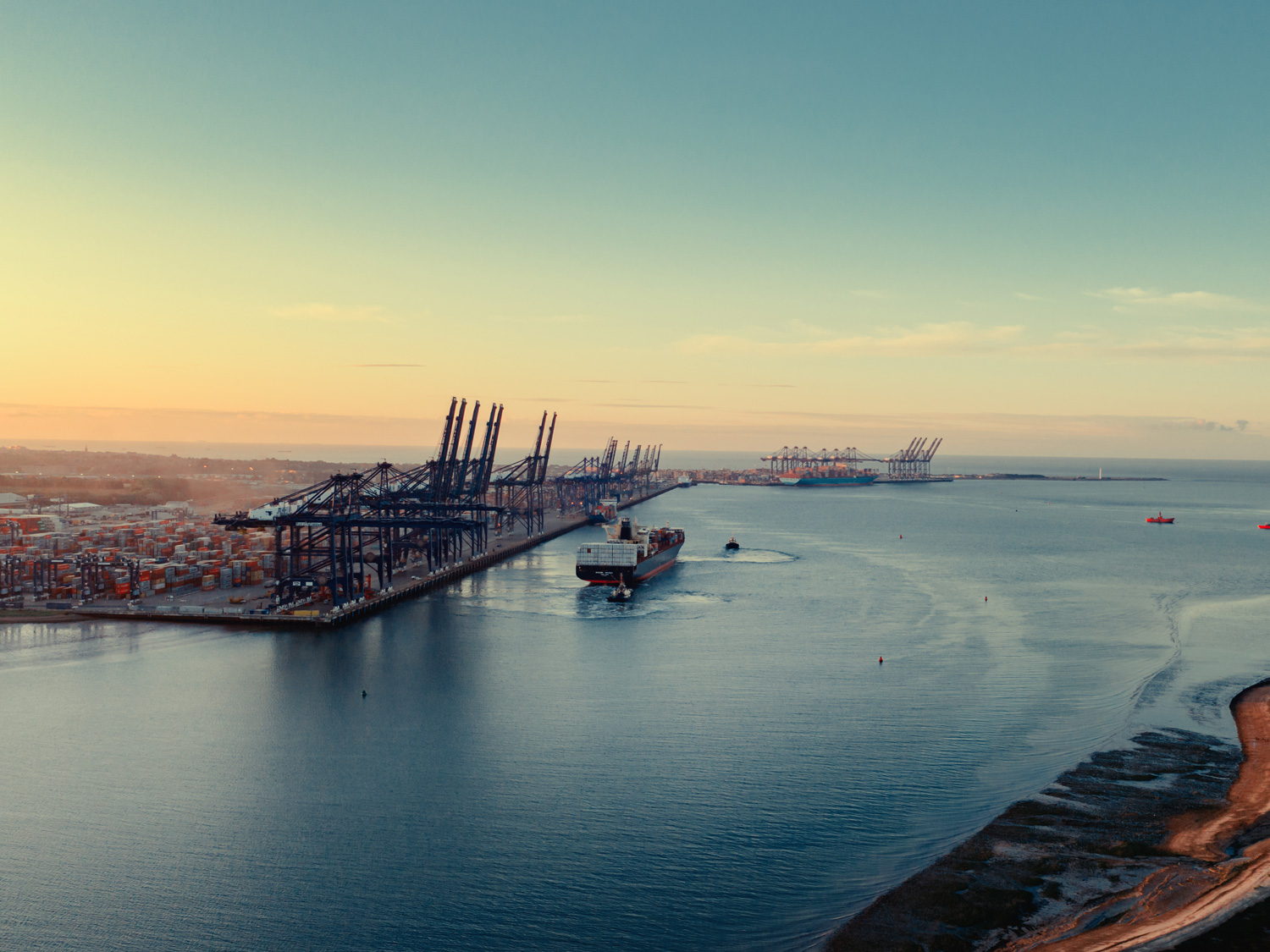
FXT at dawn

Strong demand and constrained capacity are reshaping container shipping

For much of the recent past, freight markets have lurched from one disruption to another. Pandemic recovery, conflict in the Red Sea, tariff uncertainty and conflict in the Middle East have each triggered periods of higher freight rates before conditions gradually eased.

This time, however, the market appears to be changing for different reasons.

While geopolitical events continue to influence global shipping, they are no longer the only force keeping container capacity tight. Strong international trade, sustained investment in new industries and persistent congestion across global transport networks are all helping to support freight rates, suggesting the market may remain firmer than many shippers anticipated.

Global trade continues to absorb available capacity

One of the strongest indicators is that cargo volumes continue to grow despite higher transport costs.

Global container traffic has increased by around 4% year on year, with Asia-Europe volumes rising approximately 12% and Asia-North America around 11%, with indexed rates rising 150% over two quarters.

Growth is also becoming more geographically diverse. Alongside resilient demand from Europe and North America, expanding trade with Africa and Latin America is absorbing additional vessel capacity that might previously have been available elsewhere.

At the same time, the mix of cargo moving through global supply chains is changing.

Rather than retailers replenishing inventories and other traditional sources of demand, increasing volumes are being generated by long-term investment in artificial intelligence infrastructure, data centres, batteries, electric vehicles and renewable energy technologies. These emerging industries will require sustained manufacturing and international transport over many years, creating a more durable source of freight demand than short-term consumer buying cycles.

More ships do not necessarily mean more capacity

Although shipping lines have ordered record numbers of new vessels, effective shipping capacity remains far tighter than headline fleet statistics suggest.

Only around 2% of the global container fleet is currently idle, while demand for charter vessels (particularly ships above 3,000 TEU) continues to strengthen. Carrier profitability also recovered sharply during the second quarter, reflecting healthier trading conditions after a difficult start to the year.

Meanwhile, operational constraints continue to reduce available capacity.

Most container services remain diverted around the Cape of Good Hope instead of using the Red Sea, significantly extending voyage times. Transit through the Strait of Hormuz remains uncertain following renewed regional tensions, while congestion at several major ports continues to delay vessel turnaround times.

Together, these factors mean carriers are deploying almost every available ship simply to maintain existing service networks.

Air freight points to the same underlying trend

Container shipping is not the only transport mode experiencing stronger market conditions.

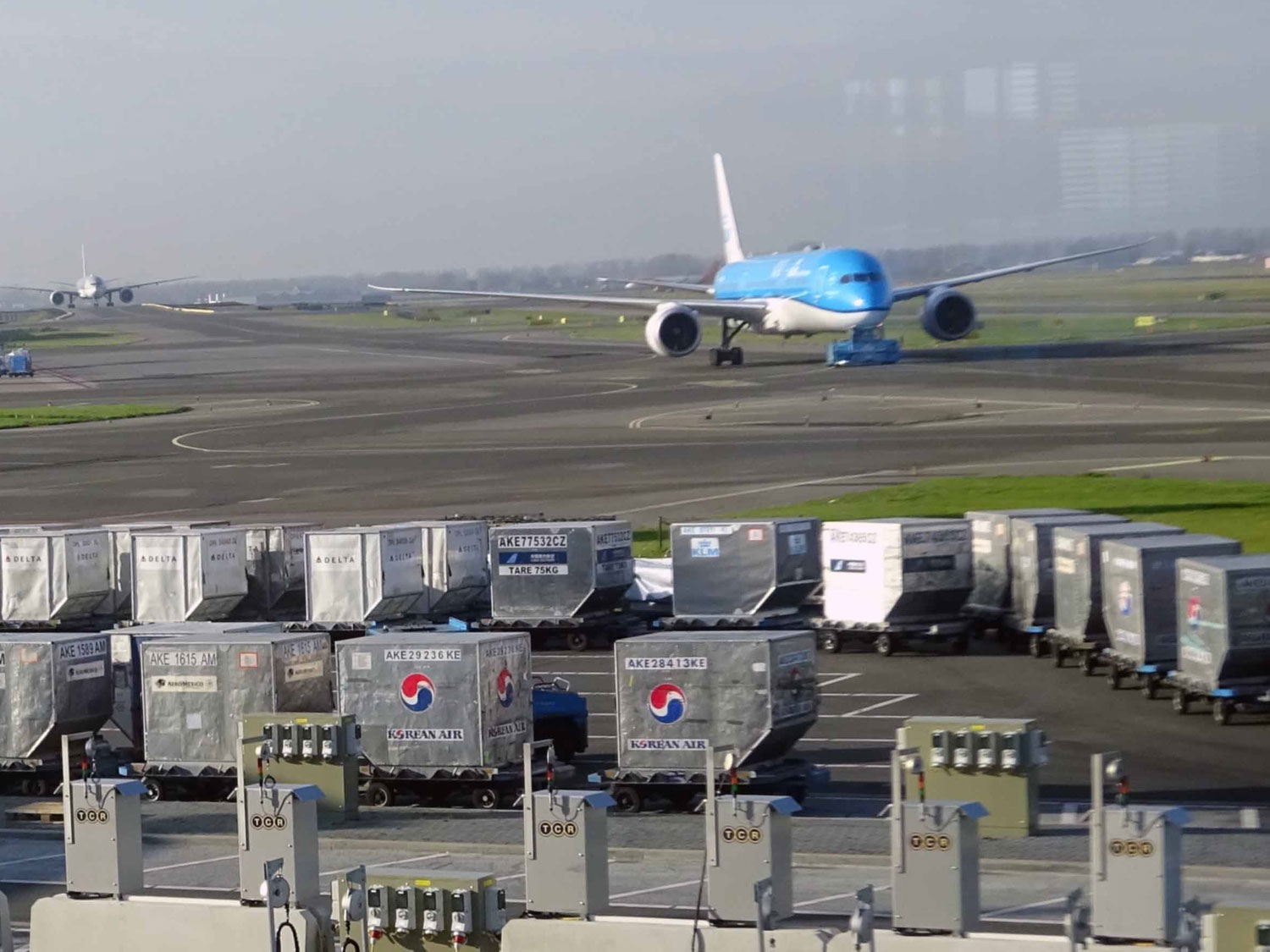
Air freight demand has also continued to strengthen since the second quarter, despite improving airline capacity and fewer operational disruptions, driving indexed rates up by a quarter in under six months.

When both ocean and air freight markets strengthen simultaneously, it indicates that demand for international transport is expanding across global supply chains rather than being driven solely by disruption affecting one particular trade route.

For cargo owners, that provides further evidence that today's freight market reflects broader structural demand rather than temporary geopolitical events alone.

Peak season is likely to remain challenging

Looking ahead, while some softening is probably inevitable, there is little indication that market conditions will change significantly before the end of the year.

Strong demand, limited spare shipping capacity, continuing port congestion and ongoing geopolitical uncertainty are all expected to support freight rates throughout the traditional peak season.

While some carriers have begun limited returns through the Suez Canal, these remain selective and do not yet represent a wider restoration of normal operating patterns.

As a result, businesses should continue planning for constrained capacity, longer booking lead times and freight costs remaining above historical averages.

Relief is coming, but not immediately

The substantial order-book of new container ships scheduled for delivery during 2027 and 2028 should eventually restore greater balance between supply and demand.

Until then, however, the combination of resilient trade growth and restricted effective capacity is likely to keep freight markets tighter than many expected earlier this year.

Rather than waiting for rates to fall, businesses should continue reviewing freight budgets, securing capacity early and building flexibility into their supply chain planning to reduce exposure to market volatility.

Metro can help you stay ahead of changing market conditions

Freight markets are evolving rapidly, making forward planning more important than ever. Whether you're reviewing sourcing strategies, managing peak season demand or looking to reduce transport costs through smarter routing and capacity planning, Metro's ocean freight specialists can help.

With global carrier relationships, flexible routing options and tailored supply chain solutions, we work alongside customers to secure reliable capacity and build resilient logistics strategies that keep cargo moving, whatever the market conditions. 

EMAIL Metro’s Managing Director, Andrew Smith to discuss how we can support your international supply chain.


India flag on container doors 1440x1080 1

India, the hottest shipping lane

Ocean freight from India has entered a period of intense demand, with tightening vessel space, rising freight rates and increasing competition for capacity across both European and North American trade lanes.

For businesses diversifying manufacturing away from China or expanding sourcing across South Asia, the challenge is no longer finding suppliers. It is securing reliable shipping capacity in an increasingly constrained market.

Capacity constraints are driving the market

The India-Europe trade has tightened significantly over recent weeks as booming export demand collides with reduced vessel availability.

While demand has recovered strongly, carriers have removed a substantial amount of capacity through blank sailings, cancelled departures, port omissions and revised service schedules. Between March and early July, more than one in five scheduled sailings between India and Europe failed to operate, reducing overall capacity by around 17% across the trade.

The result has been widespread vessel overbooking, booking windows stretching to four to six weeks, and an increasing risk of cargo either being rolled or, in some cases, having confirmed bookings cancelled and rebooked onto later sailings.

Freight rates have responded accordingly. Average pricing from western Indian gateways into Northern Europe has increased by up to 50% in little more than a month, with further peak season surcharges already announced for the second half of July.

Rather than being driven by a single disruption, the current market reflects a genuine supply and demand imbalance, with available vessel space struggling to keep pace with export demand.

Service reliability is becoming just as important as capacity

The tightening market is being compounded by inconsistent service performance.

Several India-Europe services have experienced repeated blank sailings over recent months, while others have omitted key North European ports, further reducing effective capacity available to shippers. On some loops, weekly departures have become considerably less frequent, extending delays whenever cargo is rolled to a subsequent sailing.

At the same time, schedule reliability varies significantly between carrier networks. While some services continue to operate with consistently high reliability through the deployment of additional vessels, others continue to experience frequent disruption and irregular departures.

For shippers, choosing the right carrier and service has become just as important as securing vessel space itself.

Pressure is spreading across South Asia

Across the wider South Asia region, carriers have introduced substantially higher Freight All Kinds (FAK) levels into both North Europe and Mediterranean markets. These increases represent step changes of around 30-50% compared with pricing seen at the end of the first quarter.

These adjustments reflect a broader reset in carrier expectations. With capacity constrained and demand holding firm, pricing is being recalibrated to reflect both operational pressures and ongoing network disruption.

While some variation remains across individual trade lanes, the direction of travel is consistent: a more expensive and less flexible South Asia-Europe market through the current peak season.

US demand is adding further pressure

Demand on the India-US East Coast lane has surged in recent weeks, with booking volumes more than doubling normal levels and freight rates increasing by more than 80% over a four-week period.

In response, one major carrier is preparing to reinstate a previously withdrawn India-US 

East Coast service only weeks after suspending it, underlining how quickly supply and demand dynamics have changed.

This matters for European shippers because carriers continue to allocate vessels where returns are strongest. Strong demand across North American services inevitably competes with India-Europe for finite vessel capacity, making space increasingly valuable across both trades.

Local expertise makes the difference

With an expanding office network across India, Metro’s local teams coordinate factory collections, inland movements, port operations and ocean bookings as a single integrated flow, providing customers with earlier visibility of capacity constraints and greater flexibility when market conditions change.

Whether that means using alternative gateways, splitting shipments across multiple sailings or combining ocean freight with targeted air solutions for time-critical cargo, we help businesses maintain continuity while controlling transport costs.

To discuss your India-Europe or India-North America shipping requirements, EMAIL Metro’s Managing Director.

NYC 1440x1080 1

July deadline for eFiling US product compliance

From 8 July, regulated consumer products entering the US must be supported by electronic compliance certificates filed at the time of customs entry, turning missing or inaccurate information into a direct threat to supply chain continuity.

This is not a change to the underlying safety rules, but to how they are enforced in practice. Paper or PDF certificates kept “on file” will no longer be enough; instead, compliance data must travel with the goods through US Customs and Border Protection’s Automated Commercial Environment (ACE), creating a new operational dependency on clean master data and structured product records.

What is changing in July

The US Consumer Product Safety Commission (CPSC) is rolling out mandatory electronic filing of Certificates of Compliance for regulated consumer products from 8 July, covering finished goods already in scope of existing CPSC requirements.

Importers (or their customs brokers) must now submit defined certificate data elements electronically via ACE with every applicable customs entry, including low-value and de minimis consignments. Shipments into US Foreign Trade Zones benefit from a longer transition, with mandatory eFiling pushed back to January 2027, but they will ultimately be brought into the same regime.

The new rules will be felt most acutely in sectors with broad product ranges, frequent line changes and complex safety obligations.

Fashion, retail, toys, consumer electronics, nursery products, homeware and household goods are all directly affected, particularly where products require either a Children’s Product Certificate (CPC) or a General Certificate of Conformity (GCC). 

For brands with high-volume direct-to-consumer flows and seasonal collections, the inclusion of de minimis parcels means that even small data gaps can disrupt launches and delay customer deliveries.

From paper certificates to digital compliance

For each shipment, importers must transmit a structured set of data points, including product identifiers (such as SKUs), details of the certifying party, the specific safety rules applied, manufacturing dates and locations, test dates and locations, and contact details for the laboratory and record keeper. 

Importers can choose between two methods of submitting compliance data:

1. Full PGA Message Set

Under this option, all certificate data is filed directly into ACE for every shipment. Required information includes:

  • Product identifiers such as SKU or GTIN
  • Applicable CPSC safety standards
  • Manufacturing dates and locations
  • Manufacturer or assembler details
  • Testing dates and testing facility information
  • Laboratory details
  • Contact details for the party maintaining compliance records

This approach is generally more suitable for importers handling smaller product ranges or irregular shipments.

2. Reference PGA Message Set

For businesses importing the same regulated products regularly, the CPSC Product Registry offers a more streamlined alternative.

Product certificate information can be pre-registered in advance, allowing customs brokers to submit only:

  • Certifier ID
  • Product ID
  • Certificate Version ID

This method can significantly reduce repetitive data entry and support faster customs processing.

Both approaches rely on accurate, pre-prepared data that aligns exactly with the physical shipment.

New operational and data challenges

Importers now need to manage the intersection of multiple requirements at SKU level, for example combining US flammability rules for clothing, chemical restrictions on substances such as lead and phthalates, and labelling standards for fibre content, care instructions and safety warnings.

For fashion and lifestyle brands, that means building robust testing programmes, maintaining complete technical files and ensuring master data can be translated into CPSC-compliant certificate records without manual rework at the point of entry.

Regulators have signalled that they expect full compliance from the implementation date, with no broad indication of delayed enforcement.

Incorrect or incomplete eFilings can trigger automated customs holds, manual inspections, potential seizure or refusal of non-compliant shipments, and even civil penalties where systemic failures are identified. For time-sensitive sectors such as fashion and retail, where margins and calendars are already under pressure, even short delays at the border can undermine entire seasons or promotional campaigns.

Why exporters and origin teams matter

Although legal responsibility for eFiling sits with the US importer, a significant proportion of the required information resides with exporters, manufacturers and upstream partners.

Testing records, manufacturing details, lab certifications and product specifications are typically held at origin, and without structured access to this data, importers may struggle to complete mandatory filings accurately and on time. Exporters targeting the US market therefore need to map CPSC scope with their customers and embed electronic information sharing into standard shipping processes so certificate data is available well before cargo departs.

Turning compliance into an advantage

Businesses that invest early in mapping their CPSC exposure, closing testing gaps, building digital certificate libraries and rehearsing eFilings in test environments will move through the new regime with fewer delays and lower risk. 

Those that treat compliance as a last-minute paperwork exercise risk finding that missing or inconsistent data becomes a bigger threat than tariffs, capacity constraints or transport disruption.

Metro is already working with customers in fashion, retail, consumer goods and wider international trade to align product data, testing records, documentation and customs processes across origin and destination teams. 

If you import into the United States and want to turn the new CPSC eFiling rules into a competitive advantage rather than a source of disruption, EMAIL our Managing Director, Andrew Smith, directly. 

container loading

Why more importers are rethinking FCL during peak season pressure

Metro’s LCL Optimised Solution lets shippers move smaller, more frequent orders without paying for empty container space, freeing up working capital and easing the current squeeze on capacity.

As peak season tightens capacity across the major east-west container trades, many importers are reassessing whether shipping partially filled containers still makes commercial sense.

With space tighter, container equipment under pressure and freight markets increasingly volatile, Metro is seeing growing interest in flexible LCL (Less than Container Load) solutions that help businesses reduce costs, improve inventory flow and avoid paying for unused container space.

For many shippers, particularly those moving fluctuating or irregular cargo volumes, the traditional Full Container Load (FCL) model can tie up unnecessary working capital and create avoidable inefficiencies across the supply chain.

When LCL becomes more cost-effective

While FCL remains more cost-effective as shipment volumes scale, cargo volumes below 15 CBM are generally better suited to LCL solutions, while 15 to 20 CBM represents a tipping point where FCL and LCL options should be compared carefully.

That calculation becomes even more relevant during peak season periods, when under-utilised containers effectively mean paying premium freight rates for empty space.

However, the headline freight rate is only part of the picture. Many origin and destination charges, including customs clearance, documentation and terminal handling, apply whether cargo moves as FCL or LCL. The real saving often comes from avoiding under-filled containers and reducing indirect costs linked to excess inventory.

Metro’s LCL Optimised Solution

Metro’s Optimised Solution converts under-utilised 20′ and 40′ FCL shipments into LCL by loading cargo into Metro’s own consolidated containers alongside compatible freight from other customers. This improves container utilisation while giving customers access to guaranteed capacity during peak periods without paying for unused space.

Customers benefit from lower freight costs per cubic metre compared with similar volumes moving in partially filled FCL containers, alongside reduced administration and handling complexity through simplified pricing and regular consolidated departures.

Although LCL shipments naturally involve additional consolidation and deconsolidation handling, Metro’s priority processes for LCL conversions minimise disruption, reduce risk and maintain cargo integrity throughout the shipment process.

The overall result is a more flexible and commercially efficient shipping model for importers whose cargo volumes no longer justify dedicated FCL space on every movement.

Reducing inventory pressure and improving flexibility

Smaller and more frequent shipments help reduce the amount of cash tied up in bulk inventory while also lowering storage pressure and dwell time at origin.

Businesses gain greater flexibility to respond to changing demand patterns without committing to large inventory positions weeks or months in advance. In volatile market conditions, that flexibility can become a major operational advantage.

Metro’s regular consolidated departures also help customers reduce origin delays and improve supply chain responsiveness during periods of disruption, particularly when container shortages and rolling bookings are affecting traditional FCL movements.

As market conditions remain volatile and peak season pressure continues building, many importers are reviewing whether every shipment genuinely requires a full container, or whether a smarter consolidation strategy could unlock greater efficiency across the supply chain.

Metro’s Optimised LCL Solution helps customers reduce freight costs, free up working capital, secure guaranteed space and avoid paying for under-utilised containers during volatile market conditions.

If you would like to explore whether converting FCL shipments into Metro’s consolidated LCL solution could improve your supply chain efficiency, save money and improve your cash flow, EMAIL Key Account Director Jane Kenny.