
Smart 2026 supply chains are being engineered for pressure

Smart 2026 supply chains are being engineered for pressure

Supply chains are no longer judged on efficiency alone, in 2026 they will be expected to anticipate disruption and adapt at speed to actively support growth. The experience of the past year confirmed that stability is no longer a realistic planning assumption, but performance under pressure is.

Rather than a single crisis, 2025 delivered constant friction. Congestion resurfaced across ports and inland networks, capacity existed but was selectively deployed, and geopolitical and regulatory shifts altered trade flows long before any formal policy changes took effect. 

The result was a decisive shift in mindset: supply chains must be designed to operate in volatility, not merely recover from it.

That shift accelerates in 2026, as technology, resilience and sustainability converge to redefine how supply chains are planned, financed and executed.

Resilience becomes a competitive advantage

If 2025 proved anything, it was that capacity on paper does not guarantee performance in practice. Across ocean, air and road freight, service reliability was dictated by execution: blank sailings, schedule volatility and inland bottlenecks determined what actually moved.

In response, supply chain design is moving beyond simple continuity planning toward resilience, where networks are designed to adapt and improve under stress.

Common characteristics include:

  • Multi-route and multimodal playbooks rather than single-lane optimisation
  • Near-shoring and regionalisation to shorten lead times and reduce exposure
  • Centralised planning paired with regional execution for faster response

These approaches reflect a broader shift away from cost-minimisation toward risk-adjusted performance.

Warehousing becomes a strategic control point

Warehousing emerged as one of the most critical differentiators in 2025 — a trend that intensifies in 2026. With transit times less predictable and congestion harder to avoid, inventory positioning and fulfilment speed have become central to supply-chain resilience.

High-performing shippers increasingly treat warehousing as an active control layer, not passive storage. Key developments include:

  • Greater use of strategically located facilities to buffer disruption
  • Tighter integration between warehousing, transport and customs planning
  • Investment in automation and robotics that flex with demand and seasonality

This is particularly important as omnichannel and e-commerce pressures continue to grow, demanding seamless support for direct-to-consumer, BOPIS and rapid fulfilment models alongside traditional B2B flows.

From reactive networks to intelligent systems

One of the most significant changes heading into 2026 is the role of technology within supply chains. What began as analytical support is now moving into operational control.

AI-enabled tools are increasingly embedded across planning, procurement, inventory management and risk assessment, enabling supply chains to:

  • Anticipate disruption through predictive insights
  • Optimise routing, inventory and capacity decisions in near real time
  • Coordinate responses across multiple functions and geographies

As these systems become more connected, cybersecurity and data governance also rise sharply in importance. Protecting sensitive operational, commercial and customs data is now a core supply-chain requirement, not an IT afterthought.

Data quality, skills and execution define winners

Technology alone is not enough. The past year also highlighted a widening gap between organisations that could convert insight into action and those constrained by fragmented systems and poor data quality.

In 2026, competitive advantage depends on:

  • Clean, trusted and consistent data across logistics, customs and finance
  • Integrated platforms rather than disconnected tools
  • Teams with the skills to manage AI-driven, data-rich operations

Workforce transformation is therefore as important as digital investment. Roles are evolving toward data analytics, systems oversight and exception management, requiring targeted up-skilling to unlock value from new technologies.

Sustainability and compliance move into the operating core

Environmental and regulatory pressures are no longer peripheral considerations. Carbon pricing, emissions transparency, stricter customs enforcement and evolving trade rules are now shaping routing, mode selection and inventory strategy.

For most shippers, progress in 2026 will come less from premium “green” options and more from practical levers:

  • Smarter planning and consolidation
  • Modal optimisation and regionalisation
  • Stronger traceability and data governance

Sustainability and compliance have become operational constraints — inseparable from cost, resilience and service performance.

Designing supply chains that perform under pressure

Taken together, the direction of travel for 2026 is clear. Supply chains are being rebuilt as intelligent, integrated systems — shifting from reactive cost centres to strategic growth engines.

The most resilient networks are those that:

  • Integrate finance, procurement, logistics and technology decisions
  • Combine centralised control with regional agility
  • Invest equally in data, platforms, people and process

The objective is not to eliminate disruption, but to design networks that continue to perform when conditions are uncertain.

At Metro, this same mindset underpins how supply chains are assessed and supported. Stress-testing assumptions, strengthening visibility and applying execution-focused logistics, warehousing and transport strategies. In 2026, the differentiator will not be avoiding disruption, but owning a supply chain designed to operate through it.
When the Suez Canal Comes Back Online: Hidden Risks for Supply Chains

When the Suez Canal Comes Back Online: Hidden Risks for Supply Chains

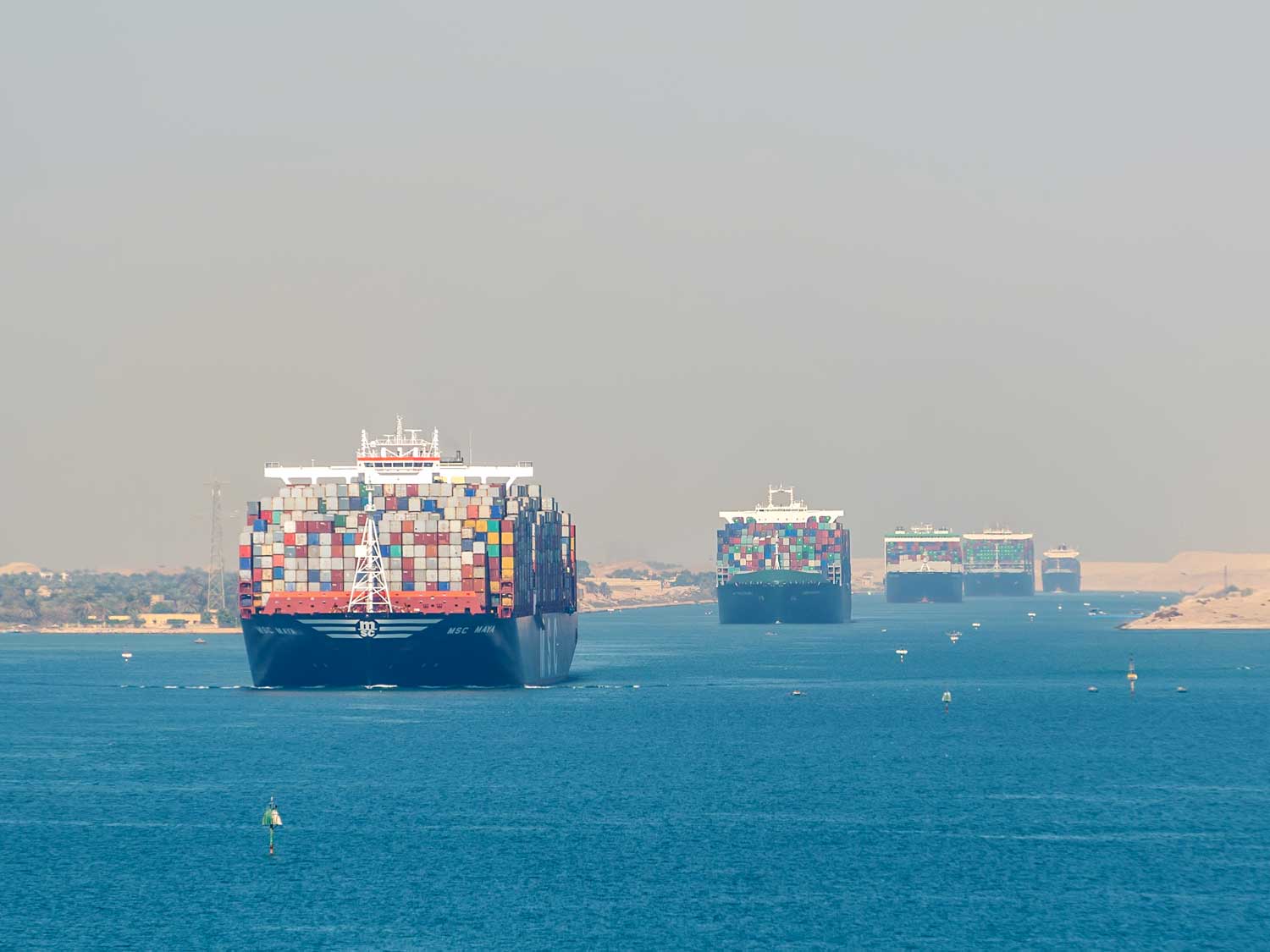
With hopes rising of stabilising conflict in the Red Sea region, analysts are increasingly considering what it would mean if shipping lines resume full use of the Suez Canal route, and it’s not all good news. 

While the shorter route from Asia to Europe might seem like a logistical boon, the modelling suggests there are several material pitfalls ahead that shippers need to be aware of.

Since late 2023, container shipping lines operating on Asia–Europe and Asia–North America routes have avoided the Suez Canal, opting instead to sail around the Cape of Good Hope. This detour has extended transit times and absorbed a significant amount of global container capacity. According to Sea-Intelligence, a full and immediate return to the Suez Canal could release up to 2.1 million TEU of capacity, equivalent to around 6.5 % of the global fleet, back into circulation.

However, this sudden release would create a powerful surge of imports into Europe. Modelling suggests that if all carriers reverted to Suez routing at once, inbound volumes from Asia could double for a period of up to two weeks, pushing overall port handling demand almost 40 % higher than previous peaks. 

Even if the transition were more gradual, spread over six to eight weeks, European ports would still face throughput levels around 10 % above historical highs, straining terminal operations, inland connections, and storage capacity.

Key Areas of Risk

  • European Port Congestion and Hinterland Strain
    European ports are already under pressure. A sudden import surge could stretch terminal capacity, yard space, and inland networks, leading to delays, higher handling costs, and increased demurrage.
  • Short-Term Disruption Despite Long-Term Gains
    While the Suez route offers shorter transits and lower fuel use, the transition back is complex. Network structures have been rebuilt around the Cape, and reverting will require major re-engineering, with temporary schedule changes and service disruption.
  • Lingering Risk and Insurance Costs
    The security issues that diverted ships from Suez persist. Even after reopening, residual war-risk premiums and contingency measures could keep operating costs elevated.
  • Capacity Overshoot and Rate Pressure
    Releasing 2.1 million TEU of capacity is likely to swing supply–demand balance, pushing rates down and while shippers may benefit in the short-term, it is likely that carriers would take drastic action to protect margins.
  • Timing and Readiness
    The timing of a full return remains uncertain. Analysts stress that rushing back before networks and ports are ready could trigger fresh disruption rather than restoring stability.

Metro’s sea freight team are already modelling reopening scenarios to ensure capacity, routing, and contingency plans are ready when trade flows shift back through the Suez Canal. 

EMAIL Managing Director, Andrew Smith to arrange a strategic review of your shipping patterns, risk exposure, and options to protect service continuity and cost efficiency when routes realign.

March Airfreight Surge Sets Stage for Further Growth as US-China Trade Tensions Ease

March Airfreight Surge Sets Stage for Further Growth as US-China Trade Tensions Ease

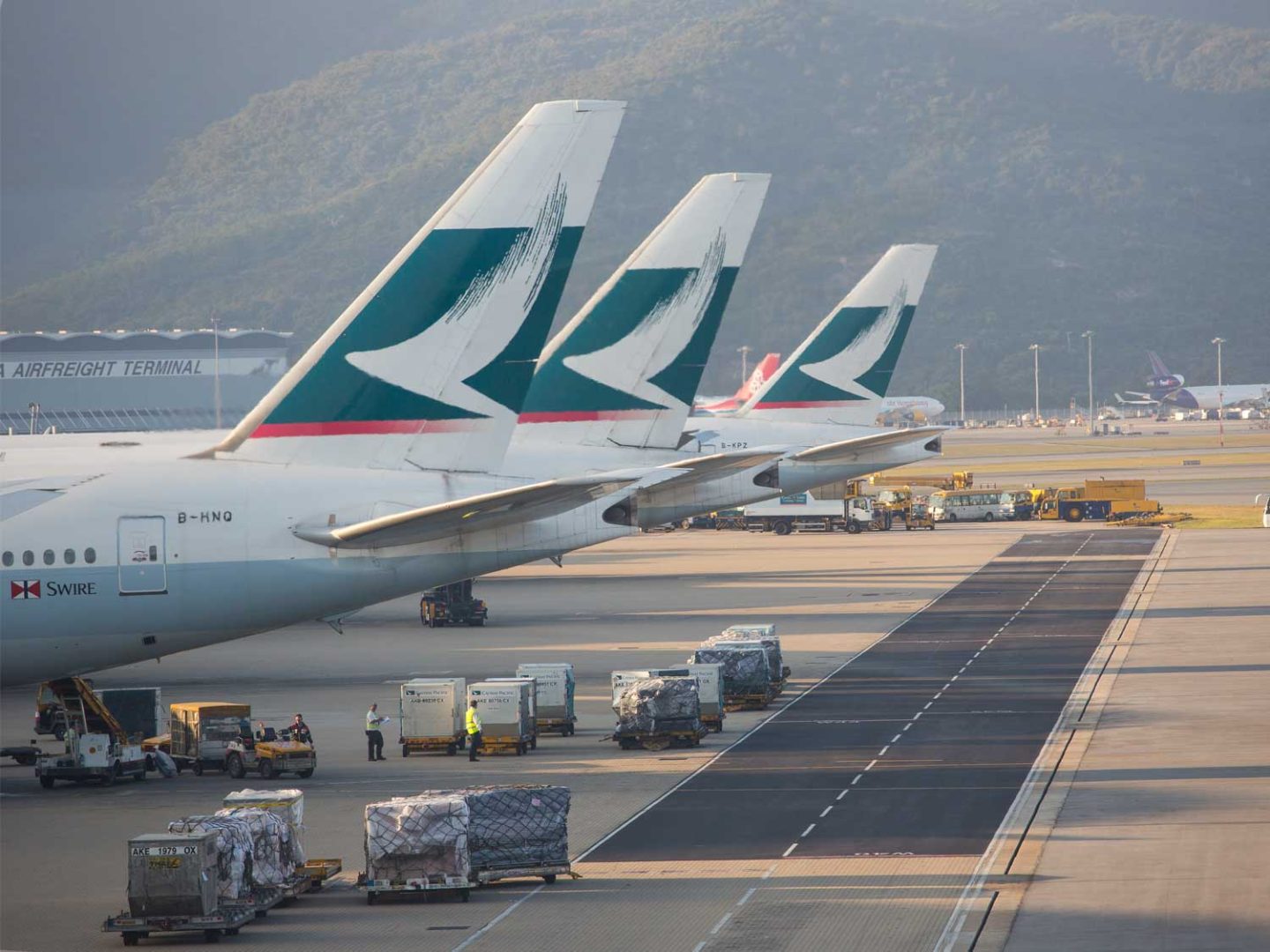
Airfreight markets posted a record performance in March, with particularly strong activity on Asia, US, Europe and UK trade lanes. The surge, driven by shippers front-loading cargo ahead of anticipated US tariffs, has provided a benchmark for what could follow in the months ahead as recent tariff reductions between the US and China hint at a renewed spike in activity.

According to IATA, global demand measured in cargo tonne-kilometres rose by 4.4% year-on-year, with international cargo traffic increasing by 5.5%. Capacity, meanwhile, increased by a similar margin, helping to stabilise load factors despite the sudden surge in volumes. Asia-Pacific carriers led growth with a 9.6% rise in demand and an 11% increase in available capacity. North American airlines recorded a 9.5% increase in volumes, while European carriers posted a more moderate rise.

Asia-North America remained the largest and fastest-growing trade lane by market share, as exporters sought to avoid the sharp rise in tariffs. The Europe-North America route also experienced strong activity and was the busiest overall in March, underpinned by steady intra-European demand which grew by 2%.

The operating environment provided further stimulus, with world industrial output and global trade volumes expanding by just under 3%. Falling energy costs provided additional support, with jet fuel prices down for the ninth consecutive month. Inflation rates also stabilised across key markets, providing additional certainty for international shippers. China’s deflationary environment also showed signs of softening, with the rate improving to just below zero.

The result was a sharp escalation in demand from sectors that rely on rapid supply chains and cannot risk ocean freight delays. Electronics, high fashion, automotive and perishable goods were among the leading commodities contributing to the increased volumes.

The extraordinary March performance may not remain an isolated event. The recent temporary US-China tariff reduction has the potential to trigger another wave of increased airfreight activity.

While the extent of future growth will depend on how negotiations between the world’s two largest economies unfold, the easing of tariffs has already bolstered market sentiment.

However, market analysts note that after the March peak, demand may return to more typical seasonal levels in the short term, particularly as capacity has increased by over 6% on international routes, offering more space for shippers. Yet, the fundamental reliance on airfreight for high-value and time-critical shipments between Asia, the US, Europe and the UK remains unchanged.

Should trade relations between the US and China continue to thaw, the market could be poised for another significant uplift in volumes. The key will be whether the current political stability translates into sustained confidence among exporters and freight forwarders across these critical trade lanes.

With airfreight demand surging and tariffs in flux, now is the time to optimise your supply chain strategy. EMAIL Elliot Carlile, Operations Director, to explore how we can help you secure space and streamline your international shipments.

Seven supply chain shocks in seven weeks

Seven supply chain shocks in seven weeks

Just seven weeks into 2025, global supply chains have already faced a whirlwind of challenges.

From industrial action to trade barriers and shifting alliances, businesses must stay agile to navigate ongoing disruptions. Here are seven of the most impactful developments so far this year.

1. US east coast port strike averted (8th January)
A major disruption was narrowly avoided as the International Longshoremen’s Association (ILA) and United States Maritime Alliance (USMX) reached a tentative six-year agreement. The deal, approved on 7 February, prevented a strike that could have crippled US east coast ports for months. A final vote on 25 February will confirm its ratification.

2. Uncertainty over Suez Canal return (19th January)
Despite a fragile ceasefire in Gaza, container ships will not be returning to the Red Sea anytime soon. Carriers remain cautious, fearing renewed instability and prioritising the established Cape of Good Hope diversions. Even if ships do resume transit, severe disruption is expected, with schedules taking up to two months to stabilise.

3. Trump’s trade policies spark concerns (20th January)
Following his inauguration, President Trump swiftly reignited trade tensions, threatening tariffs on Colombia, China, Canada, and Mexico. Proposals include a 25% levy on steel and aluminium from Canada and Mexico, with reciprocal tariffs also being considered for UK imports. The potential trade war could have widespread consequences for global supply chains.

4. US air cargo demand under threat (1st February)
Trump’s decision to impose a 10% tariff on all Chinese imports and temporarily suspend the de minimis exemption for low-value Chinese shipments has sent shockwaves through the air freight sector. While the exemption was reinstated, changes to eCommerce regulations could significantly disrupt air cargo flows into the US, which is expected to receive 1.4 billion eCommerce packages this year.

5. New Asia shipping alliances reshape trade (2nd February)
The long-anticipated shift from three major container alliances (Ocean, THEA, 2M) to four key players (Ocean, Premier, Gemini, MSC) is now in effect. Asia-North Europe scheduled liner capacity will shrink by 11%, yet the number of weekly sailings will increase from 26 to 28. These changes will reshape global shipping networks for years to come.

6. European road freight rates stabilising (4th February)
After three years of decline, European road freight spot rates may have hit their lowest point. According to the European Road Freight Rate Benchmark, spot rates fell just 1% year-on-year in Q4 2024. While demand remains weak, cost pressures have kept rates 15% above pre-pandemic levels, with short-term volatility expected.

7. Carriers cut sailings to stabilise rates (14th February)
Shipping lines are aggressively blanking sailings to ease the transition to new alliance schedules and sustain freight rates. Between 17 February and 23 March, 51 sailings have been cancelled across key east-west trade routes, with February’s cancellations rising to 133 from 104 in January. Further capacity withdrawals and a general rate increase (GRI) could follow if demand fails to recover.

With trade disputes, shipping realignments, and geopolitical instability shaping global supply chains, the first quarter of 2025 has already presented significant challenges.

Staying ahead requires proactive strategy adjustments to mitigate risks and build resilience. That’s why we share these insights and why your Metro account management team is always by your side, ready to provide expert advice, share knowledge, and develop bespoke solutions tailored to your supply chain needs.

For high-level support, EMAIL Andrew Smith, Managing Director.