Typhoon HKG 1440x1080 1

Climate is becoming one of the biggest supply chain risks

For years, weather disruption was largely viewed as an operational inconvenience. A storm might delay a vessel, flooding could close a road for a day or two, or high winds might temporarily suspend port operations. That is no longer the case.

Across the world's major trade routes, climate-related disruption is becoming more frequent, affecting more regions at the same time and lasting significantly longer. Drought, heatwaves, wildfires and tropical storms are now influencing shipping capacity, inland transport, manufacturing and inventory planning simultaneously.

Recent events across Europe, Asia and the Americas demonstrate that weather is no longer simply an environmental issue. It’s becoming a fundamental supply chain risk that needs to be anticipated and planned for. 

Panama Canal faces renewed pressure

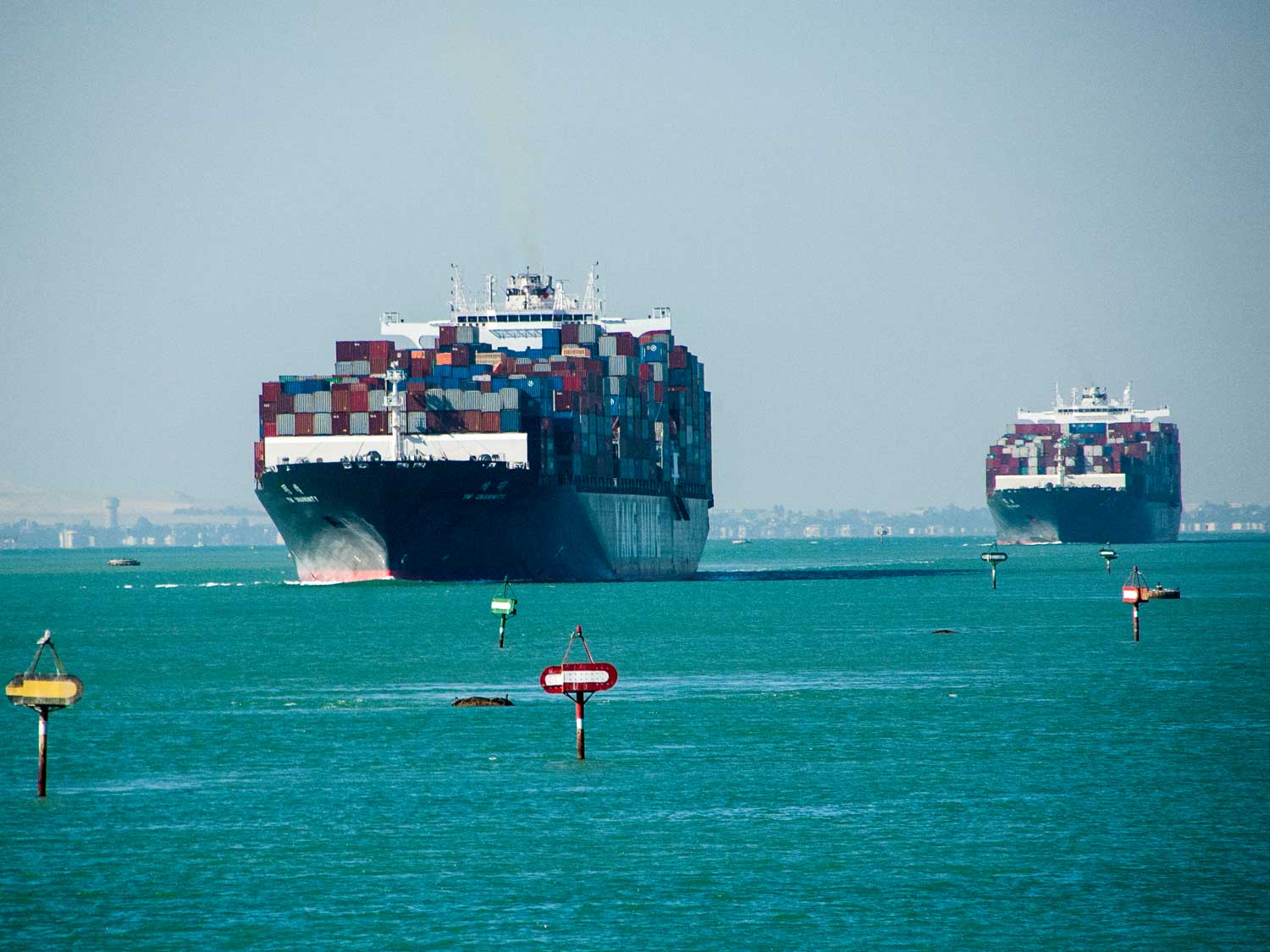
One of the clearest examples is the Panama Canal, where falling water levels in Gatun Lake have prompted the Panama Canal Authority to progressively reduce maximum vessel draft during the summer as it conserves freshwater ahead of an anticipated Super El Niño. While current restrictions remain less severe than those experienced during the 2023 drought, they are already increasing costs for shippers. 

Several major ocean carriers have introduced Panama Canal surcharges ranging from $100 to $320 per TEU on Asia-US East Coast and Gulf Coast services, reflecting the reduced cargo each vessel can carry under tighter draft restrictions. Although the canal continues to operate normally, any future reduction in daily transit slots would have a much greater impact on schedule reliability than the current draft limits alone. 

Europe's rivers are feeling the strain

The effects of prolonged hot, dry weather are also being felt across Europe's inland transport network.

Water levels on the Rhine have fallen to critically low levels, severely restricting barge operations between Rotterdam, Antwerp and inland Germany. Operators have been introducing low-water surcharges for several weeks, while some services have become commercially or operationally unviable. 

Efforts to transfer freight onto rail have proved equally challenging, with alternative corridors already operating close to capacity because of ongoing infrastructure works.

For manufacturers relying on Europe's inland waterways, disruption is no longer confined to river transport, it increasingly affects rail capacity, road availability and overall distribution costs.

Wildfires are disrupting European road freight

Across southern Europe, another climate-related challenge is emerging, as large wildfires in France and Spain disrupt some of Europe's busiest freight corridors through road closures, diversions, reduced visibility and extreme temperatures. Longer journey times are increasing fuel consumption, delaying deliveries and placing additional pressure on temperature-controlled supply chains. 

The impact extends well beyond the affected regions. France remains the principal land bridge between the UK and the Iberian Peninsula, and with around 75% of UK trade with continental Europe transported by road, closures and diversions across France can have far-reaching consequences for supply chains across Europe.

For businesses importing fresh produce or operating just-in-time supply chains, even relatively localised events can have continent-wide consequences.

Typhoon season continues to test Asian supply chains

Meanwhile, North Asia is experiencing another challenging tropical storm season.

Following the disruption caused by Typhoon Bavi, Typhoon Dolphin is threatening further delays across one of the world's busiest manufacturing and shipping regions. Major ports including Shanghai, Ningbo and Qingdao are already managing congestion, with delays of up to 8 days and while the typhoon is being downgraded, another severe weather event risks extending vessel queues and delaying cargo movements before previous backlogs have fully cleared. 

The timing is particularly significant as peak season demand continues, increasing pressure on both container shipping and bulk commodity movements throughout the region.

Weather disruption is becoming interconnected

Individually, each of these events presents a local operational challenge, but together, they highlight a much broader trend.

Lower water levels restrict major waterways. Heat and drought increase wildfire risk. Tropical storms disrupt manufacturing and port operations. Each event creates knock-on effects that spread rapidly through global supply chains, affecting transport capacity, transit times and logistics costs far beyond the immediate area.

With forecasters warning that a strengthening Super El Niño could increase the frequency and severity of weather extremes over the coming months, businesses should expect climate-related disruption to remain a significant operational risk. 

Building resilience into the supply chain

Extreme weather can no longer be treated as an occasional disruption that businesses simply react to.

Organisations that build resilience into their supply chains, through flexible transport options, contingency planning, alternative routings and greater supply chain visibility, will be far better placed to manage future disruption than those relying on historical weather patterns.

As climate events become more frequent and interconnected, resilience is becoming every bit as important as cost and transit time.

Whether you're moving freight through Europe, North America or Asia, Metro can deliver visibility throughout your supply chain and help you prepare for disruption before it happens. From alternative routings and multimodal solutions to warehousing, customs and contingency planning, we'll help build a more resilient supply chain that keeps your cargo moving when conditions change.

EMAIL Managing Director, Andrew Smith to start a conversation. 

Typhoon HKG 1440x1080 1

Typhoon Bavi exposes fragility in global supply chains

Typhoon Bavi, an exceptionally powerful and large tropical cyclone that tore through the Western Pacific last week may have passed, but its impact on global supply chains will linger for at least another week. 

After forcing the temporary closure of several of China's most important container gateways, the storm has left shipping lines, ports and shippers facing weeks of disruption as vessel schedules recover and freight networks work through mounting backlogs.

The Category 5-equivalent super typhoon swept across eastern China in mid-July, bringing winds exceeding 140 km/h and affecting an area almost 1,000 kilometres wide. As the storm approached, ports suspended operations, vessels were ordered to leave exposed berths and inland feeder terminals closed as a precaution. Although terminals have now reopened, the disruption created during just a few days of closures is continuing to ripple through global logistics networks.

For importers and exporters, the lesson is becoming increasingly clear. Modern supply chains are no longer disrupted only by geopolitical events or capacity shortages. Severe weather is now capable of creating global consequences that last long after the skies have cleared.

China's busiest ports face weeks of recovery

Shanghai and Ningbo, the world's first and third busiest container ports respectively, bore the brunt of the disruption. Together they handle tens of millions of containers every year and sit at the heart of manufacturing supply chains serving Europe, North America and the rest of Asia.

As Typhoon Bavi approached, container terminals suspended operations, vessels left deep-water berths and truck movements were halted. Along the Yangtze River, feeder ports linking inland manufacturing centres with Shanghai also closed, temporarily severing one of China's most important export corridors.

Operations resumed once the storm had passed, but reopening terminals is only the first stage of recovery. Every delayed vessel must still be berthed, unloaded and reloaded before shipping schedules can begin returning to normal.

Industry analysts estimate that almost two million TEU of container capacity was delayed by the disruption, with North Asia accounting for more than half of all global port congestion during the immediate aftermath. Current forecasts suggest ports may require at least two weeks to work through the accumulated backlog.

Vessel queues continue to grow

The operational impact became visible almost immediately after ports reopened.

The queue of vessels waiting outside Shanghai more than doubled within a week, rising from fewer than 60 ships before the closures to well over 120. Ningbo experienced a similar pattern, with waiting vessels increasing by almost 70%, while congestion also spread north to Qingdao following precautionary closures there.

Waiting times have lengthened accordingly. Some vessels are now experiencing delays of several days before securing a berth, while carriers operating certain services face considerably longer waits as terminals prioritise arrivals and reorganise schedules.

The disruption extends well beyond the ports themselves. Warehousing, customs processing, container yards and trucking operations all require time to absorb the surge in cargo released once terminals reopen. As containers accumulate, equipment availability tightens, truck demand rises and inland transport networks come under increasing pressure.

Delays are spreading across global shipping networks

The consequences are now extending far beyond eastern China. Shipping lines have omitted calls at Shanghai and Ningbo on several international services, instead diverting cargo through alternative hubs including Hong Kong, Singapore and Busan before arranging onward transhipment. Other vessels have been forced to skip scheduled ports entirely or adjust voyage rotations to recover lost time.

These changes inevitably create further disruption downstream. Delayed vessels arrive at subsequent ports outside their planned windows, leading to berth congestion elsewhere, missed feeder connections and revised cut-off times for exporters. Cargo originally booked on one sailing may be rolled to another, while importers face growing uncertainty over arrival dates.

The cumulative effect is that disruption continues travelling through global shipping networks long after the original weather event has ended.

Extreme weather is becoming a strategic supply chain risk

Typhoon Bavi is the latest reminder that climate-related disruption is becoming an increasingly significant operational challenge for global trade.

Maritime transport carries more than 80% of world merchandise trade, making the resilience of major ports critical to international supply chains. Yet severe weather events are becoming both more frequent and more disruptive, with tropical cyclones already responsible for months of cumulative port disruption each year.

For shippers, this changes the nature of supply chain risk. Weather-related disruption can no longer be viewed simply as a short-term operational inconvenience. Increasingly, it affects inventory planning, manufacturing schedules, customer service and working capital across international supply chains.

Building resilience now requires more than securing freight capacity. Businesses also need timely visibility into where products are, how disruption is developing and which shipments require immediate intervention.

Visibility is becoming a competitive advantage

When disruption occurs, the biggest challenge is often not the delay itself but understanding exactly how individual shipments are affected.

Metro's MVT platform provides end-to-end shipment visibility down to SKU level, allowing customers to monitor cargo movements, identify disruption early and make informed decisions before delays impact production, inventory or customer commitments. Combined with Metro's global freight expertise, MVT transforms complex supply chain data into actionable intelligence, helping businesses maintain control when international logistics become increasingly unpredictable. EMAIL Managing Director Andrew Smith today.

Indian port congestion looms

Global port congestion is worse than expected

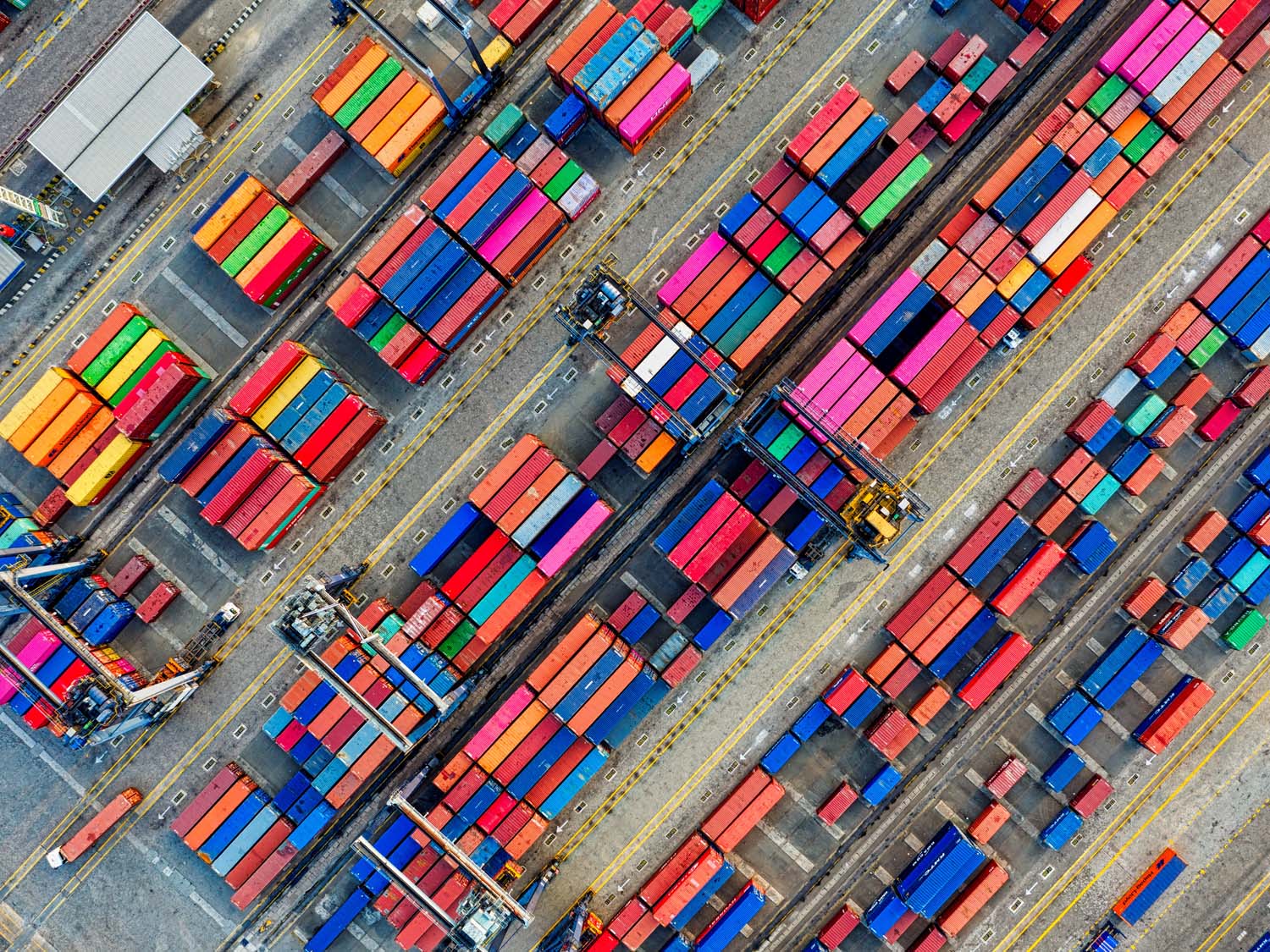
Container shipping is once again under pressure from widespread port congestion, but headline delay figures are only telling part of the story.

Across major global hubs, vessel queues are building, schedules are slipping, and reliability is deteriorating. Yet at the same time, reported delay metrics appear to be improving.

The reason lies in how carriers are managing disruption.

The hidden reality of “negative delays”

Undoubtedly with best intentions shipping lines have increasingly built buffer time into schedules, to absorb ongoing disruption, particularly following prolonged diversions around the Red Sea and Middle East.

Longer published transit times allow carriers to recover from delays more effectively, meaning vessels increasingly arrive "early" against their revised schedules. While this improves official schedule performance, it can also mask the underlying level of operational disruption still affecting global networks.

This has created a growing number of early vessel arrivals, artificially reducing average delay figures. In effect, “negative delays” are obscuring the true level of disruption across global networks.

Compared to pre-pandemic norms, early arrivals have more than tripled as a share of global traffic. This indicates that schedule padding has become a structural feature of liner operations rather than a temporary adjustment.

The consequence is clear: even when reported delays appear manageable, underlying network friction remains high.

Congestion spreads across key hubs

Global port congestion has climbed to a four-year high, with over 10% of the global fleet waiting at anchorage. Across Asia, a combination of adverse weather, vessel bunching, and strong demand is driving delays higher.

The most affected locations include China’s major gateways, where waiting times are stretching into multiple days, transhipment gateways such as Singapore and major feeder hubs including Colombo and Busan, where congestion is disrupting regional connections

These delays are not isolated. They are cascading across schedules, forcing carriers to omit port calls, adjust rotations, and roll cargo onto later sailings.

In many cases, even minor delays of two to three days are proving difficult to recover across multi-port loops, amplifying disruption further downstream.

Demand keeps pressure on the system

Unlike previous congestion cycles driven purely by operational disruption, current conditions are being reinforced by strong demand.

Front-loading on key trades, particularly into the US, and resilient Asia–Europe volumes are increasing cargo dwell times and yard utilisation at ports. This reduces productivity and extends vessel turnaround times, further tightening effective capacity.

The result is a feedback loop:

  • Higher demand increases congestion
  • Congestion reduces effective capacity
  • Reduced capacity pushes freight rates higher

This dynamic is already feeding into both spot and contract pricing across major trades.

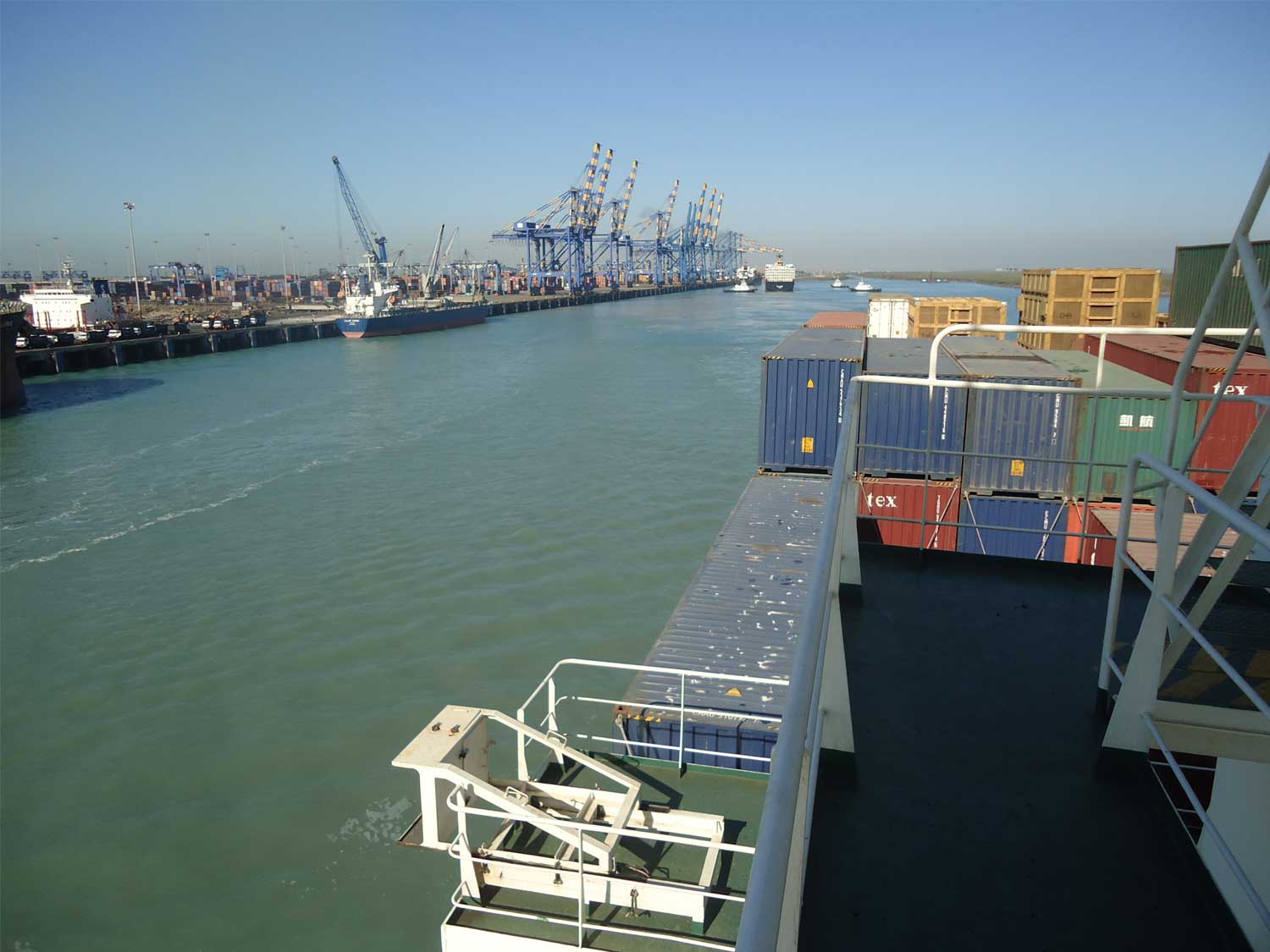
Nhava Sheva: disruption intensifies

One of the most acute examples of this disruption is currently unfolding at Nhava Sheva (JNPT), a critical gateway for Indian exports.

Severe monsoon conditions, including high winds and heavy rainfall, have significantly impacted both terminal and land-side operations. Productivity across multiple terminals has slowed sharply, with some suspensions and intermittent halts due to unsafe operating conditions.

The situation has been further exacerbated by a serious terminal incident, leading to a full suspension of operations at one facility pending investigation.

At the same time, land-side congestion has intensified, with flooding restricting access to terminals. With traffic being actively controlled several kilometres from the port cntainer gate-in and evacuation processes are heavily delayed. This combination of marine and land-side disruption is creating a severe bottleneck.

In a market where true delays are hard to see and even harder to manage local expertise and global coordination are essential.

Metro supports customers by:

  • Monitoring real-time port congestion and schedule disruption
  • Providing early warning of delays at key hubs such as Nhava Sheva
  • Securing alternative routings and contingency solutions
  • Advising on booking strategies to reduce rollover risk

With teams on the ground in key origin markets and close carrier relationships, we help customers stay ahead of disruption and overcome challenges.

To discuss your global shipping requirements or current shipments through particular hubs, EMAIL Andrew Smith, Managing Director.

.

RoRo PCC

A new era for the global RoRo fleet

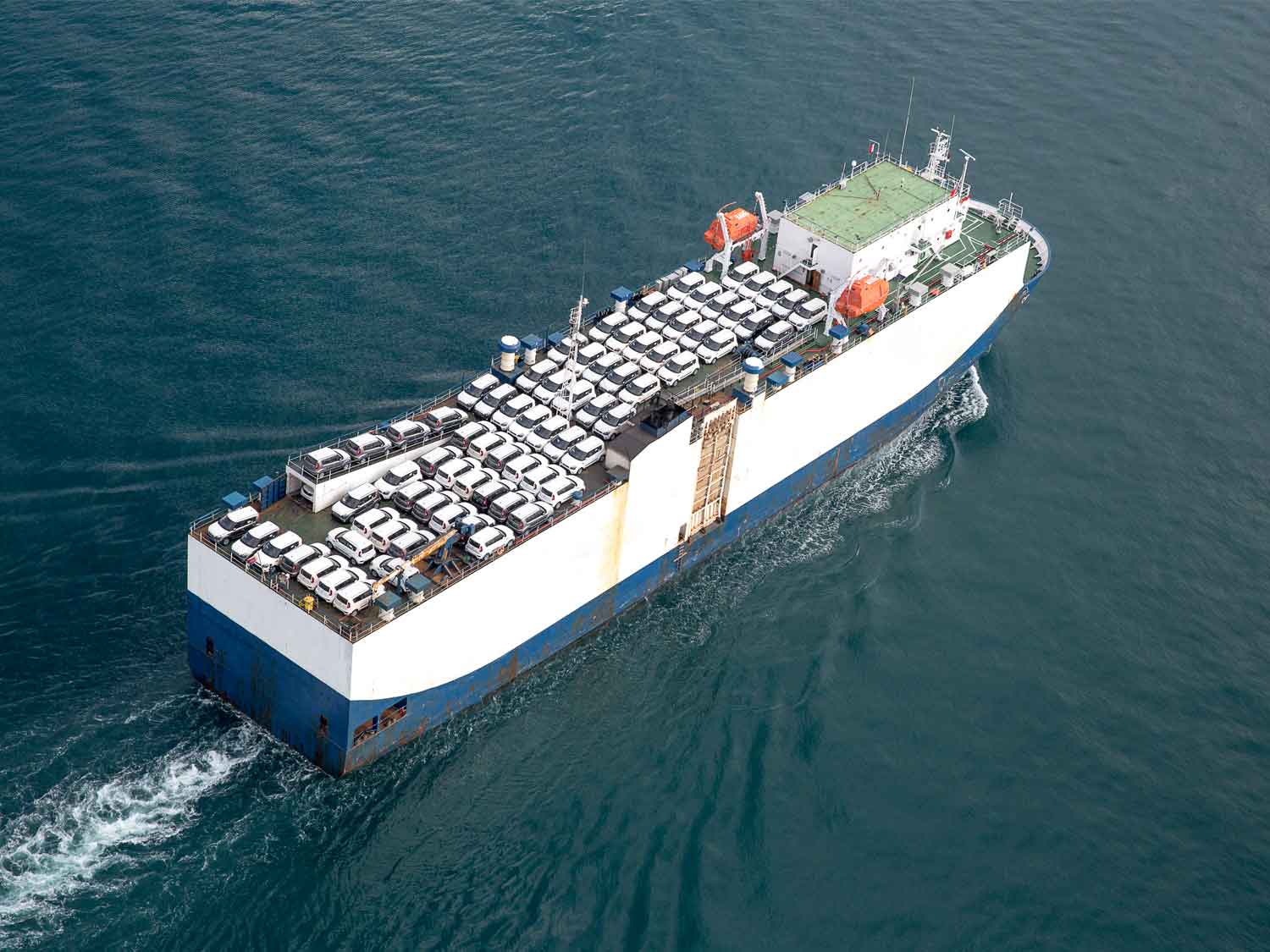
It wasn't long ago that securing space on a RoRo vehicle carrier was one of the biggest challenges facing automotive manufacturers. A shortage of Pure Car and Truck Carriers (PCTCs), soaring charter rates and surging Chinese vehicle exports created an exceptionally tight global market.

That picture is beginning to change. A significant wave of new vessel deliveries is increasing global capacity, charter rates are easing and vehicle production is becoming more regionalised as Chinese manufacturers establish factories closer to overseas markets.

For manufacturers, the challenge is no longer simply securing vessel space. Understanding how changing trade flows, regional production and evolving carrier networks affect future supply chains will be just as important.

Fleet expansion is reshaping capacity

The global PCTC fleet is undergoing its largest expansion for many years. New generations of car carriers, many capable of transporting more than 9,000 car equivalent units, are entering service with dual-fuel propulsion and future-ready designs that support lower-emission operations. 

Overall fleet capacity is expected to increase by around 40%, fundamentally changing the supply-demand balance that drove record charter rates during 2023 and 2024.

As additional vessels enter service, daily charter costs have fallen significantly from their historic highs, easing some of the pressure that has affected vehicle exporters over the past two years.

For automotive manufacturers, this represents a welcome improvement in available capacity, although freight markets remain far from returning to pre-disruption conditions.

Competition is intensifying

China's vehicle exports have surged by more than 60% this year, with Europe emerging as one of its fastest-growing overseas markets. Chinese brands continue to gain market share, particularly in the UK and parts of Southern and Eastern Europe.

However, the next phase of expansion is unlikely to rely solely on long-haul exports.

Faced with higher import tariffs in Europe and North America, Chinese automotive manufacturers are accelerating investment in overseas production. New assembly plants are being established across Europe, South America, Southeast Asia, India and South Africa, allowing vehicles to be built closer to customers while reducing tariff exposure.

For the RoRo sector, this creates a dual dynamic. Long-haul exports from China are expected to moderate over time as production shifts closer to end markets, while regional and short-sea vehicle movements within Europe are likely to grow as new production facilities come online. Investment in new European short-sea vehicle carriers already reflects these changing trade patterns.

Additional investment supports employment, strengthens regional supply chains and creates greater demand for automotive logistics across the continent. At the same time, European manufacturers face increasing competition, making resilient and efficient supply chains even more important.

Project cargo remains under pressure

While finished vehicle logistics should benefit from the expanding fleet, the outlook is less positive for project cargo and other high and heavy freight.

Construction equipment, agricultural machinery, industrial vehicles and oversized project cargo continue to compete for limited specialist deck space. The newest PCTCs are optimised for passenger vehicles rather than abnormal loads, meaning stowage flexibility for oversized freight remains constrained despite overall fleet growth.

Meanwhile, longer voyages around the Cape of Good Hope continue to absorb vessel capacity following disruption in the Red Sea, while higher bunker costs and operating expenses are maintaining commercial pressure on older and smaller RoRo vessels.

For shippers moving specialist equipment, early planning and close coordination with carriers remain essential to securing both space and suitable stowage.

Automotive supply chains need greater agility

The RoRo market is becoming more balanced, but not necessarily simpler. Vehicle production is becoming increasingly regional, trade routes are evolving, environmental regulations continue to influence fleet investment and geopolitical developments remain capable of reshaping shipping patterns with little warning.

For UK and European automotive manufacturers, success will increasingly depend on logistics partners that understand both global vehicle flows and local manufacturing requirements, helping them respond quickly as sourcing patterns and transport networks continue to evolve.

Drive resilience with Metro

Metro has extensive experience supporting OEMs, Tier 1 suppliers and automotive manufacturers with integrated international logistics solutions. 

Our specialist automotive teams work across Europe, Asia and North America to secure RoRo capacity, manage complex vehicle movements and develop contingency plans when market conditions change.

Whether moving finished vehicles, production components or specialist project cargo, Metro combines global carrier relationships with local expertise to keep automotive supply chains moving efficiently and reliably.

To discuss your automotive logistics requirements and discover how Metro can strengthen your supply chain, EMAIL Andrew Smith, Managing Director.