H1 2025: Six Developments Reshaping Global Trade

H1 2025: Six Developments Reshaping Global Trade

The first half of 2025 has been one of the most turbulent periods for supply chains in recent memory. From renewed tariff wars to fresh geopolitical flashpoints, logistics professionals have had to contend with a constantly shifting landscape.

At the same time, structural challenges around skills, safety, and sustainability have continued to grow. Here we review six developments that defined H1 2025.

1. Tariffs return to the fore
The pause in US tariff escalation ended in August, with the White House reintroducing “reciprocal” tariffs that apply baseline duties of 10% to all countries and higher rates of 10–41% depending on origin. The UK sit at the low end, while Syria faces the steepest levels. Brazil has been singled out further, hit by an additional 40% levy. Canada also saw tariffs raised from 25% to 35% on certain goods, justified by Washington’s claim that Ottawa has not done enough to curb fentanyl flows.

The executive order applies from 7 August 2025, with a grace period allowing cargo already loaded onto vessels before that date to arrive until 5 October 2025. To add complexity, US Customs will also impose new fees on Chinese-built or operated vessels from 14 October, potentially forcing alliances such as the Ocean Alliance into costly fleet reshuffles. Carriers are already working through how to redeploy capacity to avoid penalties, with COSCO and OOCL particularly exposed.

2. New shipping alliances reshape networks
The recomposition of global shipping alliances in Q1 has reshaped carrier strategies. The launch of the Gemini Cooperation between Maersk and Hapag-Lloyd marked one of the most significant realignments in recent years, focused on achieving 90%+ schedule reliability. Shippers are already seeing more dependable services, but questions remain about whether premium pricing will follow.

Other alliances, particularly Ocean and THE Alliance (now Premier Alliance), are recalibrating networks, with competition sharpening across Asia–Europe and transpacific trades. For shippers, the alliance changes mean rethinking service contracts and adapting to new network structures that could endure for much of the decade.

3. Houthi attacks deepen Red Sea crisis
The Red Sea crisis, triggered by Houthi rebel attacks, has now stretched on for nearly two years. In July 2025 the threat escalated further with the sinking of the Magic Seas, a Greek-operated vessel targeted for its links to companies calling at Israeli ports. Analysis suggests that one in six vessels globally could now be considered threatened under the Houthis’ broad definition of violators.

For container lines, this effectively rules out a return to Suez Canal routings before 2026 — and possibly not until 2027. Rerouting around the Cape of Good Hope adds up to two weeks to Asia–Europe journeys, pushing up costs and insurance premiums, and putting additional strain on fleet capacity. The Red Sea instability has been a reminder of how localised conflicts can have global consequences for supply chains.

4. Logistics skills shortages persist
The UK continues to face a significant shortfall in logistics skills, with the Road Haulage Association estimating a deficit of around 50,000 HGV drivers. The ONS also reports 6,000 fewer courier and delivery drivers than the previous year. With 55% of HGV drivers aged between 50 and 65, the demographic imbalance remains a long-term concern.

Factors include reduced access to EU workers post-Brexit, poor industry perception, and limited uptake of government training schemes. Although the crisis is not as acute as during the height of the pandemic, the ageing workforce and lack of young entrants mean structural shortages will continue. Rising wage costs, recruitment struggles, and bottlenecks in road transport all add to the burden on UK supply chains.

5. EV shipping challenges raise alarm
The growth of electric vehicle (EV) trade has created new safety risks at sea. Several high-profile fires on car carriers have been linked to lithium-ion batteries, sparking concern among insurers, regulators, and shipowners. Insurers are pushing for tougher loading protocols, enhanced crew training, and more advanced fire suppression systems.

For supply chains, this adds cost and complexity to automotive logistics, with carriers facing higher insurance premiums and the need to retrofit vessels. It is also slowing the momentum of EV exports, just as demand for cleaner vehicles accelerates globally.

6. Sustainability regulations tighten
Sustainability regulation is reshaping procurement strategies. The EU’s Carbon Border Adjustment Mechanism (CBAM) is beginning to impact trade in carbon-intensive products such as steel, aluminium, and cement, with importers required to report embedded emissions.

At the same time, sustainable aviation fuel (SAF) is moving toward a tipping point. UK and EU mandates are pushing airlines to integrate SAF into their fuel mix, with new investments underway to scale production.

While tariffs and geopolitics grab headlines, sustainability is quietly becoming a decisive factor in supplier choice, cost structures, and long-term resilience planning. For many organisations, compliance with emissions and ESG frameworks is no longer optional but critical.

Outlook
H1 2025 has exposed the vulnerability of supply chains to political shocks, armed conflict, safety risks, and structural labour shortages. Tariffs, alliances, and attacks have disrupted networks, while long-term challenges around sustainability and skills remain unresolved.

The message for supply chain leaders is clear: resilience, agility, and visibility will be critical in the second half of 2025, as disruption becomes the new normal.

H1 2025 has underlined how vulnerable global supply chains have become and staying ahead demands visibility, expertise, and a trusted partner by your side.

Metro’s account management team works proactively with customers to anticipate risks, share insights, and design solutions that are resilient and adaptable to change.

Our expertise encompasses dangerous goods and lithium battery shipping, customs, and multimodal freight, backed by a strong people strategy that includes apprenticeships, engagement programmes, and our Great Place to Work certification.

We are also leading the way on sustainability. Metro has been carbon neutral for five years, pioneering the use of Sustainable Aviation Fuel (SAF), while our MVT ECO platform helps businesses forecast, measure, and offset emissions across their global supply chains.

EMAIL Andrew Smith, Managing Director, to learn how Metro can build resilience into your supply chain.

US Tariff Developments and Global Trade Reactions

US Tariff Developments and Global Trade Reactions

Further to our recent update on the major changes to US tariffs (link), the global trade landscape remains highly fluid, with the situation evolving rapidly.

Last Wednesday, 2nd April, President Donald Trump announced a comprehensive tariff strategy, imposing a universal 10% tariff on all imported goods, effective from the 5th April.

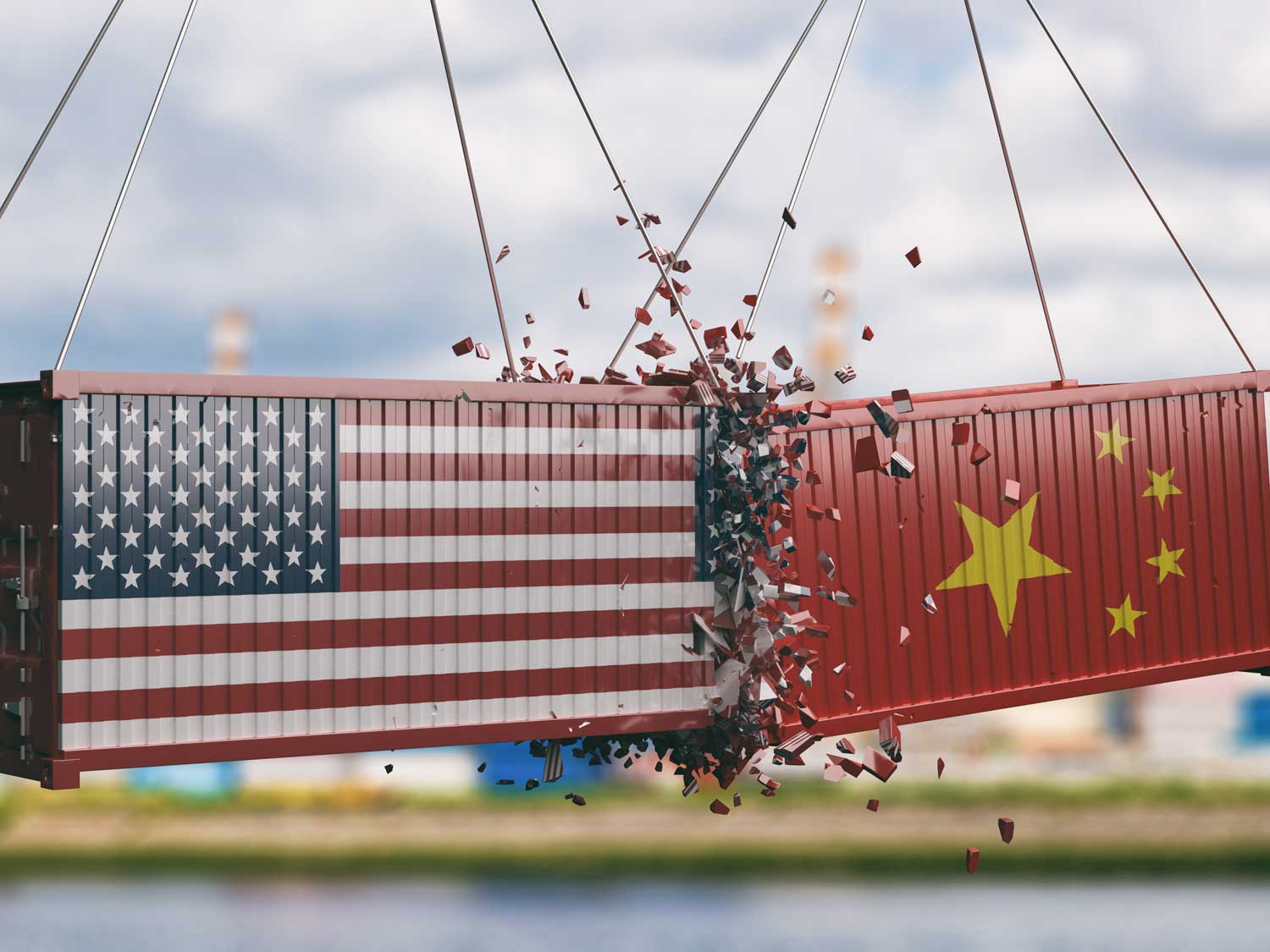
Additionally, as of today, 9th April, a second wave of higher “reciprocal” tariffs has been implemented, targeting specific countries with rates ranging from 11% to 50%, based on perceived trade imbalances and barriers. Notably, China which now faces a tariff rate of 104% on its exports to the US, combining previous and new duties.

The UK, Australia, Indonesia, Singapore, Vietnam, and Taiwan have confirmed they will not introduce countermeasures at this stage. Notably, both Vietnam and Taiwan have expressed willingness to negotiate with the US and explore zero-tariff agreements.

In contrast, China responded with retaliatory tariffs of up to 34% on US goods, which has seen President Trump follow through with his threatened escalation of an additional 50% duty on Chinese imports. As a result, US importers now face an unprecedented degree of uncertainty around landed costs.

The European Union has proposed a zero-tariff arrangement on autos and industrial goods, which was rejected by the US. So far, the EU’s potential response appears limited to steel and aluminium, though speculation persists around broader negotiations and potential shifts in trade policy.

This environment puts US importers in a difficult position: ship now and risk overpaying if tariffs are reversed, or delay and risk facing even higher costs if further duties are imposed. Many are opting to pause shipments where possible, disrupting vessel utilisation, bookings, and spot market rates.

Early indicators suggest the impact on global logistics is already being felt. Sea freight container bookings into the US from China have dropped a massive 67% in the past 7 days compared to the week prior, with export bookings also down 40%. If these figures are anywhere near accurate, this marks an extremely large and immediate disruption to trade flows into the US.

If this slowdown continues, significant blank sailings from the carriers are inevitable, and signs of this are already emerging. Yesterday, Ocean Network Express (ONE) announced that the Premier Alliance PN4 Pacific service, scheduled to begin in May, has been suspended until further notice—an early indication of broader cancellations to come.

There are several mechanisms that can be utilised to temporarily avoid duties for exports into the USA including Free/ Foreign Trade Zones, customs regimes, bonded facilities, temporary import bonds (TIB’s), carnets and more. There are options to carry on shipping goods to USA and not clear them until it is absolutely clear whether commodity tariff rates will be reduced or withdrawn as, or if, deals are agreed between countries.

From an objective standpoint, it remains unclear what concessions the US is seeking in exchange for easing these tariffs, particularly since the justification of “tariffs imposed on the US” lacks clarity in many cases.

For shippers and carriers the coming days and weeks will require vigilance and adaptability. The tariff landscape may shift dramatically and without warning, both upward and downward.

We continue to monitor developments closely and will issue further updates as more information becomes available, particularly concerning potential EU countermeasures and UK trade policy responses.

If you would like to review your specific supply chain impact, assess your exposure, or explore strategic alternatives, please don’t hesitate to get in touch. Metro is well-positioned to support you, bolstered by our expanded US presence and strong focus on North American trade flows.

Expect further insights in the coming days as the situation unfolds and if you have any questions please give me a call, or drop a message, and we will ensure that you receive immediate attention and advice.

Seven supply chain shocks in seven weeks

Seven supply chain shocks in seven weeks

Just seven weeks into 2025, global supply chains have already faced a whirlwind of challenges.

From industrial action to trade barriers and shifting alliances, businesses must stay agile to navigate ongoing disruptions. Here are seven of the most impactful developments so far this year.

1. US east coast port strike averted (8th January)
A major disruption was narrowly avoided as the International Longshoremen’s Association (ILA) and United States Maritime Alliance (USMX) reached a tentative six-year agreement. The deal, approved on 7 February, prevented a strike that could have crippled US east coast ports for months. A final vote on 25 February will confirm its ratification.

2. Uncertainty over Suez Canal return (19th January)
Despite a fragile ceasefire in Gaza, container ships will not be returning to the Red Sea anytime soon. Carriers remain cautious, fearing renewed instability and prioritising the established Cape of Good Hope diversions. Even if ships do resume transit, severe disruption is expected, with schedules taking up to two months to stabilise.

3. Trump’s trade policies spark concerns (20th January)
Following his inauguration, President Trump swiftly reignited trade tensions, threatening tariffs on Colombia, China, Canada, and Mexico. Proposals include a 25% levy on steel and aluminium from Canada and Mexico, with reciprocal tariffs also being considered for UK imports. The potential trade war could have widespread consequences for global supply chains.

4. US air cargo demand under threat (1st February)
Trump’s decision to impose a 10% tariff on all Chinese imports and temporarily suspend the de minimis exemption for low-value Chinese shipments has sent shockwaves through the air freight sector. While the exemption was reinstated, changes to eCommerce regulations could significantly disrupt air cargo flows into the US, which is expected to receive 1.4 billion eCommerce packages this year.

5. New Asia shipping alliances reshape trade (2nd February)
The long-anticipated shift from three major container alliances (Ocean, THEA, 2M) to four key players (Ocean, Premier, Gemini, MSC) is now in effect. Asia-North Europe scheduled liner capacity will shrink by 11%, yet the number of weekly sailings will increase from 26 to 28. These changes will reshape global shipping networks for years to come.

6. European road freight rates stabilising (4th February)
After three years of decline, European road freight spot rates may have hit their lowest point. According to the European Road Freight Rate Benchmark, spot rates fell just 1% year-on-year in Q4 2024. While demand remains weak, cost pressures have kept rates 15% above pre-pandemic levels, with short-term volatility expected.

7. Carriers cut sailings to stabilise rates (14th February)
Shipping lines are aggressively blanking sailings to ease the transition to new alliance schedules and sustain freight rates. Between 17 February and 23 March, 51 sailings have been cancelled across key east-west trade routes, with February’s cancellations rising to 133 from 104 in January. Further capacity withdrawals and a general rate increase (GRI) could follow if demand fails to recover.

With trade disputes, shipping realignments, and geopolitical instability shaping global supply chains, the first quarter of 2025 has already presented significant challenges.

Staying ahead requires proactive strategy adjustments to mitigate risks and build resilience. That’s why we share these insights and why your Metro account management team is always by your side, ready to provide expert advice, share knowledge, and develop bespoke solutions tailored to your supply chain needs.

For high-level support, EMAIL Andrew Smith, Managing Director.

Uncertainty grows as US tariffs target China

Uncertainty grows as US tariffs target China

While last-minute negotiations resulted in a temporary reprieve for Canadian and Mexican imports, President Trump’s new tariffs on Chinese goods from the 4th February have already triggered retaliation, adding further pressure to international supply chains.

US tariffs on Canadian and Mexican imports have been put on hold for at least 30 days following security commitments from both nations. This delay offers temporary relief for critical trade lanes, including automotive components, electronics, and pharmaceuticals.

Canada has pledged increased border enforcement measures, including new personnel and surveillance technology, while Mexico has committed to deploying additional forces to its border. These actions have led to a pause in tariffs, but shippers should remain cautious as negotiations continue, with the risk of duties being reinstated if agreements are not finalised by March.

The US administration has implemented an additional 10% tariff on Chinese imports and in response China has introduced tariffs of up to 15% on selected US goods and imposed export controls, affecting critical technologies such as solar cell production. While these measures appear targeted, they contribute to an increasingly volatile trade environment, forcing businesses to reconsider sourcing strategies and logistics solutions.

US prepares further trade restrictions

Beyond tariffs, the US is tightening its stance on eCommerce imports by getting ready to suspend the de minimis exemption for shipments from China, as soon as adequate systems are in place to fully and expediently process and collect tariff revenue. Previously, goods valued under $800 could enter the US duty-free, but the removal of this exemption would be expected to severely impact cross-border eCommerce air cargo volumes.

In addition, new regulations, announced by US Customs and Border Protection, introduce additional filing requirements, increasing administrative burdens on online retailers and logistics providers. However, analysts suggest that while higher costs may impact some importers, consumer demand is unlikely to diminish significantly, given the relatively low average value of eCommerce purchases.

With ongoing negotiations between the US, Canada, and Mexico, and China’s measured response to tariffs, industry leaders remain cautiously optimistic. However, agility will be essential in navigating evolving trade policies and regulatory changes. As new agreements are brokered and tensions shift, shippers must remain adaptable to mitigate risks and capitalise on emerging opportunities.

As global trade policies shift and new tariffs reshape supply chains, proactive planning is more critical than ever. At Metro, we leverage award-winning services and deep industry expertise to help businesses navigate evolving trade barriers, regulatory changes, and supply chain disruptions.

Whether you need to mitigate the impact of tariffs, ensure compliance with new regulations, or adapt sourcing/export strategies, our tailored solutions keep your supply chain resilient and competitive.

EMAIL Andy Smith, Managing Director, today to explore how Metro can safeguard your supply chain and support your business in 2025 and beyond.